
94%
OFF
OFF
Hazmat Labelling Essentials
- Lifetime Access
- All Levels
- PDF Certificate
£296
£19
14-Day Money-Back Guarantee
Learn With Confidence






Hazmat Labelling Essentials
Hazardous materials can present serious risks to workers, the public, property, and the environment when they are not properly identified and communicated. Clear and accurate labelling is one of the most important elements of an effective hazardous materials safety system. From chemical containers in the workplace to packages prepared for transportation, appropriate labels help people understand what a substance is, what hazards it may present, and what precautions may be necessary.
The Hazmat Labelling Essentials course provides practical, foundational knowledge about hazardous materials labelling and hazard communication. It introduces the principles behind the Globally Harmonized System of Classification and Labelling of Chemicals (GHS), hazardous material classification, and labelling considerations under OSHA, DOT, and EPA requirements.
The course also explores practical best practices for creating and maintaining effective HAZMAT labels. Learners will develop a stronger understanding of why labels matter, how hazard information is communicated, and how accurate labelling can support safer handling, storage, transportation, and emergency response.
Whether you work with chemicals, manage hazardous materials, prepare shipments, operate a warehouse, or support workplace safety, this course can help you build a stronger foundation in hazardous materials labelling.
Why Hazmat Labelling Essentials Matters
A hazardous material should never be treated as an ordinary product simply because it is contained in a bottle, drum, box, tank, or other package.
The container needs to communicate relevant hazard information clearly enough for workers and other authorised personnel to understand the risks.
Effective labelling can help identify hazards such as:
-
Flammability
-
Toxicity
-
Corrosivity
-
Oxidising properties
-
Explosiveness
-
Gas-related hazards
-
Health hazards
-
Environmental hazards
-
Physical hazards
Poor or missing labels can create confusion and increase the likelihood of incorrect handling.
A worker may select unsuitable PPE, store an incompatible chemical in the wrong location, use an inappropriate handling method, or fail to recognise an emergency hazard.
The Hazmat Labelling Essentials course helps learners understand how effective labels contribute to hazard recognition and communication.
What You Will Learn
By completing the Hazmat Labelling Essentials course, learners will be able to:
-
Explain the purpose of hazardous materials labelling.
-
Understand fundamental hazard communication principles.
-
Describe the role of OSHA, DOT, EPA, and GHS in hazardous material information.
-
Understand basic hazardous material classification concepts.
-
Recognise common GHS label elements.
-
Understand workplace chemical labelling considerations.
-
Recognise key transportation labelling concepts.
-
Understand environmental and chemical management considerations.
-
Identify common problems with hazardous material labels.
-
Apply best-practice principles when reviewing HAZMAT labels.
-
Support clearer communication of chemical hazards.
-
Recognise when current regulatory guidance should be consulted.
Course Curriculum
Module 1: Introduction to Hazardous Materials Labelling
Lesson 1: Introduction to Hazardous Materials Labelling
The course begins with an introduction to hazardous materials labelling and its role in workplace safety.
Learners will explore why hazardous materials require clear identification and how labels communicate important information about chemical and physical hazards.
A label may provide information such as:
-
Product or chemical identifier
-
Hazard pictograms
-
Signal words
-
Hazard statements
-
Precautionary statements
-
Supplier information
-
Identification information
The module introduces the difference between labels, markings, placards, signs, and other forms of hazard communication.
Although these systems are related, they serve different purposes.
Learners will understand why labels should be:
-
Accurate
-
Legible
-
Durable
-
Visible
-
Appropriate
-
Consistent with supporting information
The course also highlights the importance of checking labels when chemicals are received, transferred, stored, or prepared for transportation.
By completing this module, participants will develop a strong foundation in the purpose and importance of HAZMAT labelling.
Module 2: Hazard Communication Standards (HCS) and GHS
This module introduces two important concepts in modern chemical hazard communication: the Hazard Communication Standard and the Globally Harmonized System of Classification and Labelling of Chemicals.
Learners will explore how the GHS provides a structured approach to communicating chemical hazards using standardised elements.
These may include:
-
Signal words
-
Hazard statements
-
Precautionary statements
-
Pictograms
-
Product identifiers
-
Supplier information
The module explains how standardised communication can help workers recognise hazards more consistently.
Learners will also explore the relationship between hazard classification and label content.
A chemical’s properties and identified hazards influence the information that should appear on its label.
The course introduces the importance of Safety Data Sheets and explains how labels and Safety Data Sheets work together.
For example, a label provides important hazard information at the container level, while the Safety Data Sheet provides more detailed information about hazards, handling, storage, PPE, emergency response, and other considerations.
By completing this module, learners will better understand the principles behind GHS-based hazard communication.
Module 3: Classification of Hazardous Materials
Correct classification is an essential part of effective labelling.
This module explores how hazardous materials can be classified according to their physical, health, and environmental hazards.
Learners will examine concepts associated with hazards such as:
-
Flammability
-
Acute toxicity
-
Corrosivity
-
Oxidising properties
-
Explosiveness
-
Carcinogenicity
-
Skin and eye hazards
-
Respiratory hazards
-
Environmental hazards
The course explains why classification should be based on reliable scientific and regulatory information.
Workers should not attempt to classify an unfamiliar substance based solely on appearance, colour, odour, or personal assumptions.
Reliable information may come from:
-
Safety Data Sheets
-
Manufacturer information
-
Laboratory analysis
-
Product specifications
-
Regulatory documentation
-
Applicable classification requirements
Learners will understand that classification is closely connected to the information communicated on labels.
By completing this module, participants will develop a clearer understanding of why accurate hazard classification is essential for appropriate labelling.
Module 4: HAZMAT Labelling Requirements under OSHA
Workplace chemical labelling plays an important role in protecting employees from hazardous chemical exposure.
This module introduces learners to OSHA-related hazard communication considerations and workplace labelling principles.
Learners will explore the importance of communicating relevant information on containers and ensuring that workers can understand the hazards associated with chemicals they may encounter.
The module covers concepts such as:
-
Workplace chemical identification
-
Hazard information
-
Pictograms
-
Signal words
-
Hazard statements
-
Precautionary statements
-
Secondary containers
-
Workplace procedures
The course also highlights the importance of ensuring that employees receive appropriate information and training regarding hazardous chemicals.
Learners will understand why a workplace label should not be viewed as an isolated requirement.
Effective chemical safety involves multiple layers of communication, including labels, Safety Data Sheets, training, procedures, and appropriate controls.
The module reinforces the importance of checking current OSHA requirements when developing or reviewing workplace chemical labels.
By completing this module, participants will better understand the role of labelling within workplace hazard communication.
Module 5: Labelling Requirements under DOT
Hazardous materials prepared for transportation may be subject to specific Department of Transportation requirements.
This module introduces the fundamentals of DOT hazardous materials labelling and transportation hazard communication.
Learners will explore the role of labels in identifying the hazards associated with packages during transportation.
Topics include concepts such as:
-
Hazard classes
-
Package labels
-
Hazard communication
-
Shipping descriptions
-
Identification information
-
Transportation documentation
-
Relationship between labels and placards
The course explains why transportation labelling is different from ordinary workplace product labelling.
A package moving through the transportation system may be handled by several different people and may be involved in loading, unloading, transfer, storage, and emergency response.
Clear transportation labels can help communicate hazards throughout this process.
Learners will also understand why DOT requirements can depend on the material, quantity, packaging, and transportation circumstances.
The module reinforces the importance of consulting current DOT requirements before preparing hazardous materials for shipment.
By completing this module, participants will develop greater awareness of transportation-related labelling requirements.
Module 6: Labelling Requirements under EPA
Hazardous materials and chemicals may also be subject to environmental requirements.
This module introduces learners to the role of EPA requirements in hazardous chemical management and environmental protection.
Learners will explore how chemical identification and hazard information can support:
-
Environmental protection
-
Waste management
-
Chemical storage
-
Spill response
-
Reporting
-
Emergency planning
-
Regulatory compliance
The course explains why appropriate identification is particularly important when hazardous substances become waste or are involved in an environmental incident.
Clear information can help personnel determine what material is present and what precautions may be required.
The module also highlights that EPA requirements may vary depending on the substance, quantity, facility, activity, and applicable environmental regulations.
Learners will understand that labelling should be considered as part of a wider environmental and hazardous materials management system.
By completing this module, participants will develop greater awareness of the relationship between hazardous materials labelling and environmental responsibilities.
Module 7: Best Practices for Creating HAZMAT Labels
The final module brings together the knowledge developed throughout the course.
Learners will explore practical best practices for creating, reviewing, maintaining, and using HAZMAT labels.
Effective labels should provide relevant information in a format that workers can recognise and understand.
Best practices may include:
-
Using accurate hazard information
-
Selecting appropriate pictograms
-
Using correct signal words
-
Providing appropriate hazard statements
-
Including relevant precautionary statements
-
Ensuring readability
-
Maintaining label durability
-
Checking for regulatory compliance
-
Keeping information current
-
Matching labels with Safety Data Sheets and other records
The module also examines common labelling problems, including:
-
Missing labels
-
Incorrect information
-
Faded labels
-
Damaged labels
-
Unreadable text
-
Incorrect hazard symbols
-
Inconsistent information
-
Outdated labels
Learners will understand why labels should be reviewed periodically and updated when necessary.
The course reinforces that labels should never be created from assumptions or copied without verifying the underlying hazard information.
By completing this module, participants will have a stronger foundation for reviewing and supporting effective HAZMAT labelling practices.
Who Is This Course For?
The Hazmat Labelling Essentials course may be suitable for individuals who work with, handle, store, ship, receive, or manage hazardous materials.
It can benefit:
-
Hazmat employees
-
Warehouse workers
-
Shipping personnel
-
Receiving teams
-
Logistics professionals
-
Chemical handlers
-
Manufacturing workers
-
Safety professionals
-
Environmental staff
-
Facility managers
-
Supervisors
-
Compliance personnel
-
Emergency response personnel
-
Laboratory workers
-
Contractors
It may also be valuable for organisations seeking to strengthen their employees’ understanding of hazardous material identification and communication.
Practical Learning Outcomes
The Hazmat Labelling Essentials course is designed around practical workplace awareness.
After completing the course, learners should have a clearer understanding of how labels communicate hazardous material information and why accurate labelling is essential.
Participants will be better prepared to recognise common label elements and identify potential labelling problems.
They will also understand the importance of considering different regulatory environments, particularly workplace, transportation, and environmental requirements.
Improve Hazard Recognition
A clear label can provide critical information before a worker begins handling a substance.
Recognising hazard pictograms, signal words, hazard statements, and precautionary statements can help workers make more informed decisions.
The course encourages learners to use labels together with Safety Data Sheets, workplace procedures, training, and appropriate safety controls.
Strengthen Workplace Chemical Safety
Chemical safety begins with knowing what materials are present and what hazards they pose.
Appropriate labelling can support:
-
Safer chemical handling
-
Correct PPE selection
-
Proper storage
-
Emergency response
-
Spill management
-
Worker training
-
Chemical inventory control
The Hazmat Labelling Essentials course helps learners understand how labelling contributes to these activities.
Support Transportation Safety
Hazardous materials transported by road and other modes require appropriate hazard communication.
Transportation labels can provide important information to workers throughout the logistics chain.
Accurate information can also support emergency responders if an incident occurs during transportation.
The course helps learners understand why transportation labelling requirements should be checked carefully before shipment.
Promote Environmental Awareness
Correct chemical identification can also support environmental protection.
When a spill, release, or waste management issue occurs, personnel need reliable information about the material involved.
Clear identification can support appropriate response decisions and reduce the likelihood of accidental exposure or environmental contamination.
Identify Common Labelling Problems
A label may fail to communicate a hazard effectively when it is:
-
Missing
-
Incorrect
-
Damaged
-
Faded
-
Difficult to read
-
Inconsistent with other information
-
Outdated
Learners will understand why such problems should be identified and reported through appropriate workplace procedures.
Build Better Hazard Communication
Effective hazard communication is not simply about placing a label on a container.
It involves making sure that the information is:
-
Accurate
-
Understandable
-
Accessible
-
Consistent
-
Current
-
Appropriate for the situation
Labels work together with Safety Data Sheets, training, procedures, and other safety measures.
The Hazmat Labelling Essentials course provides learners with a practical foundation for understanding this wider communication system.
Support Regulatory Awareness
Hazardous materials labelling can involve multiple regulatory frameworks.
OSHA requirements may apply to workplace hazard communication, while DOT requirements may apply to transportation and EPA requirements may apply to environmental matters.
The applicable requirements can depend on the substance, activity, quantity, location, and other circumstances.
This course provides general educational information and does not replace current regulations or site-specific compliance advice.
Learners should always consult the latest applicable regulatory requirements and their organisation’s procedures when creating or reviewing labels.
Enrol in Hazmat Labelling Essentials Today
Clear and accurate hazardous materials labelling is an essential component of workplace safety, transportation safety, environmental protection, and emergency preparedness.
The Hazmat Labelling Essentials course provides a structured introduction to hazardous materials labelling, GHS and hazard communication principles, material classification, OSHA-related labelling considerations, DOT transportation requirements, EPA-related considerations, and best practices for creating effective HAZMAT labels.
Whether you work in logistics, warehousing, manufacturing, chemical handling, transportation, environmental services, workplace safety, or emergency response, this course can help strengthen your understanding of hazardous materials labelling and communication.
By completing the course, learners will gain a stronger foundation for recognising hazards, reviewing labels, supporting safer chemical handling, and communicating important information throughout the hazardous materials lifecycle.
Enrol in the Hazmat Labelling Essentials course today and develop the knowledge needed to understand HAZMAT labels, strengthen hazard communication, support safer workplace and transportation practices, and contribute to a more effective hazardous materials safety culture.
Course Modules
Course Content
Module 1_ Introduction to Hazardous Materials Labeling
-
Lesson 1_ Introduction to Hazardous Materials Labeling
Module 2_ Hazard Communication Standards (HCS) and GHS
Module 3_ Classification of Hazardous Materials
Module 4_ HAZMAT Labeling Requirements under OSHA
Module 5_ Labeling Requirements under DOT
Module 6_ Labeling Requirements under EPA
Module 7_ Best Practices for Creating HAZMAT Labels
What our students say
Excellent
4.9 average
158 Reviews

Earn an Accredited Certificate
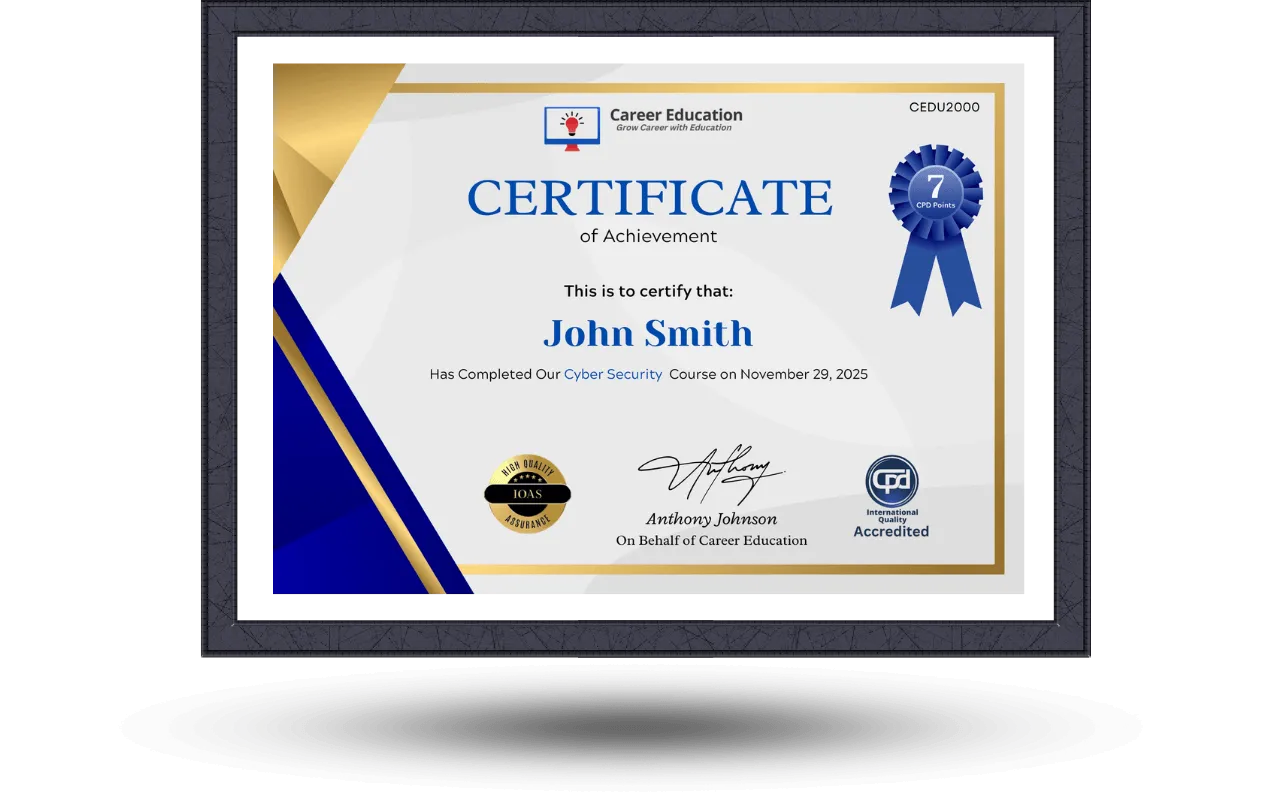
Upon completion of any course, all students are entitled to a CPD IQ Accredited e-certificate that will be issued by Career Education signifying the completion of your course.
After you complete the course and assignment, you will be eligible to order a free certificate accredited by CPD International Quality by completing the form below.
Hardcopy certificates and transcripts are also available for a small additional fee. More information is disclosed upon course completion.
Similar Courses




Frequently Asked Questions
The lifetime membership includes unlimited access to all courses, resources, and updates for a one-time fee.
You can purchase the membership directly from our website using a secure checkout process.
Yes, selected courses can be downloaded for offline access through our mobile app.
Yes, all future updates and new courses are included at no extra cost.
Yes, we offer a 30-day money-back guarantee if you are not satisfied with the membership.