OFF
Fundamentals of Audio Typing and Transcription
- Lifetime Access
- All Levels
- PDF Certificate
Learn With Confidence









Overview
# Fundamentals of Audio Typing and Transcription
Audio typing and transcription are valuable skills in today’s fast-moving professional environment. Businesses, educators, researchers, healthcare organisations, legal professionals, media teams and administrative departments regularly need spoken information converted into accurate, readable written documents. As organisations continue to create and share audio and video content, the ability to listen carefully, understand spoken language and transform it into well-structured text can be a highly useful professional skill.
**Fundamentals of Audio Typing and Transcription** is designed to provide learners with a practical introduction to the core skills required for effective audio transcription. The course takes you through the transcription process step by step, from understanding audio material and developing an efficient transcription technique to producing accurate text, applying appropriate formatting and avoiding common language errors.
Whether you are completely new to transcription, interested in developing administrative skills, considering freelance opportunities or looking to improve your existing typing and listening abilities, this course provides a structured foundation for building your confidence.
Transcription is about much more than simply typing what you hear. A good transcriptionist needs to listen attentively, recognise words accurately, understand context, maintain concentration, apply appropriate punctuation and formatting, and review their work carefully. **Fundamentals of Audio Typing and Transcription** introduces these essential elements so that learners can approach transcription tasks in a more organised and professional way.
## Why Learn Audio Typing and Transcription?
Spoken information is often easier to capture through audio than by immediately creating written notes. Meetings, interviews, lectures, consultations, presentations, research sessions and recorded discussions can all produce valuable information that may later need to be converted into text.
This creates a continuing need for people who understand how to work efficiently with audio and produce accurate written documents.
Learning audio typing and transcription can help you develop:
* Listening and concentration skills
* Typing and keyboard skills
* Audio-processing techniques
* Transcription accuracy
* Proofreading awareness
* Language and vocabulary awareness
* Document formatting skills
* Time-management abilities
* Attention to detail
* Professional written communication
**Fundamentals of Audio Typing and Transcription** focuses on these core abilities and provides a foundation that can be applied to a variety of transcription tasks.
—
# Module 1 – Audio Transcription
The course begins by introducing the fundamentals of audio transcription.
You will explore what audio transcription involves and how spoken material is transformed into written text. Understanding the complete process is important because transcription requires several skills to work together.
You will learn to consider factors such as:
* Audio quality
* Speaker clarity
* Background noise
* Speaking speed
* Different accents
* Multiple speakers
* Unfamiliar terminology
* Context
* Listening concentration
Not every recording will be perfect. A transcriptionist may encounter unclear speech, interruptions, overlapping speakers or technical vocabulary.
Developing an awareness of these challenges can help you approach transcription tasks more effectively.
This module provides the foundation for understanding what is involved before moving into specific transcription techniques.
—
# Module 2 – The Transcription Technique
Effective transcription requires a structured technique.
Simply pressing play and attempting to type continuously can quickly become inefficient, particularly when working with longer or more complicated recordings.
Module 2 introduces techniques that can help you create a more organised transcription workflow.
You will explore how to:
* Listen actively
* Control audio playback
* Pause and replay sections
* Work through difficult phrases
* Maintain concentration
* Keep track of your progress
* Use context to understand speech
* Develop an efficient working rhythm
The objective is to help you become more comfortable with the relationship between listening and typing.
With practice, transcription can become more systematic rather than feeling like a constant struggle to keep up with the recording.
—
# Module 3 – Transcribe Audio to Text
Once you understand the basic technique, the next step is converting audio into written text.
Module 3 focuses directly on the process of transcribing audio to text.
You will explore how to approach recordings methodically and how to ensure that the resulting text accurately represents the source material.
Important considerations include:
* Identifying words correctly
* Understanding context
* Recognising sentence boundaries
* Handling pauses
* Identifying different speakers
* Managing unclear sections
* Reviewing completed sections
* Maintaining consistency
You will also develop an understanding of why transcription should not be based solely on individual words.
Context can often help clarify unclear speech. Understanding the subject being discussed can make it easier to identify terminology and construct meaningful sentences.
The aim is to help you produce text that is accurate, readable and faithful to the original recording.
—
# Module 4 – How the Pros Turn Speech into Text So Quickly
Professional transcriptionists often appear to convert speech into text at impressive speeds.
However, efficient transcription is usually the result of developed techniques, consistent practice and effective workflow management rather than simply typing extremely fast.
Module 4 explores the principles behind efficient transcription.
You will learn about factors that can influence transcription speed, including:
* Familiarity with keyboard shortcuts
* Effective audio controls
* Efficient typing habits
* Listening ahead
* Understanding context
* Reducing unnecessary pauses
* Building vocabulary
* Developing concentration
* Using a consistent workflow
The goal is not to sacrifice accuracy for speed.
A fast transcription containing numerous errors may require more time to correct than a carefully produced document. Professional-quality transcription therefore requires a balance between efficiency and accuracy.
This module helps you understand how experienced transcriptionists can improve productivity while maintaining high standards.
—
# Module 5 – Transcription Skills
Successful transcription requires a combination of technical, language and personal skills.
Module 5 explores the key abilities that can help you become more effective when working with audio.
You will develop awareness of the importance of:
### Listening Skills
Careful listening is essential because transcription begins with understanding spoken information.
### Typing Skills
Efficient keyboard use can help you keep pace with audio and reduce unnecessary interruptions.
### Concentration
Long recordings require sustained attention. Losing focus can result in missed words and errors.
### Language Awareness
A strong understanding of vocabulary, sentence structure and grammar can help you interpret spoken material more accurately.
### Attention to Detail
Small mistakes can change the meaning of a sentence, making careful review essential.
### Time Management
Efficiently organising transcription tasks can help you meet deadlines and manage workload effectively.
By developing these complementary skills, you can improve your overall transcription performance.
—
# Module 6 – Transcription Accuracy
Accuracy is one of the most important qualities of professional transcription.
A transcription should represent the source recording faithfully while meeting the requirements of the intended document or client.
Module 6 focuses on strategies for improving transcription accuracy.
You will explore ways to reduce common errors involving:
* Misheard words
* Missing words
* Incorrect punctuation
* Incorrect spelling
* Speaker identification
* Numbers and dates
* Names and terminology
* Homophones
* Inconsistent formatting
You will also learn the importance of reviewing your work after completing the initial transcription.
A first pass can focus on capturing the content, while a subsequent review can help identify errors and improve readability.
Developing a consistent checking process can significantly strengthen the quality of your finished documents.
—
# Module 7 – Transcription Formatting
A transcription needs to be more than accurate—it should also be easy to read.
Formatting plays an important role in transforming raw transcription into a professional written document.
Module 7 introduces the fundamentals of transcription formatting and explores how written content can be structured clearly.
You will develop awareness of:
* Paragraph structure
* Punctuation
* Speaker identification
* Headings
* Spacing
* Capitalisation
* Numbers
* Abbreviations
* Consistent document presentation
Different transcription assignments may follow different formatting requirements.
For example, a legal transcription, business interview and research interview may each have specific conventions. It is therefore important to understand the requirements of the particular assignment rather than applying one universal format.
The module provides foundational knowledge that can help you create clearer and more professional transcripts.
—
# Module 8 – Common Homophones
Homophones are words that sound the same or very similar but have different meanings or spellings.
They can create particular difficulties during transcription because the audio alone may not always make the correct spelling immediately obvious.
Module 8 introduces common homophones and explains why context is essential when determining the correct word.
Examples can include distinctions such as:
* There, their and they’re
* To, too and two
* Your and you’re
* Its and it’s
* They’re and their
* Principal and principle
* Affect and effect
The exact word required should always be determined by the meaning of the sentence.
Developing awareness of homophones can help reduce avoidable transcription and proofreading errors and improve the overall accuracy of written work.
—
# Build a Reliable Transcription Workflow
One of the key benefits of **Fundamentals of Audio Typing and Transcription** is learning to approach transcription as a process rather than simply a typing exercise.
A reliable workflow might involve:
1. Preparing the recording
2. Understanding the assignment requirements
3. Listening to the audio
4. Identifying speakers where necessary
5. Transcribing the content
6. Reviewing difficult sections
7. Checking spelling and grammar
8. Applying appropriate formatting
9. Proofreading the final document
10. Completing a final accuracy check
Developing a repeatable process can make transcription tasks more manageable and help you work more consistently.
—
# Improve Your Listening and Typing Coordination
Transcription requires your listening and typing abilities to work together.
At first, it may feel difficult to listen to a recording while simultaneously producing written text. With practice and an effective workflow, however, you can develop better coordination between these activities.
The course helps you understand how to:
* Listen for meaning rather than isolated sounds
* Anticipate sentence structure
* Identify important terminology
* Pause strategically
* Replay difficult sections
* Maintain typing rhythm
* Review information efficiently
These techniques can help you become more comfortable with transcription work and gradually improve your productivity.
—
# Develop Greater Attention to Detail
A transcriptionist needs to notice details that are easy to overlook.
A single incorrect word, missing punctuation mark or incorrectly transcribed name can affect the quality of an entire document.
**Fundamentals of Audio Typing and Transcription** encourages careful attention to details such as:
* Names
* Places
* Dates
* Numbers
* Technical terms
* Acronyms
* Speaker changes
* Sentence meaning
* Formatting requirements
This attention to detail is valuable not only for transcription but also for many administrative, office and communication-based roles.
—
# Apply Skills Across Different Types of Audio
Audio transcription can be used in many contexts.
Recordings may include:
* Business meetings
* Interviews
* Presentations
* Lectures
* Training sessions
* Research discussions
* Podcasts
* Administrative recordings
* General spoken content
Each type of recording can present different challenges.
An interview may involve multiple speakers, while a lecture may contain specialist terminology. A business meeting may involve names, dates and action points.
The fundamentals remain relevant across these situations, while specific formatting and confidentiality requirements may vary depending on the context.
—
# Develop Professional Document Quality
A high-quality transcript should be useful to the person reading it.
This means that accuracy, readability and consistency all matter.
Through **Fundamentals of Audio Typing and Transcription**, you can develop an understanding of how to move beyond simply recording words and create documents that communicate information clearly.
You will learn to think about:
* Accuracy
* Clarity
* Structure
* Formatting
* Consistency
* Readability
* Professional presentation
These qualities can make your work more useful and can help establish professional standards in your transcription activities.
—
# Strengthen Your Professional Skill Set
Audio typing and transcription can complement many other professional abilities.
Administrative professionals can use transcription skills when working with meetings and recorded information. Researchers can benefit from understanding how interviews are converted into written data. Students can use transcription techniques when working with recorded lectures or research material. Freelancers can develop transcription as part of a broader digital services skill set.
The course can therefore contribute to wider professional development.
You can combine transcription knowledge with skills such as:
* Administration
* Data entry
* Proofreading
* Document management
* Research
* Customer service
* Digital communication
* Office technology
—
# Practical Learning Outcomes
After completing **Fundamentals of Audio Typing and Transcription**, you can expect to have a stronger foundation in audio transcription and professional typing practices.
You will be able to:
* Explain the basic principles of audio transcription
* Understand the stages of a transcription workflow
* Develop more effective listening techniques
* Apply structured transcription methods
* Convert spoken audio into written text more confidently
* Improve transcription speed through efficient techniques
* Recognise factors that influence transcription productivity
* Develop greater transcription accuracy
* Identify common transcription errors
* Apply fundamental formatting principles
* Improve proofreading and review practices
* Recognise and correctly handle common homophones
* Develop stronger attention to detail
* Organise transcription tasks more effectively
* Prepare for further development in professional transcription
These outcomes can give you a practical foundation for continued learning and experience.
—
# Who Is This Course For?
**Fundamentals of Audio Typing and Transcription** is suitable for anyone who wants to develop foundational transcription skills.
It may be particularly useful for:
* Beginners interested in transcription
* Administrative professionals
* Office workers
* Virtual assistants
* Freelancers
* Students
* Researchers
* Personal assistants
* Secretarial professionals
* Data-entry professionals
* Individuals exploring remote-work skills
* Anyone interested in developing professional typing skills
The course is suitable for learners who want to build confidence before progressing to more specialised transcription work.
—
# Start Building Your Transcription Skills
The ability to transform spoken information into accurate written content is a practical and versatile skill.
**Fundamentals of Audio Typing and Transcription** provides a structured introduction to the techniques and knowledge needed to approach transcription more effectively.
From understanding audio and developing a reliable transcription technique to improving speed, accuracy, formatting and language awareness, the course covers the essential foundations needed to begin developing professional transcription skills.
You will learn why effective transcription requires more than fast typing. Careful listening, concentration, context, accuracy, proofreading and presentation all contribute to producing quality written documents.
## Take the Next Step Towards Professional Transcription
Whether you want to strengthen your administrative capabilities, explore freelance opportunities, improve your typing and listening skills or prepare for further transcription training, **Fundamentals of Audio Typing and Transcription** can provide a valuable starting point.
Build your understanding of audio transcription, learn techniques for converting speech into text, improve your accuracy, develop more efficient working habits, understand transcription formatting and become more confident in recognising common language challenges such as homophones.
With practice and continued learning, these foundational skills can become part of a broader professional skill set.
**Enrol in Fundamentals of Audio Typing and Transcription today and start developing the listening, typing, accuracy and formatting skills needed to turn spoken audio into clear, organised and professional written content.**
Course Modules
Course Content
Module 1 – Audio Transcription
-
Lesson 1 – Audio Transcription
Module 2 – The Transcription Technique
Module 3 – Transcribe Audio to Text
Module 4 – The Pros Turn Speech to Text So Quickly
Module 5 – Transcription Skills
Module 6 – Transcription Accuracy
Module 7 – Transcription Formatting
Module 8 – Common Homophones
What our students say

Earn an Accredited Certificate
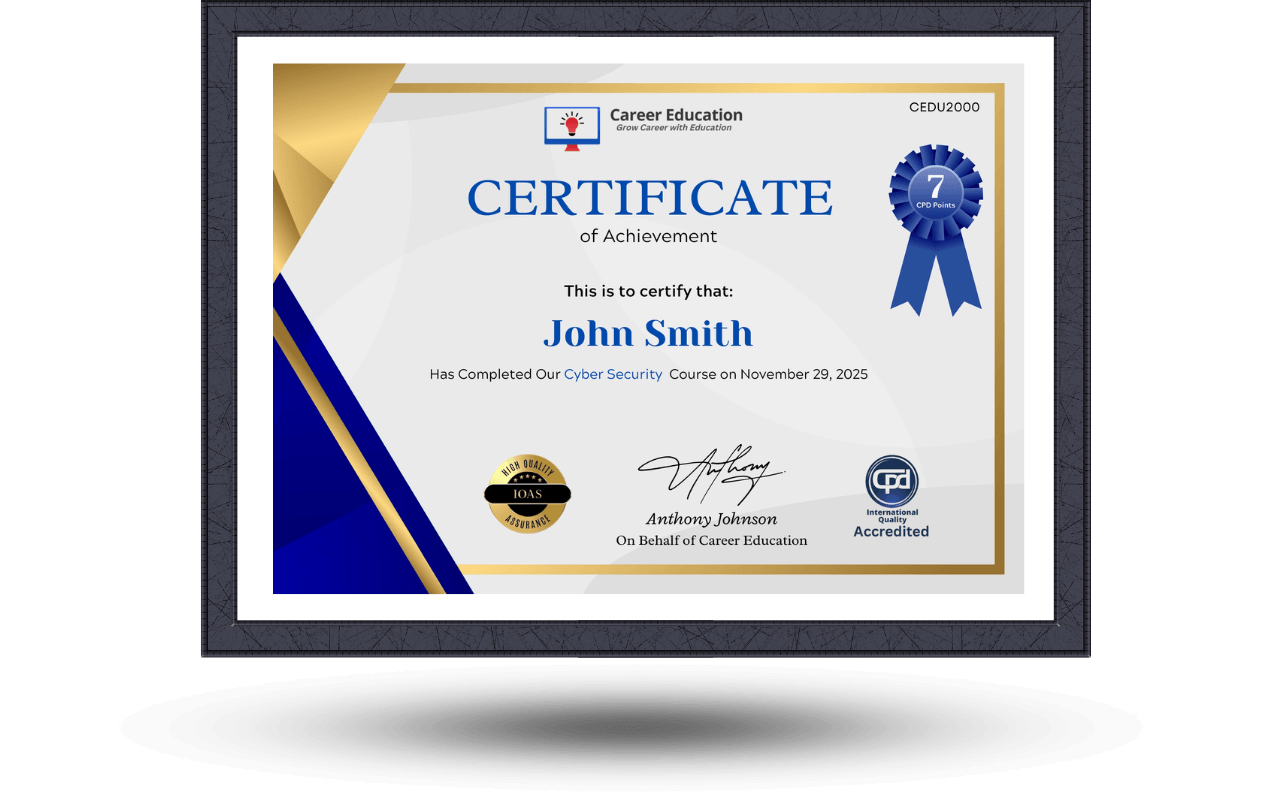
Upon completion of the course, an e-certificate will be downloadable from Khan Education signifying the completion of your course. But, the course is CPD Accredited and after you complete the assignment, you will be eligible to order a certificate accredited by CPD International Quality for £5.99 only. If you want a hardcopy certificate accredited by CPD IQ, you can get it for only £15.99.
Get your CertificateSimilar Courses