
94%
OFF
OFF
Fundamentals of Agile Scrum
- Lifetime Access
- All Levels
- PDF Certificate
£296
£19
14-Day Money-Back Guarantee
Learn With Confidence





# Fundamentals of Agile Scrum
Modern organisations need to respond quickly to changing customer expectations, market conditions and business priorities. Traditional project management approaches can sometimes make it difficult to adapt when requirements change during development. Agile approaches provide teams with a flexible way to deliver value incrementally, learn from feedback and continuously improve how they work.
**Fundamentals of Agile Scrum** provides a practical introduction to the principles, practices and framework of Scrum. The course is designed to help learners understand how Agile Scrum works, how Scrum teams organise their work and how key concepts such as sprints, user stories, product backlogs, estimation, velocity and technical debt fit together.
Whether you are new to Agile, preparing to work within a Scrum team, involved in software or product development, or simply want to understand modern project delivery methods, this course provides a useful foundation.
Rather than focusing solely on terminology, **Fundamentals of Agile Scrum** helps learners understand how Scrum concepts connect in practice. You will explore how teams organise requirements, plan short development cycles, prioritise work, estimate effort and use feedback to improve future delivery.
## Why Learn Fundamentals of Agile Scrum?
Agile Scrum is widely associated with software development and digital product delivery, but its principles can also inform work across many other environments.
Scrum encourages teams to:
* Work collaboratively
* Deliver value incrementally
* Respond to changing requirements
* Prioritise important work
* Learn from feedback
* Inspect progress regularly
* Adapt plans when necessary
* Continuously improve
Understanding these principles can help professionals communicate more effectively when working within Agile environments.
**Fundamentals of Agile Scrum** introduces the core concepts in a structured and accessible way, making it suitable for beginners and professionals looking to strengthen their existing knowledge.
—
# Module 01 – Introduction to Agile Scrum
The course begins with an introduction to Agile Scrum and the ideas behind iterative and incremental delivery.
You will explore why Agile approaches emerged and how they differ from more traditional project delivery methods.
The module introduces concepts including:
* Agile development
* Scrum
* Iterative delivery
* Incremental development
* Collaboration
* Customer value
* Feedback
* Adaptability
You will begin to understand why Agile teams aim to deliver useful increments of work regularly rather than waiting until the end of a project to produce a final outcome.
The module also introduces key Scrum terminology so that you can communicate more confidently when discussing Agile projects.
By developing this foundation, you will be better prepared to understand the Scrum framework and its associated practices.
—
# Module 02 – Scrum Framework
Scrum provides a structured framework for managing complex product development work.
Module 2 explores the key elements that make up Scrum and explains how they work together.
You will develop awareness of important Scrum concepts such as:
* Scrum roles and responsibilities
* Events
* Artifacts
* Product development
* Transparency
* Inspection
* Adaptation
* Incremental delivery
You will explore how Scrum creates a framework within which teams can organise their work while maintaining flexibility.
The module also helps you understand that Scrum is not simply a collection of meetings. It is an approach built around empirical learning, collaboration and continuous adaptation.
Understanding the framework can help you recognise how individual Scrum practices contribute to the wider delivery process.
—
# Module 03 – Agile Principles
Agile is based on a set of principles that encourage collaboration, adaptability and continuous delivery of value.
Module 3 explores the principles that underpin Agile approaches and explains why they are important in modern project environments.
You will explore ideas such as:
* Responding to change
* Customer collaboration
* Frequent delivery
* Continuous improvement
* Team collaboration
* Working software or usable product increments
* Sustainable development
* Simplicity
* Self-organising teams
The module encourages learners to look beyond Agile terminology and understand the thinking behind Agile practices.
For example, responding to change does not mean abandoning planning. Instead, Agile teams recognise that new information can emerge throughout development and that plans may need to evolve accordingly.
This mindset can help teams remain focused on delivering value while adapting to changing circumstances.
—
# Module 04 – Sprints
Sprints are central to Scrum.
A sprint is a defined period during which a Scrum team works towards a specific goal and creates a usable product increment.
Module 4 explores how sprints work and why they are important.
You will develop awareness of:
* Sprint planning
* Sprint goals
* Sprint execution
* Daily Scrum
* Progress monitoring
* Sprint review
* Sprint retrospective
* Incremental delivery
Sprints provide teams with a regular rhythm for planning, delivering, reviewing and improving.
Instead of attempting to predict every detail of a long project, teams can focus on achieving valuable outcomes within a shorter timeframe and then use what they learn to inform future work.
This iterative approach can make it easier to identify issues early and respond to changing priorities.
—
# Module 05 – Requirements and User Stories
Understanding what customers and users need is essential for successful product development.
Module 5 introduces requirements and user stories and explores how teams can communicate desired functionality in a clear and useful way.
You will explore:
* Product requirements
* User needs
* User stories
* Acceptance criteria
* Business value
* Functional expectations
* Prioritisation
User stories are commonly used to express requirements from the perspective of the person who needs the functionality.
This can help teams focus on the value a feature is intended to provide rather than simply describing technical tasks.
You will learn why clear requirements can support better communication between stakeholders, product professionals and development teams.
The module also introduces the importance of discussing and refining requirements as the team gains greater understanding.
—
# Module 06 – Product Backlog
The product backlog is an important Scrum artifact that represents work that may be needed to improve a product.
Module 6 explores the purpose and management of the product backlog.
You will learn about concepts such as:
* Backlog items
* Prioritisation
* Refinement
* Product value
* Requirements
* Ordering work
* Changing priorities
A backlog is not simply a static task list.
It can evolve as the product develops and as new information becomes available.
The course explores why backlog management requires ongoing attention and why items may need to be clarified, reordered or refined.
A well-managed backlog can help teams maintain visibility of upcoming work and focus attention on the most valuable priorities.
—
# Module 07 – Estimation and Velocity
Agile teams often need to estimate the effort or complexity associated with potential work.
Module 7 introduces estimation and velocity and explores how these concepts can support planning.
You will develop awareness of:
* Relative estimation
* Complexity
* Effort
* Story points
* Team forecasting
* Velocity
* Historical delivery data
Agile estimation is not about creating perfectly accurate predictions.
Instead, teams use estimates as tools for discussion, planning and decision-making.
Velocity can provide information about how much work a team has historically completed during previous sprints. When used appropriately, this information can help teams develop more realistic forecasts.
The course emphasises that velocity is a team-specific measure and should not be treated as a universal productivity score or a mechanism for comparing teams.
—
# Module 08 – Technical Debt
Technical debt is an important concept for teams working on software and digital products.
Technical debt can arise when teams choose a short-term solution that may create additional work or maintenance requirements later.
Module 8 explores the concept of technical debt and why it needs to be recognised and managed.
You will explore:
* What technical debt means
* How it can develop
* Short-term versus long-term consequences
* Code quality
* Maintenance
* Refactoring
* Risk
* Product sustainability
Technical debt is not necessarily the result of poor decisions. Sometimes teams make deliberate trade-offs because of deadlines, changing requirements or limited resources.
However, unmanaged technical debt can increase complexity and make future development more difficult.
Understanding the concept allows teams and stakeholders to discuss technical quality and long-term sustainability more effectively.
—
# Understand the Scrum Way of Working
One of the most valuable outcomes of **Fundamentals of Agile Scrum** is developing a connected understanding of how Scrum works.
The different elements of Scrum are not isolated.
Requirements can become backlog items. Backlog items can be refined and prioritised. Selected items can be planned into a sprint. The team works towards a sprint goal and creates an increment. The result is reviewed, feedback is considered and future work can be adapted.
This creates a continuous cycle of:
**Plan → Develop → Inspect → Learn → Adapt**
Understanding this cycle can make Scrum easier to apply and explain.
—
# Develop an Agile Mindset
Agile is not simply a set of project management techniques.
It also involves a different way of thinking about work.
An Agile mindset encourages teams to recognise that:
* Requirements can evolve
* Feedback is valuable
* Learning happens throughout development
* Collaboration is essential
* Small increments can reduce risk
* Improvement should be continuous
* Plans should adapt to new information
Developing this mindset can help you understand why Scrum practices are structured in the way they are.
—
# Understand Collaborative Product Development
Scrum places considerable emphasis on collaboration.
Product development involves multiple perspectives, including customer needs, business priorities, technical considerations and delivery constraints.
Effective collaboration can help teams bring these perspectives together.
Through **Fundamentals of Agile Scrum**, you will develop greater awareness of how teams can work collaboratively to:
* Clarify requirements
* Prioritise work
* Identify risks
* Discuss estimates
* Review progress
* Share feedback
* Improve processes
This understanding can be valuable when working in cross-functional teams.
—
# Learn to Think in Terms of Value
A central Agile concept is delivering value rather than simply completing activities.
A team can complete a large number of tasks without necessarily producing something useful for customers.
Scrum encourages teams to focus on valuable product increments.
This means considering questions such as:
* Who benefits from this work?
* What problem does it solve?
* What outcome does it create?
* Is this the most important work right now?
* What feedback can we learn from delivery?
This value-focused approach can help teams make more informed prioritisation decisions.
—
# Understand Continuous Improvement
Continuous improvement is a core part of Agile thinking.
Teams should not simply repeat the same processes every sprint without reflection.
Sprint retrospectives and regular inspection provide opportunities to identify:
* What worked well
* What did not work well
* What caused difficulties
* What could be changed
* What experiments could be attempted
The goal is not to assign blame but to learn and improve.
This mindset can help teams become more adaptable and effective over time.
—
# Manage Changing Requirements More Effectively
Change is a normal part of complex product development.
Customer expectations may change. Market conditions may shift. New technical information may emerge. Competitors may introduce new products.
Agile Scrum provides a framework for responding to these changes without abandoning structured delivery.
By working with an evolving product backlog and short development cycles, teams can reassess priorities regularly.
This can make it easier to incorporate learning and adjust future work.
—
# Understand Technical Sustainability
Delivering features quickly is only one aspect of successful product development.
Teams also need to consider maintainability, quality and long-term sustainability.
Technical debt awareness helps connect short-term delivery decisions with future consequences.
By understanding technical debt, you can participate more effectively in conversations about:
* Quality
* Refactoring
* Maintenance
* Development risks
* Architecture
* Long-term product health
This knowledge can help balance immediate business priorities with sustainable technical development.
—
# Practical Learning Outcomes
After completing **Fundamentals of Agile Scrum**, you can expect to have a stronger foundation in Agile and Scrum principles.
You will be able to:
* Explain the basic concepts of Agile and Scrum
* Understand the purpose of the Scrum framework
* Recognise important Scrum concepts and terminology
* Understand core Agile principles
* Explain the purpose of sprints
* Understand how sprint activities support incremental delivery
* Recognise the role of requirements and user stories
* Understand the purpose of a product backlog
* Explore backlog prioritisation and refinement
* Understand basic Agile estimation concepts
* Explain the purpose and limitations of velocity
* Recognise the concept of technical debt
* Understand why technical debt should be managed
* Appreciate the importance of collaboration and transparency
* Understand the value of continuous inspection and adaptation
* Develop greater confidence working within Agile environments
* Prepare for further Agile and Scrum learning
These outcomes provide a foundation for applying Agile concepts in appropriate workplace and project environments.
—
# Who Is This Course For?
**Fundamentals of Agile Scrum** is suitable for beginners and professionals who want to understand Agile project delivery and Scrum practices.
It may be particularly useful for:
* Aspiring Scrum team members
* Project professionals
* Product professionals
* Business analysts
* Developers
* Software professionals
* QA and testing professionals
* Team leaders
* Business owners
* Digital project teams
* Technology professionals
* Students exploring Agile
* Professionals transitioning into Agile environments
You do not need extensive Scrum experience to begin.
—
# Prepare for Further Agile Development
Agile Scrum is a broad field with many opportunities for further learning.
After completing **Fundamentals of Agile Scrum**, you may wish to explore areas such as:
* Scrum Master practices
* Product Owner responsibilities
* Agile project management
* Product management
* Agile coaching
* Kanban
* Lean principles
* Agile software development
* Scaled Agile approaches
* Agile leadership
* Agile transformation
This course can provide the conceptual foundation needed to explore more advanced topics.
—
# Build Practical Agile Awareness
Understanding Scrum terminology is useful, but understanding how the concepts connect is even more valuable.
**Fundamentals of Agile Scrum** helps you see how Agile principles influence Scrum practices and how Scrum practices support iterative product development.
You will explore the journey from requirements and user stories through the product backlog, sprint planning, delivery, review and improvement.
You will also develop awareness of estimation, velocity and technical debt so that you can participate more confidently in Agile discussions.
—
# Start Your Agile Scrum Learning Journey
Organisations increasingly need teams that can respond to change while continuing to deliver meaningful results.
Agile Scrum provides a structured approach to doing exactly that.
**Fundamentals of Agile Scrum** introduces the principles and practices that make this approach work. From understanding the Scrum framework and Agile principles to exploring sprints, user stories, product backlogs, estimation, velocity and technical debt, the course provides a broad foundation for understanding modern iterative delivery.
You will develop the vocabulary and conceptual knowledge needed to participate more confidently in Scrum environments and understand how different roles and activities contribute to product development.
## Take the Next Step Towards Agile Project Knowledge
Whether you are new to Agile, preparing for work within a Scrum team or looking to strengthen your understanding of modern project delivery, **Fundamentals of Agile Scrum** provides an accessible starting point.
Learn how Scrum structures collaborative work, understand how teams manage evolving requirements, explore how sprints support incremental delivery and discover how concepts such as backlog management, estimation, velocity and technical debt influence product development.
**Enrol in Fundamentals of Agile Scrum today and start building the knowledge you need to understand Agile principles, participate more effectively in Scrum environments and support a more adaptable, value-focused approach to project delivery.**
Course Modules
Course Content
Module 01_ Introduction to Agile Scrum
-
Lesson 01_ Introduction to Agile Scrum
Module 02_ Scrum Framework
Module 03_ Agile Principles
Module 04_ Sprints
Module 05_ Requirements And User Stories
Module 06_ Product Backlog
Module 07_ Estimation And Velocity
Module 08_ Technical Debt
What our students say
Excellent
4.9 average
158 Reviews

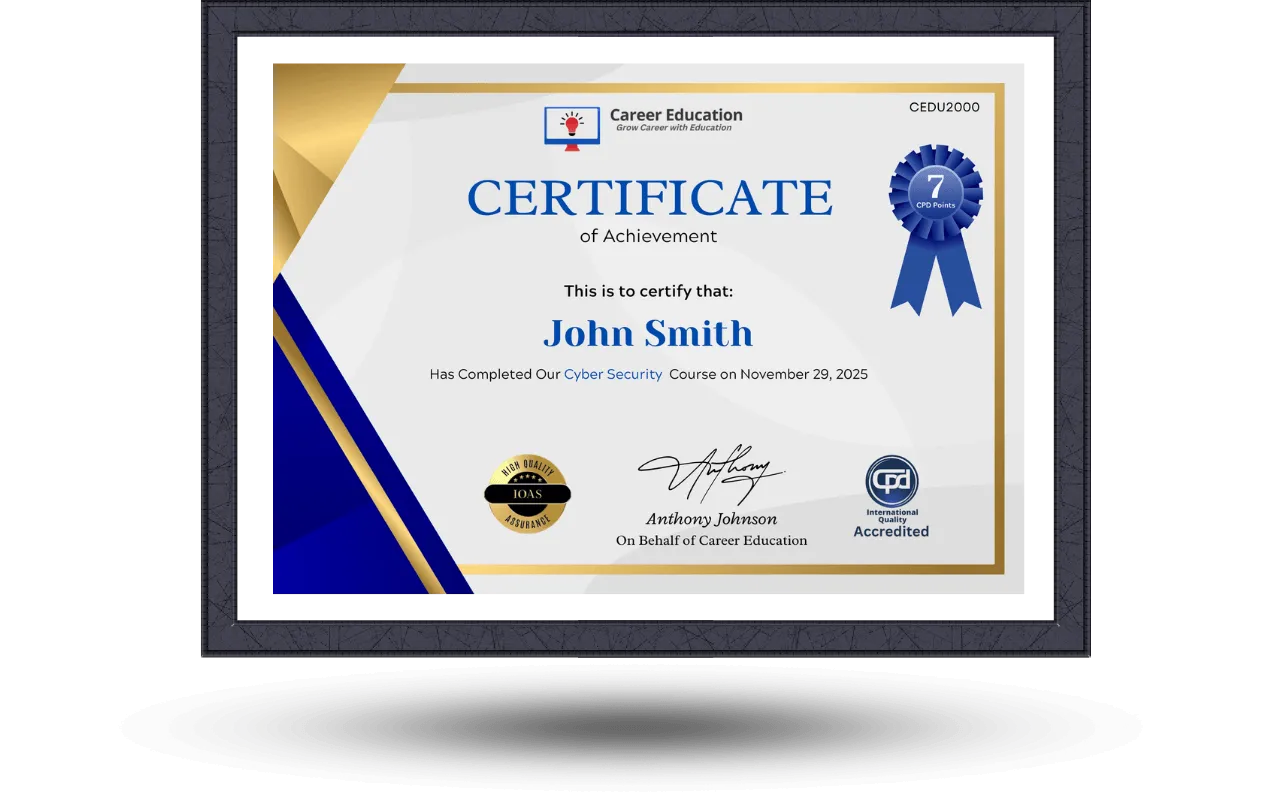
Earn an Accredited Certificate
Upon completion of any course, all students are entitled to a CPD IQ Accredited e-certificate that will be issued by Career Education signifying the completion of your course.
After you complete the course and assignment, you will be eligible to order a free certificate accredited by CPD International Quality by completing the form below.
Hardcopy certificates and transcripts are also available for a small additional fee. More information is disclosed upon course completion.
Similar Courses


Frequently Asked Questions
The lifetime membership includes unlimited access to all courses, resources, and updates for a one-time fee.
You can purchase the membership directly from our website using a secure checkout process.
Yes, selected courses can be downloaded for offline access through our mobile app.
Yes, all future updates and new courses are included at no extra cost.
Yes, we offer a 30-day money-back guarantee if you are not satisfied with the membership.