
94%
OFF
OFF
Facilities Management Coordination Training
- Lifetime Access
- All Levels
- PDF Certificate
£296
£19
14-Day Money-Back Guarantee
Learn With Confidence








Facilities Management Coordination Training
Effective facilities management is essential for keeping workplaces, buildings, and organisational environments safe, efficient, secure, and well organised. From coordinating day-to-day operations to supporting compliance, technology, people, security, and long-term planning, facilities professionals play an important role in maintaining the environments where businesses operate.
Facilities Management Coordination Training is designed to help learners develop practical knowledge and coordination skills across the key areas of modern facilities management. The course provides a structured introduction to facilities management before progressing into operational coordination, technology and data, strategic planning, human resource management, regulatory compliance, and facility security.
Whether you are looking to enter facilities management, strengthen your existing responsibilities, or develop a broader understanding of how facilities operations are coordinated, this course can help you build knowledge that can be applied across a range of workplace environments.
What Is Facilities Management Coordination Training?
Facilities Management Coordination Training focuses on the knowledge and capabilities needed to support the effective coordination of facilities and workplace services. Facilities management brings together a wide range of responsibilities, including building operations, maintenance coordination, workplace services, resource planning, safety, security, compliance, technology, and people management.
A facilities management coordinator may need to communicate with internal teams, contractors, suppliers, managers, and service providers while helping ensure that facilities-related activities are completed efficiently and in line with organisational requirements.
This course introduces learners to the different components of facilities management and explains how they can work together to support operational continuity, workplace efficiency, safety, and organisational objectives.
Why Study Facilities Management Coordination Training?
Modern organisations rely on well-managed facilities to support their employees, customers, visitors, equipment, and business operations. Poor coordination can lead to inefficient processes, communication problems, unnecessary costs, compliance concerns, and disruption.
Studying Facilities Management Coordination Training can help you understand how different facilities functions connect and how effective coordination contributes to better workplace performance.
By completing the course, learners can develop an understanding of:
-
The fundamental principles of facilities management
-
Day-to-day facilities operations
-
Technology and data-driven facilities management
-
Strategic facilities planning
-
Human resource considerations within facilities
-
Regulatory compliance
-
Facility security
-
Coordination between internal and external stakeholders
-
The importance of efficient workplace support services
-
The role of facilities management in organisational performance
The course is particularly useful for anyone who wants to develop a broader perspective of facilities management rather than focusing on one individual operational function.
Course Learning Outcomes
By the end of Facilities Management Coordination Training, learners should be able to:
-
Explain the purpose and scope of facilities management
-
Understand the major functions involved in facilities operations
-
Recognise how effective coordination supports workplace efficiency
-
Explore technology applications within modern facilities management
-
Understand how data can support facilities-related decisions
-
Identify important strategic considerations for facilities management
-
Understand the relationship between people management and facilities operations
-
Recognise the importance of regulatory compliance
-
Understand fundamental facility security considerations
-
Apply a more structured approach to coordinating facilities-related activities
-
Communicate more effectively with stakeholders involved in facilities services
-
Appreciate how operational and strategic facilities activities contribute to organisational objectives
Module 1: Introduction to Facilities Management
The first module provides a strong foundation in the principles and purpose of facilities management. Learners are introduced to the role facilities management plays in supporting organisations and maintaining functional, productive, and appropriate working environments.
Understanding the fundamentals is important because facilities management involves much more than maintaining a physical building. It can encompass workplace services, maintenance, resources, safety, security, contractors, infrastructure, and the coordination of numerous activities.
Through this module, learners can develop a clearer understanding of the facilities management function and its contribution to organisational operations.
You will explore the scope of facilities management and gain insight into the responsibilities and activities that may fall within a facilities environment. This foundation can help learners understand how individual facilities tasks connect to wider organisational needs.
Outcomes from Module 1
After completing this module, you should have a better understanding of:
-
The meaning and purpose of facilities management
-
The role of facilities management within organisations
-
Key facilities management functions
-
The importance of workplace and building support
-
The relationship between facilities and organisational performance
-
Why effective coordination is important to facilities operations
Module 2: Operational Aspects of Facilities Management
Facilities management depends heavily on effective day-to-day coordination. The second module focuses on the operational side of facilities management and helps learners understand how routine activities can be organised and supported.
Operational facilities management can involve coordinating maintenance, services, suppliers, contractors, workplace resources, and other activities required to keep facilities functioning effectively.
This module helps learners appreciate the importance of planning, communication, organisation, monitoring, and prioritisation in everyday facilities work. Effective operational coordination can help reduce disruption and ensure that facilities-related requirements are addressed in an appropriate and timely manner.
You will gain a broader understanding of the activities that contribute to successful facilities operations and how different service areas may need to work together.
Outcomes from Module 2
You can expect to develop knowledge of:
-
Core facilities management operations
-
Coordinating routine facilities activities
-
The importance of maintenance and service coordination
-
Working with contractors and service providers
-
Operational communication
-
Resource coordination
-
Monitoring facilities-related activities
-
Supporting efficient workplace operations
Module 3: Technology and Data-driven Facilities Management
Technology is transforming the way organisations manage buildings, workplaces, resources, and facilities services. The third module explores the role of technology and data in modern facilities management.
Digital tools can help facilities teams organise information, monitor activities, track resources, identify trends, and support decision-making. Understanding these developments can help learners appreciate how facilities management is moving toward more connected and data-informed approaches.
The module introduces the concept of data-driven facilities management and explores why accurate information can be valuable when planning and coordinating facilities activities.
Learners can develop an awareness of how technology can support operational visibility and improve the ability of facilities teams to make informed decisions.
Outcomes from Module 3
By studying this module, learners can understand:
-
The growing role of technology in facilities management
-
How data can support facilities decisions
-
The benefits of digital facilities management
-
How technology can improve coordination and monitoring
-
The importance of accurate facilities information
-
How data-driven approaches can support operational efficiency
Module 4: Strategic Facilities Management
Facilities management is not limited to immediate operational requirements. Organisations also need to consider their longer-term workplace, property, resource, and operational objectives.
Module 4 introduces strategic facilities management and helps learners understand how facilities activities can contribute to wider organisational goals.
Strategic thinking can help facilities professionals look beyond individual tasks and consider how facilities decisions affect efficiency, resources, service quality, workplace requirements, and organisational performance over time.
This module encourages learners to understand the relationship between facilities planning and broader business objectives. It can also help develop an appreciation of why facilities decisions should be considered from both an operational and long-term perspective.
Outcomes from Module 4
Learners can develop an understanding of:
-
The principles of strategic facilities management
-
Long-term facilities planning
-
Aligning facilities activities with organisational objectives
-
Strategic decision-making
-
Resource considerations
-
The importance of planning for future workplace requirements
-
The connection between facilities management and organisational performance
Module 5: Human Resource Management in Facilities
People are central to successful facilities management. Facilities services may involve employees, supervisors, contractors, suppliers, maintenance teams, security personnel, and other stakeholders.
Module 5 explores human resource management within the facilities environment. It helps learners understand the importance of people, communication, coordination, responsibilities, and effective working relationships.
Good facilities coordination often depends on ensuring that the right people understand their responsibilities and can communicate effectively. Strong people management can contribute to better teamwork, service delivery, and operational consistency.
This module provides learners with a broader understanding of the human side of facilities management and why effective coordination between people is essential.
Outcomes from Module 5
After completing this module, learners should understand:
-
The role of people within facilities management
-
Human resource considerations in facilities operations
-
Coordinating facilities teams
-
The importance of communication
-
Working relationships between facilities staff and stakeholders
-
The importance of clearly defined responsibilities
-
How effective people management can support facilities performance
Module 6: Regulatory Compliance and Facility Security
Compliance and security are critical considerations for organisations responsible for workplaces and facilities. The final module explores the importance of regulatory compliance and facility security.
Facilities teams may need to operate within various organisational requirements, regulations, policies, procedures, and safety expectations. Understanding the importance of compliance can help facilities professionals recognise potential responsibilities and support appropriate organisational practices.
Security is another fundamental consideration. Facilities may need to protect people, property, information, equipment, and physical environments. Effective facility security requires appropriate planning, coordination, awareness, and ongoing attention.
This module helps learners understand why compliance and security should form an important part of facilities management rather than being treated as separate concerns.
Outcomes from Module 6
Learners can develop knowledge of:
-
The importance of regulatory compliance in facilities management
-
Organisational policies and procedures
-
Compliance-related responsibilities
-
Fundamental facility security principles
-
Protecting people and physical assets
-
The role of security in facilities operations
-
Why compliance and security should be integrated into facilities planning
Who Can Benefit from Facilities Management Coordination Training?
Facilities Management Coordination Training can be valuable for a wide range of learners interested in facilities and workplace operations.
It may be suitable for:
-
Aspiring facilities management professionals
-
Facilities coordinators
-
Facilities administrators
-
Workplace coordinators
-
Property and building support staff
-
Operations professionals
-
Administrative professionals with facilities responsibilities
-
Supervisors involved in workplace services
-
Professionals working with contractors and suppliers
-
Individuals looking to broaden their facilities management knowledge
-
Learners considering a career in facilities management
The course can also benefit professionals whose existing role includes facilities-related responsibilities and who want to understand the wider operational, strategic, technological, people, compliance, and security aspects of the field.
Build Practical Facilities Management Knowledge
One of the key benefits of Facilities Management Coordination Training is its broad approach. Instead of concentrating on a single area, the course introduces six interconnected aspects of facilities management.
This can help learners understand how operational activities, technology, strategy, people, compliance, and security work together.
For example, effective facilities coordination may require more than arranging a maintenance task. It may involve identifying the requirement, communicating with the appropriate people, coordinating a service provider, considering operational disruption, recording relevant information, ensuring requirements are followed, and supporting the security of the facility.
Developing this wider perspective can help learners approach facilities responsibilities with greater awareness and structure.
Support Your Professional Development
Facilities management is a multidisciplinary field, and employers and organisations need people who can understand different aspects of workplace operations. Developing knowledge across multiple facilities functions can support professional development and help learners prepare for responsibilities involving coordination and workplace services.
Facilities Management Coordination Training provides a structured learning experience covering foundational, operational, technological, strategic, human resource, compliance, and security considerations.
The knowledge gained can be useful when working in environments where efficient coordination and organised facilities support are important.
Develop a Broader Understanding of Modern Facilities Management
Modern facilities management continues to evolve as organisations adopt new technologies, changing workplace practices, data-driven decision-making, and increasingly structured approaches to compliance and security.
For this reason, understanding traditional operational responsibilities alone may not provide the complete picture. Facilities professionals can benefit from understanding how technology, strategic planning, people, compliance, and security influence the modern facilities environment.
This course provides learners with the opportunity to explore these areas in one structured programme.
Why Choose This Course?
Choosing Facilities Management Coordination Training can help you build a foundation for understanding the diverse responsibilities associated with facilities management.
The course offers:
-
A comprehensive introduction to facilities management
-
Coverage of operational and strategic considerations
-
An overview of technology and data-driven approaches
-
Insight into human resource management
-
Awareness of regulatory compliance
-
Introduction to facility security
-
Outcome-focused learning across six modules
-
Knowledge applicable to a variety of organisational environments
-
A structured pathway for developing facilities management awareness
Rather than focusing solely on theory, the course is designed around the knowledge needed to understand how facilities management functions operate and interact.
Take the Next Step in Your Facilities Management Journey
Effective facilities management supports the smooth operation of workplaces and organisations. Behind a well-functioning facility are coordinated services, organised processes, informed decisions, capable people, appropriate technology, compliance awareness, and effective security measures.
Facilities Management Coordination Training gives learners the opportunity to explore these essential areas and develop a well-rounded understanding of modern facilities management.
Whether you are preparing for a facilities-related role, expanding your current responsibilities, or investing in your professional development, this course can help you build valuable knowledge across the full facilities management landscape.
Enrol in Facilities Management Coordination Training today and take a positive step towards developing the knowledge, coordination awareness, and professional understanding needed to support effective facilities operations.
Course Modules
Course Content
Module 1 Introduction to Facilities Management.
-
Lesson 1 Introduction to Facilities Management.
Module 2 Operational Aspects of Facilities Management.
Module 3 Technology and Data-driven Facilities Management.
Module 4 Strategic Facilities Management.
Module 5 Human Resource Management in Facilities.
Module 6 Regulatory Compliance and Facility Security.
What our students say
Excellent
4.9 average
158 Reviews

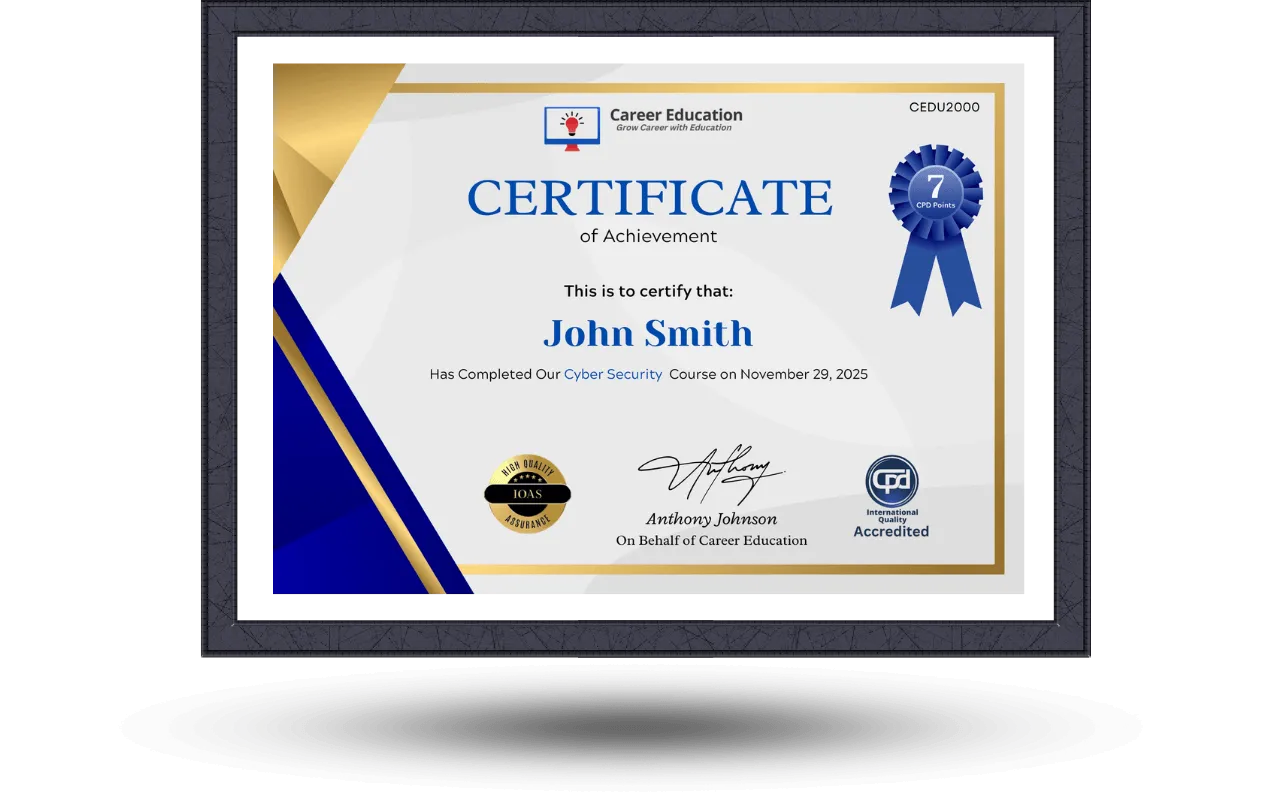
Earn an Accredited Certificate
Upon completion of any course, all students are entitled to a CPD IQ Accredited e-certificate that will be issued by Career Education signifying the completion of your course.
After you complete the course and assignment, you will be eligible to order a free certificate accredited by CPD International Quality by completing the form below.
Hardcopy certificates and transcripts are also available for a small additional fee. More information is disclosed upon course completion.
Similar Courses




Frequently Asked Questions
The lifetime membership includes unlimited access to all courses, resources, and updates for a one-time fee.
You can purchase the membership directly from our website using a secure checkout process.
Yes, selected courses can be downloaded for offline access through our mobile app.
Yes, all future updates and new courses are included at no extra cost.
Yes, we offer a 30-day money-back guarantee if you are not satisfied with the membership.