
94%
OFF
OFF
Fire Marshal Course
- Lifetime Access
- All Levels
- PDF Certificate
£296
£19
14-Day Money-Back Guarantee
Learn With Confidence









Fire Marshal Course
Develop the Knowledge and Confidence to Support Fire Safety in the Workplace
Fire safety is everyone’s responsibility, but designated fire marshals have an important role in helping organisations prepare for fire emergencies, identify potential hazards and support safe evacuation procedures.
A fire can develop rapidly, creating smoke, heat, panic and dangerous conditions within minutes. Having people who understand basic fire prevention, emergency procedures, communication and evacuation can help organisations respond in a more organised and effective way.
The Fire Marshal Course is designed to provide learners with a practical foundation in workplace fire safety and the responsibilities associated with the role of a fire marshal.
The course covers essential topics including fire safety principles, fire risk assessment, fire prevention and control, fire detection and alarm systems, emergency evacuation, fire extinguishers, communication and coordination, legal responsibilities and staff fire safety training.
Whether you have been appointed as a workplace fire marshal, are preparing to take on additional fire safety responsibilities, manage a team or simply want to improve your understanding of workplace fire safety, this course provides structured knowledge to support your development.
Why Take a Fire Marshal Course?
Fire safety is not simply about knowing where the nearest fire extinguisher is located.
Effective fire safety involves prevention, preparation, communication, emergency planning and appropriate response.
Workplaces may contain electrical equipment, combustible materials, heating systems, machinery, chemicals, cooking facilities and other potential sources of fire. Organisations therefore need appropriate procedures to reduce risks and prepare employees for emergencies.
A trained fire marshal can support these arrangements by helping promote fire safety awareness, assisting with evacuation procedures and communicating important information during an emergency.
The Fire Marshal Course helps you understand the key areas involved in this role.
You will learn about:
-
Basic fire safety principles
-
Fire risk assessment
-
Fire prevention and control
-
Fire detection and alarm systems
-
Emergency evacuation procedures
-
The appropriate use of fire extinguishers
-
Communication and coordination
-
Legal responsibilities and compliance
-
Fire safety training for staff
The goal is to help you develop knowledge that can support safer workplace practices and more organised emergency responses.
What You Will Learn
The course consists of nine modules:
-
Introduction to Fire Safety
-
Fire Risk Assessment
-
Fire Prevention and Control
-
Fire Detection and Alarm Systems
-
Emergency Evacuation Procedures
-
Use of Fire Extinguishers
-
Communication and Coordination
-
Legal Responsibilities and Compliance
-
Fire Safety Training for Staff
Each module addresses an important part of workplace fire safety and contributes to a broader understanding of the fire marshal’s role.
Module 1 – Introduction to Fire Safety
The first module provides an Introduction to Fire Safety, establishing the foundation for the rest of the course.
The introductory lesson introduces the fundamental principles of fire safety and helps learners understand why fire prevention and preparedness are essential in workplaces and other environments.
You will explore the basic principles surrounding fire hazards and the importance of taking reasonable steps to reduce fire risks.
Understanding the fundamentals provides an important starting point for anyone taking on fire marshal responsibilities.
You will also begin to appreciate why fire safety involves more than emergency response. Preventing fires from occurring in the first place is an important part of effective fire safety management.
By completing this module, you will have a stronger foundation for understanding the more specific responsibilities covered throughout the course.
Module 2 – Fire Risk Assessment
The second module focuses on Fire Risk Assessment.
Identifying hazards is a key element of fire prevention.
A fire risk assessment involves examining an environment, identifying potential fire hazards, considering who may be at risk and determining what measures may be necessary to control those risks.
This module introduces learners to the principles of fire risk assessment and helps develop awareness of how fire hazards can be identified and considered systematically.
You will learn why it is important to look at potential ignition sources, combustible materials and other circumstances that could contribute to fire risk.
You will also develop awareness of the importance of considering people who may require additional assistance during an emergency.
This knowledge can help fire marshals contribute more effectively to workplace fire safety discussions and procedures.
Module 3 – Fire Prevention and Control
Preventing a fire is generally preferable to responding to one.
Module 3 explores Fire Prevention and Control, focusing on the measures that can help reduce the likelihood of fire and limit its potential consequences.
You will develop awareness of common workplace fire hazards and the importance of good housekeeping, appropriate storage, safe working practices and effective control measures.
Fire prevention can involve relatively simple actions, but these actions need to be understood and consistently followed.
The module also introduces the concept of controlling fire risks and highlights the importance of maintaining suitable fire safety arrangements.
By completing this module, you will understand why fire prevention should be an ongoing workplace responsibility rather than something considered only during an emergency.
Module 4 – Fire Detection and Alarm Systems
Early warning can be critical during a fire emergency.
Module 4 focuses on Fire Detection and Alarm Systems, helping learners understand the purpose of systems designed to detect fire and alert people to danger.
You will explore why detection and alarm systems are important components of workplace fire safety.
An effective alarm system can provide occupants with an early warning and help initiate evacuation procedures.
As a fire marshal, understanding how alarm arrangements work can help you respond more confidently when an alarm is activated.
You will also develop awareness of the importance of ensuring that employees understand alarm procedures and know what action they are expected to take.
The module reinforces the relationship between detection, communication and evacuation.
Module 5 – Emergency Evacuation Procedures
During a fire emergency, people need to know what to do and where to go.
Module 5 focuses on Emergency Evacuation Procedures, providing learners with knowledge of the principles behind organised workplace evacuation.
You will explore the importance of clear evacuation procedures, designated escape routes, assembly arrangements and communication.
Fire marshals can play an important supporting role during evacuations by helping direct people towards appropriate exits and supporting orderly movement where safe to do so.
You will develop an understanding of why evacuation plans need to account for the people who may be present in a building, including visitors, contractors and individuals who may require assistance.
The module helps you appreciate why preparation and familiarity with emergency procedures can make a significant difference during a stressful situation.
Module 6 – Use of Fire Extinguishers
Module 6 focuses on the Use of Fire Extinguishers.
Fire extinguishers can be useful for dealing with certain small fires, but using the wrong extinguisher or attempting to tackle a fire when conditions are unsafe can increase the danger.
This module introduces the principles surrounding fire extinguishers and their appropriate use.
You will develop awareness of the importance of selecting suitable extinguishing equipment and understanding the circumstances in which it may or may not be appropriate to attempt to use an extinguisher.
Personal safety must always take priority.
A fire marshal’s primary role during a developing emergency is not to take unnecessary risks. If a fire is spreading, producing significant smoke or cannot be safely controlled immediately, the appropriate response is to raise the alarm, evacuate and contact the emergency services in accordance with workplace procedures.
This module provides foundational knowledge and does not replace practical extinguisher training where hands-on competency is required.
Module 7 – Communication and Coordination
Effective fire safety depends heavily on communication.
Module 7 focuses on Communication and Coordination, helping learners understand how information should be communicated before and during fire emergencies.
A fire marshal may need to communicate with employees, managers, visitors, other fire marshals and emergency responders.
Clear communication can help prevent confusion and support a more organised response.
You will develop awareness of the importance of knowing emergency procedures, reporting hazards and communicating relevant information.
The module also highlights the importance of coordination between different people responsible for workplace fire safety.
By completing this module, you should have a clearer understanding of how communication contributes to effective emergency management.
Module 8 – Legal Responsibilities and Compliance
Fire safety is supported by legislation and regulatory requirements.
Module 8 explores Legal Responsibilities and Compliance, helping learners understand why organisations need to take fire safety responsibilities seriously.
You will develop awareness of the importance of meeting applicable fire safety requirements and maintaining appropriate workplace arrangements.
The exact legal requirements can vary depending on the country, region, building type and workplace circumstances. Learners should therefore always refer to the legislation and official guidance applicable to their location.
This module provides a general educational foundation and should not be treated as legal advice.
Understanding the responsibilities associated with fire safety can help employees and organisations recognise the importance of appropriate policies, procedures, risk assessments, training and emergency arrangements.
Module 9 – Fire Safety Training for Staff
The final module focuses on Fire Safety Training for Staff.
Fire safety procedures are only effective if employees understand them.
Staff should know how to recognise fire risks, raise the alarm, evacuate safely and follow workplace emergency procedures.
Fire marshals may contribute to this by helping reinforce fire safety awareness and supporting appropriate staff training activities.
This module explores the importance of communicating fire safety information to employees and helping ensure that workplace procedures are understood.
You will develop greater awareness of the role education and communication play in creating a stronger fire safety culture.
By completing this final module, you will have explored the major components of the fire marshal role, from prevention and risk assessment through to emergency response and staff awareness.
Practical Learning Outcomes
By completing the Fire Marshal Course, you can develop a practical foundation in workplace fire safety.
You will be able to:
-
Explain the fundamental principles of fire safety.
-
Recognise common workplace fire hazards.
-
Understand the purpose of fire risk assessments.
-
Identify factors that can contribute to fire risk.
-
Understand basic fire prevention principles.
-
Recognise the importance of appropriate fire control measures.
-
Understand the purpose of fire detection and alarm systems.
-
Explain the importance of emergency evacuation procedures.
-
Recognise the responsibilities of a fire marshal during an evacuation.
-
Develop awareness of different types and uses of fire extinguishers.
-
Understand why personal safety must come first during a fire.
-
Recognise the importance of effective emergency communication.
-
Understand the role of coordination during fire emergencies.
-
Develop awareness of fire safety legal responsibilities.
-
Understand the importance of staff fire safety training.
-
Support a positive workplace fire safety culture.
-
Apply your knowledge to relevant workplace fire safety situations.
Develop Confidence in Fire Safety Responsibilities
Being appointed as a fire marshal can involve additional responsibilities within the workplace.
You may be expected to help employees understand emergency procedures, report fire hazards, support evacuation arrangements or assist with fire safety awareness.
The Fire Marshal Course helps you develop the knowledge required to approach these responsibilities with greater confidence.
It provides a structured learning journey covering both prevention and emergency response.
You will understand why fire safety begins with identifying and controlling risks rather than simply responding after a fire has started.
Improve Workplace Fire Awareness
Fire safety works best when everyone understands their responsibilities.
A workplace where employees know how to raise an alarm, where to evacuate and what procedures to follow can be better prepared for an emergency.
Fire marshals can contribute to this culture by promoting awareness and reinforcing appropriate procedures.
Through the course, you will learn why communication and staff training are important elements of workplace fire safety.
This knowledge can help you contribute to a more safety-conscious working environment.
Understand Fire Risk
Fire risk can arise from many sources.
Electrical equipment, heating appliances, cooking equipment, combustible materials, storage arrangements and unsafe working practices can all contribute to potential hazards depending on the workplace.
The fire risk assessment module helps you understand how these risks can be considered systematically.
Developing this awareness can help you recognise potential issues and understand when concerns should be reported to the appropriate person.
Prepare for Emergency Evacuation
A fire emergency can be stressful and unpredictable.
Preparation is therefore essential.
The Fire Marshal Course helps you understand the principles behind emergency evacuation and the importance of clear procedures.
You will develop awareness of escape routes, assembly arrangements, communication and the need to consider individuals who may require additional assistance.
This knowledge can help you understand how to support an organised evacuation while prioritising personal safety.
Understand the Safe Use of Fire Extinguishers
Fire extinguishers are an important part of many workplace fire safety arrangements, but they are not suitable for every situation.
The course helps you understand the principles surrounding their use and the importance of selecting suitable equipment.
Most importantly, you will understand that fire marshals should never place themselves or others at unnecessary risk.
If a fire cannot be safely controlled, evacuation and contacting the emergency services should take priority.
Who Is This Fire Marshal Course For?
The Fire Marshal Course is suitable for a variety of learners.
Designated Fire Marshals
If your employer has appointed you as a fire marshal or fire warden, this course can help develop foundational knowledge relevant to the role.
Managers and Supervisors
Managers can benefit from understanding workplace fire safety responsibilities and how emergency procedures should be supported.
Health and Safety Professionals
Those working in health and safety can use the course to broaden their understanding of fire safety principles.
Employees
Any employee can benefit from understanding fire risks, evacuation procedures and emergency responsibilities.
Business Owners
Business owners can develop greater awareness of the principles involved in creating and maintaining a safer workplace.
Career Changers
If you are considering a career involving workplace safety, facilities management or compliance, this course can provide useful introductory knowledge.
Students and Lifelong Learners
The course is also suitable for anyone interested in developing their general understanding of workplace fire safety.
Support Your Professional Development
Fire safety awareness can be valuable across many workplace environments.
Offices, warehouses, retail premises, schools, hospitality venues, manufacturing facilities, care settings and other workplaces all need appropriate fire safety arrangements.
Developing fire marshal knowledge can therefore complement existing responsibilities in health and safety, facilities, management, administration and workplace operations.
The Fire Marshal Course is educational and foundational. It does not automatically replace workplace-specific training, practical fire extinguisher training, competent-person requirements, local legal obligations or any qualification required by an employer or regulator.
Where practical competence is required, learners should undertake appropriate hands-on training and follow their employer’s fire safety procedures.
Learn at Your Own Pace
Online learning provides a flexible way to develop your fire safety knowledge.
You can work through the Fire Marshal Course alongside your existing professional and personal commitments.
Whether you have recently been appointed as a fire marshal or simply want to improve your understanding of workplace fire safety, the course provides a structured way to develop your knowledge.
You can revisit key concepts and use the learning as a foundation for further workplace-specific training.
Build a Stronger Fire Safety Culture
Effective fire safety depends on preparation, prevention and awareness.
A strong workplace fire safety culture encourages employees to identify hazards, follow procedures, report concerns and take emergency instructions seriously.
The Fire Marshal Course helps learners understand how these elements work together.
From fire risk assessment and prevention to alarms, evacuation, communication and staff training, the course provides a broad overview of the responsibilities associated with workplace fire safety.
Take the Next Step Towards Fire Safety Confidence
A fire marshal can be an important part of a workplace’s emergency preparedness arrangements.
Developing the right knowledge can help you understand your responsibilities, recognise potential hazards and support safer emergency procedures.
The Fire Marshal Course provides a comprehensive introduction to the essential areas of fire safety, including risk assessment, prevention, detection, evacuation, extinguishers, communication, compliance and staff training.
Whether you are developing your workplace skills, preparing for a fire marshal role or expanding your health and safety knowledge, this course can help you move forward with greater confidence.
Enrol in the Fire Marshal Course today and develop the essential knowledge needed to support effective fire prevention, emergency preparedness and workplace fire safety.
Course Modules
Course Content
Module 1_ Introduction to Fire Safety
-
Lesson 1_ Introduction to Fire Safety
Module 2_ Fire Risk Assessment
Module 3_ Fire Prevention and Control
Module 4_ Fire Detection and Alarm Systems
Module 5_ Emergency Evacuation Procedures
Module 6_ Use of Fire Extinguishers
Module 7_ Communication and Coordination
Module 8_ Legal Responsibilities and Compliance
Module 9_ Fire Safety Training for Staff
What our students say
Excellent
4.9 average
158 Reviews

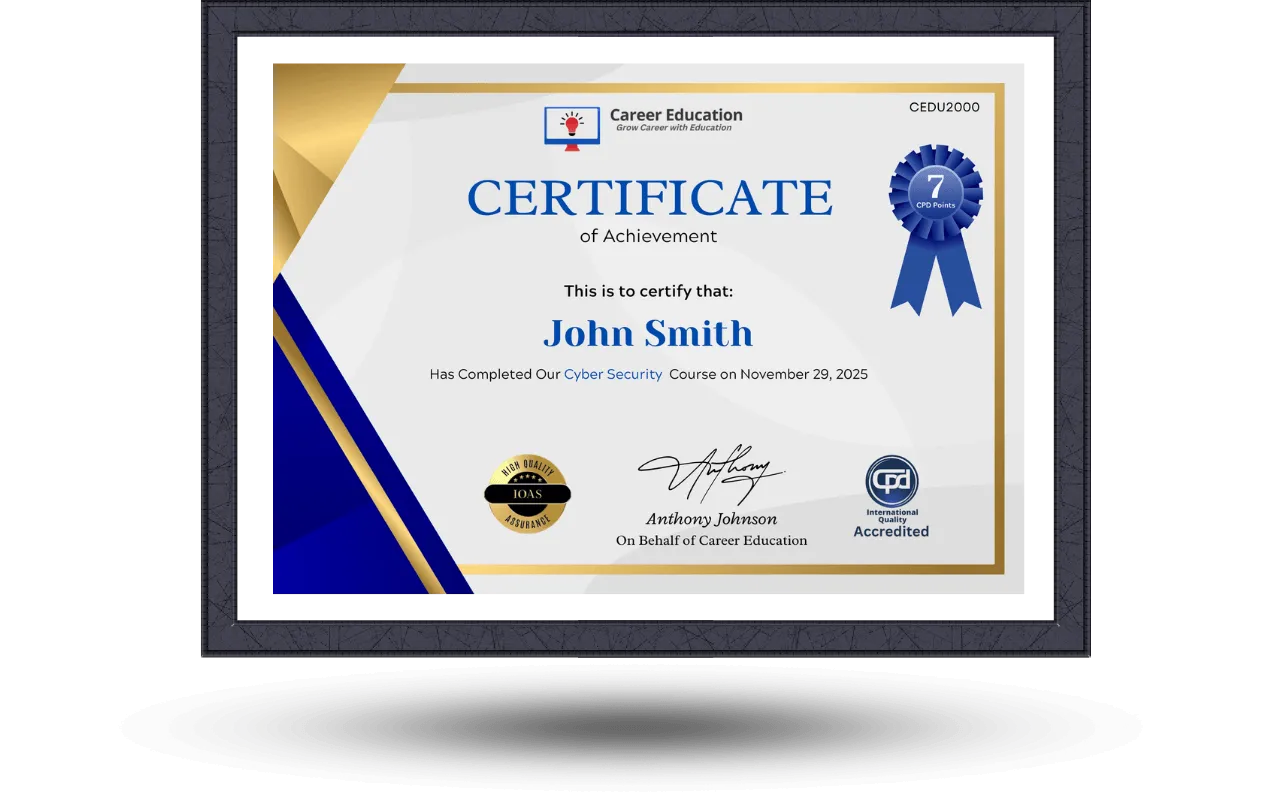
Earn an Accredited Certificate
Upon completion of any course, all students are entitled to a CPD IQ Accredited e-certificate that will be issued by Career Education signifying the completion of your course.
After you complete the course and assignment, you will be eligible to order a free certificate accredited by CPD International Quality by completing the form below.
Hardcopy certificates and transcripts are also available for a small additional fee. More information is disclosed upon course completion.
Similar Courses




Frequently Asked Questions
The lifetime membership includes unlimited access to all courses, resources, and updates for a one-time fee.
You can purchase the membership directly from our website using a secure checkout process.
Yes, selected courses can be downloaded for offline access through our mobile app.
Yes, all future updates and new courses are included at no extra cost.
Yes, we offer a 30-day money-back guarantee if you are not satisfied with the membership.