OFF
Extreme Driving Conditions Safety Essentials (US)
- Lifetime Access
- All Levels
- PDF Certificate
Learn With Confidence









Overview
# Extreme Driving Conditions Safety Essentials (US)
Driving in challenging conditions requires more than confidence behind the wheel. Snow and ice, heavy rain, dense fog, strong winds, extreme temperatures, and mountainous terrain can significantly change vehicle handling, visibility, traction, stopping distance, and overall road risk.
**Extreme Driving Conditions Safety Essentials (US)** is an outcome-focused course designed to help drivers develop practical knowledge for recognising and managing challenging driving conditions across the United States. The course covers winter driving, heavy rain, fog, high winds, extreme temperatures, and mountainous terrain while building a strong foundation in defensive driving and risk awareness.
Whether you are a professional driver, fleet employee, commuter, delivery driver, transportation worker, or someone who regularly travels through changing weather and terrain, this course can help you make safer decisions when road conditions become difficult.
The goal is not to encourage drivers to continue driving in every extreme condition. Instead, learners will develop greater awareness of changing risks, understand when conditions may require additional precautions, and recognise when delaying, stopping, or changing a journey may be the safest option.
—
## Why Extreme Driving Conditions Require Special Attention
Normal driving conditions can change rapidly.
A clear road can become difficult to navigate when heavy rain reduces visibility or creates standing water. A sudden snowstorm can reduce traction and increase stopping distances. Fog can make vehicles, road markings, and hazards difficult to see. Strong winds can affect vehicle stability, particularly for high-profile vehicles.
Mountain roads introduce additional challenges, including steep grades, sharp curves, changing weather, elevation changes, and limited escape routes.
Drivers therefore need to adjust their behaviour to match the conditions.
**Extreme Driving Conditions Safety Essentials (US)** provides a structured approach to recognising these risks and responding appropriately.
—
# What You Will Learn
By completing **Extreme Driving Conditions Safety Essentials (US)**, learners will be able to:
* Recognise common extreme driving conditions.
* Understand how severe weather can affect vehicle operation.
* Adjust driving behaviour to changing road conditions.
* Apply safer practices during winter driving.
* Recognise risks associated with heavy rain.
* Understand the visibility challenges created by fog.
* Identify hazards associated with high winds.
* Understand how extreme temperatures can affect drivers and vehicles.
* Recognise the unique challenges of mountainous terrain.
* Improve hazard awareness and defensive driving skills.
* Understand the importance of vehicle preparation.
* Make more informed decisions about whether and when to continue driving.
* Support safer driving practices in challenging US road conditions.
—
# Course Curriculum
## Module 1: Introduction to Extreme Driving Conditions
### Lesson 1: Introduction to Extreme Driving Conditions
The course begins by introducing the concept of extreme driving conditions and examining why drivers need to adapt their behaviour when conditions change.
Learners will explore how factors such as weather, visibility, road surface, temperature, terrain, and traffic can influence driving risk.
Key concepts include:
* Reduced visibility.
* Loss of traction.
* Increased stopping distance.
* Vehicle stability.
* Road surface changes.
* Driver decision-making.
* Hazard recognition.
* Defensive driving.
Participants will learn that safe driving involves continuously assessing the environment rather than relying solely on normal driving habits.
The module also introduces the importance of preparation.
Before travelling in potentially challenging conditions, drivers may need to consider weather forecasts, road conditions, vehicle readiness, fuel or charging requirements, emergency supplies, route planning, and available alternatives.
By completing this module, learners will understand the importance of adapting driving behaviour to environmental conditions.
—
# Module 2: Winter Driving
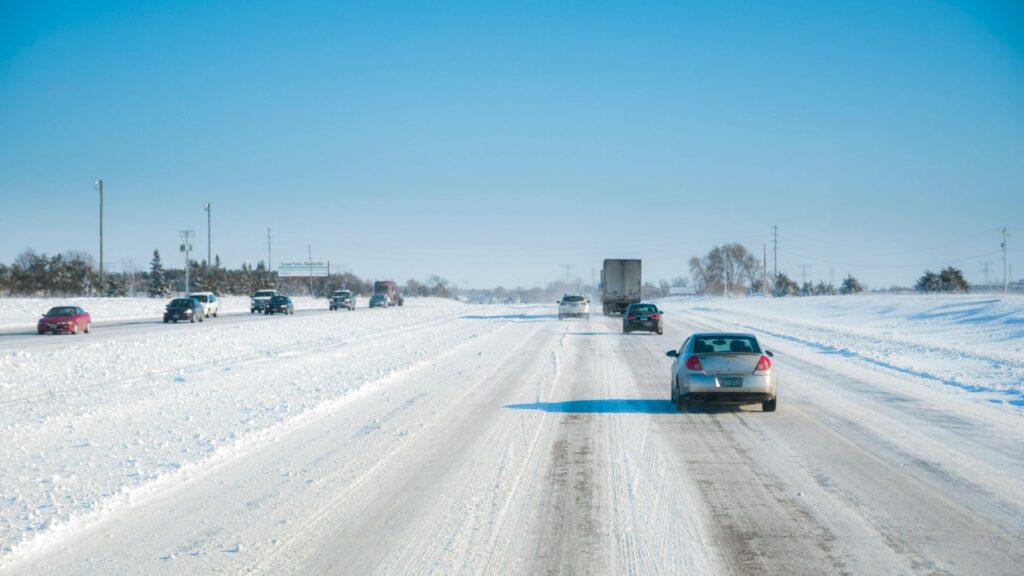
Winter conditions can create some of the most challenging driving environments.
Snow, ice, freezing temperatures, slush, reduced visibility, and untreated roads can all affect vehicle control.
This module explores winter driving safety, including:
* Snow and ice.
* Reduced traction.
* Increased stopping distances.
* Black ice awareness.
* Snow-covered roads.
* Vehicle preparation.
* Cold-weather visibility.
* Safe speed selection.
* Appropriate following distance.
Learners will explore why reducing speed and increasing following distance can become particularly important when traction is limited.
The module also addresses the importance of preparing vehicles for winter conditions.
Drivers may need to consider tyres, lights, windscreen visibility, fluids, battery condition, emergency supplies, and other vehicle-specific requirements.
Participants will also examine the importance of avoiding sudden acceleration, braking, or steering when road surfaces are slippery.
By completing this module, learners will have a stronger foundation for managing winter driving risks.
—
# Module 3: Driving in Heavy Rain
Heavy rain can create multiple hazards simultaneously.
Rain may reduce visibility, affect traction, increase stopping distances, create standing water, and increase the risk of hydroplaning.
This module examines safe driving practices for heavy rain.
Learners will explore:
* Reduced visibility.
* Wet road surfaces.
* Hydroplaning.
* Standing water.
* Following distance.
* Vehicle control.
* Windshield visibility.
* Aquaplaning risks.
* Changing traffic conditions.
Participants will examine why drivers should adjust their speed and driving behaviour when roads become wet.
The module also highlights the importance of maintaining clear visibility through appropriate use of vehicle systems and ensuring that windscreen, mirrors, and lights remain suitable for the conditions.
Learners will develop greater awareness of how quickly heavy rain can change the driving environment.
By completing this module, participants will be better prepared to recognise and respond to heavy-rain hazards.
—
# Module 4: Driving in Fog
Fog can create serious visibility challenges.
When visibility is significantly reduced, drivers may have difficulty seeing road markings, other vehicles, intersections, pedestrians, signs, curves, and hazards.
This module focuses on safe driving practices in fog.
Learners will explore:
* Reduced visibility.
* Speed adjustment.
* Following distance.
* Appropriate vehicle lighting.
* Road positioning.
* Visual reference points.
* Sudden hazards.
* Safe stopping decisions.
Participants will consider why speed should be appropriate for the actual visibility conditions rather than simply the posted speed limit.
The module also addresses the importance of avoiding sudden manoeuvres and maintaining sufficient distance from vehicles ahead.
Drivers will learn the importance of being prepared to stop when visibility becomes too poor for safe travel.
By completing this module, learners will develop greater awareness of fog-related risks and safer responses to reduced visibility.
—
# Module 5: Driving in High Winds
Strong winds can affect vehicle stability and driver control.
This can be particularly important for vehicles with larger profiles, trailers, campers, buses, and other vehicles that may be more affected by crosswinds.
This module examines:
* Crosswinds.
* Gusts.
* Vehicle stability.
* High-profile vehicles.
* Bridges and open areas.
* Passing large vehicles.
* Debris.
* Steering control.
Learners will explore how wind conditions can change unexpectedly and why drivers should remain prepared for sudden gusts.
Strong winds may also create secondary hazards, such as fallen branches, debris, damaged infrastructure, or vehicles moving unpredictably.
Participants will learn why maintaining appropriate speed, adequate space, and controlled steering can help drivers respond more effectively.
The module also emphasises the importance of monitoring weather and road advisories and considering whether travel should be delayed when conditions become unsafe.
By completing this module, learners will better understand the risks associated with high winds.
—
# Module 6: Handling Extreme Temperatures
Extreme temperatures can affect both drivers and vehicles.
Very hot or very cold conditions may create additional safety challenges, particularly during long journeys or when travelling through remote areas.
This module explores:
* Extreme heat.
* Extreme cold.
* Vehicle readiness.
* Driver wellbeing.
* Fluid considerations.
* Battery performance.
* Tyre considerations.
* Emergency preparedness.
* Exposure risks.
Learners will examine why vehicle preparation is particularly important when temperatures become extreme.
Participants will also consider the importance of recognising personal discomfort, dehydration, heat-related symptoms, cold exposure, and other conditions that may affect safe driving.
Extreme temperatures can also increase the consequences of becoming stranded.
The module therefore highlights the importance of route planning, checking conditions, maintaining appropriate supplies, and understanding what options are available if a vehicle becomes disabled.
By completing this module, learners will develop greater awareness of temperature-related driving risks.
—
# Module 7: Driving in Mountainous Terrain
Mountainous roads can present a unique combination of driving challenges.
Steep grades, sharp curves, elevation changes, narrow roads, changing weather, rockfalls, wildlife, and limited visibility may all require drivers to adapt their approach.
This module explores:
* Steep uphill driving.
* Downhill driving.
* Curves.
* Limited visibility.
* Changing weather.
* Vehicle control.
* Braking considerations.
* Safe following distance.
* Roadside hazards.
Learners will explore why mountainous terrain requires careful speed management and anticipation.
Downhill driving can place additional demands on vehicle braking systems, while steep uphill sections may affect vehicle performance.
Curves and elevation changes can also limit a driver’s view of upcoming traffic and road conditions.
Participants will learn why drivers should avoid entering curves or downhill sections at inappropriate speeds and should remain attentive to road signs and local conditions.
The module also highlights the importance of checking weather and road conditions before travelling through mountainous regions.
By completing this module, learners will have a stronger understanding of the challenges associated with mountain driving.
—
# Who Is This Course For?
**Extreme Driving Conditions Safety Essentials (US)** can benefit a wide range of drivers and transportation professionals, including:
* Professional drivers.
* Commercial vehicle drivers.
* Delivery drivers.
* Fleet employees.
* Transportation workers.
* Logistics personnel.
* Company vehicle drivers.
* Commuters.
* Road-based workers.
* New drivers.
* Experienced drivers seeking refresher training.
The course can also support organisations seeking to strengthen general awareness of driving risks associated with severe weather and challenging road conditions.
—
# Practical Learning Outcomes
The course is designed around practical, safety-focused outcomes.
After completing **Extreme Driving Conditions Safety Essentials (US)**, learners will be better prepared to:
### Assess Changing Conditions
Recognise when weather, terrain, visibility, or road conditions create additional driving risks.
### Adapt Driving Behaviour
Adjust speed, following distance, steering, and general driving approach according to conditions.
### Prepare for Winter
Understand the additional precautions associated with snow, ice, freezing temperatures, and reduced traction.
### Manage Heavy Rain
Recognise wet-road hazards, visibility problems, standing water, and hydroplaning risks.
### Drive More Safely in Fog
Understand how reduced visibility affects speed selection, following distance, and decision-making.
### Respond to High Winds
Recognise crosswind and gust hazards and understand why vehicle type can influence wind-related risks.
### Prepare for Extreme Temperatures
Understand the importance of vehicle preparation, driver wellbeing, and emergency planning in very hot or cold conditions.
### Navigate Mountainous Terrain
Recognise the challenges created by steep grades, curves, changing weather, and elevation changes.
—
# Develop a Defensive Driving Mindset
Extreme conditions require drivers to think ahead.
Instead of waiting for a hazard to become unavoidable, defensive drivers continuously scan their surroundings, anticipate potential problems, maintain space, and adapt their behaviour.
This mindset is especially important in severe weather.
A driver may need to ask:
* Is my current speed appropriate?
* Can I stop safely if traffic changes?
* Is visibility adequate?
* Is the road surface providing sufficient traction?
* Is my vehicle prepared for these conditions?
* Should I increase my following distance?
* Is continuing the journey the safest option?
These questions can help drivers make more informed decisions.
—
# Vehicle Preparation and Journey Planning
Safe driving in extreme conditions begins before the vehicle moves.
Drivers should understand the importance of checking relevant vehicle systems, monitoring weather and road conditions, planning routes, and considering alternative arrangements when conditions deteriorate.
Depending on the vehicle and journey, preparation may include checking tyres, lights, windscreen visibility, battery condition, fuel or charging levels, and emergency equipment.
The exact preparation required will depend on the vehicle, route, season, and operating environment.
—
# Know When Conditions Are Too Dangerous
An important part of extreme-condition driving safety is recognising when not to drive.
No delivery deadline, appointment, or schedule should encourage unsafe driving.
If conditions become severe enough that safe vehicle operation cannot reasonably be maintained, drivers should follow applicable company procedures and official road or weather guidance.
In some circumstances, the safest decision may be to delay departure, stop at a safe location, or use an alternative route.
**Extreme Driving Conditions Safety Essentials (US)** encourages learners to treat this decision-making process as an essential part of responsible driving.
—
# Build Greater Confidence in Challenging Conditions
Confidence should come from preparation and sound decision-making rather than from assuming that every condition can be overcome through driving skill alone.
This course helps learners understand the hazards associated with different extreme conditions and develop a more deliberate approach to managing them.
The objective is to help drivers recognise changing risks early and make appropriate decisions before situations become critical.
—
# Enrol in Extreme Driving Conditions Safety Essentials (US) Today
Driving conditions can change quickly, and severe weather or challenging terrain can significantly increase risk.
**Extreme Driving Conditions Safety Essentials (US)** provides a structured seven-module learning experience covering winter driving, heavy rain, fog, high winds, extreme temperatures, mountainous terrain, and general principles of extreme-condition driving.
The course is intended for general educational purposes and does not replace state-specific requirements, employer procedures, professional driver training, vehicle manufacturer instructions, or official weather and road-condition guidance. Applicable driving laws and safety requirements may vary by state, vehicle, driver, and operating circumstances.
Whether you are a professional driver, fleet employee, delivery worker, commuter, or transportation professional, developing stronger awareness of extreme driving conditions can help you make more informed and safety-focused decisions.
**Enrol today and build the knowledge to recognise severe driving hazards, adapt to changing road conditions, prepare your vehicle and journey more effectively, and make safer decisions when weather and terrain become challenging.**
Course Modules
Course Content
Module 1_ Introduction to Extreme Driving Conditions
-
Lesson 1_ Introduction to Extreme Driving Conditions
Module 2_ Winter Driving
Module 3_ Driving in Heavy Rain
Module 4_ Driving in Fog
Module 5_ Driving in High Winds
Module 6_ Handling Extreme Temperatures
Module 7_ Driving in Mountainous Terrain
What our students say


Earn an Accredited Certificate
Upon completion of the course, an e-certificate will be downloadable from Khan Education signifying the completion of your course. But, the course is CPD Accredited and after you complete the assignment, you will be eligible to order a certificate accredited by CPD International Quality for £5.99 only. If you want a hardcopy certificate accredited by CPD IQ, you can get it for only £15.99.
Get your CertificateSimilar Courses