94%
OFF
OFF
Aircraft Maintenance and Engineering Specialist
- Lifetime Access
- All Levels
- PDF Certificate
£296
£19
14-Day Money-Back Guarantee
Learn With Confidence








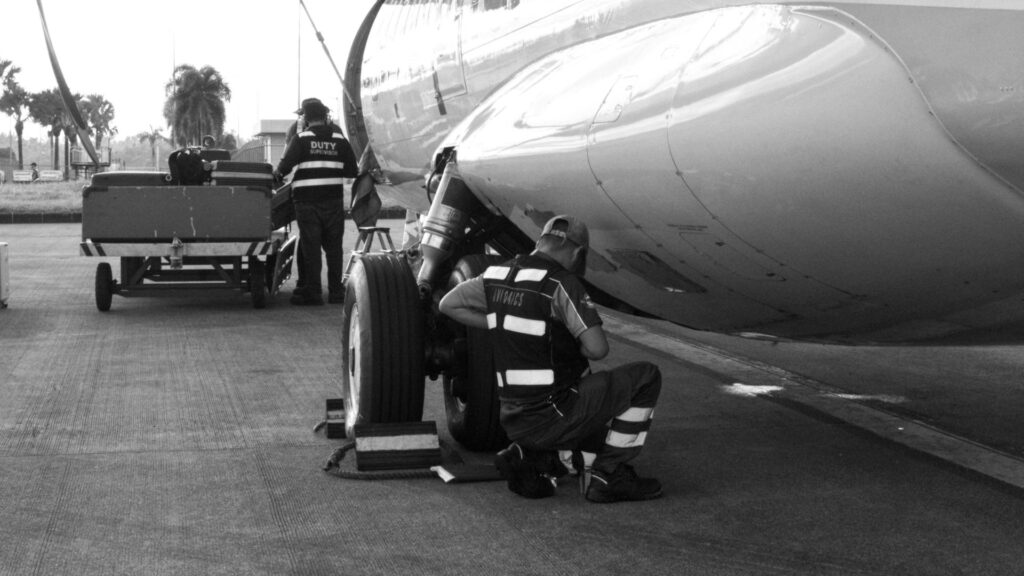
# Aircraft Maintenance and Engineering Specialist
**Aircraft Maintenance and Engineering Specialist** is a comprehensive, career-focused course designed to introduce learners to the principles, procedures and practices associated with aircraft maintenance and engineering. Aircraft maintenance is a critical part of aviation safety, reliability and operational efficiency, requiring professionals to understand inspection processes, maintenance procedures, troubleshooting techniques, aircraft systems and electrical and avionics equipment.
This course provides a structured introduction to these important areas, helping learners develop a stronger understanding of how aircraft maintenance activities are organised and why systematic inspection, diagnosis and maintenance are essential within aviation.
Whether you are interested in aviation engineering, aircraft maintenance, aerospace technology or simply want to develop your knowledge of aircraft systems, **Aircraft Maintenance and Engineering Specialist** provides a useful foundation for understanding the maintenance side of the aviation industry.
> **Important:** This is an educational foundation course. It does not by itself qualify a learner to perform certified aircraft maintenance or sign off aircraft as airworthy. Aircraft maintenance work must be carried out in accordance with applicable aviation regulations, approved maintenance data, organisational procedures and the requirements of the relevant aviation authority.
## Build a Strong Foundation in Aircraft Maintenance
Aircraft are highly complex machines that depend on the reliable operation of numerous interconnected systems. Maintenance professionals therefore need a structured understanding of inspection, repair, diagnosis and maintenance procedures.
Module 1, **Introduction to Aircraft Maintenance and Repair**, provides the foundation for the course. You will explore the fundamental principles of aircraft maintenance and develop an understanding of why regular inspection, servicing and repair are essential to aviation safety.
The module introduces the role of maintenance within aviation and provides context for the more specialised subjects covered later in the course.
By completing this module, you can develop the ability to:
* Understand the basic principles of aircraft maintenance.
* Explain why aircraft inspection and maintenance are essential.
* Recognise the relationship between maintenance and aviation safety.
* Identify key areas involved in aircraft repair.
* Develop a foundational understanding of aircraft maintenance practices.
* Appreciate the importance of following approved maintenance procedures.
This foundation can help you approach subsequent modules with a clearer understanding of the purpose and importance of aircraft maintenance activities.
## Understand Aircraft Inspection and Maintenance Procedures
Inspection is one of the most important elements of aircraft maintenance. Systematic inspections can help identify wear, damage, deterioration or other issues that may require further investigation or maintenance.
Module 2, **Aircraft Inspection and Maintenance Procedures**, explores the principles behind aircraft inspection and maintenance processes. You will develop an understanding of how maintenance activities are approached systematically and why accurate procedures are essential.
The module can help you appreciate the importance of following established maintenance documentation, inspection requirements and organisational processes.
You can develop knowledge of:
* The purpose of aircraft inspections.
* Different considerations involved in maintenance activities.
* The importance of systematic inspection procedures.
* The role of maintenance documentation.
* The importance of accurate reporting.
* The relationship between inspection, maintenance and aircraft reliability.
* Why maintenance procedures must be followed carefully.
This knowledge can provide a stronger foundation for understanding how aviation maintenance organisations approach routine and corrective maintenance.
## Develop an Understanding of Troubleshooting and Diagnosis
Aircraft systems can experience faults for a wide range of reasons. Identifying the source of a problem requires a systematic approach rather than simply replacing components or making assumptions.
Module 3, **Troubleshooting and Diagnosis of Aircraft Systems**, introduces the principles involved in identifying and investigating aircraft system problems.
You will explore why effective troubleshooting requires logical thinking, accurate information and an understanding of how individual aircraft systems operate and interact.
The knowledge developed in this module can help you understand how maintenance professionals approach technical problems by considering symptoms, possible causes and appropriate diagnostic processes.
You can work towards developing the ability to:
* Understand the purpose of aircraft system troubleshooting.
* Recognise the importance of systematic fault diagnosis.
* Understand how symptoms can help identify potential problems.
* Appreciate the importance of technical documentation during troubleshooting.
* Recognise the relationship between individual components and wider aircraft systems.
* Develop a structured approach to analysing technical issues.
For anyone interested in aircraft engineering, troubleshooting knowledge is particularly valuable because aviation maintenance often requires careful investigation and technical reasoning.
## Explore Aircraft Systems Maintenance and Inspection
Modern aircraft contain numerous interconnected systems that support flight, navigation, communication, control and passenger operations. Maintaining these systems requires an understanding of their purpose and the principles behind their inspection and servicing.
Module 4, **Maintenance and Inspection of Aircraft Systems**, explores the broader process of maintaining aircraft systems. You will develop an understanding of why aircraft systems require regular inspection and why maintenance must be carried out according to appropriate procedures.
This module builds on earlier concepts by connecting inspection, maintenance and system reliability.
Through this part of the course, you can develop a stronger understanding of:
* The importance of aircraft system maintenance.
* Why systems require regular inspection.
* The relationship between system condition and aircraft reliability.
* Maintenance planning and procedural discipline.
* The importance of identifying potential issues early.
* The need for accurate maintenance records.
* The role of approved procedures in aircraft maintenance.
Understanding these principles can help learners appreciate the complexity of maintaining an aircraft and the importance of consistency and precision throughout maintenance operations.
## Develop Knowledge of Electrical and Avionics Systems
Electrical and avionics systems play an essential role in modern aircraft. They support a wide range of functions, including communication, navigation, instrumentation, monitoring and other aircraft operations.
Module 5, **Electrical and Avionics Systems Maintenance**, introduces learners to the maintenance considerations associated with these important systems.
You will develop an understanding of why electrical and avionics systems require careful inspection, troubleshooting and maintenance. The module also highlights the importance of accuracy when dealing with technically complex aircraft equipment.
You can develop knowledge relating to:
* The role of electrical systems in aircraft.
* The importance of avionics systems.
* General principles of electrical and avionics maintenance.
* Inspection and maintenance considerations.
* Troubleshooting principles for technical systems.
* The importance of following appropriate technical documentation.
* The relationship between electrical and avionics reliability and aircraft operations.
This knowledge can help you develop a broader understanding of modern aircraft maintenance and the increasingly technical nature of aviation engineering.
## Develop an Engineering Mindset
Aircraft maintenance requires more than memorising technical information. It involves careful observation, logical reasoning, attention to detail and respect for established procedures.
**Aircraft Maintenance and Engineering Specialist** introduces learners to the mindset required when approaching aircraft maintenance topics. You will explore how inspection, diagnosis and maintenance are connected and why each stage needs to be handled carefully.
The course can help you develop greater awareness of:
* Technical problem-solving.
* Attention to detail.
* Systematic inspection.
* Maintenance planning.
* Accurate documentation.
* Safety-focused thinking.
* Procedural compliance.
* Aircraft system awareness.
These qualities can be valuable for anyone interested in developing a career or further education in aviation maintenance and engineering.
## Understand the Importance of Aviation Safety
Safety is fundamental to aircraft maintenance. Even seemingly minor maintenance issues can have significant consequences if they are not identified, assessed and addressed appropriately.
Throughout **Aircraft Maintenance and Engineering Specialist**, you will develop a stronger appreciation of the relationship between maintenance activities and aviation safety.
You will learn why maintenance professionals need to work carefully within approved procedures and why accurate documentation, inspection and reporting are essential parts of the maintenance process.
The course encourages an approach based on:
**Accuracy** – Technical information and maintenance records need to be handled carefully.
**Consistency** – Maintenance procedures should be followed systematically rather than relying on assumptions.
**Attention to detail** – Identifying potential problems requires careful observation.
**Technical reasoning** – Troubleshooting requires logical analysis of symptoms and possible causes.
**Procedural awareness** – Aviation maintenance must follow applicable requirements and approved technical information.
These principles provide an important foundation for further development in the aviation maintenance field.
## Who Is This Course For?
**Aircraft Maintenance and Engineering Specialist** is suitable for learners who want to develop foundational knowledge of aircraft maintenance, repair and engineering systems.
It may be particularly useful for:
* Aspiring aircraft maintenance professionals.
* Aviation engineering learners.
* Aerospace students.
* Aviation enthusiasts.
* Individuals considering careers in aircraft maintenance.
* Engineering students interested in aviation.
* Professionals seeking introductory aviation maintenance knowledge.
* Learners interested in aircraft systems.
* Individuals preparing for further study in aviation engineering.
* Anyone interested in understanding how aircraft maintenance supports safe operations.
The course can also complement existing knowledge for learners working towards further education or professional development in aviation-related fields.
## Develop Transferable Technical Skills
The concepts explored throughout the course can also help develop broader technical and professional skills.
Troubleshooting encourages logical thinking. Inspection develops attention to detail. Maintenance procedures reinforce the importance of following structured processes. Aircraft systems introduce learners to interconnected technical environments, while electrical and avionics topics provide exposure to increasingly sophisticated areas of modern aviation.
These skills can be valuable beyond aircraft maintenance and may support learning in other technical and engineering environments.
## Course Curriculum at a Glance
**Module 1 – Introduction to Aircraft Maintenance and Repair**
Develop a foundation in aircraft maintenance and understand the importance of repair, inspection and maintenance to aviation operations.
**Module 2 – Aircraft Inspection and Maintenance Procedures**
Explore the principles of aircraft inspection and understand the importance of systematic maintenance procedures and documentation.
**Module 3 – Troubleshooting and Diagnosis of Aircraft Systems**
Develop an understanding of structured troubleshooting and the principles involved in diagnosing aircraft system issues.
**Module 4 – Maintenance and Inspection of Aircraft Systems**
Explore the maintenance and inspection of aircraft systems and understand their importance to reliability and safe operations.
**Module 5 – Electrical and Avionics Systems Maintenance**
Develop foundational knowledge of aircraft electrical and avionics systems and the considerations involved in their maintenance and inspection.
## What You Can Gain from Aircraft Maintenance and Engineering Specialist
By completing **Aircraft Maintenance and Engineering Specialist**, you can work towards developing a broad understanding of aircraft maintenance and the technical principles that support aviation reliability.
Your learning outcomes can include the ability to:
* Explain the fundamental principles of aircraft maintenance and repair.
* Understand the importance of aircraft inspection.
* Recognise the role of maintenance procedures and documentation.
* Understand systematic approaches to troubleshooting.
* Explore the maintenance of aircraft systems.
* Develop awareness of electrical and avionics maintenance.
* Recognise the importance of technical accuracy and attention to detail.
* Understand how maintenance contributes to aviation safety.
* Develop a stronger foundation for further aviation engineering study.
* Approach aircraft maintenance topics with greater confidence.
## Why Choose Aircraft Maintenance and Engineering Specialist?
The aviation industry depends on highly structured maintenance processes to keep aircraft operating safely and reliably. Developing an understanding of these processes can provide valuable insight into one of the most important areas of aviation.
**Aircraft Maintenance and Engineering Specialist** brings together essential introductory topics within a single structured course. Rather than focusing on one narrow aspect of aircraft engineering, the curriculum provides a broad overview covering maintenance, inspection, troubleshooting, aircraft systems, electrical systems and avionics.
This gives learners a more complete starting point for understanding aircraft maintenance.
The course is also designed to encourage an outcome-focused approach. By progressing through the modules, you can develop knowledge that supports further learning and helps you understand how different maintenance activities connect.
## Take the Next Step Towards Aviation Engineering Knowledge
Aircraft maintenance is a precision-focused field where technical knowledge, careful inspection, logical troubleshooting and procedural discipline all play an important role.
**Aircraft Maintenance and Engineering Specialist** provides a structured introduction to these areas, helping learners understand the principles behind aircraft maintenance and the systems that support modern aviation.
From the fundamentals of aircraft repair and inspection to troubleshooting and electrical and avionics systems, the course provides a broad foundation for anyone interested in aircraft maintenance and engineering.
Whether you are exploring aviation as a potential career, preparing for further study or simply want to understand more about aircraft maintenance, this course can help you develop valuable foundational knowledge.
**Enrol in Aircraft Maintenance and Engineering Specialist today and build a stronger understanding of aircraft maintenance, inspection, troubleshooting and engineering systems while taking an important step towards your future learning in the aviation sector.**
Course Modules
Course Content
Module 1_ Introduction to Aircraft Maintenance and Repair.
-
Lesson 1_ Introduction to Aircraft Maintenance and Repair.
Module 2_ Aircraft Inspection and Maintenance Procedures.
Module 3_ Troubleshooting and Diagnosis of Aircraft Systems.
Module 4_ Maintenance and Inspection of Aircraft Systems.
Module 5_ Electrical and Avionics Systems Maintenance.
What our students say
Excellent
4.9 average
158 Reviews

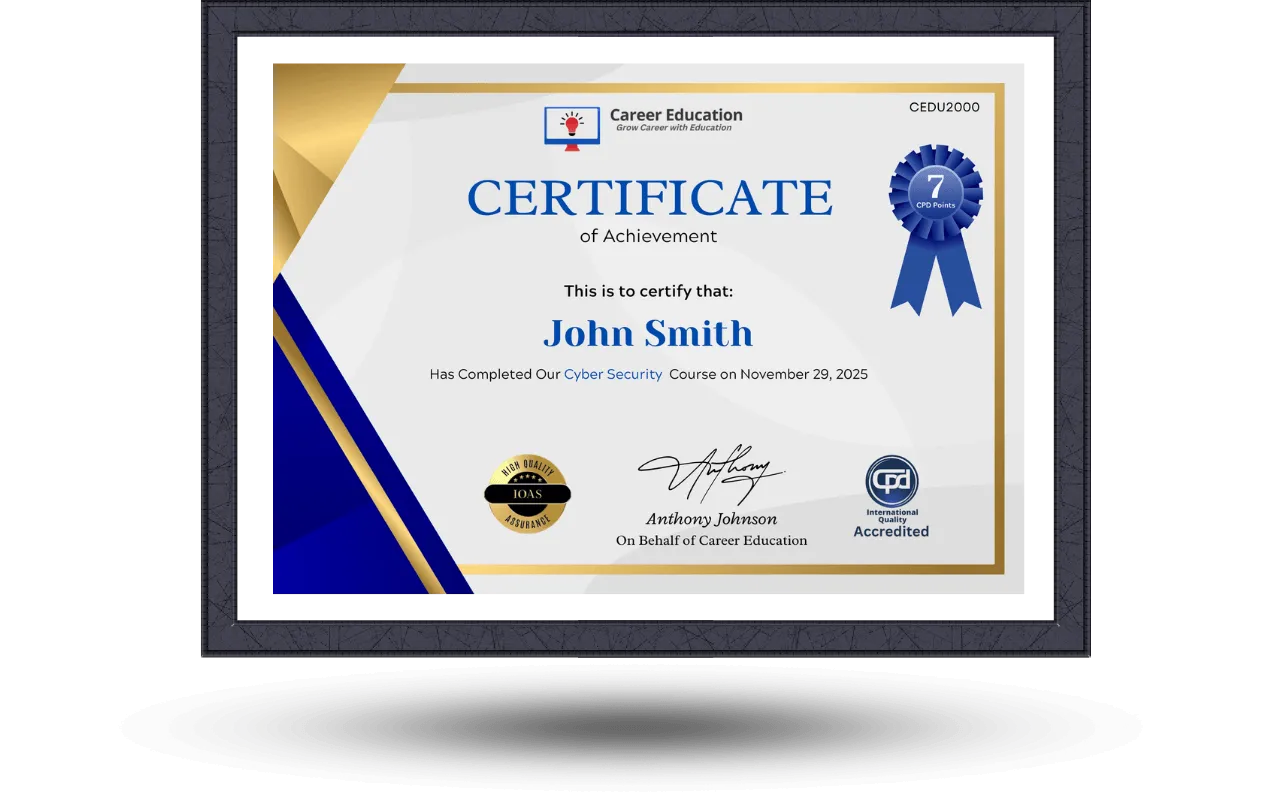
Earn an Accredited Certificate
Upon completion of any course, all students are entitled to a CPD IQ Accredited e-certificate that will be issued by Career Education signifying the completion of your course.
After you complete the course and assignment, you will be eligible to order a free certificate accredited by CPD International Quality by completing the form below.
Hardcopy certificates and transcripts are also available for a small additional fee. More information is disclosed upon course completion.
Similar Courses




Frequently Asked Questions
The lifetime membership includes unlimited access to all courses, resources, and updates for a one-time fee.
You can purchase the membership directly from our website using a secure checkout process.
Yes, selected courses can be downloaded for offline access through our mobile app.
Yes, all future updates and new courses are included at no extra cost.
Yes, we offer a 30-day money-back guarantee if you are not satisfied with the membership.