
OFF
Ethical Leadership Essentials
- Lifetime Access
- All Levels
- PDF Certificate
Learn With Confidence








Overview
# Ethical Leadership Essentials
Strong leadership is not only about achieving targets, managing people, or making difficult decisions. Effective leaders must also understand how their choices affect employees, customers, stakeholders, communities, and the wider organisation. **Ethical Leadership Essentials** is designed to help current and aspiring leaders develop the knowledge and practical awareness needed to lead with integrity, accountability, fairness, and responsibility.
In modern organisations, ethical leadership plays an important role in building trust and maintaining a positive workplace culture. Leaders regularly face decisions involving competing priorities, organisational pressure, conflicts of interest, employee wellbeing, diversity, customer expectations, social responsibility, and long-term business consequences. Knowing how to navigate these situations thoughtfully can strengthen leadership effectiveness and organisational credibility.
**Ethical Leadership Essentials** provides a structured learning experience covering ethical leadership principles, ethical decision-making, integrity, accountability, corporate social responsibility, diversity and inclusion, organisational culture, and ethical leadership in global contexts.
Whether you are a manager, supervisor, team leader, business owner, HR professional, executive, or aspiring leader, this course can help you develop a stronger foundation for responsible and values-driven leadership.
—
## Why Ethical Leadership Matters
Leadership decisions can influence much more than immediate business results.
A decision may affect employee morale, customer confidence, organisational reputation, stakeholder relationships, and long-term sustainability. Leaders who consistently demonstrate honesty, fairness, transparency, and accountability can help create an environment where people understand the standards expected of them.
Ethical leadership can help organisations:
* Build trust.
* Strengthen accountability.
* Encourage responsible decision-making.
* Improve employee confidence.
* Support respectful workplaces.
* Reduce ethical risks.
* Promote responsible organisational behaviour.
* Strengthen stakeholder relationships.
* Encourage long-term thinking.
Ethical leadership is therefore not simply about avoiding misconduct. It is about creating a leadership approach that considers values, responsibilities, consequences, and the interests of people affected by organisational decisions.
**Ethical Leadership Essentials** helps learners explore these principles in a practical and structured way.
—
# What You Will Learn
By completing **Ethical Leadership Essentials**, learners will be able to:
* Explain the fundamental principles of ethical leadership.
* Recognise the importance of values in leadership decisions.
* Apply structured approaches to ethical decision-making.
* Understand integrity and accountability in leadership.
* Explore the role of corporate social responsibility.
* Support diversity and inclusion within organisations.
* Understand how leaders influence organisational culture.
* Recognise ethical challenges in organisational behaviour.
* Consider ethical issues in global business environments.
* Strengthen responsible leadership practices.
* Build greater awareness of stakeholder impact.
* Encourage trust, transparency, and accountability within teams.
—
# Course Curriculum
## Module 1: Introduction to Ethical Leadership
### Lesson 1: Introduction to Ethical Leadership
The course begins by establishing the foundations of ethical leadership.
Learners will explore what ethical leadership means and how it differs from leadership focused solely on performance, authority, or short-term results.
Key concepts include:
* Leadership values.
* Integrity.
* Honesty.
* Fairness.
* Responsibility.
* Transparency.
* Trust.
* Accountability.
Participants will examine how leaders influence the behaviour and expectations of others.
Employees often observe how managers behave and use that behaviour as an indication of what is acceptable within the organisation. A leader who communicates high ethical standards but behaves inconsistently may undermine trust.
The module therefore emphasises the importance of leading by example.
Learners will also explore how ethical leadership can influence organisational reputation, employee engagement, workplace relationships, and decision-making.
By completing this module, participants will understand the fundamental principles of ethical leadership and why they matter in modern organisations.
—
# Module 2: Ethical Decision Making
Leaders frequently face decisions where there is no simple answer.
This module focuses on ethical decision-making and provides learners with a framework for considering difficult choices.
Participants will explore:
* Identifying ethical issues.
* Stakeholder considerations.
* Conflicts of interest.
* Competing values.
* Consequences.
* Transparency.
* Fairness.
* Professional responsibilities.
* Long-term impact.
Learners will examine why a decision that appears beneficial in the short term may create ethical or organisational problems later.
For example, leaders may face pressure to reduce costs, meet deadlines, improve performance, or satisfy customers. These objectives can sometimes conflict with employee wellbeing, fairness, quality, safety, or organisational values.
The module encourages learners to look beyond immediate outcomes and consider who may be affected by a decision.
Participants will develop a more structured approach to evaluating ethical choices rather than relying solely on instinct or convenience.
By completing this module, learners will be better prepared to approach complex leadership decisions with greater awareness and consistency.
—
# Module 3: Integrity and Accountability
Integrity is one of the central principles of ethical leadership.
This module explores how leaders can demonstrate integrity through consistent behaviour and responsible decision-making.
Learners will examine:
* Honesty.
* Transparency.
* Accountability.
* Responsibility.
* Consistency.
* Trustworthiness.
* Ethical standards.
* Leadership credibility.
Participants will explore why accountability should apply to leaders as well as employees.
An ethical leader should be prepared to acknowledge mistakes, accept responsibility for decisions, address problems appropriately, and learn from experience.
The module also considers how transparency can support trust.
Leaders do not always have the ability to share every piece of information, but they can communicate honestly about decisions, expectations, responsibilities, and relevant organisational processes.
By completing this module, learners will understand how integrity and accountability contribute to credible and trustworthy leadership.
—
# Module 4: Corporate Social Responsibility (CSR)
Organisations operate within wider communities and societies.
This module introduces corporate social responsibility and explores the role leaders can play in encouraging responsible organisational practices.
Learners will examine areas such as:
* Social responsibility.
* Environmental responsibility.
* Stakeholder interests.
* Responsible business practices.
* Community impact.
* Sustainability.
* Ethical supply chains.
* Organisational reputation.
Participants will consider how business decisions can affect people and communities beyond the organisation itself.
Ethical leadership involves understanding these broader impacts and considering how organisational objectives can be pursued responsibly.
The module also explores why CSR should not be viewed only as a marketing activity.
When social responsibility is integrated into organisational decision-making, it can become part of the organisation’s values and long-term strategy.
By completing this module, learners will have greater awareness of the relationship between ethical leadership and corporate social responsibility.
—
# Module 5: Diversity and Inclusion
Ethical leadership requires leaders to treat people fairly and respectfully.
This module explores diversity and inclusion and examines how leaders can support workplaces where individuals have opportunities to participate and contribute.
Learners will explore:
* Diversity.
* Inclusion.
* Fairness.
* Equal opportunity.
* Bias.
* Stereotypes.
* Respect.
* Belonging.
* Inclusive leadership.
Participants will examine how unconscious assumptions and organisational practices can influence decisions involving recruitment, promotion, performance management, communication, and team participation.
The module encourages leaders to recognise the value of different experiences, perspectives, skills, and backgrounds.
Inclusive leadership is not simply about increasing representation. It also involves creating an environment where people can contribute meaningfully and feel that their perspectives are respected.
By completing this module, learners will develop greater awareness of how ethical leadership can support fairer and more inclusive workplace practices.
—
# Module 6: Ethical Culture and Organizational Behavior
Leaders play a major role in shaping organisational culture.
This module explores how leadership behaviour can influence workplace norms, expectations, and employee behaviour.
Learners will examine:
* Organisational culture.
* Workplace values.
* Ethical standards.
* Leadership behaviour.
* Employee conduct.
* Communication.
* Accountability systems.
* Ethical climate.
* Organisational behaviour.
Participants will explore the connection between what an organisation says and what it actually rewards or tolerates.
For example, an organisation may formally promote honesty and integrity, but if employees are rewarded for achieving targets regardless of how those targets are achieved, the culture may send a conflicting message.
The module highlights the importance of consistency between organisational policies, leadership behaviour, performance expectations, and workplace practices.
Learners will also explore how leaders can encourage employees to raise concerns and communicate potential ethical problems appropriately.
By completing this module, participants will understand how ethical leadership can contribute to a healthier organisational culture.
—
# Module 7: Ethical Leadership in Global Contexts
Modern organisations increasingly operate across national, cultural, and regulatory boundaries.
This module explores the challenges leaders may encounter when working in global environments.
Learners will consider:
* Cultural differences.
* International business practices.
* Global stakeholders.
* Cross-cultural communication.
* Ethical expectations.
* International operations.
* Responsible decision-making.
* Global leadership challenges.
Participants will examine why ethical leadership may become more complex when leaders work across different cultural and legal environments.
Practices considered normal in one environment may be viewed differently elsewhere. Leaders therefore need to understand local contexts while maintaining appropriate organisational values and standards.
The module encourages learners to approach global leadership with cultural awareness, respect, consistency, and careful consideration of ethical responsibilities.
By completing this module, participants will have a stronger foundation for navigating ethical leadership challenges in international and multicultural environments.
—
# Who Is This Course For?
**Ethical Leadership Essentials** is suitable for professionals who influence people, make decisions, or have responsibilities within an organisation.
It can benefit:
* Managers.
* Supervisors.
* Team leaders.
* Department heads.
* Business owners.
* Entrepreneurs.
* HR professionals.
* Executives.
* Project managers.
* Operations leaders.
* Emerging leaders.
* Professionals preparing for management roles.
The course can also be valuable for organisations seeking to strengthen awareness of ethical leadership and responsible workplace behaviour.
—
# Practical Learning Outcomes
The course is designed around practical, outcome-focused learning.
After completing **Ethical Leadership Essentials**, learners will be better prepared to:
### Lead With Integrity
Understand how personal and professional values influence leadership behaviour and organisational trust.
### Make Responsible Decisions
Use structured thinking to identify ethical issues, evaluate consequences, and consider stakeholder interests.
### Strengthen Accountability
Recognise the importance of taking responsibility for decisions, actions, and outcomes.
### Support Corporate Responsibility
Understand how leaders can contribute to socially and environmentally responsible business practices.
### Promote Inclusion
Recognise the importance of fairness, respect, diversity, and inclusive participation.
### Shape Ethical Culture
Understand how leadership behaviour can influence organisational norms, employee conduct, and workplace expectations.
### Navigate Global Challenges
Develop greater awareness of ethical leadership considerations in international and multicultural environments.
—
# Build Trust Through Ethical Leadership
Trust is one of the most valuable assets a leader can develop.
Employees are more likely to engage with leaders when they believe those leaders are honest, consistent, fair, and accountable.
Trust is not established through statements alone. It develops through repeated actions.
When leaders demonstrate integrity during difficult situations, communicate transparently, treat people fairly, and accept responsibility for their decisions, they can strengthen their credibility.
**Ethical Leadership Essentials** helps learners understand how these behaviours contribute to effective leadership.
—
# Improve Ethical Decision-Making
Leaders often have to balance competing priorities.
A decision may involve financial considerations, employee interests, customer expectations, legal requirements, organisational values, and long-term consequences.
Ethical leadership encourages managers to consider these factors carefully rather than focusing exclusively on immediate results.
The course provides learners with a foundation for approaching complex situations thoughtfully and responsibly.
—
# Encourage a Positive Organisational Culture
An organisation’s ethical culture is influenced by what leaders model, reward, communicate, and tolerate.
Leaders who consistently demonstrate ethical behaviour can help establish clearer expectations for their teams.
This can support:
* Greater transparency.
* Stronger accountability.
* Respectful communication.
* Responsible decision-making.
* More consistent workplace behaviour.
* Greater employee confidence.
Ethical leadership therefore has an impact beyond individual decisions. It can influence the broader way an organisation operates.
—
# Develop Responsible Global Leadership
Global organisations face additional leadership challenges because employees, customers, partners, and stakeholders may operate across different cultural and regulatory environments.
Ethical leaders need to remain aware of these differences while maintaining appropriate standards of integrity and responsibility.
**Ethical Leadership Essentials** introduces learners to these considerations so they can approach global leadership with greater awareness and respect.
—
# Enrol in Ethical Leadership Essentials Today
Ethical leadership is essential for professionals who want to build trust, make responsible decisions, support inclusive workplaces, and contribute to positive organisational cultures.
**Ethical Leadership Essentials** provides a structured seven-module learning experience covering ethical leadership fundamentals, ethical decision-making, integrity and accountability, corporate social responsibility, diversity and inclusion, organisational culture, and ethical leadership in global contexts.
The course is intended for general professional development and does not replace legal advice, regulatory guidance, organisational policies, or professional ethics requirements applicable to a specific industry or jurisdiction.
Whether you are an experienced manager, an aspiring leader, an entrepreneur, or a professional seeking to strengthen your leadership capabilities, **Ethical Leadership Essentials** can help you develop a stronger foundation for responsible and values-driven leadership.
**Enrol today and build the knowledge to make more thoughtful decisions, demonstrate integrity, strengthen accountability, support diversity and inclusion, encourage ethical workplace cultures, and lead responsibly in an increasingly global business environment.**
Course Modules
Course Content
Module 1_ Introduction to Ethical Leadership
-
Lesson 1_ Introduction to Ethical Leadership
Module 2_ Ethical Decision Making
Module 3_ Integrity and Accountability
Module 4_ Corporate Social Responsibility (CSR)
Module 5_ Diversity and Inclusion
Module 6_ Ethical Culture and Organizational Behavior
Module 7_ Ethical Leadership in Global Contexts
What our students say

Earn an Accredited Certificate
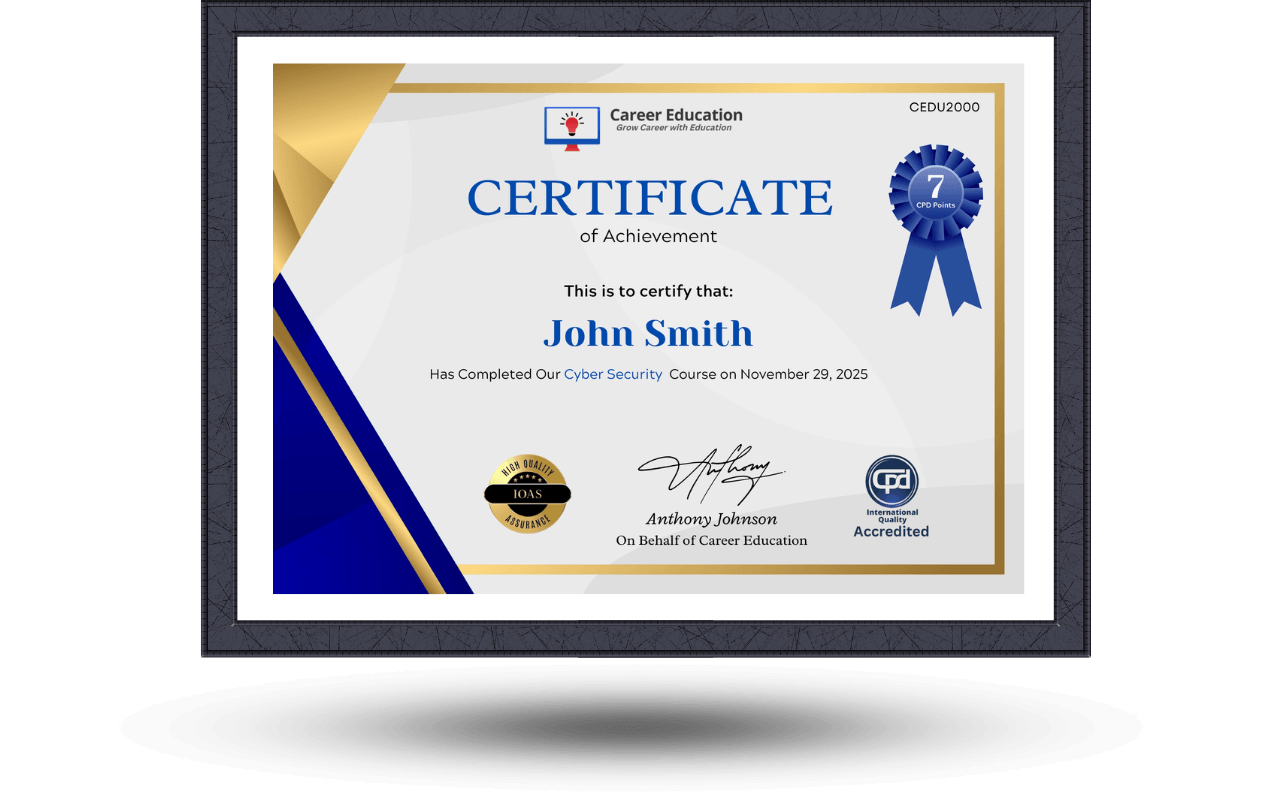
Upon completion of the course, an e-certificate will be downloadable from Khan Education signifying the completion of your course. But, the course is CPD Accredited and after you complete the assignment, you will be eligible to order a certificate accredited by CPD International Quality for £5.99 only. If you want a hardcopy certificate accredited by CPD IQ, you can get it for only £15.99.
Get your CertificateSimilar Courses