
OFF
Engineering Work Practices and Controls
- Lifetime Access
- All Levels
- PDF Certificate
Learn With Confidence









Overview
Engineering Work Practices and Controls
Engineering Work Practices and Controls is a practical training course designed to help learners understand how effective work practices, hazard controls, and safety measures can reduce workplace risks in engineering environments. Engineering work often involves machinery, equipment, tools, electrical systems, hazardous processes, and other potential sources of harm. Knowing how to identify these hazards and apply appropriate controls is essential for creating safer and more efficient workplaces.
This course provides a structured introduction to Engineering Work Practices and Controls, covering the principles of hazard identification, engineering controls, administrative controls, personal protective equipment, machine guarding, and other important safety measures. By completing the course, learners can develop a stronger understanding of how workplace hazards are assessed and how appropriate control measures can be selected and implemented.
Whether you are developing your engineering knowledge, supporting workplace safety, working around machinery, or seeking to strengthen your professional skills, this course offers practical knowledge that can be applied across a wide range of engineering and industrial environments.
Why Study Engineering Work Practices and Controls?
Engineering environments can present many different types of hazards. Moving machinery, poorly designed work areas, inadequate procedures, unsafe equipment, excessive noise, hazardous substances, and insufficient protective measures can all contribute to workplace incidents.
Simply being aware that hazards exist is not enough. Effective safety requires a systematic approach to identifying hazards, assessing risks, selecting suitable controls, and following safe work practices.
Engineering Work Practices and Controls helps learners understand this process and recognize the importance of using the right control for the right hazard. The course introduces both technical and practical approaches to workplace safety, helping learners build knowledge that can support safer decision-making.
A strong understanding of engineering work practices can help organizations:
-
Identify potential workplace hazards more effectively
-
Assess risks before work begins
-
Select suitable control measures
-
Improve safe working procedures
-
Understand the role of engineering controls
-
Use PPE appropriately
-
Reduce exposure to workplace hazards
-
Improve machine safety
-
Support a stronger workplace safety culture
What Will You Learn?
The course is structured into six focused modules, allowing learners to develop their knowledge progressively. Each module addresses an important aspect of workplace safety and engineering controls.
Module 1: Introduction to Engineering and Work Practice Controls
The course begins by establishing a foundation in engineering work practices and control principles. Learners will explore why workplace controls are important and how engineering activities can introduce different types of hazards.
This module helps learners understand the relationship between engineering operations, workplace conditions, employee behavior, and safety controls. It also provides context for understanding why hazards should be addressed systematically rather than only after an incident occurs.
By completing this module, learners can develop a clearer understanding of the purpose of work practice controls and their role in supporting safer engineering environments.
Module 2: Hazard Identification and Assessment
Recognizing hazards is one of the most important parts of workplace safety. Before an effective control can be selected, the hazard needs to be identified and assessed.
This module focuses on hazard identification and assessment, helping learners understand how potential sources of harm can be recognized within engineering workplaces. Learners will explore the importance of evaluating workplace activities, equipment, processes, and conditions to determine where risks may exist.
The knowledge gained in this module can help learners approach workplace hazards more systematically. Rather than overlooking risks during routine activities, they can develop an awareness of the need to identify potential problems before they result in incidents.
The outcome is a stronger foundation for risk-aware decision-making and more effective workplace control strategies.
Module 3: Selection and Implementation of Engineering Controls
Engineering controls are an important component of workplace hazard management because they can address hazards through the design or modification of equipment, processes, systems, or work environments.
This module introduces the selection and implementation of engineering controls. Learners will develop an understanding of how engineering solutions can be used to reduce exposure to workplace hazards and improve safety.
The module encourages learners to consider how controls can be incorporated into engineering operations rather than relying entirely on individual behavior. Understanding the selection process can help learners recognize why control measures should be appropriate to the hazard, practical for the workplace, and properly implemented.
By the end of this section, learners will have a stronger understanding of how engineering controls can contribute to safer working environments.
Module 4: Administrative Controls and Safe Work Practices
Not every workplace hazard can be addressed through engineering controls alone. Administrative controls and safe work practices can provide additional layers of protection by influencing how work is organized and performed.
This module explores administrative controls and safe work practices, helping learners understand the importance of workplace procedures, instructions, training, communication, and other organizational measures.
Learners will gain insight into how clear procedures and consistent safe working practices can support hazard control. They will also understand why employees need appropriate information and guidance when carrying out potentially hazardous engineering activities.
The knowledge gained can help learners contribute to workplaces where safety procedures are understood, followed, and integrated into everyday operations.
Module 5: Personal Protective Equipment (PPE)
Personal Protective Equipment can provide an important layer of protection when workers may be exposed to workplace hazards. However, PPE should be considered as part of a broader control strategy rather than the only approach to managing risk.
This module introduces the role of PPE within engineering work environments. Learners will explore why appropriate protective equipment is important and how PPE can support safer working practices.
The module helps learners understand the importance of selecting protective equipment based on the hazards present and using it correctly as part of an overall safety approach.
By completing this module, learners can develop greater awareness of the responsibilities associated with PPE and its place within workplace hazard control.
Module 6: Machine Guarding and Control Measures
Machinery can create significant workplace risks when moving parts, operating mechanisms, or other hazardous components are not adequately controlled. Machine guarding and related control measures can therefore play an important role in engineering safety.
This module focuses on machine guarding and control measures. Learners will explore the importance of protecting people from machinery-related hazards and understanding the purpose of suitable safeguards.
The module provides valuable knowledge for anyone who works around machines or needs to understand basic principles of machinery safety. Learners can develop a stronger awareness of how guarding and other control measures contribute to safer engineering operations.
Practical Outcomes of the Course
Completing Engineering Work Practices and Controls can help learners build practical knowledge that supports safer workplace behavior and decision-making.
By the end of the course, learners should be better prepared to:
-
Recognize common hazards associated with engineering work
-
Understand the importance of workplace hazard assessment
-
Identify appropriate approaches to controlling workplace risks
-
Understand the purpose of engineering controls
-
Recognize the role of administrative controls
-
Apply principles of safe work practices
-
Understand the purpose and importance of PPE
-
Recognize the importance of machine guarding
-
Support safer working procedures
-
Make more informed decisions when considering workplace controls
These outcomes can be valuable for learners who want to improve their understanding of engineering safety or strengthen their existing workplace knowledge.
Who Can Benefit From Engineering Work Practices and Controls?
This course can be useful for a wide range of learners interested in engineering workplace safety and control measures.
It may be particularly relevant to:
-
Engineering students and learners
-
Engineering professionals seeking additional knowledge
-
Technical and maintenance personnel
-
Manufacturing and industrial workers
-
Supervisors and team leaders
-
Workplace safety personnel
-
Employees who work around machinery and equipment
-
Individuals developing their knowledge of workplace risk management
-
Professionals seeking to strengthen their engineering safety awareness
The course can also serve as a useful learning resource for anyone who wants to understand how hazards can be controlled within engineering and industrial environments.
Build a Stronger Safety Mindset
Effective workplace safety is not simply about responding to problems after they occur. It involves recognizing hazards, assessing potential risks, selecting suitable controls, and maintaining safe working practices consistently.
Engineering Work Practices and Controls provides learners with a structured way to explore these principles. From the initial identification of hazards to the use of engineering controls, administrative measures, PPE, and machine guarding, the course covers multiple layers of workplace protection.
This broader understanding can help learners appreciate why workplace safety requires more than a single control measure. Different hazards may require different solutions, and effective safety management often depends on combining appropriate controls with responsible work practices.
Strengthen Your Professional Knowledge
Engineering workplaces continue to rely on safe systems, appropriate equipment, effective procedures, and knowledgeable personnel. Developing an understanding of workplace controls can therefore complement technical knowledge and contribute to professional development.
Rather than focusing only on individual safety rules, this course introduces the principles behind hazard identification and control. This can help learners develop a more structured approach to thinking about workplace risks and the measures used to manage them.
The skills and knowledge covered throughout the course can be useful in a variety of engineering, manufacturing, technical, and industrial settings.
Enrol in Engineering Work Practices and Controls Today
A safer engineering workplace starts with understanding the hazards that may exist and knowing how those hazards can be controlled. Engineering Work Practices and Controls provides a focused learning experience covering hazard assessment, engineering controls, administrative controls, PPE, machine guarding, and safe work practices.
Whether you are beginning your engineering journey or looking to expand your existing workplace safety knowledge, this course can help you develop a stronger foundation in practical engineering safety principles.
Enrol in Engineering Work Practices and Controls today and build the knowledge needed to recognize hazards, understand control measures, and support safer engineering work practices.
Course Modules
Course Content
Module 1_ Introduction to Engineering and Work Practice Controls.
-
Lesson 1_ Introduction to Engineering and Work Practice Controls.
Module 2_ Hazard Identification and Assessment.
Module 3_ Selection and Implementation of Engineering Controls.
Module 4_ Administrative Controls and Safe Work Practices.
Module 5_ Personal Protective Equipment (PPE).
Module 6_ Machine Guarding and Control Measures.
What our students say

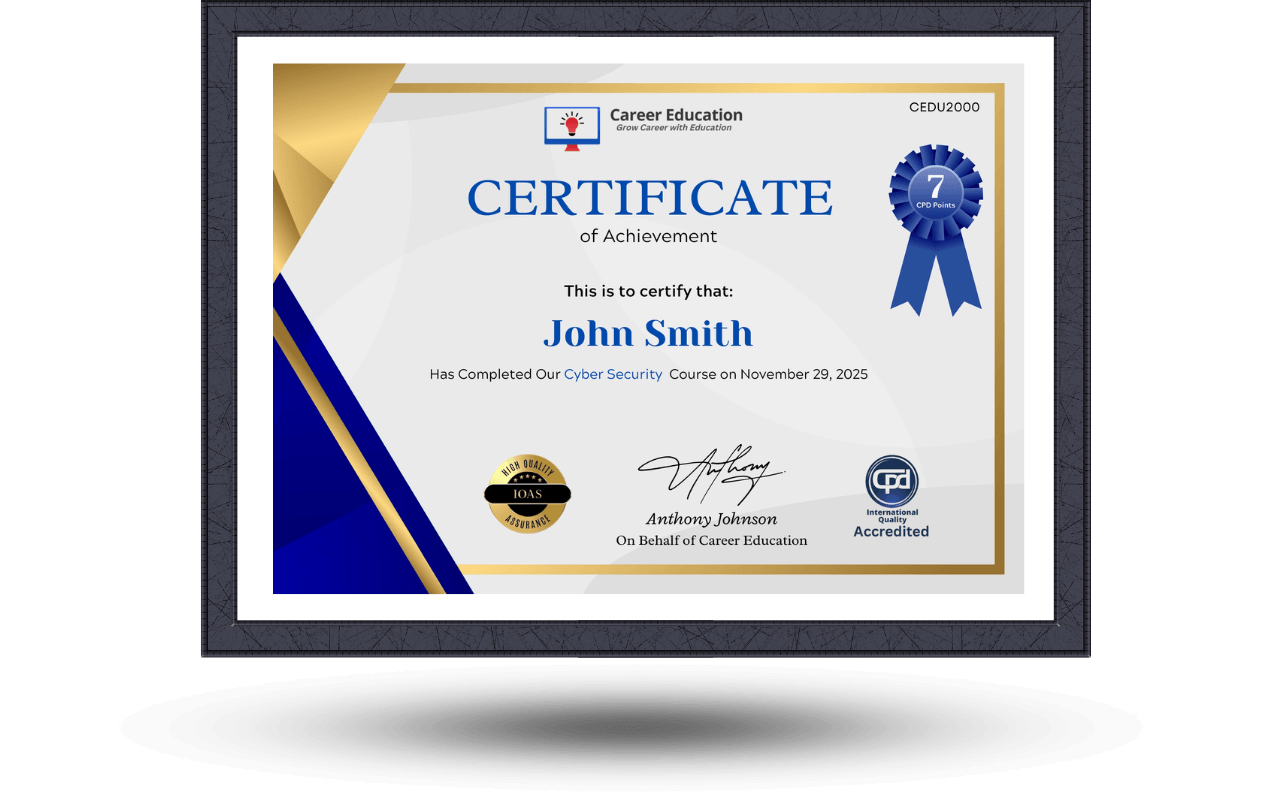
Earn an Accredited Certificate
Upon completion of the course, an e-certificate will be downloadable from Khan Education signifying the completion of your course. But, the course is CPD Accredited and after you complete the assignment, you will be eligible to order a certificate accredited by CPD International Quality for £5.99 only. If you want a hardcopy certificate accredited by CPD IQ, you can get it for only £15.99.
Get your CertificateSimilar Courses