
94%
OFF
OFF
Cardiac Care Training
- Lifetime Access
- All Levels
- PDF Certificate
£296
£19
14-Day Money-Back Guarantee
Learn With Confidence





Cardiac Care Training
Build Practical Knowledge for Effective Cardiac Care
The heart is one of the body’s most vital organs, and cardiac conditions can develop suddenly or require ongoing assessment, treatment, and support. For professionals working in healthcare and care environments, developing a strong understanding of cardiac health can help improve confidence when recognising symptoms, supporting patients, understanding treatment approaches, and responding appropriately to cardiac emergencies.
Cardiac Care Training is designed to provide learners with a structured introduction to the anatomy and physiology of the heart, assessment of cardiac conditions, diagnostic procedures, medications and devices, and emergency responses to cardiac events. The course focuses on practical knowledge and outcomes, helping learners develop a clearer understanding of the processes involved in cardiac care.
Whether you are developing your healthcare knowledge, working in a care-related environment, or looking to strengthen your professional understanding of cardiovascular health, this course can provide a valuable foundation.
What Is Cardiac Care Training?
Cardiac Care Training focuses on the knowledge and principles involved in supporting individuals with cardiac conditions. It covers the structure and function of the heart, approaches to assessing cardiac health, commonly used diagnostic tests and procedures, cardiac medications and devices, and appropriate responses to cardiac emergencies.
Understanding these areas can help learners appreciate how cardiac problems are identified and managed within healthcare settings. The course also introduces important concepts that can support communication with patients and healthcare teams.
Rather than focusing on a single cardiac condition, the training provides broad coverage of key areas relevant to cardiac care. This makes it suitable for learners who want to build their knowledge progressively, from fundamental heart anatomy through to emergency response principles.
Why Study Cardiac Care Training?
Cardiovascular health is an important area of healthcare, and professionals may encounter people living with cardiac conditions in hospitals, clinics, residential care, community settings, and other environments.
Developing cardiac care knowledge can help you:
-
Understand how the heart is structured and how it functions.
-
Recognise the importance of cardiac assessment.
-
Understand how cardiac conditions may be investigated.
-
Become familiar with diagnostic tests and procedures.
-
Develop knowledge of commonly used cardiac medications and devices.
-
Understand key principles surrounding emergency responses to cardiac events.
-
Communicate more confidently about cardiac care within your professional role.
-
Build a stronger foundation for further healthcare learning.
The goal of Cardiac Care Training is to help learners finish the course with a more organised and practical understanding of the subject.
What Will You Learn?
This course consists of five focused modules covering essential areas of cardiac care.
Module 1: Anatomy and Physiology of the Heart
A strong understanding of cardiac care begins with understanding the heart itself.
In this module, you will explore the anatomy and physiology of the heart and develop an understanding of how this vital organ works. You will learn about the heart’s structures and the processes that enable it to circulate blood throughout the body.
Understanding normal cardiac function provides an important foundation for recognising what can happen when the cardiovascular system is affected by disease or other health problems.
By completing this module, you can develop a clearer understanding of:
-
The basic structure of the heart.
-
The major components involved in cardiac function.
-
How the heart contributes to circulation.
-
The relationship between cardiac structure and function.
-
Fundamental concepts that underpin cardiac health.
This knowledge can make later topics, including assessment, diagnosis, medications, and emergency care, easier to understand.
Module 2: Assessment and Diagnosis of Cardiac Conditions
Effective cardiac care depends on appropriate assessment and identification of potential problems.
This module introduces learners to the principles involved in assessing and diagnosing cardiac conditions. You will explore how healthcare professionals gather relevant information and use clinical assessment processes to identify potential cardiovascular concerns.
The module can help you understand why patient history, symptoms, observations, and other forms of assessment are important when considering cardiac health.
You will develop knowledge that can help you understand:
-
The importance of cardiac assessment.
-
Information that may be considered during assessment.
-
How symptoms can contribute to the assessment process.
-
The role of clinical observations.
-
General principles involved in diagnosing cardiac conditions.
By developing this knowledge, learners can better appreciate the steps that may be involved when a cardiac problem is suspected.
Module 3: Diagnostic Tests and Procedures in Cardiac Care
Modern cardiac care relies on a range of diagnostic tests and procedures to investigate heart function and identify potential problems.
In this module, you will explore diagnostic testing within cardiac care and learn about the purpose of different investigations. The module is designed to help you understand why particular tests may be used and how diagnostic information contributes to patient assessment and treatment planning.
You will gain a broader understanding of:
-
The role of diagnostic testing in cardiac care.
-
Different types of cardiac investigations.
-
The purpose of diagnostic procedures.
-
How test results can contribute to clinical decision-making.
-
The importance of accurate and appropriate investigation.
Understanding diagnostic procedures can be particularly valuable for learners who work alongside healthcare professionals or support patients undergoing cardiac investigations.
Module 4: Cardiac Medications and Devices
Medication and medical devices can play important roles in the management of cardiac conditions.
This module introduces learners to cardiac medications and devices, helping you understand their place within cardiac care. You will explore the purpose of different treatment approaches and develop awareness of how medications and devices can be used as part of patient management.
The module helps build knowledge around:
-
The role of medication in cardiac care.
-
Common categories of cardiac medicines.
-
The purpose of cardiac treatment.
-
Medical devices used in cardiac management.
-
The importance of appropriate monitoring and professional oversight.
This knowledge is intended to improve your understanding of cardiac treatment rather than replace the advice, assessment, or clinical decisions of qualified healthcare professionals.
Module 5: Emergency Responses to Cardiac Events
Cardiac emergencies require appropriate and timely responses. Understanding emergency principles can help healthcare learners appreciate the importance of recognising urgent situations and following established procedures.
The final module focuses on emergency responses to cardiac events. You will explore key principles surrounding the recognition and management of cardiac emergencies within the scope of appropriate professional responsibilities.
You will develop an understanding of:
-
Why cardiac events can require urgent action.
-
The importance of recognising signs of a potential cardiac emergency.
-
General principles of emergency response.
-
The importance of following established emergency procedures.
-
The role of communication and teamwork during urgent situations.
Emergency care should always be carried out according to appropriate training, workplace procedures, and current clinical guidance. This module provides educational knowledge and does not replace hands-on clinical training or professional certification where these are required.
Develop a Stronger Understanding of Cardiac Health
One of the key benefits of Cardiac Care Training is its structured approach. Instead of studying isolated topics, learners progress through the subject logically.
You begin by understanding the anatomy and physiology of the heart. You then move into assessment and diagnosis before exploring diagnostic tests and procedures. From there, the course introduces cardiac medications and devices and concludes with emergency response principles.
This progression can help you connect different aspects of cardiac care and understand how they relate to one another.
For example, understanding how the heart functions can help you appreciate why certain symptoms may be investigated. Understanding diagnostic procedures can provide context for treatment decisions, while knowledge of medications and devices can help you understand broader approaches to cardiac management.
Who Can Benefit From This Course?
Cardiac Care Training can be useful for a range of learners who want to develop their knowledge of cardiovascular health.
It may be particularly relevant to:
-
Healthcare professionals seeking to refresh or expand their knowledge.
-
Care workers and support workers.
-
Healthcare assistants.
-
Individuals interested in cardiac care.
-
Learners considering healthcare-related careers.
-
Professionals working in environments where patients may have cardiac conditions.
-
Individuals undertaking continuing professional development.
-
Anyone seeking a structured introduction to cardiac care concepts.
The suitability of the course for a particular professional role will depend on the learner’s existing qualifications, responsibilities, and workplace requirements.
Apply Your Learning to Your Professional Development
Cardiac knowledge can be valuable across many areas of healthcare. People receiving care may have existing cardiovascular conditions, experience symptoms that require assessment, or require support following cardiac treatment.
By completing Cardiac Care Training, you can strengthen your understanding of the terminology, processes, and concepts associated with cardiac health.
The knowledge gained can support your broader professional development by helping you approach cardiac-related topics with greater confidence and awareness.
It can also provide a useful foundation for learners who intend to continue studying healthcare, cardiovascular care, nursing, clinical support, or related subjects.
Focus on Knowledge You Can Build On
Good healthcare education is not simply about memorising information. It is about developing knowledge that can be understood, connected, and applied appropriately.
This course is structured around key outcomes so that you can build your knowledge progressively. You will explore how the heart works, how cardiac conditions are assessed, why diagnostic tests are performed, how treatments and devices fit into cardiac care, and why emergency response principles are important.
This broad perspective can help you understand cardiac care as a connected area of healthcare rather than a collection of unrelated topics.
Strengthen Your Cardiac Care Knowledge Today
A solid understanding of cardiac health can be an important part of professional development for anyone working or planning to work in healthcare and care environments.
Cardiac Care Training brings together essential concepts in one structured learning experience, covering heart anatomy and physiology, cardiac assessment, diagnosis, diagnostic procedures, medications, devices, and emergency responses.
By the end of the course, you can expect to have developed a broader understanding of the principles that underpin cardiac care and a stronger foundation for continued learning.
If you are ready to expand your healthcare knowledge and develop a focused understanding of cardiovascular care, Cardiac Care Training offers a practical starting point for your learning journey.
Enrol today and take the next step toward strengthening your knowledge of cardiac care.
Course Modules
Course Content
Module 1_ Anatomy and Physiology of the Heart.
-
Lesson 1_ Anatomy and Physiology of the Heart.
Module 2_ Assessment and Diagnosis of Cardiac Conditions.
Module 3_ Diagnostic Tests and Procedures in Cardiac Care.
Module 4_ Cardiac Medications and Devices.
Module 5_ Emergency Responses to Cardiac Events.
What our students say
Excellent
4.9 average
158 Reviews

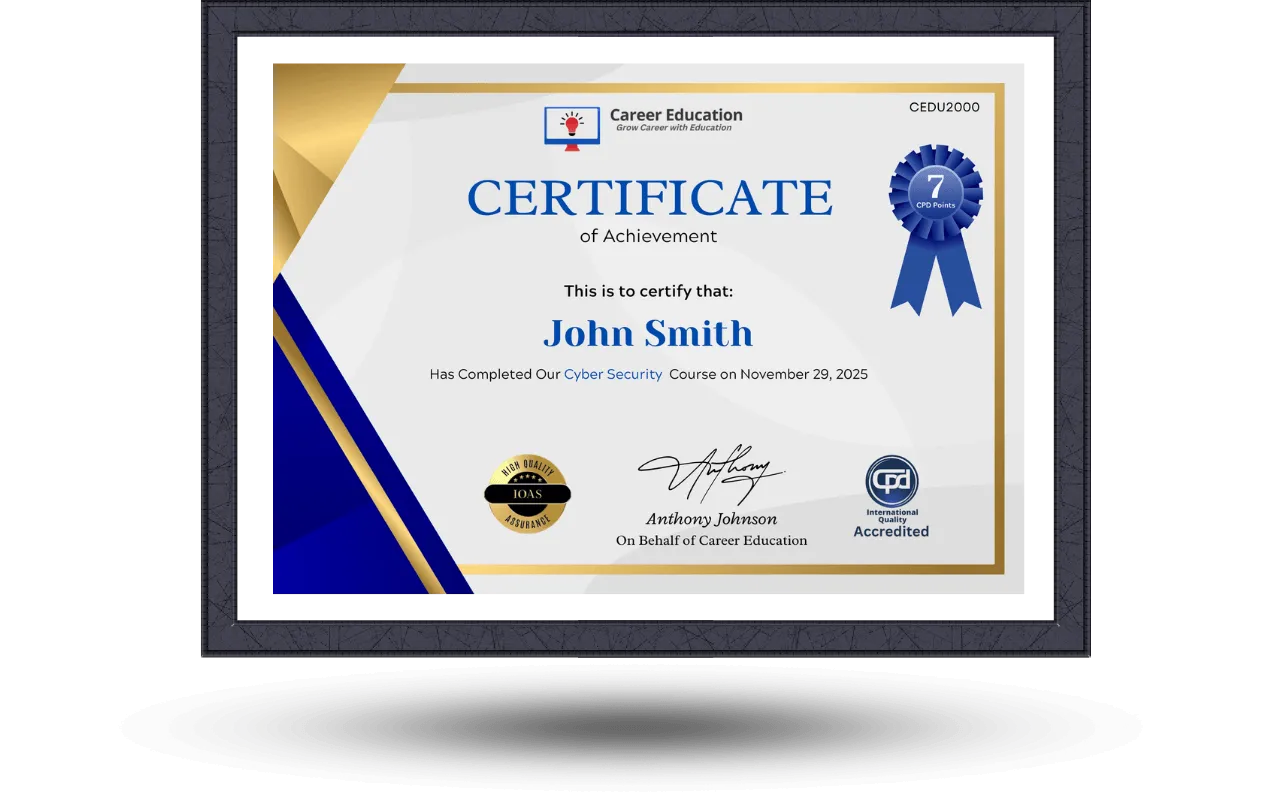
Earn an Accredited Certificate
Upon completion of any course, all students are entitled to a CPD IQ Accredited e-certificate that will be issued by Career Education signifying the completion of your course.
After you complete the course and assignment, you will be eligible to order a free certificate accredited by CPD International Quality by completing the form below.
Hardcopy certificates and transcripts are also available for a small additional fee. More information is disclosed upon course completion.
Similar Courses



Frequently Asked Questions
The lifetime membership includes unlimited access to all courses, resources, and updates for a one-time fee.
You can purchase the membership directly from our website using a secure checkout process.
Yes, selected courses can be downloaded for offline access through our mobile app.
Yes, all future updates and new courses are included at no extra cost.
Yes, we offer a 30-day money-back guarantee if you are not satisfied with the membership.