
94%
OFF
OFF
Employee Performance Management and Evaluation
- Lifetime Access
- All Levels
- PDF Certificate
£296
£19
14-Day Money-Back Guarantee
Learn With Confidence





Employee Performance Management and Evaluation
Effective employee performance is not achieved by waiting until an annual review to discuss results. Strong organisations use performance management as an ongoing process that connects employee expectations, business objectives, regular feedback, development and accountability.
Employee Performance Management and Evaluation is designed to help managers, supervisors, team leaders and HR professionals understand how to manage and evaluate employee performance more effectively. The course provides a practical framework for planning performance expectations, monitoring progress, conducting appraisals, delivering constructive feedback, creating Performance Improvement Plans (PIPs) and supporting effective performance management systems.
Performance management should be more than a form-filling exercise. When implemented properly, it can help employees understand what is expected of them, recognise their strengths, identify areas for development and contribute more effectively to organisational goals.
This outcome-focused course helps learners develop practical knowledge for creating a more structured, transparent and continuous approach to employee performance.
Why Take Employee Performance Management and Evaluation?
Employees perform best when they understand what is expected, receive useful feedback and have opportunities to improve their skills.
However, performance management can become challenging when expectations are unclear, feedback is inconsistent or performance concerns are addressed too late.
Employee Performance Management and Evaluation helps learners understand how to build a more proactive approach.
Throughout the course, participants will learn how to:
-
Understand the principles of performance management.
-
Set clear and meaningful performance expectations.
-
Align individual objectives with organisational goals.
-
Monitor employee progress effectively.
-
Recognise achievements and performance gaps.
-
Understand different performance appraisal methods.
-
Deliver constructive and balanced feedback.
-
Create appropriate Performance Improvement Plans.
-
Support employees through performance challenges.
-
Develop more consistent performance management processes.
-
Promote accountability and professional development.
-
Contribute to a stronger performance-focused workplace culture.
The emphasis is on practical application, helping learners move beyond traditional annual reviews towards continuous performance management.
What You Will Learn
By completing Employee Performance Management and Evaluation, learners will develop a broader understanding of the employee performance lifecycle.
The course explores performance from the initial planning stage through monitoring, evaluation, feedback and improvement.
Participants will learn why effective performance management requires regular communication rather than occasional conversations. They will explore how clear objectives can provide employees with direction and how regular monitoring can help managers identify progress and challenges early.
The course also addresses performance appraisal methods and feedback techniques, helping learners understand how evaluations can be conducted fairly and constructively.
Finally, participants will explore Performance Improvement Plans and wider performance management systems, providing a complete foundation for managing employee performance.
Module 1: Introduction to Performance Management
The course begins with the fundamentals of performance management.
Learners will explore what performance management means and why it is important to organisational success.
Performance management involves more than measuring whether an employee completed a task. It can include setting expectations, supporting development, monitoring progress, discussing results and identifying opportunities for improvement.
Participants will examine the relationship between employee performance and organisational objectives.
Key areas include:
-
Understanding performance management.
-
Defining performance expectations.
-
Aligning individual and organisational goals.
-
Supporting employee development.
-
Monitoring performance.
-
Recognising achievements.
-
Addressing performance concerns.
-
Encouraging accountability.
The module also highlights the importance of communication.
Employees should understand what is expected of them and how their performance contributes to wider team and organisational objectives.
By completing this module, learners will have a strong foundation in the purpose and principles of effective performance management.
Module 2: Performance Planning
Effective performance management begins with effective planning.
This module focuses on setting expectations and creating a clear framework for employee performance.
Learners will explore how managers can establish objectives that are specific, understandable and relevant to the employee’s role.
Participants will consider areas such as:
-
Job responsibilities.
-
Performance objectives.
-
Key results.
-
Quality expectations.
-
Productivity.
-
Professional behaviours.
-
Development goals.
-
Organisational priorities.
The module encourages learners to ensure that performance expectations are realistic and measurable where appropriate.
Clear objectives can help employees understand what success looks like and give managers a useful basis for future performance discussions.
Participants will also explore the importance of involving employees in performance planning. Collaborative discussions can help employees understand expectations and take greater ownership of their goals.
By completing this module, learners will be better prepared to create structured performance expectations that support both individual development and organisational priorities.
Module 3: Performance Monitoring
Performance management should not end after objectives have been established.
This module focuses on monitoring employee progress throughout the performance cycle.
Learners will explore how managers can track performance, identify achievements and recognise potential problems before they become significant.
Effective monitoring may involve:
-
Regular check-ins.
-
Reviewing progress against objectives.
-
Observing work performance.
-
Reviewing relevant results or metrics.
-
Discussing challenges.
-
Identifying development needs.
-
Recognising achievements.
-
Adjusting priorities when circumstances change.
The course encourages managers to treat monitoring as an ongoing communication process rather than a form of surveillance.
Regular conversations can help employees understand how they are progressing and provide opportunities to address obstacles.
Participants will also learn why performance monitoring should be based on relevant information and consistent expectations.
By completing this module, learners will develop a clearer understanding of how ongoing monitoring can improve performance management.
Module 4: Performance Appraisal Methods
Performance appraisals provide an opportunity to formally evaluate employee performance.
This module introduces different approaches to performance appraisal and explores how they can be used effectively.
Learners will consider the purpose of appraisals and the importance of selecting evaluation methods that are appropriate for the organisation, role and objectives.
Participants will explore concepts associated with:
-
Traditional performance reviews.
-
Objective-based evaluation.
-
Competency-based assessment.
-
Rating approaches.
-
Behaviour-focused evaluation.
-
Self-assessment.
-
Multi-source feedback approaches.
The module emphasises that appraisal methods should be applied consistently and fairly.
Learners will also consider common challenges that can affect evaluations, including unclear standards, inconsistent ratings, personal bias and focusing too heavily on recent events.
The objective is to help managers conduct performance evaluations that are meaningful rather than simply administrative.
By completing this module, participants will have a stronger foundation for understanding and applying performance appraisal approaches.
Module 5: Performance Feedback
Feedback is one of the most important components of effective performance management.
This module focuses on delivering feedback that helps employees understand what they are doing well and where improvement may be needed.
Learners will explore how effective feedback can be:
-
Specific.
-
Timely.
-
Relevant.
-
Balanced.
-
Constructive.
-
Behaviour-focused.
-
Action-oriented.
-
Respectful.
Participants will learn why feedback should not be limited to negative performance.
Recognising achievements can reinforce positive behaviours and encourage continued strong performance. At the same time, addressing performance concerns promptly can prevent small issues from becoming larger problems.
The module also explores communication during difficult performance conversations.
Managers may need to discuss missed objectives, behavioural concerns or areas requiring development. Learners will develop greater awareness of how to approach these conversations professionally and constructively.
The aim is to help managers create feedback conversations that encourage understanding, accountability and improvement.
Module 6: Performance Improvement Plans (PIPs)
When an employee’s performance does not meet established expectations, a structured improvement approach may be appropriate.
This module focuses on Performance Improvement Plans (PIPs).
Learners will explore the purpose of a PIP and how it can provide a clear framework for addressing performance gaps.
A well-structured improvement plan may include:
-
The performance concern.
-
Expected standards.
-
Specific improvement objectives.
-
Available support.
-
Development actions.
-
Review points.
-
Relevant measures of progress.
-
Follow-up arrangements.
The course emphasises that a PIP should be clear, objective and aligned with applicable organisational procedures.
Participants will explore how managers can use improvement plans to communicate expectations and provide employees with a structured opportunity to address performance concerns.
The module also highlights the importance of documenting discussions and following established workplace policies and applicable requirements.
By completing this module, learners will understand the role of PIPs within a broader performance management process.
Module 7: Performance Management Systems
The final module brings the different elements of performance management together.
Learners will explore how organisations can develop systems that support performance planning, monitoring, appraisal, feedback and improvement.
An effective performance management system can help create greater consistency across teams and provide managers with a structured approach to employee development.
Participants will consider important elements such as:
-
Performance policies.
-
Objective setting.
-
Review cycles.
-
Documentation.
-
Feedback processes.
-
Development planning.
-
Performance data.
-
Manager responsibilities.
-
Employee participation.
-
Continuous improvement.
The module also explores the importance of integrating performance management with broader organisational priorities.
When performance systems are aligned with business objectives, employees can gain a clearer understanding of how their work contributes to organisational success.
By completing this module, learners will understand how individual performance practices can form part of a wider organisational system.
Practical Benefits of Employee Performance Management and Evaluation
Employee Performance Management and Evaluation is designed to provide practical knowledge that managers and professionals can apply in real workplace situations.
After completing the course, learners should be better able to:
Set Clear Performance Expectations
Develop clearer objectives and standards that help employees understand what is expected of them.
Align Employee Goals
Connect individual performance objectives with team and organisational priorities.
Monitor Progress
Use regular performance discussions and relevant information to understand employee progress.
Conduct Effective Evaluations
Approach performance appraisals in a structured, consistent and objective manner.
Deliver Constructive Feedback
Communicate performance strengths and development opportunities clearly and respectfully.
Address Performance Concerns
Recognise performance gaps and respond to them proactively rather than allowing problems to continue unnoticed.
Develop Improvement Plans
Understand how Performance Improvement Plans can provide structure around performance development.
Support Employee Development
Use performance discussions to identify training, coaching and development opportunities.
Strengthen Accountability
Create clearer expectations and follow-up processes for both managers and employees.
Improve Performance Management Systems
Understand how individual performance practices can contribute to a more consistent organisational approach.
Who Is This Course For?
Employee Performance Management and Evaluation is suitable for professionals who have responsibility for managing, supervising or evaluating employee performance.
It may be particularly useful for:
-
Managers.
-
Supervisors.
-
Team leaders.
-
HR professionals.
-
HR managers.
-
Department heads.
-
Business owners.
-
Project managers.
-
People managers.
-
Operations managers.
-
Team coordinators.
-
Workplace trainers.
-
Professionals moving into management roles.
The course can also benefit experienced managers who want to strengthen their approach to performance conversations and develop more consistent performance management practices.
Create a More Effective Performance Culture
A strong performance culture does not happen through annual appraisals alone.
It develops through clear expectations, regular communication, useful feedback, appropriate support and consistent follow-up.
Employee Performance Management and Evaluation encourages managers to view performance as an ongoing process.
Instead of waiting until the end of a review period to identify problems, managers can monitor progress throughout the year. This creates more opportunities to recognise achievements, provide support and address challenges early.
For employees, this approach can create greater clarity around expectations and development opportunities.
For organisations, it can support stronger alignment between individual contributions and wider business objectives.
Make Performance Conversations More Productive
Performance conversations can sometimes feel uncomfortable for both managers and employees.
When discussions are poorly planned or overly focused on criticism, they may create defensiveness and reduce engagement.
A structured approach can make these conversations more productive.
Through Employee Performance Management and Evaluation, learners will develop greater awareness of how to prepare for performance discussions, communicate expectations and provide balanced feedback.
The course also highlights the importance of listening.
Performance management should not be a one-way process in which managers simply tell employees how they are performing. Effective conversations can provide employees with an opportunity to discuss challenges, ask questions and contribute to their own development.
Support Continuous Employee Development
Performance management should not only focus on identifying weaknesses.
It can also help organisations recognise employee strengths and identify opportunities for professional development.
Regular performance discussions can help managers understand where employees may benefit from additional training, coaching, resources or new responsibilities.
Employee Performance Management and Evaluation helps learners understand how performance management can support continuous development while maintaining clear expectations and accountability.
Build a More Consistent Approach to Performance
Inconsistent performance management can create confusion and frustration.
When different employees are evaluated according to completely different standards, it can become difficult to establish fairness and clarity.
A structured performance management approach can help managers apply expectations and processes more consistently while still recognising the individual circumstances of different roles.
The course provides learners with a practical foundation for understanding how planning, monitoring, appraisal, feedback and improvement can work together as part of an integrated approach.
Take the Next Step Towards Better Performance Management
Managing employee performance effectively requires more than completing an appraisal form.
It requires clear expectations, ongoing communication, meaningful feedback and appropriate support.
Employee Performance Management and Evaluation provides a practical foundation for developing these skills.
From performance planning and monitoring to appraisal methods, feedback, Performance Improvement Plans and wider performance management systems, the course covers the key stages of effective employee performance management.
Build clearer performance expectations. Improve feedback conversations. Support employee development. Address performance challenges proactively and contribute to a stronger performance culture.
Develop the practical knowledge needed to manage and evaluate employee performance more effectively with Employee Performance Management and Evaluation.
Course Modules
Course Content
Module 1_ Introduction to Performance Management
-
Lesson 1_ Introduction to Performance Management
Module 2_ Performance Planning
Module 3_ Performance Monitoring
Module 4_ Performance Appraisal Methods
Module 5_ Performance Feedback
Module 6_ Performance Improvement Plans (PIPs)
Module 7_ Performance Management Systems
What our students say
Excellent
4.9 average
158 Reviews

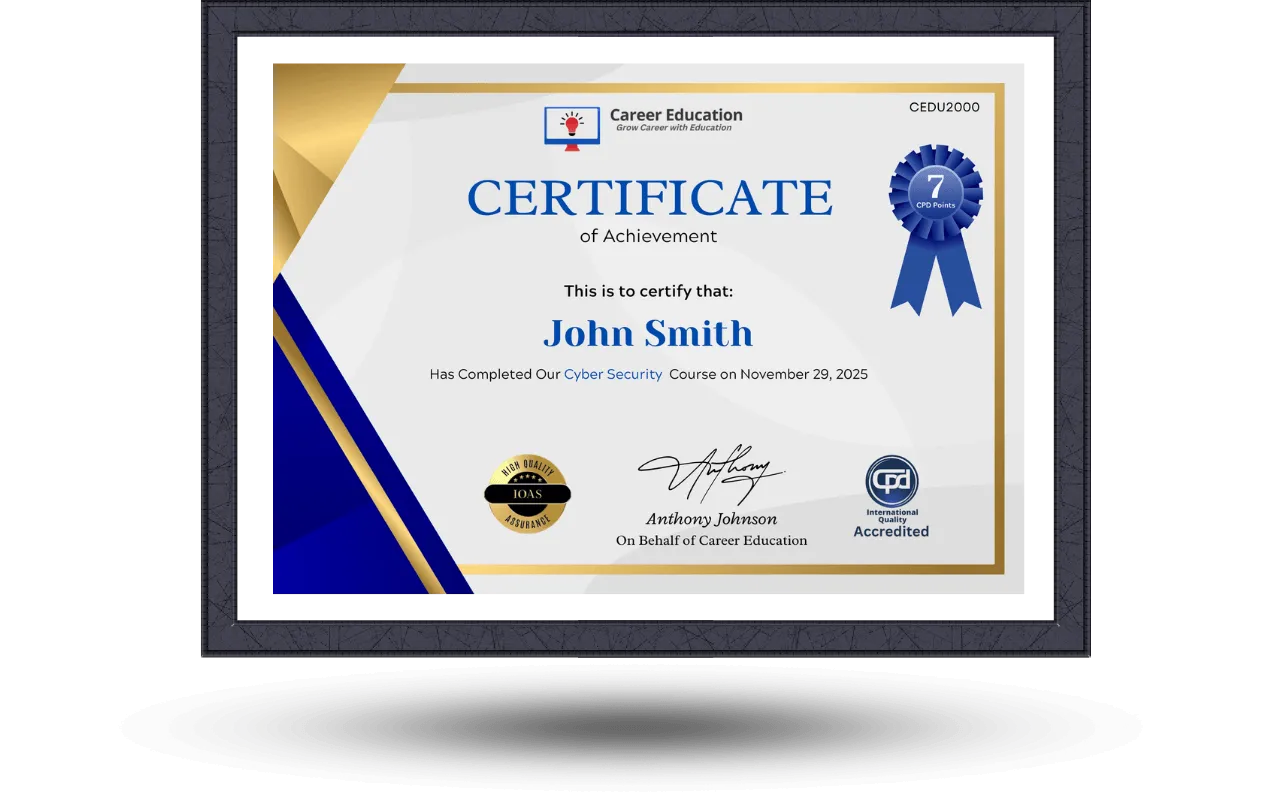
Earn an Accredited Certificate
Upon completion of any course, all students are entitled to a CPD IQ Accredited e-certificate that will be issued by Career Education signifying the completion of your course.
After you complete the course and assignment, you will be eligible to order a free certificate accredited by CPD International Quality by completing the form below.
Hardcopy certificates and transcripts are also available for a small additional fee. More information is disclosed upon course completion.
Similar Courses


Frequently Asked Questions
The lifetime membership includes unlimited access to all courses, resources, and updates for a one-time fee.
You can purchase the membership directly from our website using a secure checkout process.
Yes, selected courses can be downloaded for offline access through our mobile app.
Yes, all future updates and new courses are included at no extra cost.
Yes, we offer a 30-day money-back guarantee if you are not satisfied with the membership.