
94%
OFF
OFF
Strategic Problem-Solving Skills Training
- Lifetime Access
- All Levels
- PDF Certificate
£296
£19
14-Day Money-Back Guarantee
Learn With Confidence








Strategic Problem-Solving Skills Training
In today’s fast-changing professional environment, problems are unavoidable. What separates successful individuals and organisations is not the absence of challenges, but the ability to understand problems clearly, generate effective solutions, make informed decisions, and continuously improve outcomes. Strategic Problem-Solving Skills Training is designed to help learners develop a structured, practical approach to solving problems and responding confidently to complex situations.
Whether you are managing workplace challenges, improving business processes, leading a team, or making important operational decisions, effective problem-solving can help you reduce inefficiencies, overcome obstacles, and achieve better results. This course takes learners through the complete problem-solving process, from identifying the root of an issue to implementing, monitoring, and improving the chosen solution.
Rather than focusing only on theoretical concepts, the course is designed around practical outcomes. Learners will build the confidence to approach problems logically while also developing creative thinking skills that can help them discover alternative solutions. By the end of the training, you will have a clearer framework for turning challenging situations into opportunities for improvement.
Why Strategic Problem-Solving Skills Matter
Problems in the workplace rarely have a single obvious cause. A visible issue may only be a symptom of a deeper challenge. For example, declining productivity could be connected to inefficient processes, unclear communication, insufficient resources, or gaps in training. Addressing only the visible symptom may provide a temporary fix without resolving the underlying issue.
Strategic problem-solving involves looking beyond immediate symptoms and taking a broader view of the situation. It encourages you to gather relevant information, analyse contributing factors, consider multiple possibilities, and select solutions based on evidence and objectives.
Strong problem-solving skills can benefit professionals in almost every sector. They can help you:
-
Identify problems before they become more serious
-
Understand the underlying causes of workplace challenges
-
Make better-informed decisions
-
Generate practical and creative solutions
-
Evaluate the potential impact of different options
-
Implement solutions in a structured way
-
Monitor results and identify areas for improvement
-
Respond more effectively when circumstances change
-
Support better teamwork and collaboration
-
Contribute to organisational efficiency and performance
Strategic Problem-Solving Skills Training provides a structured learning pathway for developing these capabilities.
What You Will Learn
This course covers six key stages of strategic problem-solving. Each module builds on the previous one, allowing learners to develop a complete understanding of how effective solutions can be developed and managed.
Module 1: Introduction to Problem Solving
The course begins by establishing a strong foundation in problem-solving. You will explore what problem-solving involves and why it is an important professional skill.
You will develop an understanding of different approaches to problem-solving and learn why a structured process can be more effective than reacting to problems without sufficient analysis.
This module helps you recognise the importance of approaching challenges objectively. You will learn to distinguish between assumptions, symptoms, causes, and clearly defined problems.
By completing this module, you can develop a stronger foundation for approaching workplace challenges systematically rather than making decisions based solely on instinct or incomplete information.
Module 2: Problem Identification and Analysis
Finding the right solution begins with understanding the problem correctly. If a problem is poorly defined, even a well-executed solution may fail to deliver the desired result.
This module focuses on identifying and analysing problems in greater depth. You will explore how to clarify the nature and scope of a problem and consider the factors that may be contributing to it.
You will learn how effective analysis can help you move from identifying what is happening to understanding why it is happening. This encourages a more evidence-based approach to decision-making.
The skills developed in this module can help you:
-
Define problems more clearly
-
Separate symptoms from underlying causes
-
Gather and assess relevant information
-
Examine contributing factors
-
Identify patterns and relationships
-
Understand the potential impact of a problem
-
Establish a clearer basis for developing solutions
These skills can be particularly valuable when dealing with complex situations where the initial problem may not reveal the full picture.
Module 3: Creative Solution Generation
Once a problem has been properly understood, the next step is to explore possible solutions. Effective problem-solving is not always about choosing the first solution that appears practical. Sometimes the best answer comes from considering a range of possibilities.
This module introduces creative approaches to solution generation. You will learn how to think beyond conventional responses and explore alternative ways of addressing a challenge.
Creative problem-solving can help professionals identify opportunities that may otherwise be overlooked. It can also encourage teams to contribute different perspectives and ideas.
You will develop techniques for generating potential solutions while considering practical objectives and constraints. The focus is on expanding your options before narrowing them down.
By the end of this module, you will be better prepared to approach challenges with an open and flexible mindset and develop multiple potential ways forward.
Module 4: Solution Evaluation and Selection
Generating several possible solutions is only part of the process. The next challenge is determining which option is most appropriate.
This module focuses on evaluating potential solutions and making informed selections. You will learn to consider relevant factors such as feasibility, resources, risks, potential benefits, limitations, and expected outcomes.
A solution that appears attractive initially may not always be the most suitable choice. Strategic decision-making requires you to consider the wider consequences of each option.
This module can help you develop a more structured approach to comparing alternatives. Instead of relying entirely on personal preference or immediate convenience, you can assess potential solutions against clearly defined criteria.
You will learn how to:
-
Compare different solutions
-
Consider potential risks and benefits
-
Assess practical feasibility
-
Think about available resources
-
Consider likely consequences
-
Align solutions with objectives
-
Select an appropriate course of action
These skills can support more confident and rational decision-making in professional environments.
Module 5: Solution Implementation and Monitoring
A good solution only creates value when it is successfully implemented. Even an excellent idea can fail if responsibilities are unclear, resources are unavailable, or progress is not monitored effectively.
This module focuses on putting selected solutions into practice. You will explore the importance of planning implementation and establishing appropriate ways to monitor progress.
You will consider how implementation can be organised to support the intended outcome. Monitoring is equally important because it allows you to identify whether a solution is producing the expected results.
Through this stage of the course, you can develop a stronger understanding of how to move from decision-making to action.
You will learn to consider:
-
How solutions can be implemented effectively
-
What resources may be required
-
How responsibilities can be established
-
How progress can be monitored
-
How outcomes can be assessed
-
How emerging problems can be recognised
-
How implementation can be adjusted when necessary
This practical approach can help you avoid treating problem-solving as a one-time decision. Instead, it becomes an ongoing process of action, observation, and adjustment.
Module 6: Adaptation and Continuous Improvement
Professional environments rarely remain static. Customer expectations, technology, regulations, resources, market conditions, and organisational priorities can all change. A solution that works today may need to be adjusted tomorrow.
The final module focuses on adaptation and continuous improvement. You will explore how to respond when circumstances change and how lessons learned from previous problem-solving efforts can inform future decisions.
Continuous improvement encourages professionals to evaluate outcomes, identify opportunities for refinement, and make appropriate adjustments.
This module helps reinforce the idea that effective problem-solving does not necessarily end when a solution has been implemented. Monitoring results and learning from experience can create opportunities for further improvement.
By completing this module, you can develop a more adaptable approach to challenges and become better prepared to refine strategies as new information and circumstances emerge.
Practical Outcomes of Strategic Problem-Solving Skills Training
The purpose of Strategic Problem-Solving Skills Training is to help you develop skills that can be applied beyond the learning environment.
After completing the course, you can expect to have a stronger understanding of how to approach problems systematically and strategically. You will be able to work through the different stages of problem-solving, from initial identification through to implementation and continuous improvement.
Potential outcomes include improved confidence when facing workplace challenges, stronger analytical thinking, better decision-making, and greater ability to develop practical solutions.
You can also develop a more proactive mindset. Instead of simply responding to problems after they occur, you can become more comfortable identifying potential issues, examining their causes, and considering improvements before challenges escalate.
Who Can Benefit from This Course?
Strategic Problem-Solving Skills Training can be useful for a wide range of learners because problem-solving is relevant across industries and professional roles.
The course may be particularly valuable for:
-
Managers and team leaders
-
Supervisors and coordinators
-
Business professionals
-
Project team members
-
Entrepreneurs and business owners
-
Administrators
-
Operations professionals
-
Professionals seeking career development
-
Individuals preparing for leadership responsibilities
-
Anyone who wants to strengthen workplace decision-making skills
You do not need to work in a specific industry to benefit from strategic problem-solving. The principles covered can be adapted to different professional settings and challenges.
Build More Confident Decision-Making Skills
Good decisions require more than simply identifying that something has gone wrong. You need to understand the situation, explore possible responses, assess your options, and determine how best to move forward.
Strategic Problem-Solving Skills Training helps you develop this complete process. By learning how to analyse problems and evaluate alternatives, you can approach decisions with greater structure and confidence.
The course also highlights the importance of flexibility. Sometimes an initial solution does not produce the expected outcome. Rather than viewing this as the end of the process, effective problem-solvers can review the situation, learn from the results, and make appropriate adjustments.
This mindset can support professional resilience and encourage a culture of learning and improvement.
Support Workplace Performance and Improvement
Effective problem-solving can have a direct impact on workplace performance. When challenges are addressed systematically, organisations can identify opportunities to improve processes, reduce inefficiencies, and make better use of available resources.
Individuals who can contribute constructively to problem-solving can also become valuable members of their teams. They can help colleagues understand challenges, contribute ideas, assess potential solutions, and support implementation.
The skills covered in this course can therefore contribute not only to individual development but also to more effective teamwork and organisational improvement.
Develop a Strategic Approach to Challenges
A strategic approach means considering both the immediate problem and the wider context. It involves asking what caused the issue, what outcomes are required, what options are available, and how the chosen solution may affect other areas.
Throughout Strategic Problem-Solving Skills Training, you will develop an understanding of this broader perspective.
Rather than treating every challenge as an isolated incident, you can learn to consider patterns, consequences, resources, risks, and opportunities for long-term improvement. This can help you make decisions that are more aligned with professional and organisational objectives.
Turn Problems into Opportunities for Learning
Every challenge can provide useful information. A problem may reveal an inefficient process, a communication gap, an unmet need, or an opportunity to improve an existing approach.
The continuous improvement principles covered in this course encourage you to learn from outcomes rather than simply move on once a problem appears to have been resolved.
By reviewing what worked, what did not work, and what could be improved, you can strengthen your future problem-solving approach.
This creates a cycle of learning: identify, analyse, generate, evaluate, implement, monitor, and improve.
Take the Next Step with Strategic Problem-Solving Skills Training
Problems are an unavoidable part of professional life, but your response to those problems can make a significant difference. Developing strong problem-solving capabilities can help you approach challenges with greater clarity, creativity, structure, and confidence.
Strategic Problem-Solving Skills Training takes you through the complete problem-solving journey, from understanding the fundamentals and identifying the real issue to generating solutions, evaluating options, implementing decisions, monitoring outcomes, and continuously improving your approach.
Whether you want to strengthen your current professional skills, prepare for greater responsibility, improve your decision-making, or become more effective when dealing with workplace challenges, this course provides a structured foundation for developing strategic problem-solving abilities.
Start developing the skills you need to analyse challenges more effectively, make informed decisions, create practical solutions, and contribute to meaningful improvements in your professional environment. Enrol in Strategic Problem-Solving Skills Training today and take a proactive step towards becoming a more confident and capable problem-solver.
Course Modules
Course Content
Module 1 Introduction to Problem Solving.
-
Lesson 1 Introduction to Problem Solving.
Module 2 Problem Identification and Analysis.
Module 3 Creative Solution Generation.
Module 4 Solution Evaluation and Selection.
Module 5 Solution Implementation and Monitoring.
Module 6 Adaptation and Continuous Improvement.
What our students say
Excellent
4.9 average
158 Reviews

Earn an Accredited Certificate
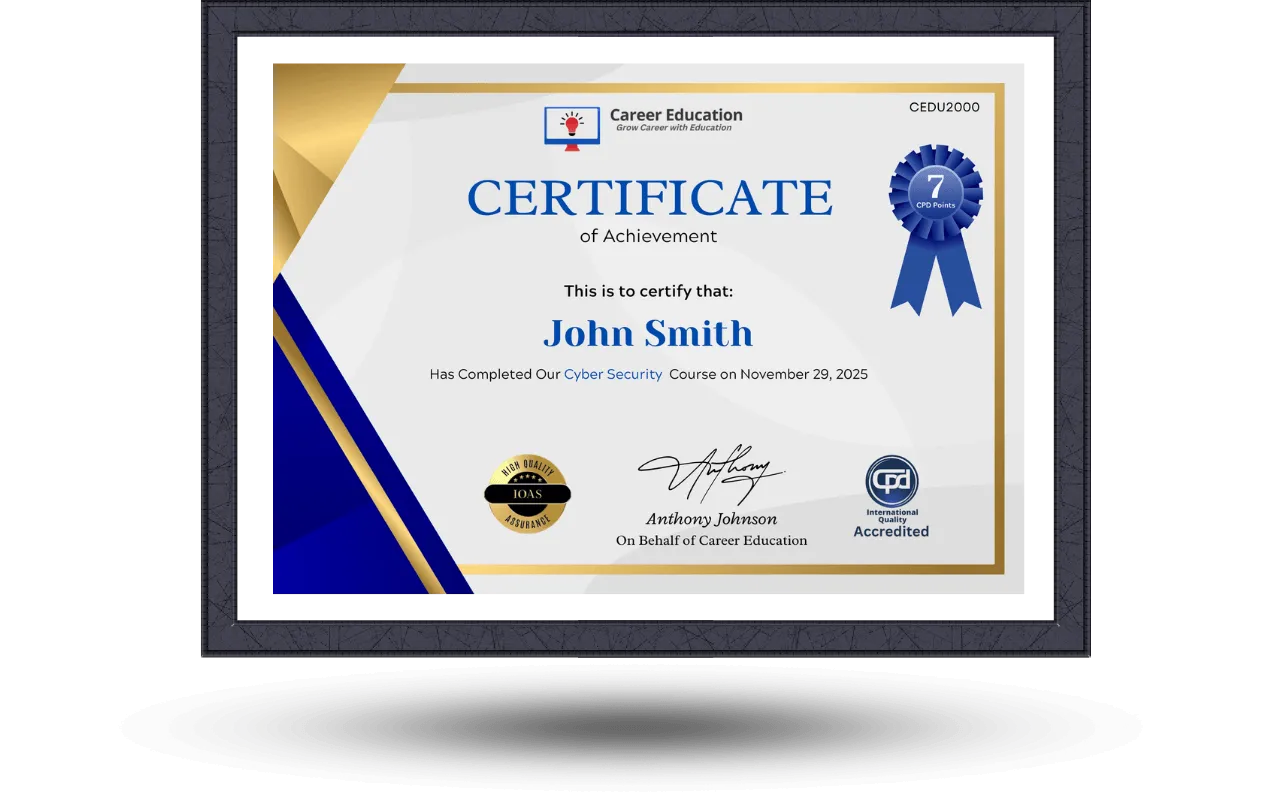
Upon completion of any course, all students are entitled to a CPD IQ Accredited e-certificate that will be issued by Career Education signifying the completion of your course.
After you complete the course and assignment, you will be eligible to order a free certificate accredited by CPD International Quality by completing the form below.
Hardcopy certificates and transcripts are also available for a small additional fee. More information is disclosed upon course completion.
Similar Courses



Frequently Asked Questions
The lifetime membership includes unlimited access to all courses, resources, and updates for a one-time fee.
You can purchase the membership directly from our website using a secure checkout process.
Yes, selected courses can be downloaded for offline access through our mobile app.
Yes, all future updates and new courses are included at no extra cost.
Yes, we offer a 30-day money-back guarantee if you are not satisfied with the membership.