
94%
OFF
OFF
Effective Upward Management Skills
- Lifetime Access
- All Levels
- PDF Certificate
£296
£19
14-Day Money-Back Guarantee
Learn With Confidence





Effective Upward Management Skills
In today’s fast-paced workplace, professional success is not only about managing your own responsibilities or leading a team. It also depends on how effectively you work with your manager, understand organisational priorities, communicate expectations, and build productive professional relationships. Effective Upward Management Skills can help professionals develop the confidence and practical abilities needed to manage these relationships strategically and contribute more effectively to workplace success.
Upward management is about creating a productive working relationship with your manager while remaining accountable for your own responsibilities. It involves understanding how your manager works, anticipating their needs, communicating clearly, handling challenges constructively, and ensuring that priorities remain aligned. When practised effectively, upward management can improve communication, reduce misunderstandings, support better decision-making, and create a more collaborative working environment.
This course is designed to help learners develop practical Effective Upward Management Skills that can be applied across different roles, industries, and organisational settings. Rather than focusing solely on management from the top down, the course explores how employees can proactively manage communication, expectations, relationships, conflicts, and professional networks to achieve better outcomes.
Why Develop Effective Upward Management Skills?
Many workplace challenges arise because expectations are unclear, communication is inconsistent, or employees and managers have different priorities. Even highly capable professionals can struggle when they do not know how to communicate effectively with senior colleagues or respond appropriately to changing expectations.
Developing Effective Upward Management Skills can help learners become more proactive and confident in their professional interactions. These skills can support better collaboration, clearer communication, stronger working relationships, and more effective problem-solving.
The ability to manage upwards can be particularly valuable when working with managers who have different communication preferences, decision-making styles, priorities, or expectations. Instead of simply reacting to instructions, learners can develop a more strategic approach to their work and become better prepared to identify potential issues before they become significant problems.
By completing this course, learners can develop an improved understanding of how to:
-
Build constructive and professional relationships with managers
-
Communicate information clearly and appropriately
-
Understand and anticipate managerial expectations
-
Present ideas and recommendations persuasively
-
Handle disagreements and difficult workplace situations
-
Improve collaboration and trust
-
Become more proactive in managing responsibilities
-
Develop a stronger professional support network
What Is Upward Management?
Upward management refers to the skills and behaviours used to create an effective working relationship with people in more senior positions. It does not mean manipulating a manager or avoiding accountability. Instead, it focuses on mutual understanding, communication, trust, and alignment.
Effective upward management means understanding what your manager needs from you and communicating what you need from them to perform your responsibilities effectively. It can involve providing timely updates, identifying risks, proposing solutions, clarifying priorities, and adapting your communication style to the situation.
The Effective Upward Management Skills course introduces learners to the principles behind this approach and provides a structured framework for applying them in everyday professional situations.
Course Curriculum
Module 1: Introduction to Managing Upwards
The course begins by introducing the fundamental principles of managing upwards. Learners will explore what upward management means, why it matters, and how it can contribute to professional effectiveness.
This module helps learners understand the difference between simply following instructions and taking proactive responsibility for the working relationship with a manager. It also encourages learners to consider how their own behaviour, communication habits, and approach to responsibilities can influence workplace outcomes.
By developing this foundation, learners can begin approaching managerial relationships with greater awareness, professionalism, and confidence.
Module 2: Building a Positive Relationship with Your Manager
A productive relationship with your manager can have a significant impact on communication, collaboration, and job performance. This module focuses on developing a professional relationship based on trust, respect, reliability, and mutual understanding.
Learners will explore ways to understand their manager’s priorities and working preferences while recognising the importance of maintaining appropriate professional boundaries. They will also consider how consistency, reliability, and proactive communication can strengthen workplace relationships.
The outcome is a more deliberate approach to relationship building that can support smoother collaboration and reduce unnecessary misunderstandings.
Module 3: Effective Communication Strategies
Clear communication is one of the most important components of successful upward management. This module examines strategies for communicating with managers effectively across different workplace situations.
Learners will develop an understanding of how to present information clearly, provide useful updates, raise concerns appropriately, and communicate challenges without creating unnecessary confusion. The module also highlights the importance of listening, asking relevant questions, and adapting communication to different circumstances.
These skills can help learners communicate with greater clarity and ensure that important information reaches managers at the right time.
Module 4: Influencing and Persuading Upwards
Professionals often need to present ideas, recommend changes, request support, or explain why a particular approach may be beneficial. Being able to influence upwards can therefore be an important professional skill.
This module explores practical approaches to presenting ideas and recommendations in a way that is logical, respectful, and outcome-focused. Learners will consider how to understand the perspective of decision-makers, use relevant information, explain benefits, and respond constructively to questions or objections.
The goal is not simply to persuade others to agree. Instead, learners can develop the ability to communicate recommendations effectively and contribute more confidently to workplace decision-making.
Module 5: Managing Conflicts and Difficult Situations
Disagreements and difficult situations can occur in any professional environment. When communication breaks down, unresolved issues can affect productivity, relationships, and team performance.
This module focuses on managing workplace conflicts and challenging conversations constructively. Learners will explore approaches for remaining professional, communicating concerns clearly, understanding different perspectives, and working towards practical solutions.
Developing these skills can help learners respond to difficult situations more calmly and strategically rather than allowing problems to escalate. The emphasis is on constructive communication, problem-solving, and maintaining productive professional relationships.
Module 6: Anticipating and Meeting Expectations
Understanding expectations is essential for effective workplace performance. Managers often have multiple priorities, and expectations can change as projects, deadlines, and organisational requirements develop.
This module helps learners become more proactive in identifying and meeting expectations. Learners will explore the value of clarifying priorities, monitoring progress, identifying potential risks, and communicating important developments early.
By anticipating needs rather than waiting for problems to arise, professionals can demonstrate greater ownership and reliability. These behaviours can also help managers make better-informed decisions and support smoother project delivery.
Module 7: Building a Supportive Network
Successful professionals rarely work in isolation. A strong network of colleagues, mentors, peers, and other workplace contacts can provide valuable knowledge, collaboration, and support.
The final module explores how learners can build and maintain a supportive professional network. It highlights the importance of constructive workplace relationships beyond the immediate manager-employee relationship.
A strong professional network can help learners exchange knowledge, identify opportunities for collaboration, gain different perspectives, and develop greater confidence in navigating workplace challenges.
What Will You Gain from This Course?
The Effective Upward Management Skills course is designed around practical professional outcomes. By completing the course, learners can strengthen their ability to communicate with managers, manage expectations, influence decisions, and navigate challenging workplace situations.
You can expect to develop skills that support:
Better Managerial Communication
Learn how to communicate information, updates, concerns, and recommendations more effectively. Clearer communication can reduce confusion and make workplace interactions more productive.
Stronger Professional Relationships
Develop approaches for creating positive, respectful, and reliable relationships with managers and colleagues. Strong professional relationships can provide a better foundation for collaboration.
Greater Confidence
Understanding how to approach difficult conversations, present ideas, and raise concerns can help professionals become more confident in workplace interactions.
Improved Problem-Solving
Learn to identify potential challenges, communicate risks, and focus conversations on practical solutions rather than simply reporting problems.
More Effective Influence
Develop the ability to communicate recommendations and ideas in a way that considers the priorities and perspectives of decision-makers.
Better Expectation Management
Learn how to clarify responsibilities, monitor priorities, and anticipate what managers may need from you. This proactive approach can support more consistent workplace performance.
Stronger Professional Networks
Understand how productive workplace connections can provide knowledge, collaboration, and professional support.
Who Can Benefit from Effective Upward Management Skills?
This course can be valuable for employees and professionals who regularly work with managers, supervisors, team leaders, department heads, or other senior colleagues.
It may be particularly useful for:
-
Employees looking to improve workplace communication
-
Professionals preparing for greater responsibility
-
Team members working closely with senior colleagues
-
Supervisors and emerging leaders
-
Professionals managing multiple priorities
-
Individuals who want to improve their influencing skills
-
Employees dealing with challenging workplace relationships
-
Anyone seeking to become more proactive and effective at work
No matter your industry, the principles of upward management can be adapted to many professional environments.
Turn Workplace Relationships into Productive Partnerships
Managing upwards is not about saying yes to everything or trying to control your manager’s decisions. It is about developing a professional approach that supports mutual understanding, accountability, and shared objectives.
When employees understand how to communicate effectively, anticipate expectations, raise concerns constructively, and contribute useful solutions, they can become more effective members of their organisations. These capabilities can also complement broader leadership, communication, teamwork, and professional development skills.
Effective Upward Management Skills provides a structured opportunity to develop these capabilities and apply them to real workplace situations. Through seven focused modules, learners can build a stronger understanding of managerial relationships, communication, influence, conflict management, expectation setting, and professional networking.
Whether you want to improve your current workplace relationships, prepare for increased responsibility, or become a more proactive professional, this course can provide valuable knowledge and practical strategies to help you work more effectively with managers and contribute with greater confidence.
Start developing your Effective Upward Management Skills today and take a more proactive approach to communication, collaboration, expectations, and professional success.
Course Modules
Course Content
Module 1_ Introduction to Managing Upwards
-
Lesson 1_ Introduction to Managing Upwards
Module 2_ Building a Positive Relationship with Your Manager
Module 3_ Effective Communication Strategies
Module 4_ Influencing and Persuading Upwards
Module 5_ Managing Conflicts and Difficult Situations
Module 6_ Anticipating and Meeting Expectations
Module 7_ Building a Supportive Network
What our students say
Excellent
4.9 average
158 Reviews

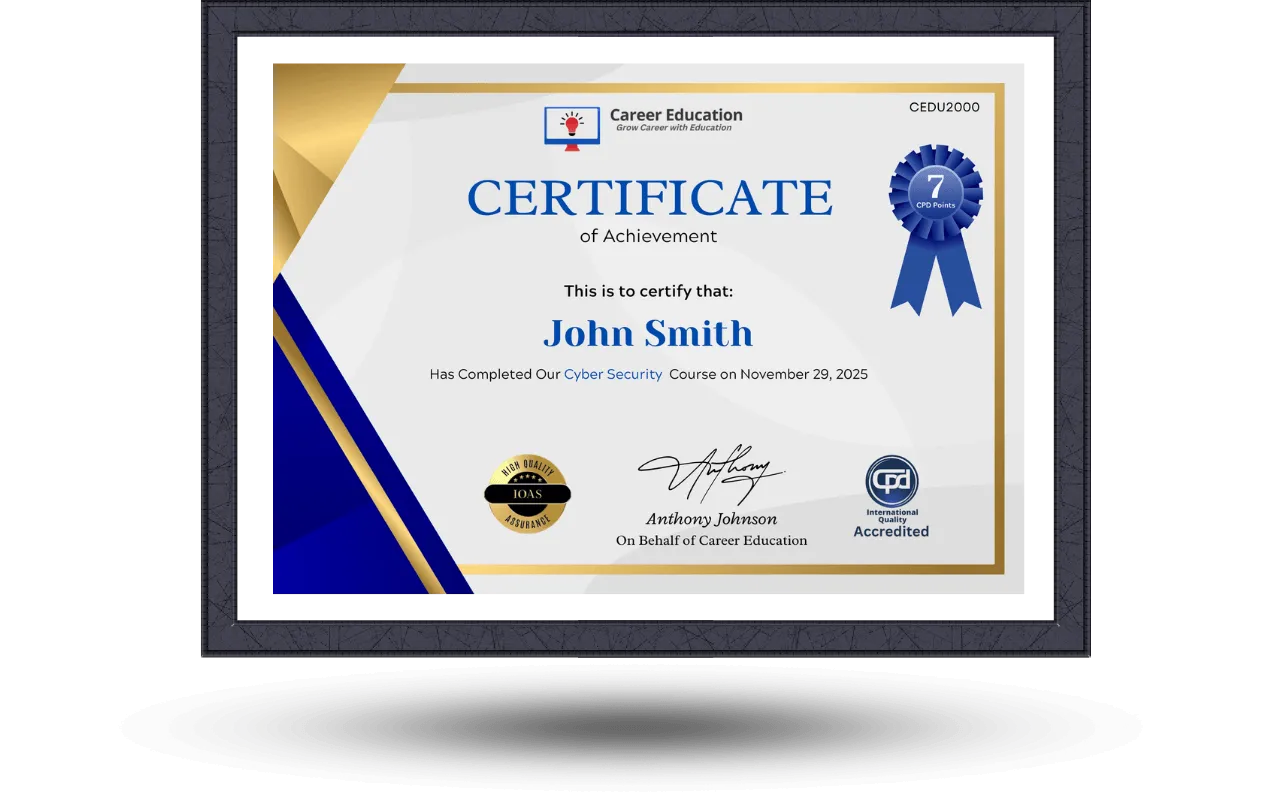
Earn an Accredited Certificate
Upon completion of any course, all students are entitled to a CPD IQ Accredited e-certificate that will be issued by Career Education signifying the completion of your course.
After you complete the course and assignment, you will be eligible to order a free certificate accredited by CPD International Quality by completing the form below.
Hardcopy certificates and transcripts are also available for a small additional fee. More information is disclosed upon course completion.
Similar Courses




Frequently Asked Questions
The lifetime membership includes unlimited access to all courses, resources, and updates for a one-time fee.
You can purchase the membership directly from our website using a secure checkout process.
Yes, selected courses can be downloaded for offline access through our mobile app.
Yes, all future updates and new courses are included at no extra cost.
Yes, we offer a 30-day money-back guarantee if you are not satisfied with the membership.