
94%
OFF
OFF
Media and Public Relations Essentials for Managers
- Lifetime Access
- All Levels
- PDF Certificate
£296
£19
14-Day Money-Back Guarantee
Learn With Confidence








# Media and Public Relations Essentials for Managers
Managers today operate in an environment where communication can influence employee confidence, customer trust, business reputation, and organisational success. Whether an organisation is launching a new initiative, responding to a challenging situation, communicating with journalists, or protecting its public image, managers need to understand how media and public relations work.
**Media and Public Relations Essentials for Managers** is a practical, outcome-focused course designed to help managers and professionals develop the knowledge and communication skills needed to engage with the media, build professional relationships, create effective messages, plan media activities, monitor public coverage, and respond to reputational challenges.
Public relations is not limited to large corporations or dedicated communications departments. Managers may find themselves involved in interviews, public announcements, stakeholder communications, media enquiries, community relations, internal communications, or crisis situations.
This course provides a structured introduction to these responsibilities. You will explore the media landscape, learn how to establish productive media relationships, develop clear and consistent messages, plan media relations strategically, analyse media coverage, and understand the fundamentals of crisis communication and reputation management.
Whether you are an experienced manager, department leader, business owner, communications professional, or aspiring leader, **Media and Public Relations Essentials for Managers** can help you approach media-related responsibilities with greater preparation and confidence.
—
## Why Media and Public Relations Essentials for Managers Matters
Organisations are constantly communicating.
Customers, employees, journalists, investors, partners, communities, regulators, and other stakeholders may all have questions about an organisation’s activities and decisions.
A manager who understands public relations can contribute more effectively to these conversations.
Without appropriate preparation, organisations may face challenges such as:
* Inconsistent messaging.
* Misunderstood information.
* Poor media relationships.
* Unclear public statements.
* Slow responses to emerging issues.
* Reputation damage.
* Unnecessary escalation during crises.
**Media and Public Relations Essentials for Managers** introduces practical concepts that can help managers communicate more strategically.
You will learn how to:
* Understand the modern media environment.
* Identify relevant media stakeholders.
* Build professional media relationships.
* Develop clear and audience-focused messages.
* Plan media relations activities.
* Monitor and analyse media coverage.
* Recognise potential reputational issues.
* Support effective crisis communication.
* Communicate consistently under pressure.
—
# What You Will Learn
## Module 1 – Introduction to Media and Public Relations
### Lesson 1 – Introduction to Media and Public Relations
The course begins with the fundamentals of media and public relations.
You will explore:
* The meaning of public relations.
* The role of media relations.
* Public relations in modern organisations.
* Key PR responsibilities.
* Stakeholder communication.
* Reputation and public perception.
* Media engagement.
* Internal and external communication.
* The role of managers in public relations.
You will discover that public relations is about much more than sending press releases.
Effective PR involves developing relationships, communicating relevant information, understanding audiences, protecting credibility, and supporting organisational objectives.
You will also explore the difference between media relations and broader public relations.
Media relations focuses primarily on working with journalists and media organisations, while public relations encompasses a wider range of communication and relationship-building activities.
Managers can play an important role in both areas.
**Outcome:** You will understand the fundamentals of media and public relations and recognise how effective communication can support organisational objectives and reputation.
—
# Module 2 – Understanding Media Landscape
The media environment has changed significantly.
Traditional newspapers, television, radio, and magazines now operate alongside digital publications, social media, podcasts, online video platforms, blogs, and other communication channels.
This module helps you understand the modern media landscape.
You will learn about:
* Traditional media.
* Digital media.
* Social media.
* Online publications.
* Broadcast media.
* Journalists and editors.
* Media audiences.
* News cycles.
* Emerging communication channels.
* Media credibility.
* Audience expectations.
You will explore how different media channels operate and why the same message may need to be adapted for different audiences.
For example, a detailed organisational announcement may require a different communication format from a short media statement or social media update.
Understanding the media landscape can help managers choose more appropriate communication channels and develop realistic expectations about how information may be received.
**Outcome:** You will develop greater awareness of the modern media environment and learn how different media channels and audiences can influence organisational communication.
—
# Module 3 – Building and Managing Media Relationships
Strong media relations are built over time.
A journalist who knows an organisation as a credible source may be more likely to engage constructively when relevant news or issues arise.
This module focuses on building and maintaining professional media relationships.
You will explore:
* Identifying relevant journalists.
* Understanding journalist interests.
* Building professional credibility.
* Establishing contact.
* Providing useful information.
* Responding to media enquiries.
* Maintaining relationships.
* Respecting deadlines.
* Understanding journalistic needs.
* Avoiding common media-relations mistakes.
You will learn why media relationships should not only be activated when an organisation needs favourable coverage.
Professional relationships can be strengthened by providing accurate, relevant, timely information and respecting the role and responsibilities of journalists.
You will also explore how managers can prepare for media interactions and understand what journalists may need when developing a story.
**Outcome:** You will learn how to develop professional media relationships based on credibility, responsiveness, relevance, and mutual respect.
—
# Module 4 – Crafting Effective Messages
A strong message needs to be clear, relevant, accurate, and appropriate for its intended audience.
This module focuses on developing effective public and media messages.
You will learn about:
* Audience analysis.
* Message development.
* Key messages.
* Clear language.
* Supporting evidence.
* Message consistency.
* Media statements.
* Interview preparation.
* Quotable information.
* Addressing difficult questions.
* Avoiding ambiguity.
* Maintaining accuracy.
You will explore how to identify the most important information and communicate it without unnecessary complexity.
Managers may sometimes have only a short opportunity to communicate an important point. A well-structured message can help ensure that the most relevant information is understood.
You will also learn how to anticipate questions and prepare responses without relying on overly scripted or artificial communication.
**Outcome:** You will be able to develop clearer, more focused messages that are appropriate for different audiences and media situations.
—
# Module 5 – Strategic Planning in Media Relations
Effective media relations require planning.
Rather than reacting to every media opportunity or enquiry individually, organisations can develop structured approaches that connect communication activities with broader objectives.
This module explores strategic media relations planning.
You will learn about:
* Setting communication objectives.
* Identifying target audiences.
* Identifying relevant media.
* Developing key messages.
* Planning media activities.
* Selecting communication channels.
* Preparing spokespersons.
* Managing timelines.
* Coordinating internal stakeholders.
* Evaluating communication outcomes.
You will explore how media planning can support broader organisational priorities.
For example, an organisation introducing a new service may need to consider its target audience, relevant media outlets, timing, spokespersons, supporting information, and potential questions.
Planning can help reduce confusion and improve consistency.
**Outcome:** You will understand how to develop a structured media relations approach that connects communication activities with organisational objectives.
—
# Module 6 – Media Monitoring and Analysis
Effective public relations does not end when a message is published.
Organisations need to understand how their communication is being received and how they are being represented in the media.
This module focuses on media monitoring and analysis.
You will explore:
* Tracking media coverage.
* Monitoring relevant topics.
* Identifying mentions.
* Analysing tone and themes.
* Identifying emerging issues.
* Monitoring competitors and industry developments.
* Evaluating message consistency.
* Recognising potential reputation risks.
* Reporting media findings.
* Using insights to improve communication.
You will learn why media monitoring can provide valuable information about public conversations.
Monitoring can help organisations identify positive opportunities as well as potential challenges.
For example, recurring questions or misunderstandings in media coverage may indicate that an organisation needs to clarify its messaging.
You will also explore the importance of distinguishing meaningful trends from isolated comments or individual pieces of coverage.
**Outcome:** You will develop an understanding of how media monitoring and analysis can support informed communication decisions and reputation management.
—
# Module 7 – Crisis Communication and Reputation Management
A crisis can develop quickly.
Organisations may face incidents involving safety, service disruption, operational failures, controversial decisions, misinformation, or other events that attract public and media attention.
This module introduces the fundamentals of crisis communication and reputation management.
You will learn about:
* Crisis communication principles.
* Crisis preparation.
* Communication responsibilities.
* Spokesperson preparation.
* Rapid response.
* Accurate information.
* Stakeholder communication.
* Managing uncertainty.
* Media enquiries during crises.
* Reputation protection.
* Post-crisis communication.
* Learning from incidents.
You will explore why organisations should avoid speculation and communicate verified information responsibly during uncertain situations.
You will also learn the importance of consistency.
When multiple people communicate on behalf of an organisation, conflicting statements can create additional confusion and reputational risk.
The course introduces the importance of preparation, clear responsibilities, accurate information, timely communication, and appropriate escalation.
**Outcome:** You will develop a foundational understanding of crisis communication and learn how structured communication can help organisations respond to reputational challenges more effectively.
—
# Practical Skills You Can Develop
**Media and Public Relations Essentials for Managers** is designed around practical management outcomes.
After completing the course, you can develop the ability to:
### Understand the Media Environment
Recognise different media channels, audiences, and communication formats.
### Build Media Relationships
Develop professional relationships with journalists and media stakeholders based on credibility and mutual respect.
### Develop Effective Messages
Create clear, concise, audience-focused messages for media and public communication.
### Prepare for Media Interactions
Anticipate questions, clarify key points, and approach media conversations more confidently.
### Plan Media Relations
Connect media activities with organisational objectives and stakeholder needs.
### Monitor Media Coverage
Track relevant coverage and identify themes, opportunities, and potential reputation concerns.
### Support Crisis Communication
Understand how to communicate accurately and responsibly during challenging situations.
### Protect Organisational Reputation
Recognise how communication choices can influence public perception and organisational credibility.
—
# Who Is This Course For?
**Media and Public Relations Essentials for Managers** is suitable for professionals who may have communication responsibilities within their organisations.
It can benefit:
* Managers.
* Team leaders.
* Business owners.
* Entrepreneurs.
* Department heads.
* Public relations professionals.
* Communications professionals.
* Marketing professionals.
* Human resources managers.
* Corporate communications teams.
* Project managers.
* Community relations professionals.
* Aspiring leaders.
It is also suitable for managers who may occasionally act as organisational representatives or spokespersons.
—
# Become a More Confident Organisational Communicator
Managers do not need to become professional journalists or public relations specialists to communicate effectively with the media.
However, understanding how media and public relations work can make a significant difference.
A manager who understands the importance of preparation can approach media enquiries more confidently. A manager who understands audience needs can communicate messages more clearly. A manager who understands reputation can recognise the potential consequences of careless or inconsistent communication.
**Media and Public Relations Essentials for Managers** provides the foundational knowledge needed to develop these capabilities.
—
# Build Stronger Media Relationships
Media relationships can become valuable professional assets when managed appropriately.
Journalists often work under tight deadlines and need accurate, relevant information. Organisations benefit when they can provide useful information efficiently while maintaining appropriate boundaries.
The course helps managers understand how to:
* Identify relevant media contacts.
* Understand media needs.
* Communicate professionally.
* Respond promptly where appropriate.
* Provide accurate information.
* Maintain credibility.
* Build long-term relationships.
These practices can contribute to more productive interactions between organisations and the media.
—
# Communicate Clearly Under Pressure
One of the biggest challenges for managers is communicating effectively when pressure is high.
During a difficult situation, there may be incomplete information, competing stakeholder demands, and significant public attention.
Clear communication becomes even more important.
Managers can benefit from asking:
* What information is confirmed?
* What does the audience need to know?
* What information should not be speculated upon?
* Who is authorised to communicate?
* What are the key messages?
* What questions are likely to arise?
* How can the organisation respond consistently?
These principles can help create a more structured approach to challenging communication situations.
—
# Strengthen Reputation Management
An organisation’s reputation is influenced by many factors, including how it communicates.
Reputation can be strengthened through:
* Accuracy.
* Transparency.
* Consistency.
* Responsiveness.
* Professionalism.
* Accountability.
* Appropriate stakeholder engagement.
**Media and Public Relations Essentials for Managers** helps learners understand how these principles connect with everyday communication.
—
# Why Choose Media and Public Relations Essentials for Managers?
The course provides a structured pathway from fundamental PR concepts to strategic media planning and crisis communication.
The curriculum covers:
1. Introduction to Media and Public Relations.
2. Understanding Media Landscape.
3. Building and Managing Media Relationships.
4. Crafting Effective Messages.
5. Strategic Planning in Media Relations.
6. Media Monitoring and Analysis.
7. Crisis Communication and Reputation Management.
This progression helps learners understand not only what public relations is but also how managers can apply communication principles in practical workplace situations.
—
# Turn Communication into a Strategic Management Skill
Communication is increasingly a core management capability.
Managers may influence how employees understand organisational decisions, how customers perceive an organisation, and how external stakeholders respond to important developments.
Developing media and public relations awareness can therefore complement traditional management skills.
The goal is not simply to generate publicity.
It is to communicate responsibly, build relationships, provide accurate information, understand stakeholder expectations, and protect organisational credibility.
—
# Start Learning Today
Every organisation has a story to communicate.
The challenge is communicating that story clearly, responsibly, and strategically.
**Media and Public Relations Essentials for Managers** provides a practical foundation for managers who want to strengthen their media awareness, communication skills, relationship-building abilities, planning capabilities, and crisis communication knowledge.
From understanding the media landscape and building professional relationships to crafting effective messages, monitoring coverage, and managing reputational challenges, the course provides a comprehensive introduction to modern media and public relations.
Whether you are a manager, business owner, communications professional, team leader, or aspiring executive, the skills covered in this course can help you approach public communication with greater confidence and strategic awareness.
**Enrol in Media and Public Relations Essentials for Managers today and learn how to understand the media landscape, build stronger media relationships, craft effective messages, plan communication strategically, monitor public coverage, and support effective crisis and reputation management.**
Course Modules
Course Content
Module 1_ Introduction to Media and Public Relations
-
Lesson 1_ Introduction to Media and Public Relations
Module 2_ Understanding Media Landscape
Module 3_ Building and Managing Media Relationships
Module 4_ Crafting Effective Messages
Module 5_ Strategic Planning in Media Relations
Module 6_ Media Monitoring and Analysis
Module 7_ Crisis Communication and Reputation Management
What our students say
Excellent
4.9 average
158 Reviews

Earn an Accredited Certificate
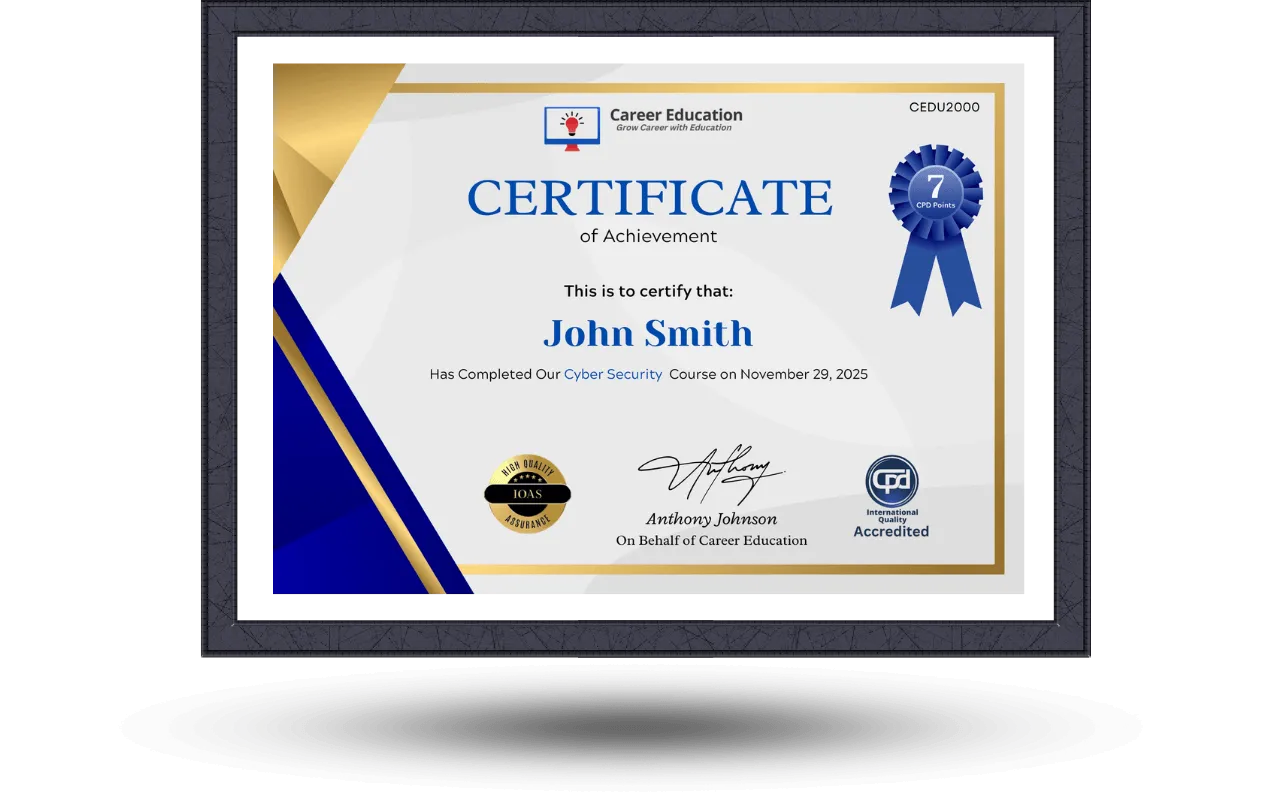
Upon completion of any course, all students are entitled to a CPD IQ Accredited e-certificate that will be issued by Career Education signifying the completion of your course.
After you complete the course and assignment, you will be eligible to order a free certificate accredited by CPD International Quality by completing the form below.
Hardcopy certificates and transcripts are also available for a small additional fee. More information is disclosed upon course completion.
Similar Courses




Frequently Asked Questions
The lifetime membership includes unlimited access to all courses, resources, and updates for a one-time fee.
You can purchase the membership directly from our website using a secure checkout process.
Yes, selected courses can be downloaded for offline access through our mobile app.
Yes, all future updates and new courses are included at no extra cost.
Yes, we offer a 30-day money-back guarantee if you are not satisfied with the membership.