
94%
OFF
OFF
Effective Delegation Skills
- Lifetime Access
- All Levels
- PDF Certificate
£296
£19
14-Day Money-Back Guarantee
Learn With Confidence







Effective Delegation Skills
Effective delegation is one of the most important skills for successful leadership, team management, and professional growth. When responsibilities are delegated effectively, leaders can focus on higher-priority tasks while empowering team members to contribute their skills, build confidence, and take greater ownership of their work.
The Effective Delegation Skills course is designed to help learners understand how to delegate responsibilities clearly, communicate expectations, build trust, monitor progress, provide constructive feedback, and motivate team members. Rather than simply assigning tasks, this course focuses on achieving better outcomes through structured delegation and stronger team collaboration.
Whether you are a new supervisor, experienced manager, team leader, business professional, or someone preparing for greater responsibility, developing effective delegation skills can help you manage workloads more efficiently and create a more capable and engaged team.
What Is Effective Delegation?
Delegation is more than handing a task to someone else. Effective delegation involves identifying the right responsibility, selecting an appropriate person, communicating expectations, providing the necessary authority and resources, monitoring progress, and supporting the individual throughout the process.
Poor delegation can lead to confusion, missed deadlines, duplicated work, and frustration. Effective delegation, on the other hand, can improve productivity, strengthen accountability, develop employee capabilities, and allow leaders to use their time more strategically.
The Effective Delegation Skills course introduces practical principles that can help learners approach delegation with greater clarity and confidence. You will explore how communication, trust, leadership, decision-making, feedback, motivation, and engagement all contribute to successful delegation.
Why Develop Effective Delegation Skills?
Leaders and managers often have more responsibilities than they can reasonably complete themselves. Trying to control every task can create unnecessary pressure and prevent team members from developing their own abilities.
Effective delegation allows responsibilities to be distributed according to skills, experience, priorities, and development opportunities. It can help create a more balanced workload while giving team members meaningful opportunities to demonstrate initiative.
By developing effective delegation skills, you can learn how to:
-
Organise responsibilities more effectively
-
Communicate tasks and expectations clearly
-
Build greater trust within your team
-
Encourage ownership and accountability
-
Make better use of individual strengths
-
Monitor work without unnecessary micromanagement
-
Provide useful and constructive feedback
-
Support stronger decision-making
-
Improve team motivation and engagement
-
Free up time for strategic and leadership responsibilities
The goal is not simply to delegate more tasks. The goal is to delegate more effectively so that both the individual and the organisation can achieve better results.
What You Will Learn
The course curriculum takes you through the key elements of successful delegation, beginning with the fundamentals and progressing toward leadership, monitoring, decision-making, motivation, and engagement.
Module 1: Introduction to Delegation
The first module introduces the principles and purpose of delegation. You will explore what delegation means, why it matters, and how it can contribute to individual and team performance.
You will develop an understanding of the difference between simply assigning tasks and delegating responsibility effectively. The module provides a foundation for recognising when delegation is appropriate and how it can support better workload management.
By completing this module, you can begin approaching delegation as a structured leadership responsibility rather than simply a way of transferring tasks.
Module 2: Communication and Delegation
Clear communication is essential for successful delegation. Even when the right person is given the right task, unclear instructions can create confusion and reduce the likelihood of achieving the desired outcome.
This module explores the relationship between communication and delegation. You will learn why expectations need to be communicated clearly and how effective communication can help team members understand responsibilities, priorities, deadlines, and desired outcomes.
The focus is on creating greater clarity between leaders and team members so that delegated responsibilities can be completed with fewer misunderstandings.
Module 3: Trust and Delegation
Delegation requires trust. Leaders need to trust team members to complete responsibilities, while team members need to feel that their leaders have confidence in their abilities.
This module examines the importance of trust in effective delegation. You will explore how excessive control can undermine ownership and how appropriate levels of trust can encourage greater independence and accountability.
You will gain insight into how leaders can create an environment where team members feel trusted to take responsibility while still receiving appropriate guidance and support.
Module 4: Leadership and Delegation
Effective delegation is closely connected to effective leadership. Leaders need to understand their team’s capabilities, recognise individual strengths, and determine how responsibilities can be allocated appropriately.
This module explores delegation as a leadership skill. You will consider how leaders can use delegation to develop team capabilities, improve productivity, and create opportunities for professional growth.
You will also develop a better understanding of how leadership behaviours can influence whether delegated tasks are accepted positively and completed successfully.
Module 5: Monitoring and Feedback in Delegation
Delegation does not mean completely stepping away from responsibility. Effective leaders need to monitor progress while avoiding unnecessary interference.
This module focuses on monitoring delegated responsibilities and providing useful feedback. You will explore how leaders can stay informed about progress, identify potential problems, and provide support when required.
You will also learn about the importance of constructive feedback in helping team members understand what is working well and where improvements may be needed.
The outcome is a more balanced approach to oversight—one that supports accountability without turning delegation into micromanagement.
Module 6: Decision Making and Delegation
Decision-making is another important part of effective delegation. Leaders need to determine which decisions should remain with them and which can appropriately be entrusted to team members.
This module examines the connection between delegation and decision-making. You will explore how assigning appropriate decision-making responsibility can encourage ownership and help team members develop confidence in handling their responsibilities.
You will gain a clearer understanding of how decision-making authority can be aligned with responsibilities, expectations, and organisational objectives.
Module 7: Motivation and Engagement in Delegation
Delegation can be a powerful way to increase motivation and engagement when responsibilities are meaningful and individuals understand the value of their contributions.
The final module explores how delegation can influence team motivation and engagement. You will learn how providing responsibility, recognising contributions, and encouraging ownership can help create a more involved and productive team environment.
The module brings together many of the concepts covered throughout the course and demonstrates how effective delegation can contribute to stronger team participation and professional development.
Practical Outcomes of the Course
After completing the Effective Delegation Skills course, learners can have a stronger understanding of how to delegate responsibilities strategically and effectively.
You can expect to develop skills that help you:
Delegate with greater confidence: Understand the fundamentals of delegation and approach responsibility allocation more systematically.
Improve workplace communication: Communicate expectations, responsibilities, and desired outcomes more clearly.
Build stronger working relationships: Use trust as an important foundation for effective delegation and collaboration.
Develop team capabilities: Give individuals opportunities to take responsibility, make decisions, and develop their skills.
Improve accountability: Establish clearer responsibilities and expectations so team members understand what they are expected to deliver.
Monitor without micromanaging: Stay aware of progress while allowing team members appropriate independence.
Provide better feedback: Use feedback to support improvement, reinforce successful performance, and address potential issues.
Support better decisions: Understand how decision-making responsibilities can be delegated appropriately.
Encourage motivation and engagement: Use meaningful responsibility and ownership to encourage stronger participation.
Who Can Benefit from Effective Delegation Skills?
The Effective Delegation Skills course can benefit anyone who has responsibility for managing tasks, projects, people, or workplace priorities.
It may be particularly useful for:
-
Team leaders and supervisors
-
Managers and aspiring managers
-
Business owners and entrepreneurs
-
Project coordinators
-
Department leaders
-
Workplace professionals taking on additional responsibilities
-
Individuals preparing for leadership roles
-
Anyone seeking to improve their organisational and leadership skills
The course can also be valuable for professionals who already have management experience but want to strengthen their approach to delegation and team development.
Build a More Effective Approach to Leadership
Delegation can transform the way work is organised when it is approached thoughtfully. Instead of leaders attempting to handle every responsibility themselves, effective delegation creates opportunities for team members to contribute, learn, make decisions, and take ownership.
The Effective Delegation Skills course provides a structured introduction to the key principles behind successful delegation. From communication and trust to leadership, monitoring, decision-making, motivation, and engagement, each module focuses on an important component of creating better delegation practices.
Developing these skills can help you become more organised, support your team’s development, and create a more collaborative working environment. Most importantly, effective delegation can help shift the focus from simply completing tasks to achieving meaningful outcomes through people and teamwork.
Start Developing Your Effective Delegation Skills Today
Strong delegation is not about doing less—it is about using time, talent, responsibility, and leadership more effectively.
With the Effective Delegation Skills course, you can develop a stronger understanding of how to assign responsibilities, communicate expectations, establish trust, monitor progress, provide feedback, support decision-making, and encourage team engagement.
If you want to strengthen your leadership capabilities, improve team performance, and create a more effective approach to managing responsibilities, this course provides a practical foundation for your development.
Enrol in Effective Delegation Skills today and take the next step toward becoming a more confident, capable, and outcome-focused leader.
Course Modules
Course Content
Module 1_ Introduction to Delegation.
-
Lesson 1_ Introduction to Delegation.
Module 2_ Communication and Delegation.
Module 3_ Trust and Delegation.
Module 4_ Leadership and Delegation.
Module 5_ Monitoring and Feedback in Delegation.
Module 6_ Decision Making and Delegation.
Module 7_ Motivation and Engagement in Delegation.
What our students say
Excellent
4.9 average
158 Reviews

Earn an Accredited Certificate
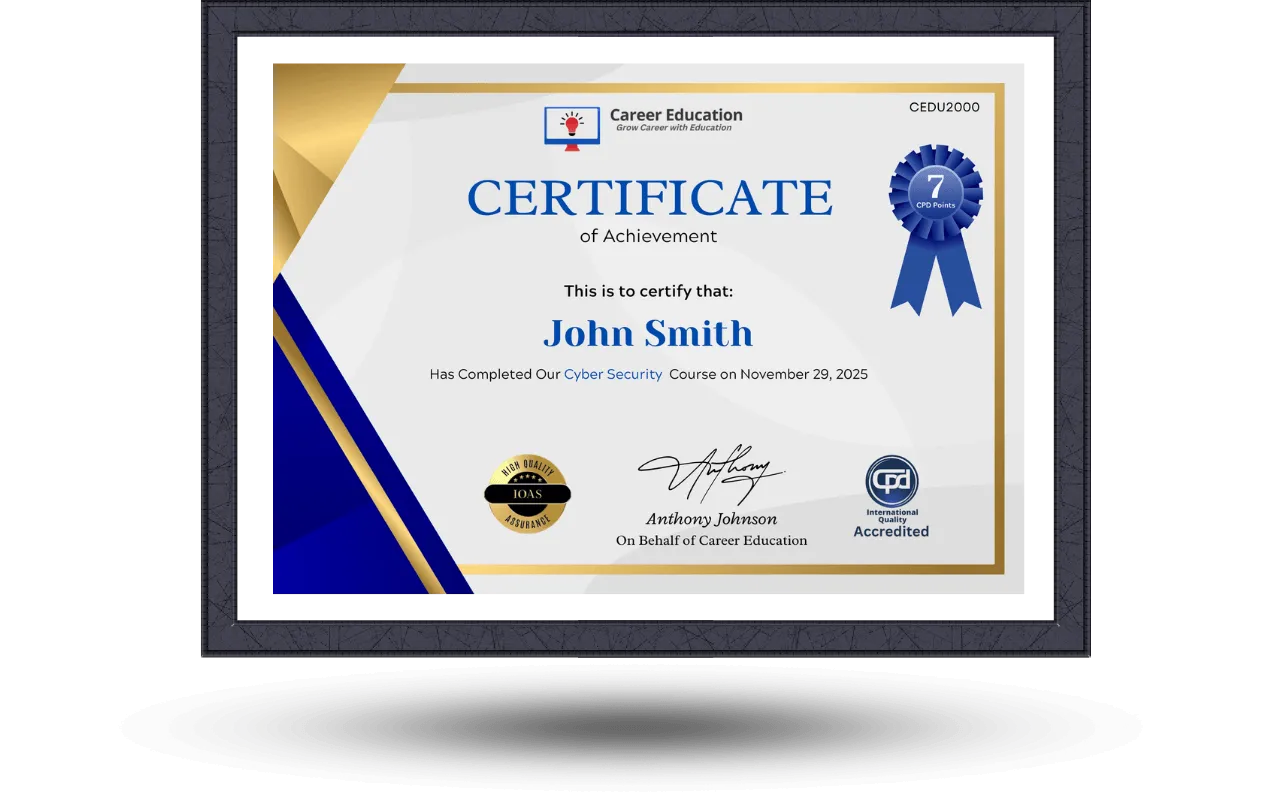
Upon completion of any course, all students are entitled to a CPD IQ Accredited e-certificate that will be issued by Career Education signifying the completion of your course.
After you complete the course and assignment, you will be eligible to order a free certificate accredited by CPD International Quality by completing the form below.
Hardcopy certificates and transcripts are also available for a small additional fee. More information is disclosed upon course completion.
Similar Courses




Frequently Asked Questions
The lifetime membership includes unlimited access to all courses, resources, and updates for a one-time fee.
You can purchase the membership directly from our website using a secure checkout process.
Yes, selected courses can be downloaded for offline access through our mobile app.
Yes, all future updates and new courses are included at no extra cost.
Yes, we offer a 30-day money-back guarantee if you are not satisfied with the membership.