
94%
OFF
OFF
Developing Professional Transcription Skills
- Lifetime Access
- All Levels
- PDF Certificate
£296
£19
14-Day Money-Back Guarantee
Learn With Confidence





Developing Professional Transcription Skills
Master the Skills Needed to Transcribe Audio Accurately, Efficiently and Professionally
Clear, accurate transcription is a valuable skill across many industries. From legal and medical organisations to businesses, media companies and independent professionals, organisations often need reliable transcription to turn spoken content into useful written records.
The Developing Professional Transcription Skills course is designed to help learners build the practical knowledge, language ability and technical confidence needed to approach transcription work professionally. Whether you are completely new to transcription or want to strengthen your existing skills, this course provides a structured introduction to the principles, tools and working practices used within the UK transcription industry.
You will explore everything from English grammar, listening and audio comprehension to transcription software, formatting standards, specialist transcription sectors, quality control and career development. By the end of the course, you will have a stronger understanding of what professional transcription involves and how to apply effective techniques to produce clear and accurate transcripts.
Why Develop Professional Transcription Skills?
Transcription is much more than simply typing what you hear. A professional transcriber needs to listen carefully, understand context, recognise different speech patterns, apply correct grammar and punctuation, format documents consistently and maintain accuracy throughout the process.
Professional transcription skills can be useful in a variety of settings. Businesses may require meetings, interviews or presentations to be converted into written documents. Media professionals may need interviews and recordings transcribed. Legal organisations can require accurate documentation, while healthcare environments may use transcription for appropriate clinical records and other documentation.
Developing these skills can therefore help you become more confident when working with different types of audio and written content.
This course focuses on practical outcomes, helping you understand how to:
-
Develop stronger transcription techniques
-
Improve listening and audio comprehension
-
Apply English grammar and punctuation appropriately
-
Use transcription equipment and software effectively
-
Follow professional formatting and style guidelines
-
Understand specialist transcription environments
-
Improve typing speed without sacrificing accuracy
-
Check and refine transcripts for quality
-
Understand expectations within the UK transcription industry
-
Explore potential career pathways in transcription
What Will You Learn?
The Developing Professional Transcription Skills course covers ten focused modules that progressively build your knowledge and practical understanding.
Module 1: Introduction to Transcription and the UK Industry
Begin by understanding what transcription is and how professional transcription services are used across different sectors.
This module introduces the UK transcription industry and helps you understand the role of a professional transcriber. You will explore different types of transcription work, common working environments and the skills employers and clients may expect.
Understanding the industry from the beginning can help you develop realistic expectations and recognise where your developing skills could be applied.
You will gain a foundation in:
-
Transcription terminology
-
Different types of transcription
-
The role of professional transcribers
-
Common industry applications
-
UK transcription practices
-
Professional expectations
-
Essential skills for transcription work
Module 2: English Language and Grammar for Transcription
Strong English language skills are essential for producing readable and professional transcripts.
This module focuses on grammar, punctuation, spelling and sentence structure in the context of transcription. You will develop a better understanding of how spoken language can be represented accurately in written form.
You will explore how grammar and punctuation influence clarity and learn why careful attention to language is important when preparing professional documents.
The module can help you improve your ability to:
-
Recognise grammatical structures
-
Apply punctuation appropriately
-
Identify spelling issues
-
Understand sentence construction
-
Produce clearer written transcripts
-
Maintain consistency in written work
These skills can be valuable when working with recordings containing different accents, speaking styles or conversational structures.
Module 3: Listening and Audio Comprehension Skills
Effective listening is at the heart of transcription.
A recording may include background noise, multiple speakers, unfamiliar terminology, different accents, fast speech or incomplete sentences. Professional transcribers need strategies for handling these challenges while maintaining accuracy.
This module helps you develop active listening and audio comprehension skills. You will learn how to focus on important information, recognise speech patterns and work methodically through challenging recordings.
You will develop techniques for:
-
Listening for detail
-
Identifying speakers
-
Understanding context
-
Handling unclear sections
-
Recognising different speech patterns
-
Maintaining concentration during longer recordings
-
Reviewing difficult sections systematically
Improving your listening ability can make the transcription process more efficient and help you produce more reliable results.
Module 4: Transcription Equipment and Software
Technology plays an important role in modern transcription.
Professional transcribers may work with audio players, headphones, foot pedals, word-processing applications and dedicated transcription software. Understanding how these tools work can improve workflow and reduce unnecessary interruptions.
This module introduces transcription equipment and software and explains how technology can support an organised working process.
You will learn about:
-
Transcription software
-
Audio playback controls
-
Headphones and other equipment
-
Foot-pedal workflows
-
Word-processing tools
-
File management
-
Efficient digital working practices
The objective is to help you become comfortable with the technology involved in transcription so that you can concentrate more effectively on the content you are transcribing.
Module 5: Formatting and Style Guidelines
A transcript should not only be accurate; it should also be clear, consistent and professionally presented.
This module explores formatting and style guidelines that can help transform raw transcription into a polished document. You will consider elements such as speaker identification, paragraph structure, punctuation and consistency.
You will gain a better understanding of how formatting choices can affect readability and usability.
Key areas include:
-
Document structure
-
Speaker identification
-
Paragraph formatting
-
Punctuation
-
Consistency
-
Style requirements
-
Professional presentation
Following appropriate formatting guidelines can help ensure that your transcripts are easier for clients, colleagues and other readers to use.
Module 6: Legal Transcription in the UK
Legal environments require particular attention to accuracy, confidentiality and professional standards.
This module introduces legal transcription within the UK and explores the characteristics of legal documents and recordings. You will gain an awareness of the terminology, formatting considerations and professional expectations that can apply when working with legal material.
You will explore:
-
The nature of legal transcription
-
Common legal terminology
-
Accuracy requirements
-
Confidentiality considerations
-
Document formatting
-
Professional responsibilities
The module is designed to help you understand the distinctive nature of legal transcription and the importance of careful, consistent work in this environment.
Module 7: Medical Transcription in the UK
Medical transcription involves working with specialised terminology and information, making attention to detail particularly important.
This module provides an introduction to medical transcription within the UK. You will learn about the nature of medical language and the challenges that can arise when transcribing specialist recordings.
You will explore:
-
Medical transcription concepts
-
Common terminology
-
Accuracy considerations
-
Professional documentation
-
Working with specialist vocabulary
-
The importance of consistency and careful review
The aim is to build awareness of the skills required when working with medical-related audio and documentation.
Module 8: Business and Media Transcription
Transcription is widely used in business and media environments.
Meetings, interviews, presentations, focus groups, podcasts, research discussions and other recordings may all need to be converted into written documents.
This module explores the characteristics of business and media transcription and helps you understand how requirements can vary depending on the type of content.
You will learn how to approach recordings involving:
-
Business meetings
-
Interviews
-
Presentations
-
Media content
-
Discussions
-
Research material
-
Multiple speakers
Understanding these different applications can broaden your awareness of where transcription skills may be useful.
Module 9: Speed, Accuracy and Quality Control
Professional transcription requires a balance between efficiency and accuracy.
Typing quickly is useful, but speed alone does not create a high-quality transcript. A professional approach requires careful listening, consistent formatting, proofreading and quality control.
This module focuses on techniques for improving your transcription workflow while maintaining reliable standards.
You will learn how to:
-
Develop efficient transcription habits
-
Improve workflow
-
Reduce avoidable errors
-
Review completed transcripts
-
Identify inconsistencies
-
Proofread effectively
-
Apply quality-control techniques
-
Balance speed with accuracy
These practices can help you work more systematically and approach transcription assignments with greater confidence.
Module 10: Building a Career in Transcription
The final module focuses on putting your developing skills into a professional context.
You will explore potential career pathways and consider how transcription skills can be developed into a professional capability. The module introduces important considerations for working in transcription, whether you are interested in employment, freelance opportunities or further skills development.
You will gain insight into:
-
Career opportunities
-
Professional development
-
Building relevant skills
-
Presenting your capabilities
-
Understanding client expectations
-
Developing professional working habits
-
Planning your next steps
By the end of this module, you should have a clearer understanding of how the knowledge gained throughout the course can support your future development.
Practical Outcomes of the Course
The Developing Professional Transcription Skills course is designed around practical, career-relevant outcomes.
Rather than focusing only on theoretical definitions, the course helps you understand how transcription works in real professional contexts. You will develop knowledge that can support more effective listening, writing, formatting, reviewing and digital working.
After completing the course, you should be better prepared to:
Understand professional transcription processes: Gain a clearer picture of how transcription assignments are approached from receiving an audio file through to reviewing the completed document.
Improve listening ability: Develop techniques for extracting accurate information from spoken content, including recordings that may present listening challenges.
Produce clearer written documents: Strengthen your understanding of English grammar, punctuation, spelling and formatting so your transcripts are easier to read.
Work with transcription technology: Become more familiar with the equipment and software commonly associated with digital transcription workflows.
Handle different content types: Understand how transcription requirements can differ across legal, medical, business and media settings.
Improve quality control: Develop a systematic approach to reviewing transcripts and identifying errors or inconsistencies.
Work more efficiently: Learn techniques that can help you improve workflow and balance transcription speed with accuracy.
Explore professional opportunities: Understand how transcription skills can contribute to potential employment, freelance work or continued professional development.
Who Is This Course For?
The Developing Professional Transcription Skills course can be suitable for learners who want to build a foundation in transcription and understand how the skill is applied professionally.
It may be particularly useful for:
-
Beginners interested in transcription
-
Learners developing administrative skills
-
Individuals interested in remote digital work
-
Aspiring freelance transcribers
-
Administrative and office professionals
-
Learners interested in specialist transcription
-
People looking to strengthen their English and listening skills
-
Professionals who regularly work with recorded meetings or interviews
-
Individuals exploring new career development opportunities
No matter where you are starting from, the structured modules provide a logical way to build your understanding step by step.
Develop Transferable Professional Skills
One of the advantages of studying transcription is that many of the skills involved can be useful beyond transcription itself.
Careful listening, attention to detail, accurate typing, proofreading, digital file management, written communication and quality control are all valuable workplace capabilities.
As you progress through the course, you can therefore develop skills that may complement administrative, customer service, business support, research, media and other professional roles.
The ability to listen carefully and convert information into organised written content can be particularly valuable in workplaces where meetings, interviews, discussions and recorded information are part of everyday operations.
Why Choose Developing Professional Transcription Skills?
Choosing a transcription course is not simply about learning how to type audio. It is about developing a complete approach to professional transcription.
The Developing Professional Transcription Skills course brings together language, listening, technology, formatting, specialist knowledge, quality control and career development in one structured learning experience.
You will learn how the different elements work together. Strong listening skills support accuracy. Good grammar improves readability. Appropriate formatting creates professional documents. Effective software use supports productivity. Quality control helps maintain standards.
Together, these capabilities can give you a stronger foundation for approaching transcription tasks with confidence and professionalism.
Take the Next Step Towards Professional Transcription
Developing a new professional skill can open the door to new learning and career possibilities. With the right knowledge and consistent practice, transcription can become a useful addition to your professional skill set.
The Developing Professional Transcription Skills course gives you a structured opportunity to explore the transcription industry, strengthen essential techniques and understand how transcription is used across different professional environments in the UK.
From English grammar and audio comprehension to specialist legal and medical transcription, business and media applications, technology, quality control and career development, each module contributes to a broader understanding of professional transcription.
If you want to build practical transcription knowledge, improve your accuracy and listening skills, understand professional standards and explore where transcription could fit into your career development, this course provides a strong place to begin.
Enrol in Developing Professional Transcription Skills today and start building the knowledge, techniques and professional awareness needed to approach transcription with greater confidence and competence.
Course Modules
Course Content
Module 1 Introduction to Transcription and the UK Industry
-
Lesson 1 Introduction to Transcription and the UK Industry
Module 2 English Language and Grammar for Transcription
Module 3 Listening and Audio Comprehension Skills
Module 4 Transcription Equipment and Software
Module 5 Formatting and Style Guidelines
Module 6 Legal Transcription in the UK
Module 7 Medical Transcription in the UK
Module 8 Business and Media Transcription
Module 9 Speed, Accuracy and Quality Control
Module 10 Building a Career in Transcription
What our students say
Excellent
4.9 average
158 Reviews

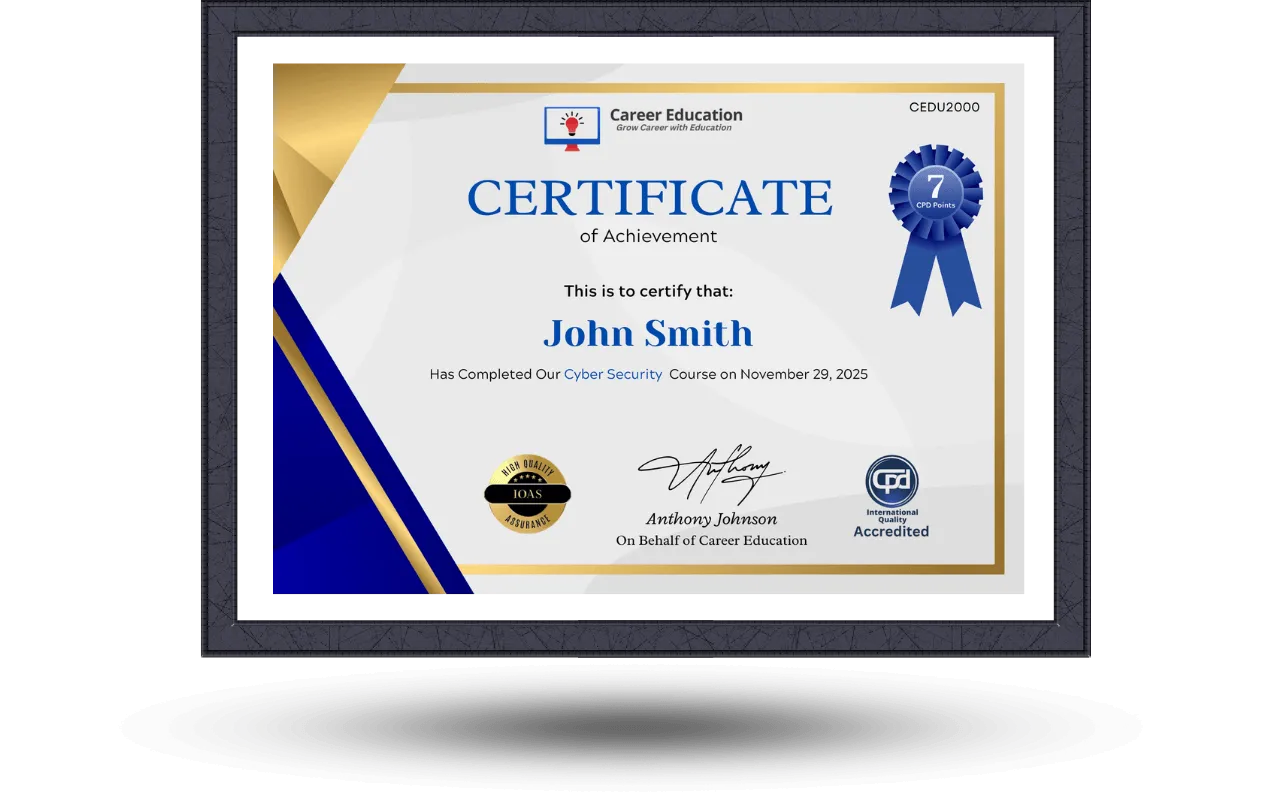
Earn an Accredited Certificate
Upon completion of any course, all students are entitled to a CPD IQ Accredited e-certificate that will be issued by Career Education signifying the completion of your course.
After you complete the course and assignment, you will be eligible to order a free certificate accredited by CPD International Quality by completing the form below.
Hardcopy certificates and transcripts are also available for a small additional fee. More information is disclosed upon course completion.
Similar Courses



Frequently Asked Questions
The lifetime membership includes unlimited access to all courses, resources, and updates for a one-time fee.
You can purchase the membership directly from our website using a secure checkout process.
Yes, selected courses can be downloaded for offline access through our mobile app.
Yes, all future updates and new courses are included at no extra cost.
Yes, we offer a 30-day money-back guarantee if you are not satisfied with the membership.