
94%
OFF
OFF
Stress Management and Wellbeing
- Lifetime Access
- All Levels
- PDF Certificate
£296
£19
14-Day Money-Back Guarantee
Learn With Confidence





# Stress Management and Wellbeing
Stress is a normal part of life, but when pressure becomes persistent or difficult to manage, it can affect concentration, productivity, relationships, sleep and overall quality of life. Learning how to recognise sources of stress, understand different responses to pressure and develop healthy coping strategies can make it easier to approach challenging situations with greater awareness and resilience.
The **Stress Management and Wellbeing** course is designed to provide practical knowledge and strategies for understanding and managing everyday stress. It explores the causes of stress, the differences between stress and anxiety, panic attacks, methods of reducing stress, effective stress management and the importance of recognising personal limits.
Rather than simply explaining what stress is, this course takes an outcome-focused approach. It helps learners develop greater awareness of their own responses to pressure, identify potential triggers and explore constructive ways of supporting their wellbeing.
Whether you are experiencing workplace pressure, studying, managing family responsibilities, navigating major life changes or simply interested in improving your understanding of wellbeing, the **Stress Management and Wellbeing** course provides a structured learning experience that can support personal and professional development.
> **Important:** This course is educational and is not a substitute for diagnosis, treatment or professional mental health support. Anyone experiencing severe, persistent or concerning symptoms should seek appropriate help from a qualified healthcare professional.
## What Is Stress Management and Wellbeing?
**Stress Management and Wellbeing** focuses on understanding stress and developing healthy approaches to managing pressure.
Stress can arise from many different circumstances. Work demands, financial concerns, relationship difficulties, academic pressure, major changes, health concerns and everyday responsibilities can all contribute to feelings of pressure.
While some stress may be temporary and manageable, prolonged stress can become overwhelming. Developing awareness of how stress affects you can be an important first step towards making positive changes.
This course covers six key areas:
* Causes of stress
* Stress versus anxiety
* Panic attacks
* Methods of reducing stress
* Proper stress management
* Knowing your limits
These topics provide a progressive learning journey. You will first explore why stress occurs, then distinguish stress from anxiety before examining panic attacks. The course subsequently focuses on practical methods for reducing stress and developing more effective management strategies, concluding with the importance of understanding and respecting personal boundaries.
# Why Study Stress Management and Wellbeing?
Modern life can involve competing responsibilities, constant communication and significant personal and professional demands. Without appropriate coping strategies, it can become difficult to switch off, maintain focus or make time for recovery.
The **Stress Management and Wellbeing** course can help you develop a more informed approach to these challenges.
Understanding stress can help you recognise patterns before they become overwhelming. You can learn to identify potential triggers, understand your responses and consider healthier ways of dealing with pressure.
The course can also help you understand that stress and anxiety are related but not identical concepts. Developing this awareness can encourage more appropriate responses when you or someone else is experiencing emotional distress.
Another important element is recognising personal limits. Effective stress management does not mean trying to tolerate unlimited pressure. Knowing when to pause, set boundaries, seek support or reconsider demands can be an essential part of maintaining wellbeing.
# Learning Outcomes
By completing the **Stress Management and Wellbeing** course, learners can develop the ability to:
* Explain the basic concept of stress
* Identify common causes and triggers of stress
* Recognise how stress can affect everyday wellbeing
* Understand the difference between stress and anxiety
* Develop awareness of panic attacks and their characteristics
* Explore practical methods for reducing stress
* Identify healthy approaches to managing everyday pressure
* Understand the importance of self-awareness in stress management
* Recognise the value of personal boundaries
* Understand the importance of knowing your limits
* Develop strategies for supporting personal wellbeing
* Approach stressful situations with greater awareness
* Identify when additional support may be appropriate
* Apply course concepts to personal and professional situations
# Course Curriculum
## Module 1: Causes of Stress
The first module introduces the causes of stress and establishes the foundation for the **Stress Management and Wellbeing** course.
Stress does not have a single cause. Different people may experience pressure in different ways, and circumstances that feel manageable to one person may be overwhelming for another.
Understanding common sources of stress can help you become more aware of situations that may affect your wellbeing.
### Lesson 1: Causes of Stress
This lesson explores the causes and triggers that can contribute to stress.
You will develop awareness of factors such as:
* Workplace demands
* Academic pressure
* Personal responsibilities
* Relationship difficulties
* Major life changes
* Financial pressures
* Environmental factors
* Time pressures
* Excessive workloads
* Uncertainty and lack of control
The lesson also encourages learners to consider how individual perceptions and circumstances can influence responses to pressure.
Recognising potential stressors is an important step towards effective management. If you can identify what is contributing to stress, you may be better positioned to consider appropriate ways of responding.
The objective is not to eliminate every source of stress—an unrealistic goal—but to develop greater awareness and learn how to respond to pressure constructively.
## Module 2: Stress vs Anxiety
Stress and anxiety are often discussed together, but they are not exactly the same. Module 2 explores the distinction between these two experiences.
Understanding the difference can help learners develop more accurate awareness of emotional and physical responses to pressure.
You will explore:
* The meaning of stress
* The concept of anxiety
* Similarities between stress and anxiety
* Differences between stress and anxiety
* Common responses to stressful situations
* How ongoing pressure can affect wellbeing
* The importance of recognising when additional support may be needed
Stress can often be associated with identifiable external pressures, while anxiety can involve persistent worry or fear that may continue even when an immediate stressor is absent. However, experiences vary considerably between individuals.
The module provides educational awareness rather than attempting to diagnose mental health conditions.
This distinction is valuable because understanding your experiences can make it easier to identify appropriate coping strategies and recognise when professional support may be beneficial.
# Module 3: Panic Attacks
Panic attacks can be intense and frightening experiences involving sudden feelings of fear or discomfort alongside physical and emotional symptoms.
Module 3 of the **Stress Management and Wellbeing** course provides learners with an introduction to panic attacks and develops awareness of what they may involve.
You will explore:
* What panic attacks are
* Common features associated with panic attacks
* Physical responses
* Emotional experiences
* The relationship between stress, anxiety and panic
* The importance of remaining aware and informed
* The importance of appropriate professional support
Understanding panic attacks can help reduce confusion surrounding these experiences.
The module encourages learners to recognise that intense physical sensations and emotional responses can occur during periods of acute distress. It also reinforces the importance of seeking appropriate medical or professional guidance when symptoms are severe, unfamiliar or concerning.
This knowledge can be useful for personal awareness and for understanding how people may respond during periods of acute stress or panic.
# Module 4: Methods of Reducing Stress
Once you understand the causes and characteristics of stress, the course moves towards practical strategies for reducing it.
Module 4 explores methods that may help individuals manage everyday pressure and support their overall wellbeing.
You will consider approaches such as:
* Relaxation techniques
* Breathing and calming strategies
* Physical activity
* Rest and recovery
* Healthy routines
* Time management
* Taking appropriate breaks
* Creating boundaries
* Social support
* Positive lifestyle habits
Effective stress reduction is rarely about one single technique. Different strategies may work for different people, and their effectiveness can depend on the situation.
The module encourages learners to develop a flexible approach by exploring different methods and considering which healthy strategies may be appropriate in their circumstances.
You will also learn why consistency can be important. Small, sustainable changes to everyday routines may be easier to maintain than attempting major changes all at once.
# Module 5: Proper Stress Management
Module 5 takes the course further by exploring the principles of effective stress management.
Reducing stress in the moment can be useful, but long-term wellbeing often requires a broader approach. Proper stress management involves understanding your stressors, recognising your responses and developing sustainable habits.
You will explore:
* Effective stress management principles
* Identifying personal stress patterns
* Healthy coping approaches
* Managing daily responsibilities
* Building resilience
* Maintaining balance
* Developing sustainable routines
* Seeking support when necessary
The module encourages learners to move away from simply reacting to stressful situations and towards developing a more proactive approach.
For example, rather than waiting until pressure becomes overwhelming, you can learn to recognise early warning signs and consider what changes may help.
This proactive mindset can be valuable in both personal and professional environments.
## Develop Sustainable Wellbeing Habits
The **Stress Management and Wellbeing** course emphasises that wellbeing is not simply about avoiding difficult experiences.
Life will inevitably involve pressure, uncertainty and challenging situations. The objective is to develop healthy ways of responding while making time for rest, recovery and activities that support wellbeing.
Sustainable habits may involve maintaining realistic expectations, creating healthy routines, communicating boundaries and making time for recovery.
These principles can help you develop a more balanced relationship with everyday responsibilities.
# Module 6: Knowing Your Limits
The final module focuses on one of the most important aspects of stress management: knowing your limits.
People sometimes try to manage stress by taking on additional responsibilities, working longer hours or attempting to cope with everything independently. While this may be possible temporarily, continually exceeding your personal limits can contribute to exhaustion and reduced wellbeing.
This module explores the importance of self-awareness and personal boundaries.
You will learn about:
* Recognising personal limits
* Understanding your capacity
* Identifying signs of excessive pressure
* Setting appropriate boundaries
* Managing expectations
* Knowing when to take a break
* Communicating your needs
* Seeking appropriate support
Knowing your limits is not a sign of weakness. It is an important aspect of responsible self-management.
Learning when to say no, delegate, pause or seek assistance can help prevent unnecessary pressure from accumulating.
The module brings together many of the concepts covered throughout the course and encourages learners to develop a personalised approach to wellbeing.
# Build Greater Awareness of Your Stress Triggers
One of the most useful outcomes of the **Stress Management and Wellbeing** course is improved self-awareness.
Stress can sometimes build gradually, making it difficult to identify what is causing it. By developing an understanding of common stressors and personal responses, you can become more attentive to patterns that may affect your wellbeing.
This awareness can help you consider questions such as:
* What situations tend to increase my stress?
* How do I usually respond to pressure?
* What early signs tell me that I am becoming overwhelmed?
* Which healthy strategies help me recover?
* Where could I establish stronger boundaries?
* When should I ask for support?
There is no single answer for everyone. The aim is to develop a better understanding of your own needs and responses.
# Improve Your Approach to Everyday Pressure
The **Stress Management and Wellbeing** course can help you develop a more proactive approach to challenging situations.
Instead of viewing stress only as something that must be eliminated, you can learn to understand its causes, recognise your reactions and consider practical ways of responding.
This can be particularly valuable in workplaces where deadlines, responsibilities and changing priorities are common.
It can also benefit students, parents, carers, entrepreneurs and anyone managing multiple responsibilities.
# Who Is This Course For?
The **Stress Management and Wellbeing** course is suitable for a broad range of learners.
It may be particularly useful for:
* Employees experiencing workplace pressure
* Managers and team leaders
* Students
* Entrepreneurs and business owners
* Parents and carers
* Individuals interested in personal development
* People seeking greater wellbeing awareness
* Professionals interested in workplace wellbeing
* Individuals who want to develop healthier coping strategies
* Anyone interested in understanding stress and anxiety
No specialist background is required. The course is designed to provide accessible educational knowledge for anyone who wants to understand stress and wellbeing more effectively.
# Support Personal and Professional Development
Stress management is relevant to both personal and professional life.
In the workplace, effective management of pressure can support productivity, communication, decision-making and healthier working habits. On a personal level, greater awareness can help individuals establish boundaries and make time for recovery.
The **Stress Management and Wellbeing** course can therefore complement broader personal development and workplace learning.
It can also provide a useful foundation for further study in areas such as wellbeing, workplace health, personal development, psychology or related subjects.
# Learn to Recognise When You Need Support
An important part of responsible stress management is recognising that you do not have to handle everything alone.
Some levels of stress can be addressed through everyday lifestyle adjustments and healthy coping strategies. However, persistent, severe or distressing symptoms may require professional support.
The course encourages learners to understand the importance of seeking appropriate help when necessary rather than attempting to manage serious difficulties alone.
This is an essential part of a balanced approach to wellbeing.
# Take the Next Step Towards Better Stress Management
Stress is part of life, but learning how to understand and respond to it can make a meaningful difference to overall wellbeing.
The **Stress Management and Wellbeing** course provides a structured learning journey covering the causes of stress, the distinction between stress and anxiety, panic attacks, stress reduction methods, effective management approaches and personal boundaries.
From identifying potential stress triggers to understanding the importance of knowing your limits, the course provides practical educational knowledge that can be applied to everyday life.
Whether you want to improve your personal wellbeing, develop healthier approaches to workplace pressure or simply gain a better understanding of stress and coping strategies, this course offers a valuable opportunity to build your knowledge.
**Enrol in Stress Management and Wellbeing today and develop greater awareness, healthier coping strategies and a more balanced approach to managing everyday pressure.**
Course Modules
Course Content
Module 1 Cause of Stress
-
Lesson 1 Cause of Stress
Module 2 Stress vs Anxiety
Module 3 Panic Attacks
Module 4 Methods of reducing Stress
Module 5 Proper Stress Management
Module 6 Knowing your Limits
What our students say
Excellent
4.9 average
158 Reviews

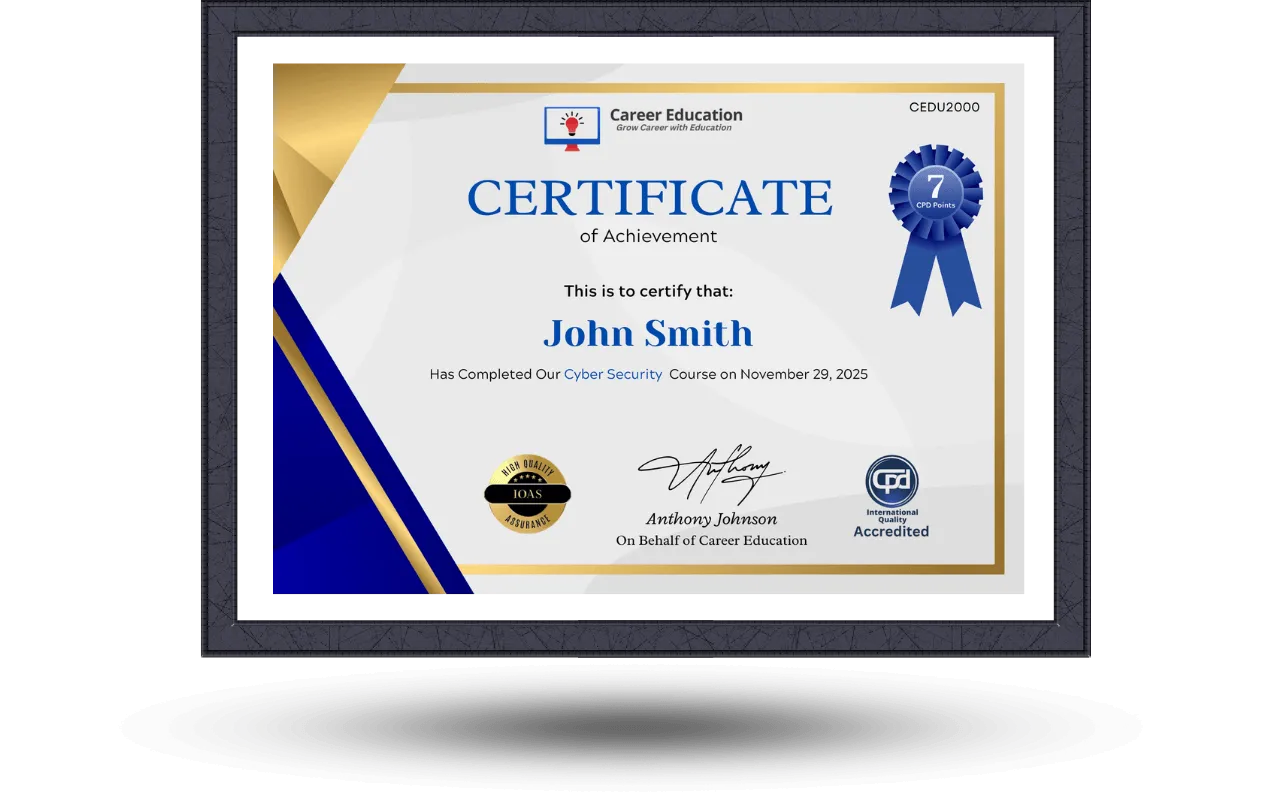
Earn an Accredited Certificate
Upon completion of any course, all students are entitled to a CPD IQ Accredited e-certificate that will be issued by Career Education signifying the completion of your course.
After you complete the course and assignment, you will be eligible to order a free certificate accredited by CPD International Quality by completing the form below.
Hardcopy certificates and transcripts are also available for a small additional fee. More information is disclosed upon course completion.
Similar Courses



Frequently Asked Questions
The lifetime membership includes unlimited access to all courses, resources, and updates for a one-time fee.
You can purchase the membership directly from our website using a secure checkout process.
Yes, selected courses can be downloaded for offline access through our mobile app.
Yes, all future updates and new courses are included at no extra cost.
Yes, we offer a 30-day money-back guarantee if you are not satisfied with the membership.