
94%
OFF
OFF
Crisis Management and Emergency Response
- Lifetime Access
- All Levels
- PDF Certificate
£296
£19
14-Day Money-Back Guarantee
Learn With Confidence









Crisis Management and Emergency Response
In a crisis, the ability to respond quickly, communicate clearly, and make informed decisions can make all the difference. Organisations across industries face a wide range of potential emergencies, from operational disruptions and workplace incidents to reputational challenges, natural disasters, cyber incidents, and international crises. Without effective preparation, even a manageable situation can quickly become more complex.
The Crisis Management and Emergency Response course is designed to help learners develop the practical knowledge and strategic awareness needed to prepare for, respond to, and recover from crises. Rather than focusing only on theory, this course explores how effective crisis management works throughout the entire crisis lifecycle—from identifying risks and creating response plans to coordinating teams, communicating with stakeholders, evaluating outcomes, and improving future preparedness.
Whether you are responsible for business continuity, workplace safety, operations, communications, leadership, or organisational resilience, this course can help you build a stronger understanding of how to respond when unexpected situations occur.
What Is Crisis Management and Emergency Response?
Crisis Management and Emergency Response involves the structured processes organisations use to anticipate threats, prepare for emergencies, manage incidents, communicate with affected parties, and recover after a crisis.
Effective crisis management is not simply about reacting when something goes wrong. It begins well before an emergency occurs. Organisations need to understand potential risks, establish responsibilities, develop response procedures, prepare communication strategies, and ensure that teams understand what to do under pressure.
Once a crisis occurs, effective emergency response requires coordinated action. Leaders may need to make time-sensitive decisions, teams may need to work across departments, and communication channels must remain clear. Following the immediate response, organisations also need to review what happened, identify lessons, and strengthen their procedures.
This course provides a structured introduction to these essential areas.
What You Will Learn
By completing the Crisis Management and Emergency Response course, learners can develop knowledge and practical understanding in areas including:
-
The principles and foundations of crisis management
-
How to identify and assess potential risks
-
How to develop effective crisis plans
-
Communication strategies for challenging situations
-
Coordinating and leading crisis management teams
-
Post-crisis evaluation and organisational improvement
-
Ethical decision-making during emergencies
-
Communicating effectively with the media
-
International and cross-border crisis management
-
Building stronger organisational preparedness and resilience
The knowledge gained can be applied across a wide variety of professional environments where effective preparation and response are important.
Module 1: Introduction to Crisis Management
The course begins by establishing a strong foundation in crisis management. Learners explore what constitutes a crisis, why organisations need structured response processes, and how crisis management differs from routine operational management.
You will develop an understanding of the different types of crises organisations may encounter and explore the importance of preparedness, leadership, decision-making, and resilience.
This module helps you recognise that crisis management is a continuous organisational process rather than a response that begins only after an emergency occurs.
Outcome: Build a clear foundation in crisis management principles and understand the importance of preparedness and organisational resilience.
Module 2: Risk Assessment and Crisis Planning
Preparation is one of the most important elements of effective emergency response. This module focuses on identifying potential threats, assessing risks, and developing plans that can guide an organisation during challenging situations.
You will explore how organisations can consider the likelihood and potential impact of different risks and use this information to prioritise preparedness efforts. The module also introduces the importance of establishing response procedures, responsibilities, resources, and escalation processes.
A well-developed crisis plan can provide structure when normal procedures are disrupted, helping teams understand their roles and make coordinated decisions.
Outcome: Develop a stronger understanding of risk assessment and learn how effective crisis planning can improve organisational preparedness.
Module 3: Effective Communication Strategies in Crisis Management
Communication becomes especially important when people are dealing with uncertainty. Confusing, delayed, or inconsistent information can increase concern and make an already difficult situation harder to manage.
This module explores communication strategies that can support effective crisis response. Learners examine how to communicate with employees, customers, stakeholders, emergency responders, partners, and other affected groups.
You will consider the importance of clarity, accuracy, consistency, timing, and audience when communicating during a crisis. You will also develop awareness of how communication should evolve as a crisis develops.
Outcome: Improve your ability to understand and apply clear, structured communication strategies during crisis situations.
Module 4: Coordinating and Leading Crisis Management Teams
Successful emergency response often depends on people working together effectively. During a crisis, responsibilities may change rapidly, decisions may need to be made under pressure, and multiple teams may need to coordinate their activities.
This module examines the role of leadership and teamwork in crisis management. You will explore how crisis management teams can be structured, how responsibilities can be allocated, and how leaders can support effective coordination.
The module also highlights the importance of decision-making, delegation, collaboration, accountability, and maintaining focus during periods of uncertainty.
Outcome: Develop the knowledge needed to support effective crisis team coordination and demonstrate stronger leadership awareness during emergencies.
Module 5: Post-Crisis Analysis and Continuous Improvement
Crisis management does not end when the immediate situation has been resolved. Reviewing what happened is essential for learning and improving future preparedness.
This module focuses on post-crisis analysis and continuous improvement. Learners explore how organisations can review their response, identify strengths and weaknesses, gather feedback, and determine where procedures may need to be changed.
A constructive post-crisis review can help organisations transform experience into improved preparedness. Instead of simply asking what went wrong, organisations can consider what worked, what could be improved, and what should be changed before the next crisis.
Outcome: Understand how to evaluate crisis responses and use lessons learned to strengthen future crisis management processes.
Module 6: Ethical Considerations in Crisis Management
Crises can create difficult situations in which leaders and organisations must make decisions involving competing priorities. Ethical considerations can become particularly important when resources are limited, information is incomplete, or different stakeholders have different needs.
This module introduces the ethical dimensions of crisis management. Learners explore the importance of responsibility, transparency, fairness, accountability, and professional conduct when making decisions during emergencies.
Understanding ethical considerations can help professionals recognise the broader impact of crisis decisions and appreciate the importance of maintaining trust and integrity.
Outcome: Develop greater awareness of ethical responsibilities and responsible decision-making in crisis management.
Module 7: Crisis Communication with the Media
Media communication can significantly influence how a crisis is understood by the public. Organisations may need to provide accurate information while responding to public concern and protecting sensitive information.
This module explores the role of media communication during a crisis. Learners examine the principles of preparing messages, responding to media enquiries, maintaining consistency, and communicating information responsibly.
You will also gain an understanding of why organisations should prepare for media interaction before a crisis occurs rather than attempting to develop an approach in the middle of an emergency.
Outcome: Develop greater confidence in understanding the principles of effective media communication during crisis situations.
Module 8: International Crisis Management
Modern organisations often operate across multiple countries and regions, creating additional challenges for crisis management. Cultural differences, legal requirements, communication barriers, geographical factors, and international stakeholders can all influence how a crisis should be managed.
This module introduces the complexities of international crisis management. Learners explore how organisations can consider different environments and stakeholder expectations when developing crisis response strategies.
The module provides a broader perspective on crisis management and highlights the importance of adaptability when responding to incidents that cross geographical or cultural boundaries.
Outcome: Understand the additional considerations involved in managing crises in international and multicultural environments.
Who Can Benefit from This Course?
The Crisis Management and Emergency Response course can be valuable for professionals and learners who want to develop their understanding of crisis preparedness and organisational resilience.
It may be particularly relevant to:
-
Managers and supervisors
-
Business owners and entrepreneurs
-
Operations professionals
-
Team leaders
-
Health and safety professionals
-
Business continuity professionals
-
Risk management professionals
-
Security and emergency management personnel
-
Communications and public relations professionals
-
Human resources professionals
-
Professionals responsible for organisational resilience
-
Individuals seeking to expand their professional knowledge
The course can also be useful for anyone who wants to understand how organisations prepare for and respond to unexpected events.
Build Practical Crisis Management Knowledge
One of the key advantages of studying Crisis Management and Emergency Response is the ability to look beyond the immediate emergency and understand the complete crisis management process.
You will explore how preparation supports response, how communication supports coordination, how leadership influences decision-making, and how post-crisis analysis contributes to continuous improvement.
This broader perspective can help you understand how different parts of an organisation work together during challenging circumstances.
Strengthen Your Professional Skill Set
Crisis management knowledge can complement a wide range of professional skills. Whether your existing responsibilities involve people, operations, safety, communications, leadership, or risk, understanding how to respond to disruption can enhance your overall professional capabilities.
Employers and organisations need individuals who can remain organised, communicate effectively, understand risks, and contribute constructively when circumstances change. Developing knowledge in crisis management can therefore support broader professional development.
Develop a Preparedness Mindset
Effective crisis management begins with preparation. Waiting until an emergency happens can leave organisations struggling to determine what to do, who is responsible, and how information should be communicated.
This course encourages a preparedness-focused approach. By understanding risk assessment, planning, communication, team coordination, ethics, media relations, and post-crisis improvement, learners can develop a more complete view of organisational readiness.
The goal is not simply to respond to one particular type of emergency. It is to develop transferable knowledge that can be considered across different crisis scenarios and organisational environments.
Why Study Crisis Management and Emergency Response?
Unexpected situations can challenge even well-established organisations. Having appropriate knowledge and planning processes in place can help organisations respond in a more structured and coordinated manner.
The Crisis Management and Emergency Response course provides learners with a comprehensive introduction to the key principles involved in crisis preparedness and response. From initial risk assessment to international crisis considerations, the curriculum covers the major areas that contribute to effective crisis management.
By completing the course, you can strengthen your understanding of how to prepare for disruption, support effective communication, coordinate crisis teams, evaluate responses, and contribute to continuous organisational improvement.
Take the Next Step in Your Professional Development
Being prepared for a crisis requires more than the ability to react quickly. It requires planning, communication, leadership, ethical awareness, coordination, and a commitment to learning from experience.
The Crisis Management and Emergency Response course brings these areas together in one structured learning experience. Through eight focused modules, you can develop a stronger understanding of how organisations anticipate risks, prepare for emergencies, manage complex situations, communicate with stakeholders and the media, and improve their future resilience.
If you want to expand your professional knowledge and develop a stronger understanding of organisational preparedness, this course provides an excellent opportunity to build valuable crisis management knowledge.
Enrol in the Crisis Management and Emergency Response course today and take a proactive step toward becoming better prepared to understand, support, and manage challenging situations in the workplace.
Course Modules
Course Content
Module 1_ Introduction to Crisis Management.
-
Lesson 1_ Introduction to Crisis Management.
Module 2_ Risk Assessment and Crisis Planning.
Module 3_ Effective Communication Strategies in Crisis Management.
Module 4_ Coordinating and Leading Crisis Management Teams.
Module 5_ Post-Crisis Analysis and Continuous Improvement.
Module 6_ Ethical Considerations in Crisis Management.
Module 7_ Crisis Communication with the Media.
Module 8_ International Crisis Management.
What our students say
Excellent
4.9 average
158 Reviews

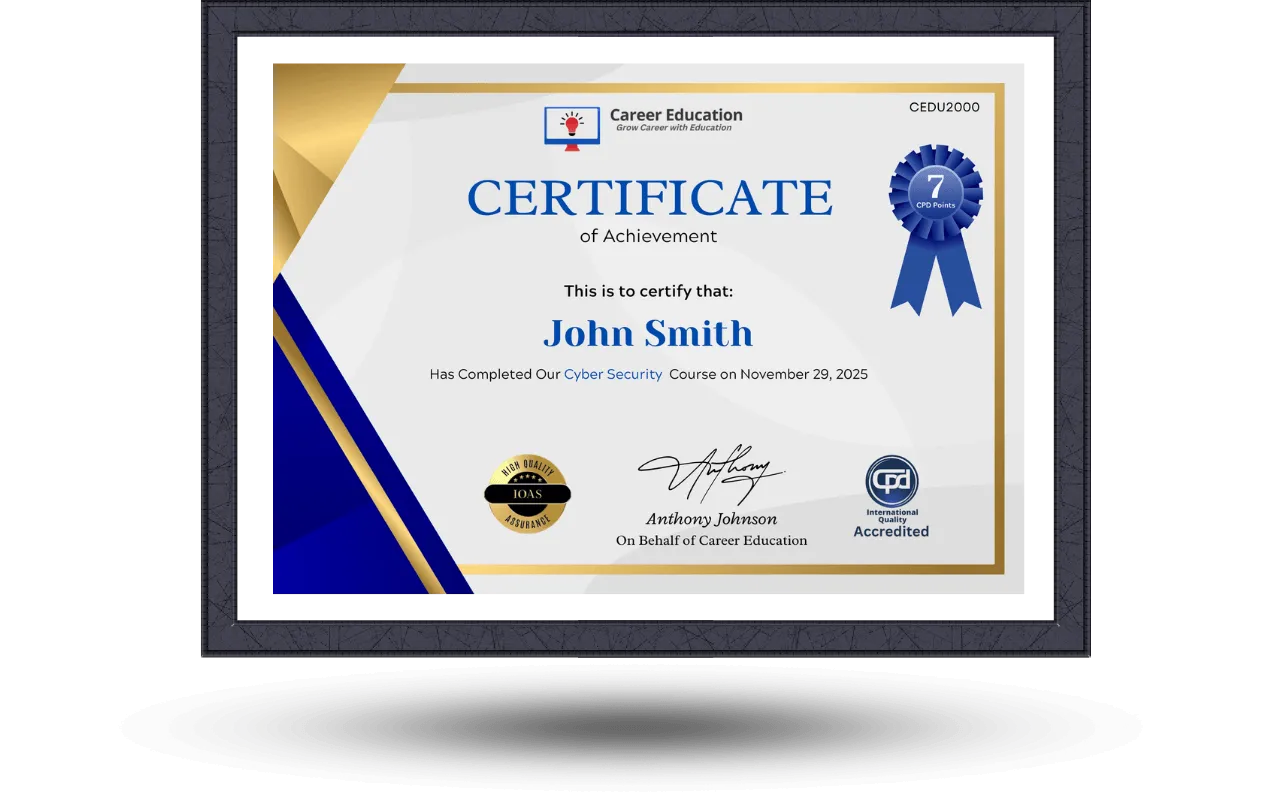
Earn an Accredited Certificate
Upon completion of any course, all students are entitled to a CPD IQ Accredited e-certificate that will be issued by Career Education signifying the completion of your course.
After you complete the course and assignment, you will be eligible to order a free certificate accredited by CPD International Quality by completing the form below.
Hardcopy certificates and transcripts are also available for a small additional fee. More information is disclosed upon course completion.
Similar Courses




Frequently Asked Questions
The lifetime membership includes unlimited access to all courses, resources, and updates for a one-time fee.
You can purchase the membership directly from our website using a secure checkout process.
Yes, selected courses can be downloaded for offline access through our mobile app.
Yes, all future updates and new courses are included at no extra cost.
Yes, we offer a 30-day money-back guarantee if you are not satisfied with the membership.