
94%
OFF
OFF
Credit Control and Management
- Lifetime Access
- All Levels
- PDF Certificate
£296
£19
14-Day Money-Back Guarantee
Learn With Confidence









Credit Control and Management
Effective financial management depends on more than generating sales and issuing invoices. Businesses also need reliable systems for ensuring that customers pay what they owe on time. Strong Credit Control and Management helps organisations protect cash flow, reduce overdue accounts, manage customer relationships and make informed credit decisions.
The Credit Control and Management course is designed to help learners develop practical knowledge of the principles, policies, processes and communication techniques used to manage credit effectively. Whether you are beginning a career in finance, accounts or credit control, or you want to strengthen your existing professional skills, this course provides a structured foundation for handling credit-related responsibilities with greater confidence.
Why Credit Control and Management Matters
Credit is an important part of modern business. Offering customers the option to purchase products or services before making payment can support sales, strengthen commercial relationships and encourage business growth. However, extending credit also creates financial risk. If customers delay payments or fail to settle their accounts, businesses can experience cash-flow difficulties and increased administrative costs.
Effective Credit Control and Management provides a framework for reducing these risks. It involves understanding customer creditworthiness, establishing appropriate policies, monitoring outstanding balances, following up overdue invoices and communicating professionally with customers.
For businesses, effective credit control can contribute to:
-
More consistent cash flow
-
Fewer overdue accounts
-
Better visibility of outstanding debts
-
Improved financial planning
-
Reduced credit risk
-
More consistent credit procedures
-
Stronger customer relationships
-
More efficient accounts receivable processes
This course helps learners understand how these objectives can be supported through effective processes, appropriate technology and professional communication.
What You Will Learn
The Credit Control and Management course covers four important areas: understanding credit control, developing credit management policies and procedures, using technology in credit control, and communicating effectively with customers.
By completing the course, learners can develop a clearer understanding of how credit control works within an organisation and how different activities contribute to effective financial management.
Module 1 – Understanding Credit Control
The first module introduces the fundamental principles of credit control and explains why it is an essential business function.
Learners will explore the purpose of credit control and its relationship with cash flow, sales, customer accounts and overall financial performance. Understanding these connections can help learners recognise why businesses need structured approaches to managing credit.
The module provides an opportunity to develop knowledge of the credit control process, from assessing customers and establishing payment expectations through to monitoring accounts and following up outstanding balances.
You will develop an understanding of areas such as:
-
The purpose and importance of credit control
-
The role of credit control within a business
-
Customer credit and payment arrangements
-
Monitoring outstanding accounts
-
Managing overdue payments
-
Credit risk awareness
-
The relationship between credit control and cash flow
-
The importance of accurate financial records
A strong foundation in these principles can help learners approach credit-related tasks in a more organised and informed way.
Rather than simply focusing on collecting overdue payments, effective credit control involves preventing avoidable problems wherever possible. Clear payment terms, appropriate customer assessments and consistent account monitoring can all contribute to better outcomes.
By the end of this module, learners should have a stronger understanding of how effective credit control supports business stability and financial performance.
Module 2 – Credit Management Policies and Procedures
Successful Credit Control and Management requires clear policies and consistent procedures. Without an organised approach, different customers may be treated inconsistently, overdue accounts may not be followed up promptly, and credit risks may be overlooked.
This module explores the importance of credit management policies and procedures and how they can support consistent decision-making.
Learners will consider how organisations can establish processes for managing customer credit, setting payment expectations and responding to overdue accounts. The module encourages a structured approach to credit management, helping learners understand how policies can support both financial objectives and customer relationships.
Topics covered include areas such as:
-
The purpose of credit management policies
-
Establishing credit procedures
-
Setting clear payment terms
-
Customer account management
-
Credit assessment processes
-
Monitoring credit exposure
-
Managing overdue accounts
-
Consistency in credit decisions
-
Escalation procedures
-
Record keeping and documentation
Effective policies can help businesses create clear expectations from the beginning of a customer relationship. They can also provide employees with guidance when dealing with late payments or potential credit risks.
Learners will gain insight into why documentation and consistency matter in credit management. Well-defined procedures can make it easier for teams to understand their responsibilities and follow an established process when dealing with customer accounts.
This knowledge can be particularly valuable for professionals who work with accounts receivable, finance administration, customer accounts or business operations.
Module 3 – Technology in Credit Control
Technology has transformed the way businesses manage financial information and customer accounts. Modern systems can help organisations monitor invoices, track payments, identify overdue balances and maintain accurate customer records.
The third module examines the role of technology in Credit Control and Management and explores how digital tools can support more efficient credit processes.
Learners will consider how technology can help reduce manual administration and improve visibility over outstanding accounts. Automated reminders, accounting platforms, customer relationship management systems and reporting tools can all contribute to more organised credit control activities.
You will explore areas such as:
-
The role of technology in credit control
-
Digital customer account management
-
Automated payment reminders
-
Invoice and payment tracking
-
Credit control reporting
-
Data accuracy and record management
-
Using technology to monitor overdue accounts
-
Improving efficiency through automation
Technology does not replace sound credit management principles, but it can help professionals apply those principles more efficiently.
For example, automated reminders can support timely customer communication, while reporting tools can make it easier to identify accounts requiring attention. Accurate digital records can also improve decision-making by providing clearer information about customer payment behaviour and outstanding balances.
Understanding the role of technology can therefore help learners become more adaptable in modern finance and business environments.
By completing this module, learners can develop greater awareness of how digital solutions support credit control activities and contribute to more efficient financial administration.
Module 4 – Effective Communication in Credit Control
Credit control involves working with people as well as numbers. Contacting customers about outstanding payments requires professionalism, clarity and appropriate communication skills.
The fourth module focuses on Effective Communication in Credit Control, helping learners understand how communication can influence payment discussions and customer relationships.
When discussing unpaid invoices, professionals need to communicate clearly while remaining respectful and solution-focused. Poor communication can create unnecessary conflict, while effective communication can help establish understanding and encourage constructive discussions.
Learners will explore important communication principles for credit control, including:
-
Professional customer communication
-
Clear and concise payment requests
-
Handling customer queries
-
Managing difficult conversations
-
Maintaining professionalism
-
Listening and responding appropriately
-
Negotiating payment arrangements
-
Building positive customer relationships
-
Following up consistently
Effective communication can be particularly important when customers have questions about invoices, dispute charges or experience temporary difficulties with payment.
A professional credit controller needs to understand the situation, communicate the relevant information clearly and work towards an appropriate resolution while following organisational policies.
The skills developed in this module can help learners communicate with greater confidence and professionalism across telephone, email and other customer contact channels.
Practical Outcomes of the Course
The Credit Control and Management course is designed with practical workplace outcomes in mind. Rather than focusing only on theoretical concepts, it helps learners understand how credit control principles can be applied in real business environments.
After completing the course, learners can expect to have a stronger understanding of how to:
-
Explain the purpose of credit control within a business
-
Recognise the importance of managing customer credit effectively
-
Understand the connection between credit control and cash flow
-
Follow structured credit management policies and procedures
-
Support consistent approaches to customer accounts
-
Recognise potential credit risks
-
Monitor outstanding and overdue accounts
-
Understand how technology can improve credit control processes
-
Use professional communication when discussing payments
-
Handle customer conversations more confidently
-
Support constructive solutions to payment issues
-
Contribute to efficient accounts receivable processes
These outcomes can help learners become more confident when dealing with credit-related responsibilities and financial administration.
Who Is This Course For?
The Credit Control and Management course can be useful for a wide range of learners and professionals.
It may be suitable for:
-
Aspiring credit controllers
-
Accounts assistants
-
Finance administrators
-
Accounts receivable professionals
-
Bookkeeping professionals
-
Business administration staff
-
Finance team members
-
Customer account administrators
-
Small business owners
-
Entrepreneurs
-
Professionals looking to develop financial management skills
-
Learners interested in careers in finance and credit control
The course can also provide useful knowledge for business owners and managers who want to understand how effective credit management can support their organisation’s financial health.
Build Valuable Workplace Skills
Credit control requires a combination of financial awareness, organisation, technology skills and communication ability. Developing these skills can make professionals better prepared to manage customer accounts and support business objectives.
The Credit Control and Management course provides learners with an opportunity to build knowledge across all four areas.
You will learn why credit control matters, how policies can structure credit processes, how technology can support efficient account management and how communication can contribute to productive customer relationships.
These skills can be valuable across many business environments because organisations of different sizes and industries need effective ways to manage invoices, payments and customer accounts.
Support Better Financial Decision-Making
Good credit management is ultimately about making informed decisions. Businesses need to understand their customers, monitor payment activity and respond appropriately to potential risks.
Through this course, learners can develop a more structured perspective on credit control and understand how individual activities fit into the wider financial management process.
Whether you are monitoring customer accounts, supporting finance teams, communicating about outstanding payments or helping develop credit procedures, the knowledge gained from this course can help you approach these responsibilities with greater confidence.
Advance Your Professional Development
In today’s business environment, employers value professionals who can combine technical understanding with practical workplace skills. Knowledge of Credit Control and Management can complement experience in finance, accounting, administration, customer service and business operations.
Completing this course can demonstrate your commitment to developing your understanding of credit processes and professional financial administration.
It can also provide a useful foundation for continued learning in areas such as accounting, bookkeeping, finance management, accounts receivable and business administration.
Start Learning Credit Control and Management
Effective credit control can help businesses maintain healthier cash flow, manage financial risk and build more organised customer account processes. Developing the right knowledge and skills can help professionals contribute more effectively to these objectives.
The Credit Control and Management course provides a focused learning experience covering the essential principles of credit control, credit management policies and procedures, technology and professional communication.
Whether you are looking to strengthen your current role, prepare for new responsibilities or build a foundation for further professional development, this course can help you develop practical knowledge that can be applied in modern business environments.
Enrol in Credit Control and Management today and develop the knowledge, confidence and practical understanding needed to manage credit processes more effectively.
Course Modules
Course Content
Module 1 – Understanding Credit Control
-
Lesson 1 – Understanding Credit Control
Module 2 – Credit Management Policies and Procedures
Module 3 – Technology in Credit Control
Module 4 – Effective Communication in Credit Control
What our students say
Excellent
4.9 average
158 Reviews

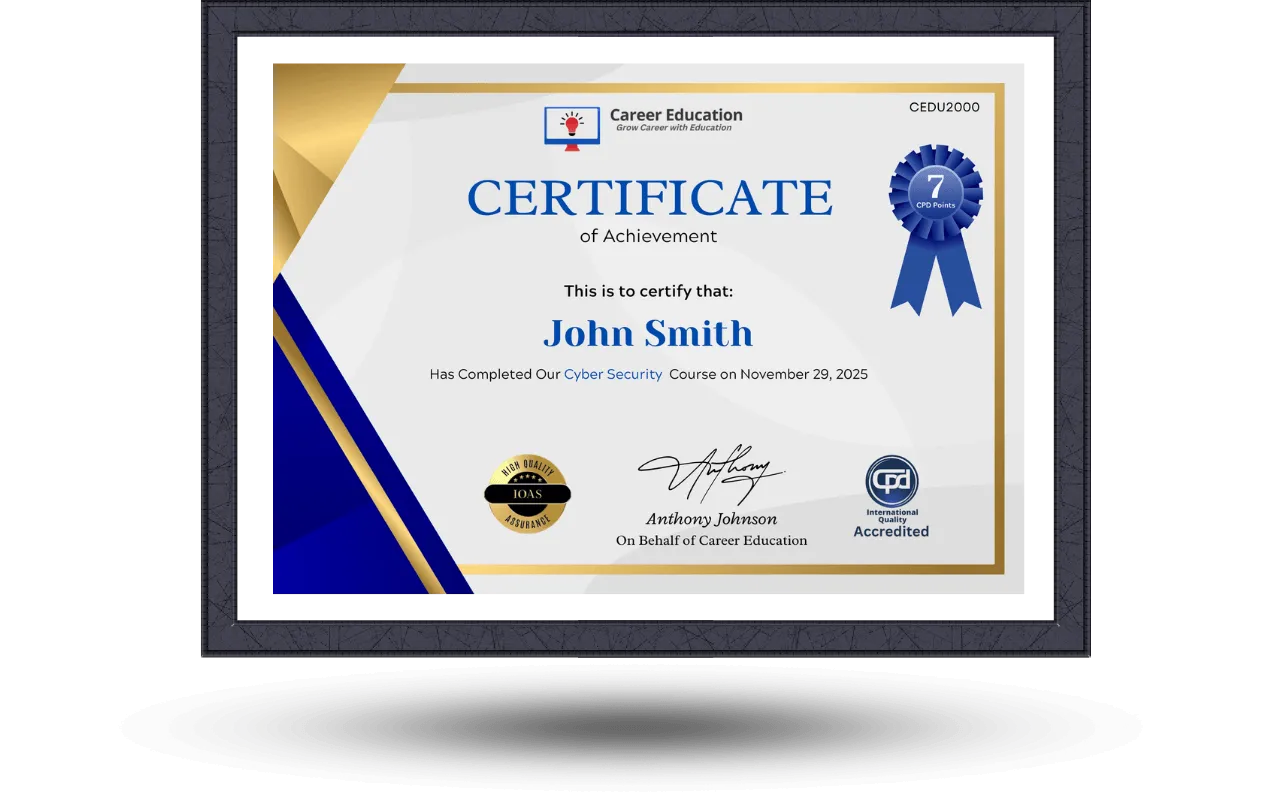
Earn an Accredited Certificate
Upon completion of any course, all students are entitled to a CPD IQ Accredited e-certificate that will be issued by Career Education signifying the completion of your course.
After you complete the course and assignment, you will be eligible to order a free certificate accredited by CPD International Quality by completing the form below.
Hardcopy certificates and transcripts are also available for a small additional fee. More information is disclosed upon course completion.
Similar Courses




Frequently Asked Questions
The lifetime membership includes unlimited access to all courses, resources, and updates for a one-time fee.
You can purchase the membership directly from our website using a secure checkout process.
Yes, selected courses can be downloaded for offline access through our mobile app.
Yes, all future updates and new courses are included at no extra cost.
Yes, we offer a 30-day money-back guarantee if you are not satisfied with the membership.