
94%
OFF
OFF
Construction Slips, Trips and Falls Safety
- Lifetime Access
- All Levels
- PDF Certificate
£296
£19
14-Day Money-Back Guarantee
Learn With Confidence









Construction Slips, Trips and Falls Safety
Construction sites are dynamic environments where people, equipment, materials and changing work conditions come together every day. While this creates opportunities for productive work, it can also create significant safety risks. Uneven surfaces, debris, tools, cables, wet areas, temporary structures, scaffolds and elevated work locations can all contribute to slips, trips and falls.
Construction Slips, Trips and Falls Safety is a practical, outcome-focused course designed to help learners understand how these hazards occur on construction sites and how they can be identified, assessed and controlled. The course covers hazard identification, risk assessment, control measures, training, housekeeping, maintenance, fall protection systems and scaffold safety.
Rather than focusing only on what to do after an incident, this course promotes a proactive approach to construction safety. You will develop greater awareness of common hazards and learn how effective planning, good housekeeping, appropriate controls and worker awareness can contribute to safer construction environments.
Whether you are a construction worker, supervisor, site manager, safety professional or someone responsible for workplace safety, this course provides valuable knowledge for recognising and managing slip, trip and fall risks.
Why Construction Slips, Trips and Falls Safety Matters
Construction environments can change from one hour to the next. Materials may be moved, work areas may be reorganised, temporary access routes may be created and surfaces can become contaminated or obstructed.
This means that a hazard assessment conducted at the beginning of a project may not remain sufficient throughout the entire workday or project lifecycle.
A construction worker may encounter an extension cable crossing a walkway, loose materials around a work area, an uneven surface, poor lighting or a temporary opening. At height, the consequences of losing balance can be even more serious.
Construction Slips, Trips and Falls Safety helps learners understand why ongoing hazard recognition and risk management are essential.
You will explore practical principles for identifying hazards, applying appropriate controls, maintaining orderly work areas and understanding fall protection and scaffold safety.
What You Will Learn
By completing Construction Slips, Trips and Falls Safety, you will develop knowledge that can help you:
-
Understand common causes of construction slips, trips and falls.
-
Identify potential hazards before they cause incidents.
-
Apply basic principles of hazard identification and risk assessment.
-
Understand different approaches to controlling hazards.
-
Recognise the importance of worker training and awareness.
-
Support effective housekeeping practices.
-
Understand why maintenance is important for construction safety.
-
Develop greater awareness of fall protection systems.
-
Understand fundamental scaffold safety principles.
-
Recognise changing conditions that can increase fall risks.
-
Support safer access and movement around construction sites.
-
Contribute to a proactive safety culture.
-
Improve awareness of responsibilities relating to site safety.
-
Apply risk-control principles to everyday construction activities.
Course Curriculum
Module 1: Introduction to Slips, Trips, and Falls
Lesson 1: Introduction to Slips, Trips, and Falls
The first module introduces the fundamentals of slips, trips and falls within construction environments.
You will explore the differences between slips, trips and falls and examine why these incidents can occur during construction activities.
The module introduces common hazards such as uneven ground, debris, tools, materials, cables, wet surfaces, temporary access routes and elevated work areas.
You will also consider how changing site conditions can create new hazards throughout a project.
The lesson encourages you to develop a proactive mindset. Instead of simply reacting to incidents, you will learn to look for conditions that could contribute to an accident and consider appropriate preventive measures.
By the end of this module, you will have a strong foundation for understanding slip, trip and fall hazards in construction.
Module 2: Hazard Identification and Risk Assessment
Effective prevention begins with identifying hazards before they result in harm.
This module focuses on hazard identification and risk assessment principles within construction environments.
You will learn how to recognise conditions that could cause slips, trips or falls and consider who may be exposed to those hazards.
The module explores the importance of assessing both the likelihood of an incident and the potential consequences.
You will also consider why construction risk assessments should be reviewed when conditions change. New equipment, materials, weather conditions, work activities or site layouts can introduce additional risks.
By completing this module, you will develop a more structured approach to identifying and evaluating construction hazards.
Module 3: Control Measures for Slips, Trips, and Falls
Once hazards have been identified and assessed, appropriate control measures should be considered.
This module examines practical methods for controlling slip, trip and fall risks.
You will explore the importance of eliminating hazards where possible and implementing suitable measures to reduce risks that cannot be eliminated.
The module considers controls related to work areas, access routes, surfaces, materials, equipment and work practices.
You will also learn why controls should be selected according to the specific hazard and conditions rather than relying on a single solution for every situation.
The module reinforces the importance of maintaining effective controls throughout the construction project.
By completing this module, you will have greater awareness of how appropriate control measures can reduce construction safety risks.
Module 4: Training and Awareness
Workers play an essential role in identifying and preventing slip, trip and fall hazards.
This module focuses on the importance of training and safety awareness in construction environments.
You will explore why workers need to understand the hazards associated with their activities and the procedures used to control those risks.
The module also highlights the importance of communicating changing site conditions. Construction workers should be encouraged to report hazards and raise concerns through appropriate workplace procedures.
You will learn how ongoing awareness can support a stronger safety culture.
Training is not simply about meeting requirements. Effective safety education can help workers understand why procedures matter and how their actions can influence the safety of others.
By completing this module, you will understand how training and communication can contribute to better construction safety.
Module 5: Housekeeping and Maintenance
Good housekeeping is one of the most practical ways to reduce slip and trip hazards.
Construction sites can quickly become cluttered with tools, materials, packaging, waste and other objects. Without appropriate housekeeping, these conditions can create hazards for workers.
This module focuses on maintaining orderly work areas and clear access routes.
You will explore the importance of removing waste, organising materials, managing cables and keeping walking areas free from unnecessary obstructions.
The module also examines the relationship between maintenance and safety. Damaged surfaces, defective equipment, inadequate lighting and deteriorating access areas may increase risk if they are not addressed.
You will learn why housekeeping and maintenance should be treated as ongoing activities rather than tasks performed only at the end of a shift.
By completing this module, you will develop greater awareness of how organised and well-maintained work areas can contribute to safer construction sites.
Module 6: Fall Protection Systems
Falls from elevated areas can have severe consequences, making appropriate fall protection an important aspect of construction safety.
This module introduces the principles of fall protection systems and explains their role in reducing the risk of falls from height.
You will explore the importance of planning work at height and identifying appropriate protection measures for the specific task and environment.
The module also highlights the importance of inspecting and maintaining fall protection equipment and ensuring that workers understand how relevant systems should be used.
You will develop greater awareness of the importance of combining planning, appropriate equipment, training and safe work practices when working at height.
Because fall protection requirements can vary by jurisdiction and task, learners should always follow the applicable regulations, manufacturer instructions and site-specific procedures.
By completing this module, you will have a stronger foundation in the principles of construction fall protection.
Module 7: Scaffold Safety
Scaffolds are commonly used in construction to provide temporary access and working platforms. However, improper use, poor condition or unsuitable setup can introduce significant fall hazards.
This module focuses on fundamental scaffold safety principles.
You will explore the importance of proper scaffold planning, inspection, access and use.
The module also highlights the importance of recognising unsafe conditions and ensuring that scaffolds are used according to applicable requirements and manufacturer or competent-person guidance.
You will learn why workers should not modify, move or use scaffolding in ways that are inconsistent with established safety procedures.
By completing this module, you will develop greater awareness of scaffold-related hazards and the importance of appropriate controls when working around or on scaffolds.
Develop Stronger Construction Hazard Awareness
One of the central outcomes of Construction Slips, Trips and Falls Safety is improved hazard recognition.
Construction workers operate in environments where hazards can change quickly. Developing the ability to identify potential problems before an incident occurs is therefore extremely valuable.
You will learn to look beyond obvious hazards and consider how different conditions can interact.
For example, a walkway may appear safe until materials are placed across it. A surface that is normally dry may become slippery following a spill or weather change. A temporary access route may become hazardous if lighting is inadequate.
Developing this awareness can help workers respond more proactively to changing conditions.
Improve Risk Assessment Skills
Effective construction safety involves more than identifying hazards. Workers and safety personnel also need to understand how to evaluate and control risks.
Through this course, you will develop a foundation in risk assessment principles.
You will learn to consider:
-
What is the hazard?
-
Where is the hazard located?
-
Who could be exposed?
-
How could an incident occur?
-
What could happen if an incident occurs?
-
What controls are already available?
-
What additional controls may be necessary?
-
Does the risk need to be reassessed when conditions change?
This structured approach can help support more consistent safety decision-making.
Strengthen Housekeeping Practices
A clean and organised work area can make a significant difference to construction safety.
Construction Slips, Trips and Falls Safety highlights the importance of maintaining clear walkways and removing unnecessary obstacles.
You will develop a greater understanding of why waste management, material organisation and cable management are important parts of everyday safety.
Good housekeeping can also make hazards easier to see. When work areas are cluttered, hazards may be hidden or overlooked.
By promoting better housekeeping, construction teams can contribute to safer and more efficient working environments.
Understand Fall Protection
Working at height introduces additional risks that require appropriate planning and controls.
The course provides an introduction to fall protection principles and helps learners understand why suitable systems, procedures and training are important.
You will develop greater awareness of the role that fall protection can play in preventing serious incidents and why equipment must be selected, used and maintained appropriately.
The course is designed to build awareness rather than replace task-specific practical training or competent-person instruction.
Improve Scaffold Safety Awareness
Scaffold safety is an essential consideration for construction workers who use, inspect or work around scaffolding.
Through the course, you will understand the importance of appropriate access, condition, inspection and use.
You will also develop awareness of why workers should never assume that a scaffold is safe simply because it has been used previously.
Conditions can change, components can become damaged and modifications can affect safety. Appropriate procedures and competent oversight are therefore essential.
Build a Stronger Construction Safety Culture
Construction safety is a shared responsibility.
Workers need to recognise hazards. Supervisors need to communicate expectations and address unsafe conditions. Managers need to provide appropriate resources, planning and systems. Everyone has a role in maintaining a safe environment.
Construction Slips, Trips and Falls Safety encourages this shared responsibility by showing how individual awareness and organisational controls can work together.
A strong safety culture encourages workers to report hazards rather than ignore them and promotes prevention rather than waiting for incidents to occur.
Who Is This Course For?
Construction Slips, Trips and Falls Safety is suitable for:
-
Construction workers.
-
Site supervisors.
-
Construction managers.
-
Health and safety professionals.
-
Site safety officers.
-
Project managers.
-
Maintenance personnel.
-
Contractors and subcontractors.
-
General labourers.
-
Facilities professionals.
-
Construction trainees.
-
Workers who regularly access elevated areas or scaffolds.
The course can also benefit organisations seeking to improve general awareness of slip, trip and fall prevention among construction personnel.
Support Safer Construction Practices
Preventing slips, trips and falls requires consistent attention throughout the construction process.
From identifying hazards and conducting risk assessments to maintaining work areas and using appropriate fall protection, each stage contributes to overall safety.
The course helps you understand how these elements connect so that you can approach construction safety more systematically.
You will develop knowledge that can support toolbox talks, workplace discussions, safety awareness programmes and everyday hazard identification.
Take the Next Step in Construction Safety
Construction environments will always involve changing conditions, but many slip, trip and fall risks can be reduced through proper planning, awareness and control.
Construction Slips, Trips and Falls Safety provides a comprehensive introduction to the key principles needed to recognise and manage these hazards.
From understanding common causes and conducting risk assessments to implementing controls, improving housekeeping, supporting worker awareness and understanding fall protection and scaffold safety, the course covers essential areas of construction hazard prevention.
By completing the course, you can develop stronger hazard perception, improve your understanding of risk management and contribute more effectively to safer construction practices.
Start learning Construction Slips, Trips and Falls Safety today and build the knowledge needed to identify hazards, support effective controls, improve housekeeping and promote safer working practices across construction environments.
Course Modules
Course Content
Module 1_ Introduction to Slips, Trips, and Falls
-
Lesson 1_ Introduction to Slips, Trips, and Falls
Module 2_ Hazard Identification and Risk Assessment
Module 3_ Control Measures for Slips, Trips, and Falls
Module 4_ Training and Awareness
Module 5_ Housekeeping and Maintenance
Module 6_ Fall Protection Systems
Module 7_ Scaffold Safety
What our students say
Excellent
4.9 average
158 Reviews

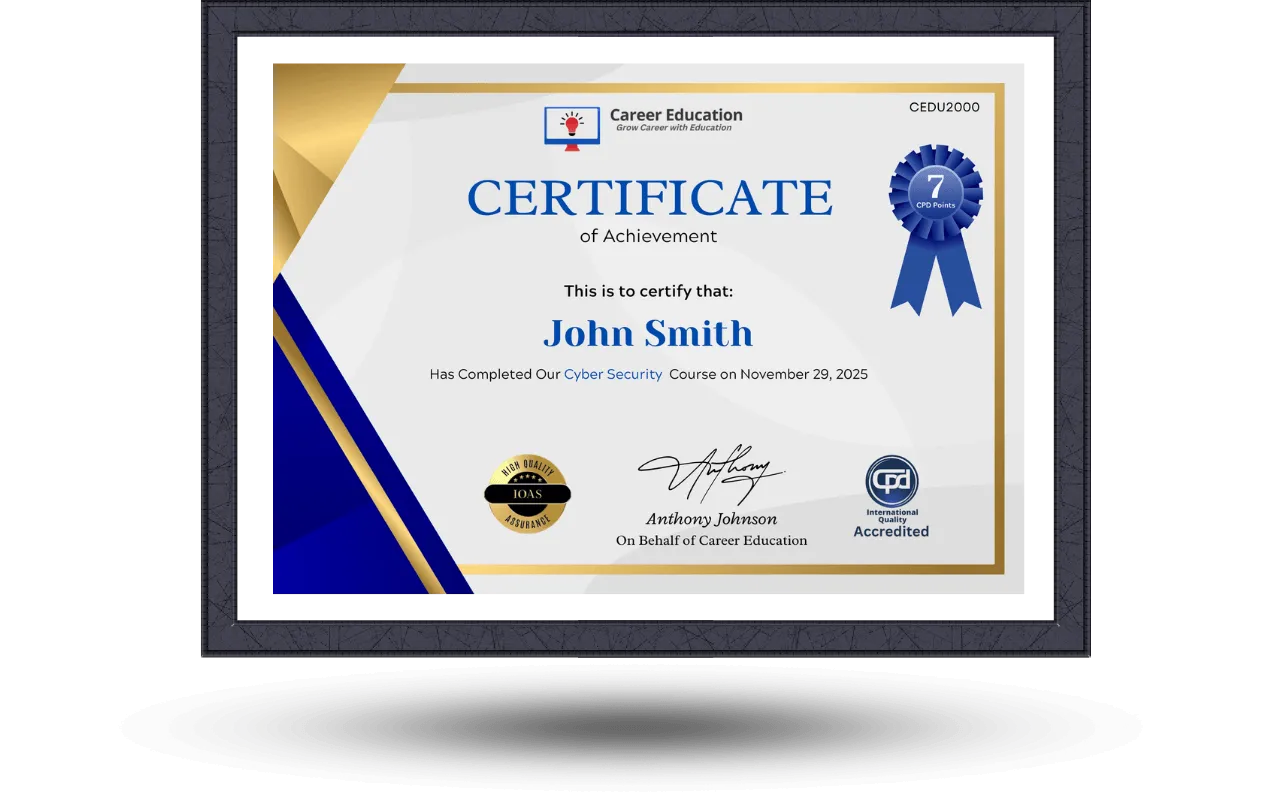
Earn an Accredited Certificate
Upon completion of any course, all students are entitled to a CPD IQ Accredited e-certificate that will be issued by Career Education signifying the completion of your course.
After you complete the course and assignment, you will be eligible to order a free certificate accredited by CPD International Quality by completing the form below.
Hardcopy certificates and transcripts are also available for a small additional fee. More information is disclosed upon course completion.
Similar Courses


Frequently Asked Questions
The lifetime membership includes unlimited access to all courses, resources, and updates for a one-time fee.
You can purchase the membership directly from our website using a secure checkout process.
Yes, selected courses can be downloaded for offline access through our mobile app.
Yes, all future updates and new courses are included at no extra cost.
Yes, we offer a 30-day money-back guarantee if you are not satisfied with the membership.