
94%
OFF
OFF
Construction Personal Protective Equipment Safety
- Lifetime Access
- All Levels
- PDF Certificate
£296
£19
14-Day Money-Back Guarantee
Learn With Confidence









Construction Personal Protective Equipment Safety
Construction sites are dynamic working environments where employees can encounter multiple hazards throughout the working day. Falling objects, flying particles, excessive noise, dust, airborne contaminants, sharp materials, heavy equipment and uneven surfaces can all create risks that require appropriate protective measures.
Construction Personal Protective Equipment Safety is designed to help construction workers, supervisors, site managers and other professionals understand the role of personal protective equipment (PPE) in reducing exposure to workplace hazards.
PPE is an important part of a broader workplace safety programme. However, simply having protective equipment available does not guarantee safety. Workers need to understand which PPE is appropriate for a particular hazard, how to use it correctly, how to inspect it and when it should be replaced.
This course provides a practical, outcome-focused introduction to essential PPE used in construction environments. Learners will explore head, eye and face, hearing, respiratory, hand and foot protection, developing a stronger understanding of how each type of PPE can support safer working practices.
Why Take Construction Personal Protective Equipment Safety?
Construction workers can encounter different hazards depending on the task, worksite and environment. A worker may need eye protection for one activity, hearing protection for another and respiratory protection in a dusty environment.
Understanding PPE requirements helps workers make better safety decisions before beginning a task.
Construction Personal Protective Equipment Safety helps learners understand how to:
-
Recognise common construction hazards requiring PPE.
-
Understand the purpose of different types of protective equipment.
-
Select PPE appropriate to workplace hazards and task requirements.
-
Use PPE correctly.
-
Inspect PPE before use.
-
Recognise damaged or unsuitable protective equipment.
-
Understand limitations of PPE.
-
Maintain and store PPE appropriately.
-
Support safe working practices.
-
Develop stronger personal safety awareness on construction sites.
The course focuses on practical application, helping learners understand how PPE fits into everyday construction safety.
What You Will Learn
By completing Construction Personal Protective Equipment Safety, participants will develop greater awareness of the different types of PPE used in construction and the hazards they are designed to address.
The course begins with the fundamentals of PPE and then explores specific forms of protection, including head, eye and face, hearing, respiratory, hand and foot protection.
Learners will understand why PPE should be selected based on the hazards present rather than simply using the same equipment for every task.
The course also reinforces the importance of following site-specific procedures, manufacturer instructions and applicable workplace requirements.
Module 1: Introduction to Personal Protective Equipment (PPE) in Construction
The course begins with an introduction to PPE and its role in construction safety.
Learners explore why PPE may be necessary when workers are exposed to hazards that cannot be adequately controlled through other measures.
Participants will consider common construction hazards, including:
-
Falling or moving objects.
-
Flying particles.
-
Dust and airborne contaminants.
-
Excessive noise.
-
Sharp materials.
-
Heavy objects.
-
Chemical exposure.
-
Uneven or hazardous surfaces.
-
Construction debris.
The module introduces the importance of conducting hazard assessments and selecting protective equipment based on the specific task and working environment.
Learners will also explore the importance of using PPE consistently and correctly. Wearing unsuitable or poorly maintained equipment can provide inadequate protection and may create additional risks.
The module establishes the foundation for understanding PPE as one component of a comprehensive safety approach.
Module 2: Head Protection
Construction workers may be exposed to hazards involving falling objects, overhead activities, impact risks and other situations where head protection may be necessary.
This module focuses on the purpose and safe use of head protection.
Learners will explore why appropriate head protection can help reduce the risk of head injuries in suitable work environments.
Participants will consider:
-
Situations where head protection may be required.
-
Selecting suitable head protection.
-
Inspecting protective headgear.
-
Checking for damage or deterioration.
-
Correct fitting and adjustment.
-
Proper use and storage.
-
Following workplace requirements.
-
Recognising when equipment may need replacement.
The module reinforces that protective headgear should be appropriate for the hazards identified and used according to applicable requirements and manufacturer guidance.
By completing this module, learners will have a stronger understanding of how appropriate head protection supports construction safety.
Module 3: Eye and Face Protection
Construction activities can expose workers to flying debris, dust, particles, splashes and other hazards that may affect the eyes or face.
This module examines the importance of eye and face protection.
Learners will explore different considerations when selecting suitable protection for specific tasks and hazards.
Participants will develop awareness of:
-
Flying particles.
-
Dust.
-
Chemical or material splashes.
-
Impact hazards.
-
Cutting and grinding activities.
-
Welding and other task-specific hazards.
-
Proper fitting and positioning.
-
Cleaning and maintenance.
-
Inspection before use.
The course emphasises that ordinary vision correction eyewear may not provide adequate protection against workplace hazards unless it is specifically designed and approved for that purpose.
Learners will also understand why damaged, scratched or unsuitable eye protection should be addressed promptly.
By applying appropriate eye and face protection practices, workers can reduce unnecessary exposure to potentially harmful workplace hazards.
Module 4: Hearing Protection
Construction environments can be noisy. Machinery, power tools, drilling, cutting, heavy equipment and other activities may create high noise levels.
This module focuses on hearing protection and noise-related safety awareness.
Learners will explore why prolonged or excessive exposure to workplace noise can create health risks and why appropriate controls should be considered.
Participants will learn about the role of hearing protection and the importance of selecting suitable equipment for the environment.
Topics include:
-
Recognising noisy work activities.
-
Understanding the importance of noise assessment.
-
Types of hearing protection.
-
Correct fitting and use.
-
Maintaining hearing protection.
-
Replacing damaged equipment.
-
Following workplace hearing conservation procedures.
The course reinforces that PPE should not be considered the only approach to noise control. Where applicable, engineering and administrative controls should also be considered as part of a comprehensive approach.
By completing this module, learners will better understand how hearing protection can contribute to safer construction work.
Module 5: Respiratory Protection
Dust, fumes, vapours and airborne contaminants may be present during certain construction activities.
This module introduces the role of respiratory protection in managing inhalation hazards.
Learners will explore why respiratory protection must be selected according to the specific hazard and workplace conditions.
Participants will consider important principles such as:
-
Identifying airborne hazards.
-
Understanding the limitations of respiratory protection.
-
Selecting suitable respiratory equipment.
-
Correct fitting and use.
-
Maintaining equipment.
-
Replacing filters or components according to applicable requirements.
-
Avoiding contaminated equipment practices.
-
Following workplace respiratory protection procedures.
The module also reinforces that respiratory PPE should not replace appropriate hazard controls. Where possible, exposure should be reduced through elimination, substitution, engineering controls and other appropriate measures.
Learners will gain a clearer understanding of why correct selection and use are essential when respiratory protection is required.
Module 6: Hand Protection
Hands are frequently exposed to workplace hazards because workers use them for handling tools, materials and equipment.
This module examines the importance of hand protection in construction environments.
Learners will explore hazards such as:
-
Cuts and punctures.
-
Abrasions.
-
Impact.
-
Heat or cold.
-
Certain chemical exposures.
-
Rough or sharp materials.
-
Mechanical hazards.
Participants will learn why different gloves provide different levels and types of protection.
The module highlights the importance of selecting gloves based on the specific hazard rather than assuming one type of glove is suitable for every activity.
Learners will also consider:
-
Proper glove fit.
-
Inspection before use.
-
Cleaning and maintenance.
-
Replacement of damaged gloves.
-
Avoiding inappropriate glove use.
-
Following task-specific requirements.
By applying these principles, workers can make more informed decisions about hand protection and reduce avoidable exposure to workplace hazards.
Module 7: Foot Protection
Construction sites can expose workers to heavy objects, sharp materials, uneven surfaces, wet conditions and other hazards that may affect the feet.
This module focuses on selecting and using appropriate protective footwear.
Learners will explore the role of suitable safety footwear in reducing risks associated with construction work.
Participants will consider:
-
Impact hazards.
-
Compression hazards.
-
Puncture risks.
-
Slips and trips.
-
Wet or contaminated environments.
-
Uneven surfaces.
-
Task-specific footwear requirements.
The module also covers the importance of checking footwear for damage and deterioration.
Learners will understand why protective footwear should fit correctly, remain in suitable condition and be appropriate for the hazards present on the worksite.
By completing this module, participants will be better prepared to recognise the importance of foot protection as part of an overall construction PPE programme.
Practical Benefits of Construction Personal Protective Equipment Safety
Construction Personal Protective Equipment Safety is designed to produce practical outcomes that learners can apply on construction sites.
After completing the course, participants should be better able to:
Recognise PPE Requirements
Identify construction hazards that may require specific forms of personal protective equipment.
Select Appropriate Protection
Understand why PPE should be matched to the hazard, task and working environment.
Use PPE Correctly
Develop greater awareness of correct fitting, use and handling of protective equipment.
Inspect PPE
Recognise visible damage, deterioration or other conditions that may affect protective equipment.
Protect Different Areas of the Body
Understand the specific purposes of head, eye and face, hearing, respiratory, hand and foot protection.
Follow Workplace Procedures
Apply PPE requirements consistently and follow relevant site instructions and safety procedures.
Recognise PPE Limitations
Understand that PPE is an important safety measure but should form part of a broader hazard-control strategy.
Strengthen Personal Safety Awareness
Develop safer habits and become more proactive when identifying and managing construction hazards.
Who Is This Course For?
Construction Personal Protective Equipment Safety is suitable for anyone working in or around construction environments where PPE may be required.
It may be particularly useful for:
-
Construction workers.
-
General labourers.
-
Site operatives.
-
Construction supervisors.
-
Site managers.
-
Contractors.
-
Maintenance workers.
-
Engineering personnel.
-
Skilled tradespeople.
-
Health and safety professionals.
-
Project managers.
-
New construction employees.
-
Experienced workers seeking a PPE refresher.
The course can be used as part of broader workplace safety awareness and PPE training programmes, subject to the specific requirements of the organisation and applicable regulations.
Build Better PPE Safety Habits
Personal protective equipment is most effective when workers understand why it is required and how to use it properly.
Simply wearing PPE is not enough. Workers need to know whether the equipment is suitable, whether it fits correctly, whether it is in good condition and whether it provides the appropriate level of protection for the task.
Construction Personal Protective Equipment Safety encourages learners to think critically about these questions before starting work.
The course also promotes a proactive approach. Workers should not wait until an incident occurs to identify a PPE problem. Damaged equipment, inadequate protection or changing workplace conditions should be identified and addressed promptly according to workplace procedures.
Support a Stronger Construction Safety Culture
A strong construction safety culture depends on consistent behaviour.
When workers understand PPE requirements and supervisors reinforce appropriate use, safety expectations become part of everyday working practices.
Construction Personal Protective Equipment Safety helps participants understand how individual PPE decisions contribute to wider workplace safety.
From protecting the head and eyes to managing noise, airborne hazards, hand injuries and foot hazards, each form of PPE addresses specific risks. Understanding these differences allows workers to make more informed and responsible decisions.
Take a Proactive Approach to Construction PPE
Construction environments can change quickly. New tasks, equipment, materials and site conditions can introduce new hazards.
Being prepared means understanding how to identify these hazards and determine whether additional protective measures are required.
Construction Personal Protective Equipment Safety provides learners with a practical foundation for recognising PPE needs, using protective equipment appropriately and supporting safer working practices.
By completing the course, participants can strengthen their PPE awareness and contribute to a more safety-conscious construction environment.
Develop Safer Working Practices Today
Every construction worker has a role to play in preventing workplace injuries.
Appropriate PPE can provide an important layer of protection when hazards cannot be fully eliminated or controlled through other measures. However, its effectiveness depends on proper selection, correct use, regular inspection and consistent application.
Construction Personal Protective Equipment Safety gives learners the knowledge they need to understand these principles and apply them in practical workplace situations.
Build stronger PPE awareness. Improve hazard recognition. Protect yourself and others. Support a safer construction workplace with Construction Personal Protective Equipment Safety.
Course Modules
Course Content
Module 1_ Introduction to Personal Protective Equipment (PPE) in Construction
-
Lesson 1_ Introduction to Personal Protective Equipment (PPE) in Construction
Module 2_ Head Protection
Module 3_ Eye and Face Protection
Module 4_ Hearing Protection
Module 5_ Respiratory Protection
Module 6_ Hand Protection
Module 7_ Foot Protection
What our students say
Excellent
4.9 average
158 Reviews

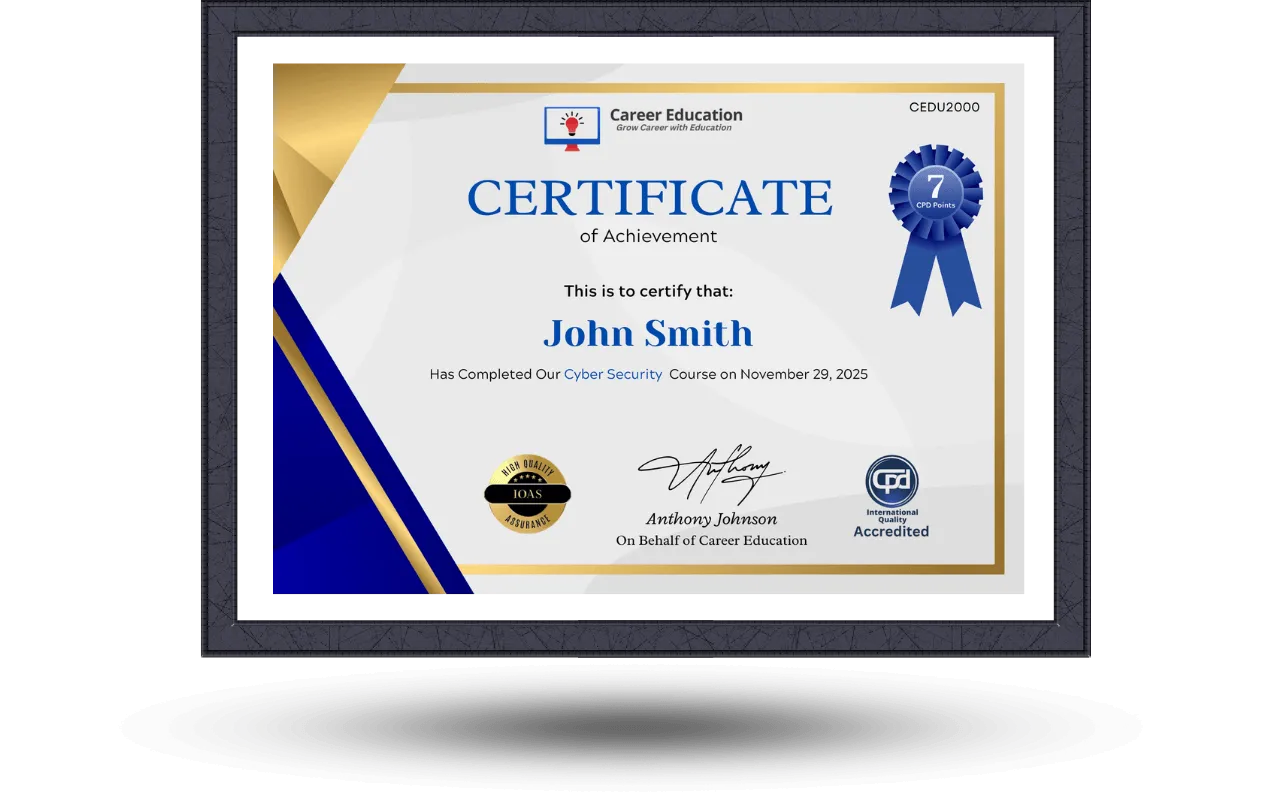
Earn an Accredited Certificate
Upon completion of any course, all students are entitled to a CPD IQ Accredited e-certificate that will be issued by Career Education signifying the completion of your course.
After you complete the course and assignment, you will be eligible to order a free certificate accredited by CPD International Quality by completing the form below.
Hardcopy certificates and transcripts are also available for a small additional fee. More information is disclosed upon course completion.
Similar Courses




Frequently Asked Questions
The lifetime membership includes unlimited access to all courses, resources, and updates for a one-time fee.
You can purchase the membership directly from our website using a secure checkout process.
Yes, selected courses can be downloaded for offline access through our mobile app.
Yes, all future updates and new courses are included at no extra cost.
Yes, we offer a 30-day money-back guarantee if you are not satisfied with the membership.