
94%
OFF
OFF
Construction Industry Scheme (CIS) Fundamentals
- Lifetime Access
- All Levels
- PDF Certificate
£296
£19
14-Day Money-Back Guarantee
Learn With Confidence









Construction Industry Scheme (CIS) Fundamentals
The Construction Industry Scheme (CIS) Fundamentals course is designed to help learners build a practical understanding of the Construction Industry Scheme and how it applies to businesses, contractors, subcontractors, and construction-related payments in the UK. CIS plays an important role in ensuring the correct amount of tax is deducted from payments made to subcontractors, making a clear understanding of its requirements essential for anyone involved in construction finance, payroll, administration, or business operations.
Whether you are new to CIS, responsible for construction-related financial administration, working with contractors and subcontractors, or looking to strengthen your professional knowledge, this course provides a structured introduction to the key principles, processes, and compliance responsibilities associated with CIS.
Rather than focusing only on theory, the Construction Industry Scheme (CIS) Fundamentals course is designed around practical outcomes. You will develop the knowledge needed to understand CIS obligations, recognise when registration may be required, understand tax deductions, follow reporting procedures, and appreciate how CIS interacts with VAT.
Why Study Construction Industry Scheme (CIS) Fundamentals?
The Construction Industry Scheme can appear complicated, particularly when businesses need to manage registration, verification, deductions, payments, records, and reporting requirements. Mistakes can create administrative difficulties and may result in compliance problems.
A strong foundation in CIS can help you approach these responsibilities with greater confidence.
By completing the Construction Industry Scheme (CIS) Fundamentals course, you can develop an understanding of:
-
How the Construction Industry Scheme operates
-
The roles and responsibilities of contractors and subcontractors
-
CIS registration and compliance requirements
-
How subcontractor verification works
-
How tax deductions are calculated and applied
-
CIS payment processes
-
Reporting and filing obligations
-
The relationship between CIS and VAT
-
The importance of maintaining accurate records
-
Common compliance considerations within construction businesses
The course provides a useful foundation for learners who want to understand the practical side of CIS and apply their knowledge in relevant workplace situations.
What Will You Learn?
The Construction Industry Scheme (CIS) Fundamentals course is divided into five focused modules. Each module covers an important aspect of CIS, allowing you to progressively build your knowledge.
Module 1: Introduction to CIS
The first module introduces the Construction Industry Scheme and establishes the foundations for understanding how it works.
You will explore the purpose of CIS and why the scheme exists within the UK construction sector. The module helps you understand the types of construction work and business arrangements that may fall within the scope of the scheme.
You will also develop an understanding of the distinction between contractors and subcontractors and the responsibilities associated with each role.
By completing this module, you should be better prepared to:
-
Explain the purpose of the Construction Industry Scheme
-
Understand the basic principles behind CIS
-
Identify key parties involved in CIS transactions
-
Recognise the general circumstances in which CIS may apply
-
Understand the importance of CIS compliance within construction businesses
This foundational knowledge provides the starting point for understanding the more detailed administrative and financial requirements covered throughout the course.
Module 2: CIS Registration and Compliance
Registration and compliance are central to managing CIS correctly. This module focuses on the processes and responsibilities businesses need to understand when operating under the scheme.
You will explore CIS registration requirements and learn why it is important for relevant businesses to establish their obligations before making or receiving construction payments.
The module also introduces important compliance considerations, helping you understand the role of accurate information, proper documentation, and appropriate procedures.
You will gain knowledge that can help you:
-
Understand CIS registration requirements
-
Recognise the responsibilities of contractors and subcontractors
-
Understand the importance of subcontractor verification
-
Appreciate the role of accurate business and payment information
-
Identify key areas where CIS compliance needs to be maintained
-
Develop a more organised approach to CIS administration
Understanding these requirements can help reduce confusion and support more consistent handling of CIS-related responsibilities.
Module 3: Tax Deductions and Payments
Tax deductions are one of the most important elements of CIS. Contractors may be required to deduct tax from payments made to subcontractors, meaning businesses need to understand how deductions work and how they affect payments.
In this module, you will explore the fundamentals of CIS tax deductions and payment procedures.
You will learn how CIS deductions relate to subcontractor payments and why the correct treatment of payments is important. The module also helps you understand the importance of keeping appropriate records of deductions and payments.
By the end of this module, you will be better equipped to:
-
Understand the purpose of CIS tax deductions
-
Recognise how deductions affect subcontractor payments
-
Understand the importance of applying the appropriate deduction treatment
-
Appreciate the need for accurate payment records
-
Understand the relationship between deductions and CIS reporting
-
Recognise common administrative considerations surrounding CIS payments
This practical understanding can be particularly useful for learners involved in bookkeeping, payroll support, accounts administration, construction business management, or financial operations.
Module 4: Reporting and Filing Requirements
CIS responsibilities do not end when a payment is made. Contractors may have reporting and filing obligations that need to be completed accurately and on time.
This module focuses on the reporting and filing side of CIS, helping learners understand the information that needs to be managed and why timely reporting is important.
You will explore the general principles of CIS returns, record keeping, and reporting responsibilities. You will also learn why businesses need reliable documentation to support their CIS activities.
After completing this module, you should be able to:
-
Understand the purpose of CIS reporting
-
Recognise key filing responsibilities
-
Appreciate the importance of accurate and timely submissions
-
Understand the role of supporting records
-
Identify areas that require careful administrative attention
-
Recognise the potential consequences of poor CIS record keeping
Developing these skills can help you contribute to more effective financial administration and stronger compliance processes within a construction environment.
Module 5: CIS and VAT
CIS and VAT can create additional complexity for businesses because they involve different tax considerations and may affect how construction transactions are handled.
The final module introduces the relationship between CIS and VAT and helps learners understand why both areas need to be considered when dealing with relevant construction transactions.
You will explore the fundamental principles surrounding CIS and VAT and develop an awareness of how VAT considerations can interact with construction-related payments.
By completing this module, you will be able to:
-
Understand the basic relationship between CIS and VAT
-
Recognise why VAT treatment requires careful consideration
-
Appreciate how tax responsibilities can overlap within construction transactions
-
Understand the importance of accurate invoicing and records
-
Develop greater confidence when dealing with construction-related financial administration
This knowledge can help you see CIS within the wider context of construction taxation and business finance.
Practical Outcomes of the Course
The goal of the Construction Industry Scheme (CIS) Fundamentals course is not simply to introduce terminology. It is designed to help you develop knowledge that can be applied to practical workplace responsibilities.
After completing the course, you should have a stronger understanding of how CIS operates and how its main processes fit together.
You will be able to approach CIS-related tasks with greater awareness, including understanding registration responsibilities, recognising the importance of verification, understanding tax deductions, and appreciating reporting requirements.
You will also have a clearer understanding of how CIS connects with VAT and wider financial administration.
These outcomes can help you become more confident when communicating with contractors, subcontractors, finance teams, administrators, and other professionals who deal with construction-related payments.
Who Is This Course For?
The Construction Industry Scheme (CIS) Fundamentals course is suitable for a wide range of learners who want to develop their understanding of CIS.
It may be particularly useful for:
-
Construction business owners
-
Contractors
-
Subcontractors
-
Bookkeepers
-
Accounts administrators
-
Payroll and finance staff
-
Office administrators working in construction
-
Business managers
-
Individuals entering construction administration
-
Professionals who regularly deal with construction payments
-
Learners seeking to expand their knowledge of UK construction taxation
The course can also be useful for anyone who wants to develop a broader understanding of how tax and compliance responsibilities affect construction businesses.
Build Confidence in Construction Tax Administration
CIS compliance requires attention to detail. Businesses need to understand their responsibilities, maintain appropriate records, process payments correctly, and meet relevant reporting obligations.
Without a clear understanding of the scheme, it can be difficult to know what information is required, when action needs to be taken, or how different tax considerations relate to construction transactions.
The Construction Industry Scheme (CIS) Fundamentals course gives you a structured way to build that knowledge.
Instead of approaching CIS as a collection of complicated rules, you will explore the scheme through its key areas: introduction, registration, compliance, deductions, payments, reporting, filing, and VAT.
This structured approach can make it easier to understand how individual CIS responsibilities connect to one another.
Strengthen Your Professional Skill Set
Knowledge of CIS can complement existing skills in accounting, bookkeeping, payroll, business administration, construction management, and financial operations.
For professionals already working in construction, improving your CIS knowledge can help you better understand the financial and administrative side of your role. For learners considering a career in construction administration or finance, it can provide useful additional knowledge to support their professional development.
The course can also help business owners become more aware of the processes involved in managing construction-related tax obligations.
Learn the Fundamentals in a Structured Way
Tax and compliance topics can feel overwhelming when studied without a clear structure. The Construction Industry Scheme (CIS) Fundamentals course takes a progressive approach, beginning with the foundations before moving into registration, deductions, reporting, and VAT.
This allows you to develop your knowledge step by step.
You will first understand what CIS is and who it affects. You will then explore registration and compliance before moving into the practical financial aspects of deductions and payments. The course then covers reporting and filing before concluding with CIS and VAT.
This learning structure helps connect the different elements of CIS and gives you a more complete picture of the scheme.
Take the Next Step in Your Professional Development
Understanding the Construction Industry Scheme can be a valuable addition to your professional knowledge, particularly if your work involves construction businesses, financial administration, contractor payments, or subcontractor relationships.
The Construction Industry Scheme (CIS) Fundamentals course gives you an opportunity to develop a practical foundation in an important area of UK construction finance and compliance.
From understanding the fundamentals of CIS to exploring registration, tax deductions, reporting requirements, and VAT, the course is designed to give you knowledge that can support greater confidence in relevant workplace situations.
If you want to strengthen your understanding of construction tax administration and develop a clearer picture of how CIS works, the Construction Industry Scheme (CIS) Fundamentals course is an excellent place to begin.
Enrol today and start building the knowledge you need to understand CIS responsibilities, support accurate construction payment processes, and contribute more confidently to effective compliance and financial administration.
Course Modules
Course Content
Module 1_ Introduction to CIS.
-
Lesson 1_ Introduction to CIS.
Module 2_ CIS Registration and Compliance.
Module 3_ Tax Deductions and Payments.
Module 4_ Reporting and Filing Requirements.
Module 5_ CIS and VAT.
What our students say
Excellent
4.9 average
158 Reviews

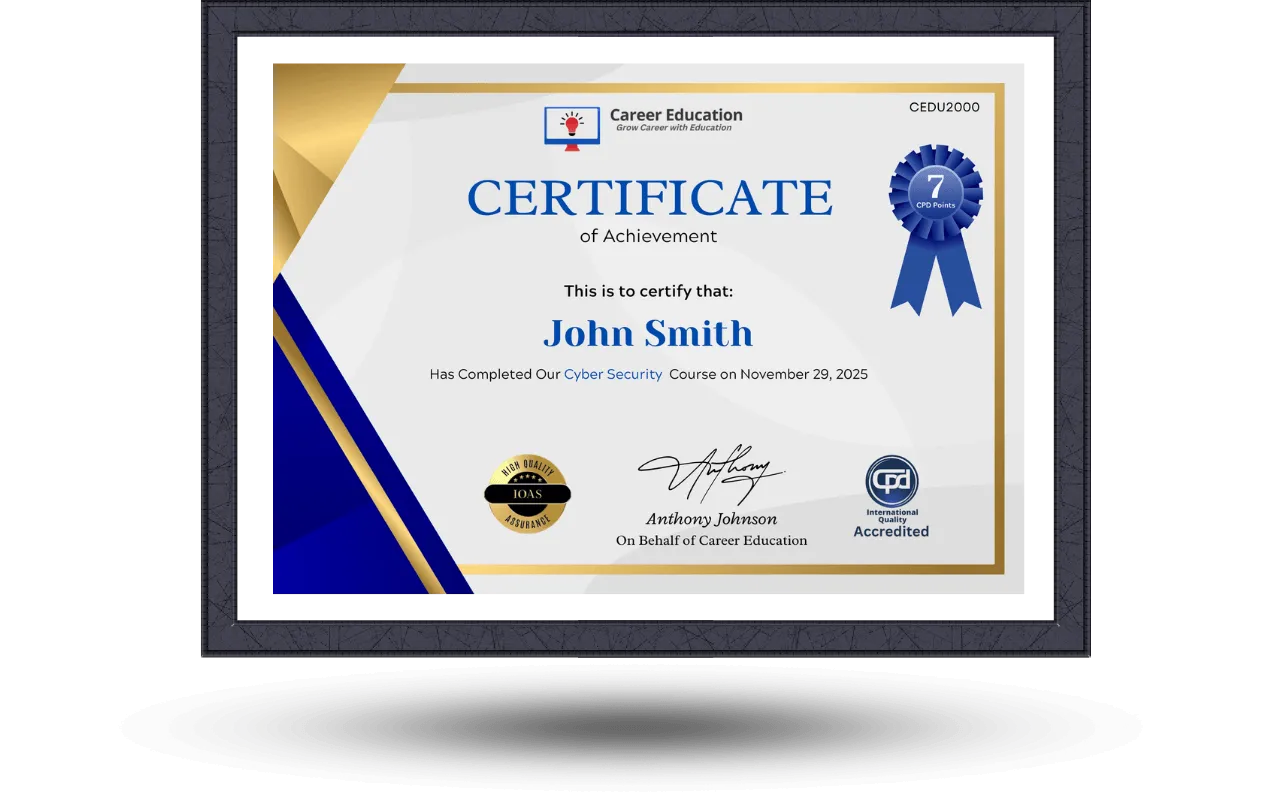
Earn an Accredited Certificate
Upon completion of any course, all students are entitled to a CPD IQ Accredited e-certificate that will be issued by Career Education signifying the completion of your course.
After you complete the course and assignment, you will be eligible to order a free certificate accredited by CPD International Quality by completing the form below.
Hardcopy certificates and transcripts are also available for a small additional fee. More information is disclosed upon course completion.
Similar Courses




Frequently Asked Questions
The lifetime membership includes unlimited access to all courses, resources, and updates for a one-time fee.
You can purchase the membership directly from our website using a secure checkout process.
Yes, selected courses can be downloaded for offline access through our mobile app.
Yes, all future updates and new courses are included at no extra cost.
Yes, we offer a 30-day money-back guarantee if you are not satisfied with the membership.