
94%
OFF
OFF
Cardiac Care in Healthcare
- Lifetime Access
- All Levels
- PDF Certificate
£296
£19
14-Day Money-Back Guarantee
Learn With Confidence




Cardiac Care in Healthcare
Cardiovascular health is a vital part of modern healthcare, and professionals who understand cardiac conditions, assessment methods, diagnostic procedures, medications, and emergency responses can contribute more effectively to patient care. The Cardiac Care in Healthcare course is designed to provide learners with a structured understanding of essential cardiac care principles and the knowledge needed to recognise and respond appropriately to common cardiovascular situations.
The heart plays a central role in maintaining the body’s vital functions. When cardiac problems occur, timely assessment, accurate diagnosis, appropriate treatment, and effective emergency response can be critically important. For this reason, developing a strong foundation in cardiac care can be valuable for healthcare learners and professionals seeking to strengthen their knowledge and support safer, more informed practice.
This comprehensive Cardiac Care in Healthcare course takes learners through the fundamentals of cardiac anatomy and physiology before progressing to assessment, diagnosis, diagnostic testing, medications, cardiac devices, and emergency responses. The course is structured to help learners build their understanding progressively, making complex concepts easier to connect with practical healthcare situations.
Why Study Cardiac Care in Healthcare?
Cardiovascular conditions are among the major health challenges encountered across healthcare settings. Healthcare professionals may encounter patients experiencing symptoms associated with cardiac conditions in hospitals, clinics, community environments, rehabilitation settings, and other care contexts.
A strong understanding of cardiac care can help learners recognise the importance of systematic assessment and understand how different aspects of cardiovascular management fit together. From understanding how the heart functions to learning about diagnostic procedures and emergency responses, each area contributes to a broader understanding of patient-centred cardiac care.
The Cardiac Care in Healthcare course can help you develop foundational knowledge that may support further learning, professional development, or work within healthcare-related environments.
Rather than focusing only on theoretical information, the course follows a practical learning pathway. You will explore how cardiac anatomy relates to physiological function, how cardiac conditions may be assessed, why different diagnostic tests are used, how medications and devices support cardiac management, and what healthcare professionals need to understand about responding to cardiac emergencies.
What Will You Learn?
By completing the Cardiac Care in Healthcare course, you can develop knowledge in several important areas of cardiovascular care.
You will learn about:
-
The structure and function of the heart
-
Basic cardiac anatomy and physiology
-
Assessment approaches for cardiac conditions
-
Principles of cardiac diagnosis
-
Common diagnostic tests and procedures
-
The role of cardiac medications
-
Cardiac devices and their applications
-
Emergency responses to cardiac events
-
The importance of timely and appropriate cardiac care
-
Key concepts that support effective healthcare practice
These learning outcomes can help you build a stronger foundation for understanding cardiovascular health and the care provided to individuals experiencing cardiac problems.
Module 1: Anatomy and Physiology of the Heart
The first module establishes the foundation for understanding cardiac care by exploring the anatomy and physiology of the heart.
Before healthcare professionals can understand cardiac conditions and their management, it is important to understand how a healthy heart is structured and how it functions. This module introduces learners to the heart and its role within the circulatory system.
You will explore the key structures of the heart and develop an understanding of how these structures work together to support circulation. The module also introduces fundamental physiological concepts relevant to cardiac function.
Understanding normal cardiac function can make it easier to recognise why changes in the heart can lead to symptoms and health complications. It also provides useful background knowledge for later modules covering assessment, diagnosis, medication, devices, and emergency responses.
By completing this module, you can develop a stronger understanding of:
-
Major structures of the heart
-
Basic cardiac function
-
The role of the heart in circulation
-
Fundamental cardiac physiology
-
Relationships between cardiac structure and function
This foundational knowledge provides an essential starting point for the rest of the course.
Module 2: Assessment and Diagnosis of Cardiac Conditions
Effective cardiac care begins with appropriate assessment. The second module explores key principles involved in assessing and diagnosing cardiac conditions.
Learners will develop an understanding of how healthcare professionals gather relevant information when evaluating a patient with potential cardiovascular concerns. Assessment can involve considering symptoms, patient history, observations, and other clinical information before determining what further investigation may be appropriate.
This module helps you understand the importance of a systematic approach to cardiac assessment and the relationship between assessment findings and diagnostic decision-making.
You will explore concepts associated with:
-
Cardiac patient assessment
-
Recognising relevant signs and symptoms
-
Gathering patient information
-
Understanding the diagnostic process
-
Interpreting assessment information within a healthcare context
-
The importance of accurate and timely evaluation
Developing this knowledge can help you appreciate how healthcare professionals identify potential cardiac problems and determine appropriate next steps.
The module also reinforces the importance of professional judgement, communication, accurate documentation, and appropriate escalation within healthcare environments.
Module 3: Diagnostic Tests and Procedures in Cardiac Care
Modern cardiac care relies on a range of diagnostic tests and procedures to help healthcare professionals investigate cardiovascular problems. Module 3 introduces learners to the role of these tools in cardiac assessment and management.
You will explore why diagnostic testing may be required and how different tests can provide information about the heart and cardiovascular system.
Understanding the purpose of diagnostic procedures can help healthcare learners make better connections between symptoms, assessment findings, investigations, and treatment planning.
This module covers important concepts relating to cardiac diagnostic testing, helping you understand:
-
Why cardiac diagnostic tests are performed
-
The role of diagnostic procedures in cardiac care
-
How investigations can support diagnosis
-
The relationship between assessment and diagnostic testing
-
The importance of appropriate clinical investigation
The objective is not simply to memorise test names. Instead, the module aims to help you understand the role diagnostic procedures play within the broader cardiac care pathway.
This knowledge can be particularly useful when working in or studying healthcare environments where cardiovascular investigations are part of routine patient management.
Module 4: Cardiac Medications and Devices
Medications and medical devices can play an important role in managing cardiovascular conditions. Module 4 introduces learners to essential concepts surrounding cardiac medications and devices.
You will explore the role of medications in cardiac care and develop an understanding of why different types of treatment may be used to support patients with cardiovascular conditions.
The module also introduces cardiac devices and their place within modern cardiac management. Understanding these technologies can help learners appreciate how healthcare teams support patients with different cardiac needs.
Key areas include:
-
The role of cardiac medications
-
Basic principles of medication-based cardiac management
-
The purpose of cardiac devices
-
How devices may support cardiac function or monitoring
-
The importance of safe and informed healthcare practice
This module is designed to build awareness rather than replace professional clinical training or prescribing education. Medication and device management should always be undertaken within appropriate professional roles, clinical guidance, and organisational procedures.
By completing this module, learners can develop a clearer understanding of the different approaches used to support individuals receiving cardiac care.
Module 5: Emergency Responses to Cardiac Events
Cardiac emergencies can require rapid recognition and an appropriate response. The final module focuses on emergency responses to cardiac events and the importance of acting appropriately within one’s role and training.
You will explore fundamental concepts surrounding cardiac emergencies and the principles that guide an effective response. The module highlights the importance of recognising potential emergencies, following established emergency procedures, communicating effectively, and seeking appropriate assistance.
You will develop knowledge relating to:
-
Recognising potential cardiac emergencies
-
The importance of rapid response
-
Emergency communication and escalation
-
Basic principles of cardiac emergency management
-
Working effectively within established healthcare procedures
-
The importance of appropriate training and professional responsibilities
This module helps bring together the knowledge developed throughout the course. Understanding cardiac anatomy, assessment, diagnostic procedures, medications, and devices provides useful context for appreciating the complexity of emergency cardiac care.
Emergency care should always be delivered according to current clinical guidance, appropriate training, local protocols, and the healthcare professional’s scope of practice.
Practical Knowledge for Healthcare Development
The Cardiac Care in Healthcare course has been structured to help learners connect foundational theory with healthcare practice.
Instead of studying individual concepts in isolation, you will progress through a logical learning journey:
Heart anatomy → Cardiac assessment → Diagnostic testing → Medications and devices → Emergency response
This progression can help you understand how different elements of cardiac care work together.
For example, understanding the structure and function of the heart provides important background when learning about cardiac conditions. Knowledge of assessment can then help explain why diagnostic tests are required. Understanding diagnosis provides context for exploring medications and devices, while all of these areas contribute to a broader understanding of cardiac emergency management.
Who Can Benefit from This Course?
The Cardiac Care in Healthcare course may be suitable for learners who want to develop their understanding of cardiovascular care and related healthcare practices.
It can be valuable for:
-
Healthcare learners
-
Individuals considering a healthcare career
-
Care workers seeking additional knowledge
-
Healthcare support staff
-
Professionals interested in cardiovascular care
-
Individuals undertaking continuing professional development
-
Learners preparing for further study in healthcare-related subjects
The course can also provide a useful foundation for individuals who want to become more familiar with the terminology and processes associated with cardiac care.
It is important to note that this course is educational and should not be treated as a substitute for regulated clinical education, professional registration, supervised practice, or emergency-response certification where these are required.
Build Your Understanding of Cardiovascular Care
Cardiac care is a broad field that requires knowledge across anatomy, assessment, diagnosis, treatment, technology, and emergency management. Developing an understanding of these areas can help learners appreciate the complexity of cardiovascular healthcare and the importance of coordinated patient care.
The Cardiac Care in Healthcare course gives you the opportunity to study these essential areas through a structured curriculum. Whether you are developing your healthcare knowledge, preparing for further education, or expanding your professional development, the course can help you build a stronger foundation in cardiac care.
You will finish the course with a broader understanding of how the heart functions, how cardiac conditions can be assessed, how diagnostic tests contribute to patient evaluation, how medications and devices are used within cardiac management, and what is involved in responding to cardiac events.
Advance Your Healthcare Knowledge
Understanding cardiovascular health can be an important part of developing broader healthcare competence. The Cardiac Care in Healthcare course brings together essential concepts in one structured learning programme, allowing you to explore the subject from fundamental principles through to emergency response.
With its focused modules and outcome-oriented approach, the course can help you develop knowledge that supports continued learning and professional development.
If you are ready to strengthen your understanding of cardiovascular care, explore the Cardiac Care in Healthcare course and take the next step in developing your healthcare knowledge.
Course Modules
Course Content
Module 1_ Anatomy and Physiology of the Heart.
-
Lesson 1_ Anatomy and Physiology of the Heart.
Module 2_ Assessment and Diagnosis of Cardiac Conditions.
Module 3_ Diagnostic Tests and Procedures in Cardiac Care.
Module 4_ Cardiac Medications and Devices.
Module 5_ Emergency Responses to Cardiac Events.
What our students say
Excellent
4.9 average
158 Reviews

Earn an Accredited Certificate
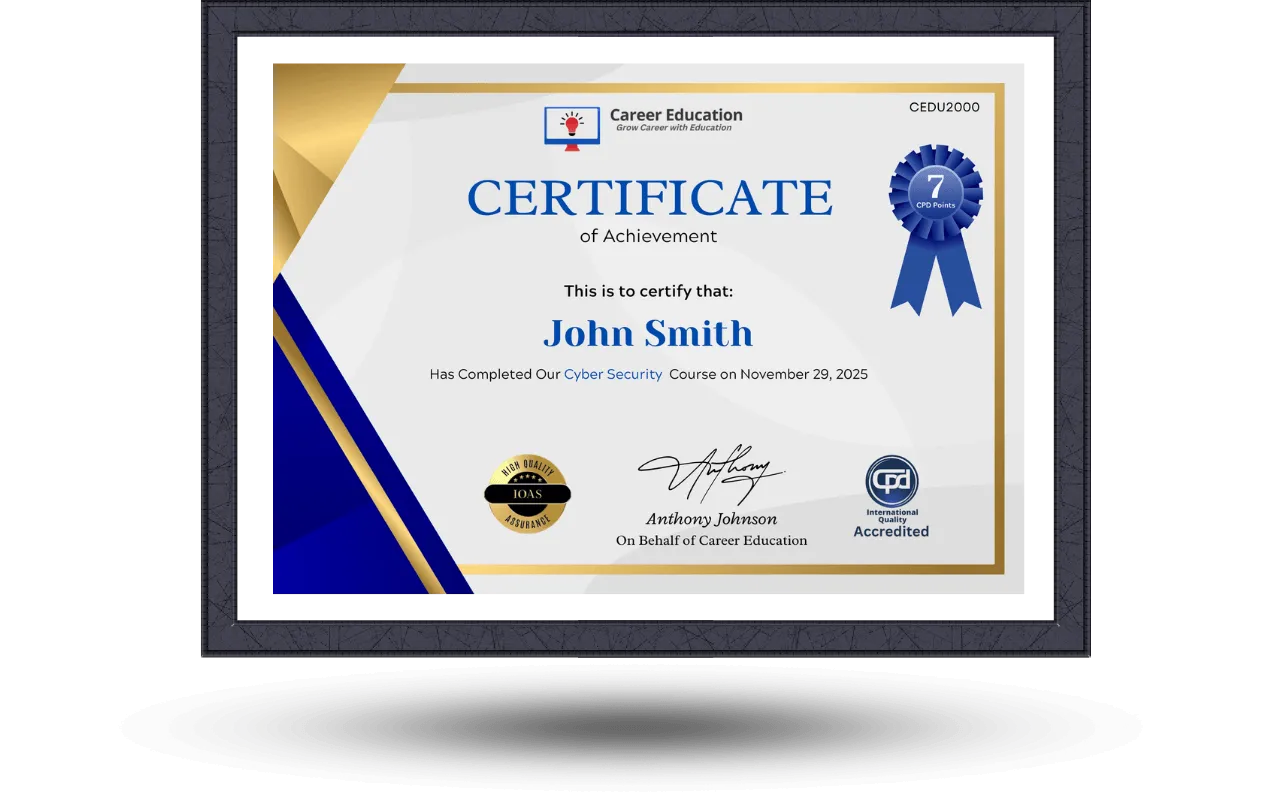
Upon completion of any course, all students are entitled to a CPD IQ Accredited e-certificate that will be issued by Career Education signifying the completion of your course.
After you complete the course and assignment, you will be eligible to order a free certificate accredited by CPD International Quality by completing the form below.
Hardcopy certificates and transcripts are also available for a small additional fee. More information is disclosed upon course completion.
Similar Courses




Frequently Asked Questions
The lifetime membership includes unlimited access to all courses, resources, and updates for a one-time fee.
You can purchase the membership directly from our website using a secure checkout process.
Yes, selected courses can be downloaded for offline access through our mobile app.
Yes, all future updates and new courses are included at no extra cost.
Yes, we offer a 30-day money-back guarantee if you are not satisfied with the membership.