
94%
OFF
OFF
Bereavement Support and Awareness Training
- Lifetime Access
- All Levels
- PDF Certificate
£296
£19
14-Day Money-Back Guarantee
Learn With Confidence









Bereavement Support and Awareness Training
Develop the Knowledge and Confidence to Support People Through Grief
Bereavement can be one of the most challenging experiences a person faces. Losing someone important can affect emotions, relationships, daily routines, decision-making, and overall wellbeing. For professionals who support bereaved individuals and families, understanding grief and knowing how to respond sensitively can make a meaningful difference.
Bereavement Support and Awareness Training is designed to help learners develop practical knowledge and awareness of bereavement, grief, death, mourning, and the needs of people experiencing loss. The course explores different experiences of grief, cultural and religious approaches to death, ways of supporting children and adolescents, considerations when supporting dying people and their families, and the importance of professional self-care.
Rather than focusing only on theoretical knowledge, this course aims to build skills that can be applied in real-world support settings. Learners can develop greater confidence in communicating sensitively, recognising individual needs, respecting different perspectives, and maintaining appropriate professional boundaries.
Whether you work in health and social care, community support, education, counselling-related environments, or another people-focused role, this training can help strengthen your understanding of how bereavement can affect individuals and families.
Why Bereavement Support and Awareness Matters
Grief does not follow one universal pattern. People may respond to loss in very different ways depending on their relationship with the person who died, personal circumstances, previous experiences, beliefs, culture, age, support network, and many other factors.
For professionals, this means that effective bereavement support requires more than simply knowing what to say. It requires patience, empathy, active listening, respect, and an understanding that each person’s experience of loss is individual.
Bereavement Support and Awareness Training helps learners explore these differences and understand how to approach bereaved people with sensitivity. The course can help you recognise the importance of person-centred support while developing awareness of the emotional and practical challenges associated with bereavement.
By completing the training, you can strengthen your ability to contribute positively to supportive environments where individuals feel heard, respected, and treated with dignity.
What You Will Learn
The course is structured into five focused modules covering important aspects of bereavement support.
Module 1: Understanding Bereavement
The first module introduces the fundamental concepts surrounding bereavement and grief. Learners explore what bereavement means and consider how people may experience and respond to loss.
Understanding bereavement provides an essential foundation for anyone who works with people who have experienced a significant loss. You will develop awareness that grief can affect people differently and that there is no single response that applies to everyone.
This module can help you:
-
Understand key concepts associated with bereavement and grief.
-
Recognise that individual experiences of loss can vary considerably.
-
Develop greater awareness of the emotional impact of bereavement.
-
Understand the importance of compassionate and respectful support.
-
Appreciate why listening and person-centred approaches matter when supporting bereaved individuals.
The knowledge gained in this module can help you approach conversations about loss with greater confidence and sensitivity.
Module 2: Cultural and Religious Perspectives on Death and Mourning
Death and mourning are understood and experienced differently across cultures, religions, families, and communities. Beliefs and traditions can influence how people approach death, funerals, remembrance, mourning, family responsibilities, and expressions of grief.
The second module explores the importance of recognising and respecting these differences. For professionals, cultural awareness can help prevent assumptions and encourage more respectful communication.
You will develop an understanding of why it is important to ask rather than assume what a bereaved person or family needs. You will also explore how cultural and religious perspectives may influence experiences surrounding death and mourning.
By completing this module, learners can:
-
Develop greater cultural awareness when supporting bereaved people.
-
Recognise that mourning practices differ between individuals and communities.
-
Understand the importance of respecting personal beliefs and traditions.
-
Communicate more sensitively with people from diverse backgrounds.
-
Avoid making assumptions about how someone should express or experience grief.
This knowledge can support more inclusive and respectful professional practice.
Module 3: Supporting Children and Adolescents through Grief
Children and adolescents can experience bereavement in ways that differ from adults. Their understanding of death, emotional responses, communication styles, and support needs can change according to their age, development, circumstances, and relationship with the person who has died.
The third module focuses specifically on supporting younger people through grief. It highlights the importance of age-appropriate communication and creating supportive environments in which children and adolescents can express their feelings and ask questions.
Learners can develop greater awareness of:
-
How bereavement may affect children and adolescents.
-
The importance of communicating in an age-appropriate way.
-
Why children and young people may respond to grief differently from adults.
-
The value of listening and providing reassurance.
-
How supportive adults can help younger people navigate experiences of loss.
This module can be particularly valuable for professionals and volunteers who may encounter bereaved children or adolescents through care, education, community, or family-support settings.
Module 4: Supporting the Dying and Their Families
Supporting someone who is approaching the end of life can be emotionally demanding and requires compassion, dignity, and respect. Families may also experience uncertainty, sadness, practical pressures, and changing support needs.
The fourth module examines considerations involved in supporting dying people and their families. It encourages learners to understand the importance of sensitive communication and appropriate support during difficult circumstances.
You will explore how professionals can contribute to a supportive environment while recognising the individual needs and preferences of the person and their family.
This module can help you:
-
Develop greater awareness of the needs of dying people and their families.
-
Communicate with greater sensitivity during difficult conversations.
-
Recognise the importance of dignity, compassion, and respect.
-
Understand the emotional challenges families may experience.
-
Provide appropriate professional support while maintaining boundaries.
The knowledge developed here can help learners feel better prepared to interact respectfully with individuals and families during significant and sensitive moments.
Module 5: Self-Care for Professionals Supporting the Bereaved
Supporting people who are grieving can also affect the professionals providing that support. Regular exposure to loss and emotionally difficult situations may create personal and professional challenges.
For this reason, effective bereavement support includes looking after yourself as well as supporting others.
The final module focuses on self-care for professionals who work with bereaved individuals and families. It highlights the importance of recognising your own needs, maintaining healthy professional boundaries, and developing strategies that support your wellbeing.
Through this module, you can:
-
Understand why self-care is important for professionals supporting bereaved people.
-
Recognise the potential emotional demands of bereavement-related work.
-
Appreciate the importance of professional boundaries.
-
Develop greater awareness of your own wellbeing.
-
Consider healthy approaches to maintaining resilience in emotionally demanding roles.
Looking after your own wellbeing can help you remain better prepared to provide consistent, compassionate, and professional support.
Practical Outcomes of Bereavement Support and Awareness Training
Completing Bereavement Support and Awareness Training can provide learners with knowledge and awareness that can be applied across a variety of people-focused environments.
By the end of the course, you can expect to have developed a stronger understanding of:
-
The nature of bereavement and individual experiences of grief.
-
The importance of compassionate, respectful communication.
-
Cultural and religious differences relating to death and mourning.
-
The needs of children and adolescents experiencing bereavement.
-
Considerations when supporting dying individuals and their families.
-
The importance of professional self-care and wellbeing.
-
Person-centred approaches to supporting people through difficult experiences.
These outcomes can help you approach bereavement-related situations with greater awareness and confidence.
Who Can Benefit from This Course?
Bereavement Support and Awareness Training can be suitable for anyone whose role involves supporting people, particularly individuals who may encounter bereavement, grief, death, or end-of-life situations as part of their work.
It may be relevant to learners working or planning to work in areas such as:
-
Health and social care
-
Care and support services
-
Community support
-
Education
-
Family support
-
Voluntary and charitable organisations
-
Residential and care environments
-
People-focused professional roles
The course can also be useful for individuals who want to expand their personal and professional awareness of bereavement and improve their ability to respond sensitively to people experiencing loss.
Build Compassionate and Informed Support Skills
Effective bereavement support is not about finding a perfect phrase or expecting everyone to grieve in the same way. It is about developing the awareness to listen, the sensitivity to respect individual experiences, and the knowledge to provide appropriate support.
Bereavement Support and Awareness Training brings these important areas together in one structured learning experience. From understanding bereavement and exploring cultural perspectives to supporting younger people, assisting dying individuals and their families, and maintaining professional self-care, the course provides a broad foundation for compassionate practice.
Developing this knowledge can help you feel more prepared when encountering situations involving grief and loss. It can also support a more respectful approach to communication and professional relationships.
Take the Next Step in Your Professional Development
Bereavement is an experience that can touch individuals, families, workplaces, and communities. Professionals who understand the complexities surrounding grief are better positioned to respond with patience, dignity, and appropriate awareness.
If you want to strengthen your knowledge of bereavement, improve your confidence when supporting people experiencing loss, and develop greater awareness of cultural, developmental, family, and professional considerations, Bereavement Support and Awareness Training can be a valuable addition to your learning journey.
Enrol today and develop the knowledge and awareness needed to approach bereavement-related situations with greater confidence, compassion, and professionalism.
Course Modules
Course Content
Module 1_ Understanding Bereavement
-
Lesson 1_ Understanding Bereavement
Module 2_ Cultural and Religious Perspectives on Death and Mourning
Module 3_ Supporting Children and Adolescents through Grief
Module 4_ Supporting the Dying and Their Families
Module 5_ Self-Care for Professionals Supporting the Bereaved
What our students say
Excellent
4.9 average
158 Reviews

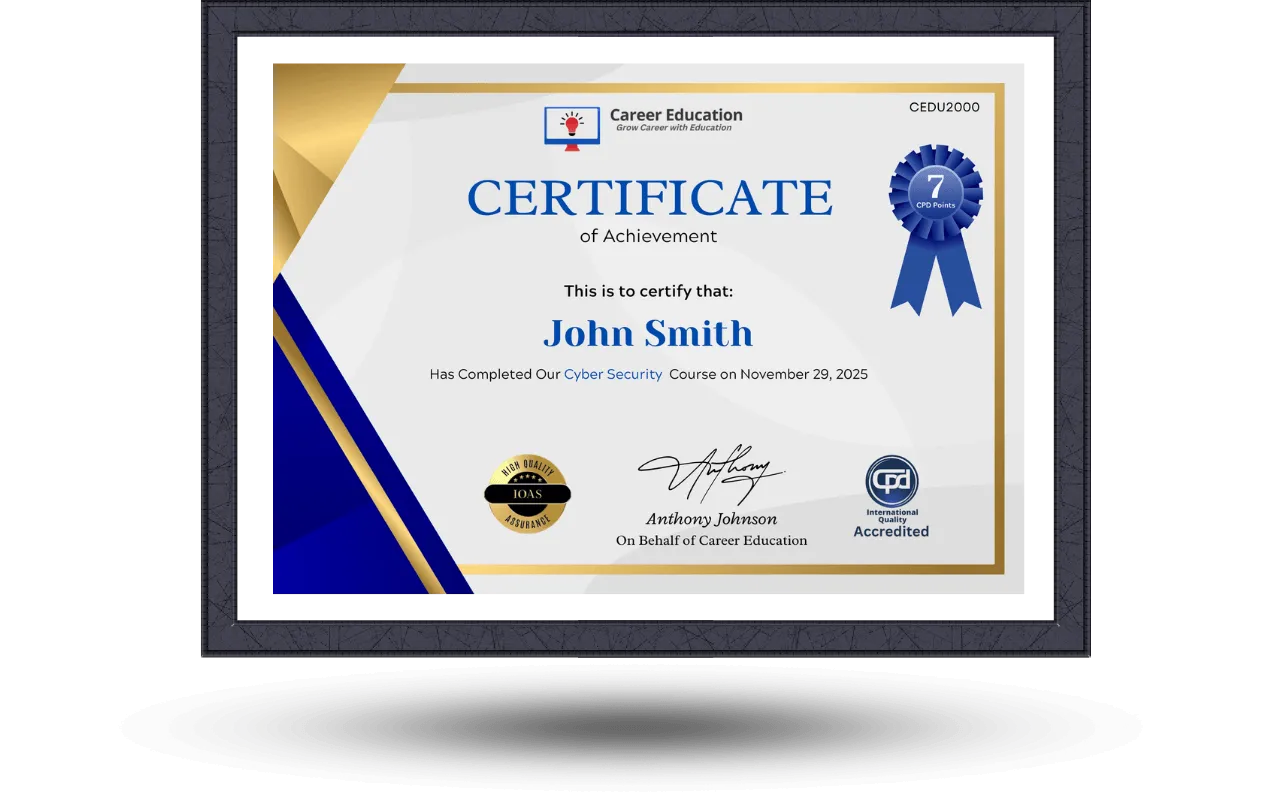
Earn an Accredited Certificate
Upon completion of any course, all students are entitled to a CPD IQ Accredited e-certificate that will be issued by Career Education signifying the completion of your course.
After you complete the course and assignment, you will be eligible to order a free certificate accredited by CPD International Quality by completing the form below.
Hardcopy certificates and transcripts are also available for a small additional fee. More information is disclosed upon course completion.
Similar Courses



Frequently Asked Questions
The lifetime membership includes unlimited access to all courses, resources, and updates for a one-time fee.
You can purchase the membership directly from our website using a secure checkout process.
Yes, selected courses can be downloaded for offline access through our mobile app.
Yes, all future updates and new courses are included at no extra cost.
Yes, we offer a 30-day money-back guarantee if you are not satisfied with the membership.