94%
OFF
OFF
Artificial Intelligence for Marketing
- Lifetime Access
- All Levels
- PDF Certificate
£296
£19
14-Day Money-Back Guarantee
Learn With Confidence







Artificial Intelligence for Marketing
Overview
Marketing has entered a new era where data, automation, and intelligent technologies are reshaping how businesses connect with customers. Artificial Intelligence for Marketing is designed to help learners understand how artificial intelligence is transforming modern marketing practices, enabling organisations to make smarter decisions, deliver personalised customer experiences, and improve campaign performance across multiple channels.
As businesses generate increasing amounts of customer data, traditional marketing methods are no longer sufficient to keep pace with changing consumer behaviour. Artificial intelligence provides marketers with powerful tools to analyse data, identify patterns, predict future trends, automate repetitive tasks, and create more targeted marketing campaigns. Organisations across industries are now seeking professionals who understand how to combine marketing knowledge with AI-powered technologies to achieve measurable business results.
Many professionals find AI intimidating because of its technical reputation. However, successful AI adoption in marketing does not require advanced programming skills. What matters most is understanding how AI works, where it can be applied, and how to use its capabilities responsibly to improve customer engagement, campaign effectiveness, and business growth.
Artificial Intelligence for Marketing takes a practical approach to these challenges by introducing learners to the core concepts, strategies, and applications of AI within the marketing environment. From customer segmentation and predictive analytics to content creation, advertising optimisation, social media management, and ethical considerations, the course provides a comprehensive understanding of how AI supports every stage of the marketing journey.
Throughout the course, learners will discover how organisations use intelligent technologies to improve decision-making, personalise customer interactions, optimise advertising budgets, forecast demand, and develop long-term marketing strategies. The knowledge gained can be applied across businesses of all sizes, from start-ups and small enterprises to global organisations.
Whether you are beginning your marketing career, expanding your digital marketing expertise, or preparing your organisation for the future of AI-driven marketing, this course provides practical knowledge that can be applied immediately in real-world marketing environments.
Course Description
Artificial Intelligence for Marketing provides a comprehensive introduction to the growing relationship between artificial intelligence and modern marketing. As digital transformation accelerates across industries, organisations increasingly rely on AI to understand customer behaviour, improve campaign performance, automate processes, and create highly personalised customer experiences.
This course explores how AI technologies support marketing professionals throughout the customer journey. Learners will examine how customer data is collected, managed, analysed, and transformed into actionable insights that improve business decision-making. By understanding the principles behind AI-driven marketing, learners can make informed choices about selecting and implementing appropriate marketing technologies.
A major focus of the course is helping learners understand how data serves as the foundation for successful AI marketing initiatives. High-quality data enables businesses to segment audiences more effectively, predict future purchasing behaviour, identify market opportunities, and optimise communication strategies. The course demonstrates how these capabilities contribute to stronger customer relationships and improved marketing performance.
Learners will also discover how artificial intelligence enhances content marketing through intelligent content planning, audience targeting, personalisation, and campaign optimisation. Advertising platforms increasingly depend on AI algorithms to automate bidding, optimise budgets, improve audience targeting, and maximise return on investment. Understanding these systems allows marketers to make better strategic decisions while maintaining human creativity and oversight.
Social media continues to generate vast amounts of customer information. The course explains how AI helps organisations analyse conversations, monitor brand sentiment, identify influencers, schedule content, and improve engagement across multiple platforms. Learners will understand how intelligent technologies simplify complex marketing activities while supporting consistent customer communication.
Ethics plays an increasingly important role in AI-driven marketing. Organisations must balance innovation with responsible data management, privacy protection, transparency, fairness, and regulatory compliance. This course introduces learners to ethical principles that guide responsible AI adoption and help build long-term customer trust.
The course concludes by exploring how organisations develop practical AI strategies, evaluate implementation opportunities, manage organisational change, and measure long-term success. Rather than focusing solely on technology, learners develop strategic thinking that enables them to integrate AI into broader marketing objectives.
By completing Artificial Intelligence for Marketing, learners will gain confidence in understanding AI-powered marketing tools, interpreting marketing data, improving customer engagement, supporting business growth, and contributing to future-ready marketing strategies. The course prepares learners to participate in an evolving marketing landscape where human creativity and artificial intelligence work together to deliver exceptional customer value.
What You Will Learn in Artificial Intelligence for Marketing
Module 1: Introduction to AI in Marketing
This opening module introduces the foundations of artificial intelligence within the marketing industry. Learners explore the evolution of AI technologies, understand common terminology, and examine how intelligent systems are changing marketing activities across customer acquisition, engagement, retention, and business growth. The module establishes the relationship between AI, machine learning, automation, and data-driven decision-making while demonstrating how organisations are using these technologies to improve efficiency and competitiveness.
Real-world examples illustrate how AI supports modern marketing without replacing the creativity and strategic thinking of marketing professionals.
After completing this module you will be able to:
-
Explain the role of AI in modern marketing.
-
Understand key AI terminology and concepts.
-
Identify common marketing applications of AI.
-
Recognise opportunities for AI adoption.
-
Appreciate the benefits and limitations of AI.
-
Understand the relationship between AI and marketing strategy.
-
Build a strong foundation for later modules.
Module 2: Data Collection and Management
Successful AI depends on reliable data. This module explains how organisations collect, organise, clean, and manage marketing data to support intelligent decision-making. Learners examine various data sources, customer information systems, and data quality principles while understanding why accurate information is essential for effective AI performance.
The module also explores data governance, responsible data handling, and best practices for maintaining secure, accurate marketing databases.
After completing this module you will be able to:
-
Understand marketing data fundamentals.
-
Identify different sources of customer data.
-
Explain the importance of data quality.
-
Recognise effective data management practices.
-
Support AI-driven marketing with reliable information.
-
Understand data governance principles.
-
Appreciate secure data handling requirements.
Module 3: Customer Segmentation
Understanding customers is central to successful marketing. This module explores how artificial intelligence improves customer segmentation by identifying meaningful audience groups based on behaviour, demographics, purchasing patterns, interests, and engagement.
Learners discover how AI enables businesses to deliver more personalised communications, improve targeting accuracy, and strengthen customer relationships while avoiding common segmentation mistakes.
After completing this module you will be able to:
-
Explain AI-powered customer segmentation.
-
Identify valuable customer characteristics.
-
Support personalised marketing campaigns.
-
Improve audience targeting strategies.
-
Understand behavioural segmentation techniques.
-
Recognise the importance of customer insights.
-
Apply segmentation concepts in practical marketing.
Module 4: Predictive Analytics and Forecasting
This module introduces predictive analytics and demonstrates how AI helps businesses forecast customer behaviour, sales trends, marketing performance, and future opportunities. Learners understand how predictive models assist marketing planning while reducing uncertainty.
Practical examples show how forecasting improves campaign planning, resource allocation, customer retention, and revenue growth.
After completing this module you will be able to:
-
Understand predictive analytics principles.
-
Explain forecasting in marketing.
-
Identify future customer behaviour patterns.
-
Support evidence-based decision-making.
-
Improve campaign planning.
-
Understand business forecasting techniques.
-
Evaluate predictive insights responsibly.
Module 5: AI in Content Marketing
Content remains a vital component of digital marketing. This module explores how AI assists with content planning, audience analysis, personalisation, optimisation, scheduling, and performance measurement while maintaining creativity and brand consistency.
Learners understand where AI can improve efficiency without replacing strategic content development.
After completing this module you will be able to:
-
Explain AI-supported content creation.
-
Improve content planning processes.
-
Personalise content for different audiences.
-
Understand content performance analysis.
-
Optimise publishing strategies.
-
Support consistent brand messaging.
-
Balance automation with creativity.
Module 6: AI in Advertising
Advertising platforms increasingly depend on AI to improve campaign performance. This module explains how intelligent algorithms optimise audience targeting, bidding strategies, budget allocation, and advertising effectiveness across digital platforms.
Learners explore best practices for measuring campaign success while understanding how marketers maintain oversight over automated systems.
After completing this module you will be able to:
-
Understand AI-driven advertising.
-
Improve campaign targeting.
-
Support advertising budget optimisation.
-
Interpret campaign performance metrics.
-
Recognise automated bidding strategies.
-
Improve advertising efficiency.
-
Apply best practices in digital advertising.
Module 7: Customer Experience and Engagement
Delivering outstanding customer experiences is essential for business success. This module demonstrates how AI improves customer interactions through personalisation, automation, intelligent recommendations, and responsive communication.
Learners examine practical applications that enhance customer satisfaction while supporting long-term loyalty and retention.
After completing this module you will be able to:
-
Understand AI-powered customer engagement.
-
Improve customer experience strategies.
-
Recognise personalised communication methods.
-
Support customer retention initiatives.
-
Understand recommendation systems.
-
Enhance customer satisfaction.
-
Apply customer-centric marketing principles.
Module 8: Social Media and Influencer Marketing
Social media platforms generate valuable customer insights that AI can analyse to improve marketing performance. This module explores social listening, audience analysis, influencer identification, sentiment analysis, content scheduling, and engagement measurement.
Learners understand how AI supports informed decision-making while strengthening brand presence across social media channels.
After completing this module you will be able to:
-
Understand AI in social media marketing.
-
Analyse customer engagement trends.
-
Identify suitable influencers.
-
Support social listening activities.
-
Interpret sentiment analysis.
-
Improve content scheduling.
-
Strengthen online brand visibility.
Module 9: AI Ethics and Compliance in Marketing
Responsible AI adoption requires strong ethical standards. This module explores privacy, transparency, fairness, bias, accountability, consumer trust, and legal compliance within AI-powered marketing.
Learners understand how organisations balance innovation with responsible marketing practices while protecting customer rights.
After completing this module you will be able to:
-
Explain ethical AI principles.
-
Understand responsible data use.
-
Recognise compliance requirements.
-
Identify potential algorithmic bias.
-
Promote transparency in marketing.
-
Support trustworthy AI implementation.
-
Build customer confidence.
Module 10: AI Strategy and Implementation
The final module brings together all previous learning by focusing on practical implementation. Learners examine organisational readiness, AI planning, technology selection, change management, performance measurement, and continuous improvement.
The module demonstrates how businesses develop sustainable AI strategies that align with wider marketing objectives and organisational goals.
After completing this module you will be able to:
-
Develop practical AI marketing strategies.
-
Evaluate implementation opportunities.
-
Support organisational AI adoption.
-
Measure AI marketing performance.
-
Understand change management principles.
-
Identify continuous improvement opportunities.
-
Contribute to long-term marketing success.
Who Is This Course For?
Artificial Intelligence for Marketing is suitable for:
-
Marketing professionals seeking to expand their AI knowledge.
-
Digital marketers looking to improve campaign performance.
-
Business owners wanting to modernise their marketing strategies.
-
Entrepreneurs aiming to grow their customer base.
-
Marketing managers leading digital transformation initiatives.
-
Students pursuing careers in marketing or business.
-
Career changers entering the marketing industry.
-
Freelancers offering digital marketing services.
-
Consultants advising organisations on marketing strategy.
-
Social media managers seeking data-driven approaches.
-
Content creators interested in AI-assisted marketing.
-
Lifelong learners wanting to understand emerging marketing technologies.
Requirements
To complete this course, learners only need:
-
An interest in artificial intelligence and marketing.
-
A computer, tablet, or smartphone.
-
A reliable internet connection.
-
Basic digital skills.
-
A willingness to learn and apply new concepts.
No previous experience with artificial intelligence or advanced technical knowledge is required, making the course suitable for beginners as well as experienced marketing professionals.
Career Path
Completing Artificial Intelligence for Marketing can support progression into a wide range of marketing and business roles, including:
Digital Marketing Executive
Use AI tools to improve online campaigns, customer engagement, and digital performance while supporting organisational marketing objectives.
Marketing Manager
Lead strategic marketing initiatives, implement AI-powered solutions, oversee campaign performance, and drive business growth.
Content Marketing Specialist
Develop intelligent content strategies, improve audience targeting, and analyse content performance using AI-supported insights.
Social Media Manager
Manage social media campaigns, analyse customer sentiment, identify trends, and optimise engagement using AI technologies.
Marketing Analyst
Interpret customer data, generate business insights, forecast marketing performance, and support strategic decision-making.
Customer Experience Manager
Improve customer journeys through personalisation, intelligent automation, and data-driven engagement strategies.
Marketing Consultant
Advise businesses on AI adoption, digital transformation, marketing optimisation, and responsible implementation strategies.
The knowledge gained also supports freelance consultancy, entrepreneurship, continuing professional development, and progression into leadership positions where AI-enabled marketing skills are becoming increasingly valuable.
Frequently Asked Questions
1. What is Artificial Intelligence for Marketing?
Artificial Intelligence for Marketing is a professional development course that explores how AI technologies improve marketing strategy, customer engagement, advertising, content creation, data analysis, and business decision-making.
2. Who should take this course?
The course is suitable for marketers, business owners, entrepreneurs, students, digital professionals, consultants, freelancers, managers, and anyone interested in understanding AI’s growing role in modern marketing.
3. Is previous experience required?
No. The course is designed for beginners while also providing valuable insights for experienced marketing professionals seeking to develop AI knowledge.
4. What will I learn?
You will learn about AI fundamentals, customer segmentation, predictive analytics, content marketing, advertising optimisation, customer experience, social media, ethical AI, compliance, and implementation strategies.
5. How long does the course take?
The study time depends on your learning pace. Because the course is delivered online, you can progress through each module according to your own schedule.
6. Can beginners complete it?
Yes. The course introduces concepts step by step, making it suitable for learners with little or no previous knowledge of artificial intelligence.
7. How does this course help my career?
It develops practical skills that are increasingly valued across marketing, business, digital communications, customer experience, and strategic planning roles.
8. Will I receive a certificate?
If your training provider includes certification with successful completion, you will receive details regarding eligibility and any applicable requirements.
9. Can I study at my own pace?
Yes. The online format allows you to study whenever it is convenient, making it easier to balance learning with work and personal commitments.
10. Why should I choose this course?
Artificial Intelligence for Marketing offers a balanced combination of marketing knowledge, practical AI applications, ethical considerations, and strategic implementation. It equips learners with future-focused skills that can be applied across a wide range of industries while building confidence in using AI responsibly to improve marketing performance.
Enrol Today
Artificial Intelligence for Marketing provides the knowledge and practical understanding needed to succeed in today’s rapidly evolving marketing landscape. By completing this course, you will gain the confidence to use AI-powered marketing tools responsibly, make better data-driven decisions, improve customer engagement, optimise campaigns, and contribute to business growth.
As artificial intelligence continues to shape the future of marketing, developing these skills today can help you remain competitive, adaptable, and prepared for new opportunities. Enrol now and begin building the knowledge that will support your success in the next generation of marketing.
Course Modules
Course Content
Module 1_ Introduction to AI in Marketing.
-
Lesson 1_ Introduction to AI in Marketing.
Module 2_ Data Collection and Management.
Module 3_ Customer Segmentation.
Module 4_ Predictive Analytics and Forecasting.
Module 5_ AI in Content Marketing.
Module 6_ AI in Advertising.
Module 7_ Customer Experience and Engagement.
Module 8_ Social Media and Influencer Marketing.
Module 9_ AI Ethics and Compliance in Marketing.
Module 10_ AI Strategy and Implementation.
What our students say
Excellent
4.9 average
158 Reviews

Earn an Accredited Certificate
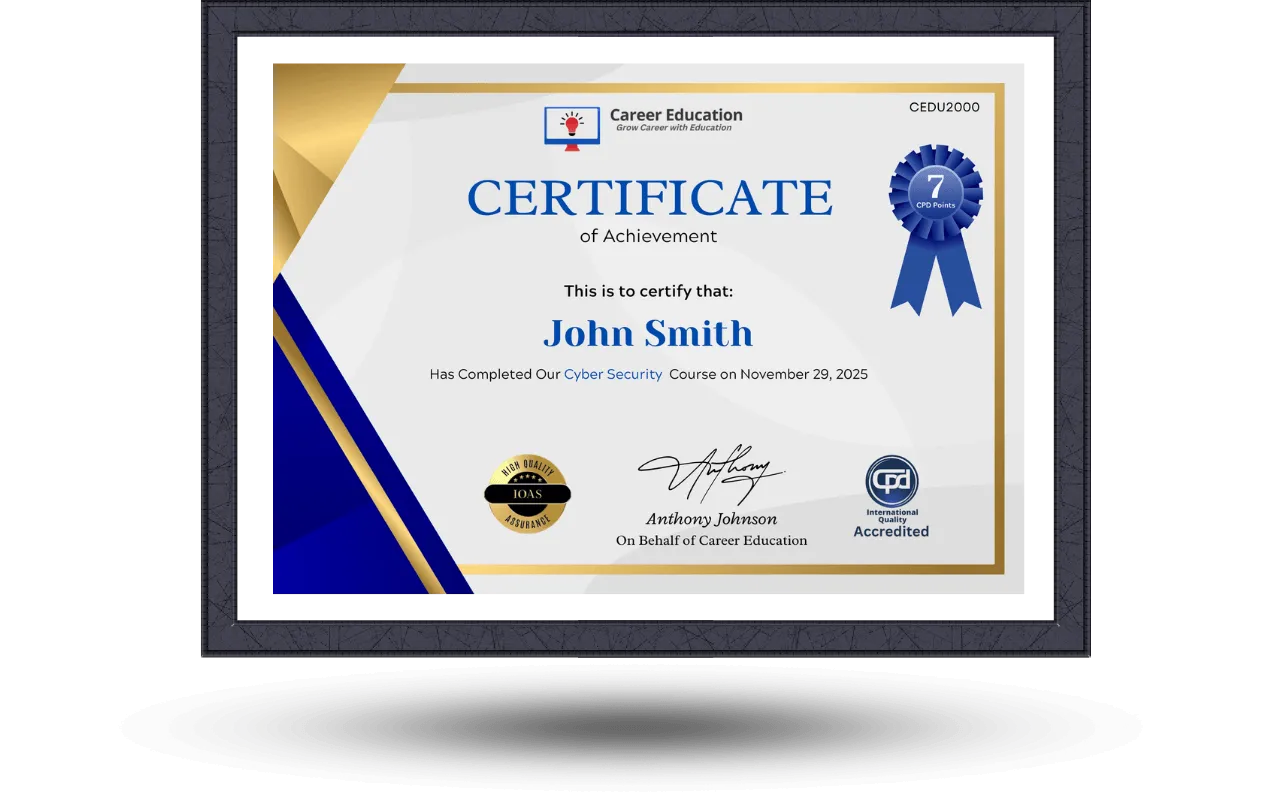
Upon completion of any course, all students are entitled to a CPD IQ Accredited e-certificate that will be issued by Career Education signifying the completion of your course.
After you complete the course and assignment, you will be eligible to order a free certificate accredited by CPD International Quality by completing the form below.
Hardcopy certificates and transcripts are also available for a small additional fee. More information is disclosed upon course completion.
Similar Courses




Frequently Asked Questions
The lifetime membership includes unlimited access to all courses, resources, and updates for a one-time fee.
You can purchase the membership directly from our website using a secure checkout process.
Yes, selected courses can be downloaded for offline access through our mobile app.
Yes, all future updates and new courses are included at no extra cost.
Yes, we offer a 30-day money-back guarantee if you are not satisfied with the membership.