
94%
OFF
OFF
Ambulance and Emergency Care Fundamentals
- Lifetime Access
- All Levels
- PDF Certificate
£296
£19
14-Day Money-Back Guarantee
Learn With Confidence








Ambulance and Emergency Care Fundamentals
In an emergency, the ability to respond calmly, assess a situation, and understand essential care principles can make a meaningful difference. Ambulance and Emergency Care Fundamentals is designed to introduce learners to the core knowledge and practical concepts associated with first aid, emergency care, ambulance services, medical terminology, health monitoring, accidents and injuries, and critical thinking in urgent situations.
Whether you are considering a career in healthcare, interested in emergency support, already working in a care-related environment, or simply want to develop your understanding of emergency care fundamentals, this course provides a structured learning experience covering important areas of ambulance and emergency care.
What Is Ambulance and Emergency Care Fundamentals?
Ambulance and Emergency Care Fundamentals focuses on the foundational knowledge required to understand how emergency situations are approached and managed. Emergency care can involve rapidly changing circumstances where clear communication, appropriate observation, good hygiene, and sound decision-making are essential.
The course introduces learners to basic first-aid techniques, medical terminology, health monitoring, ambulance care fundamentals, accidents and injuries, critical thinking, and self-hygiene. It also explores the role of immunisation-focused nursing within the broader healthcare context.
Rather than focusing solely on theoretical knowledge, the course is designed around outcomes that can help learners build confidence in understanding emergency healthcare environments and the responsibilities associated with supporting individuals during urgent situations.
Why Study Ambulance and Emergency Care Fundamentals?
Emergencies can happen in many environments, including homes, workplaces, public spaces, care settings, and healthcare facilities. Understanding the principles of emergency care can help individuals recognise the importance of prompt assessment, effective communication, appropriate hygiene, and responsible action.
Studying Ambulance and Emergency Care Fundamentals can help you:
-
Develop an understanding of basic first-aid principles.
-
Become familiar with commonly used medical terminology.
-
Understand fundamental approaches to monitoring health.
-
Explore the role and purpose of ambulance care.
-
Learn about accidents and injuries from an emergency-care perspective.
-
Develop critical-thinking skills relevant to urgent situations.
-
Understand the importance of personal hygiene in healthcare.
-
Build awareness of healthcare roles and responsibilities.
-
Improve your confidence when learning about emergency-care environments.
-
Develop foundational knowledge that can support further healthcare education.
The course is particularly useful for learners who want to establish a strong foundation before progressing into more specialised healthcare or emergency-care learning.
What Will You Learn?
Module 1: Basic First-Aid Techniques
The first module introduces essential concepts surrounding basic first aid. First aid is an important component of emergency preparedness because initial support may be required before professional medical assistance becomes available.
You will explore fundamental first-aid concepts and develop an understanding of how appropriate responses can contribute to safer emergency situations. The module helps learners recognise the importance of remaining calm, observing circumstances carefully, and understanding the limits of their role.
By completing this module, you can develop a stronger foundation in first-aid awareness and understand why appropriate initial responses are important in emergency situations.
Module 2: Medical Terminology Instruction
Healthcare professionals use specialised terminology to communicate information accurately and efficiently. Understanding medical terminology can therefore be valuable for anyone interested in healthcare or emergency services.
This module introduces learners to medical language and terminology relevant to healthcare environments. You will become more familiar with commonly used terms and their importance in professional communication.
The outcome is greater confidence when encountering medical vocabulary in learning materials, healthcare documentation, and professional discussions. Building this foundation can also make future healthcare training easier to understand.
Module 3: Medical Health Monitoring
Effective monitoring is an important part of healthcare because changes in a person’s condition may need to be recognised and communicated appropriately.
In this module, learners explore the fundamentals of medical health monitoring. You will develop an awareness of why observations matter, how health information can support decision-making, and why accurate communication is important when monitoring an individual’s condition.
The module is designed to help you understand the relationship between observation, documentation, communication, and ongoing care. This knowledge can be valuable when progressing into further healthcare-related study.
Module 4: Fundamentals of Ambulance Care
Ambulance services play an important role in emergency healthcare. This module introduces the fundamentals of ambulance care and provides learners with an overview of the principles associated with emergency transportation and support.
You will explore the healthcare environment surrounding ambulance services and develop an understanding of the importance of preparedness, communication, teamwork, and professional responsibilities.
By completing this module, you can gain a clearer understanding of the role ambulance care plays within wider emergency healthcare systems and how different responsibilities contribute to effective emergency responses.
Module 5: Nurse Specialising in Immunizations
Immunisation is an important area of healthcare, and professionals working with vaccinations require appropriate knowledge, communication skills, and an understanding of safe professional practice.
This module introduces learners to the concept of nursing specialisation in immunisations. It provides an opportunity to explore the responsibilities associated with this area and understand how immunisation services fit within healthcare practice.
The module can help broaden your awareness of nursing roles and demonstrate how specialised healthcare knowledge can contribute to preventative care and public health.
Module 6: Accidents and Injuries
Accidents and injuries can occur unexpectedly, making awareness of emergency-care principles particularly valuable. This module explores accidents and injuries and introduces learners to the importance of appropriate assessment and response.
You will develop an understanding of different circumstances in which injuries may occur and explore fundamental considerations when responding to emergency situations.
The focus is on building awareness rather than replacing professional medical training. By completing the module, learners can develop a better understanding of the importance of appropriate action, communication, safety, and professional support when dealing with accidents and injuries.
Module 7: Critical Thinking in Emergency
Emergency situations can require people to process information quickly and make responsible decisions. Critical thinking is therefore an important skill in healthcare and emergency environments.
This module focuses on developing awareness of critical-thinking principles in emergency situations. You will explore the importance of assessing available information, considering priorities, communicating clearly, and avoiding assumptions.
Developing these skills can help you approach emergency-care scenarios more thoughtfully and understand why structured decision-making is important in healthcare.
The module also encourages learners to recognise when professional assistance is required and the importance of working within appropriate roles and responsibilities.
Module 8: Practice of Self-Hygiene
Hygiene is fundamental to safe healthcare practice. Good personal hygiene can support infection-control efforts and contribute to safer environments for patients, colleagues, and healthcare workers.
The final module focuses on self-hygiene and its importance within healthcare and emergency-care settings. Learners will explore the principles of maintaining appropriate personal hygiene and understand how hygiene practices contribute to professional standards.
Completing this module reinforces the importance of personal responsibility, cleanliness, infection awareness, and safe working practices.
Outcome-Focused Learning
The goal of Ambulance and Emergency Care Fundamentals is to give learners useful foundational knowledge that can support their personal and professional development.
After completing the course, you should have a broader understanding of:
-
Fundamental first-aid concepts.
-
Healthcare terminology and communication.
-
Basic health-monitoring principles.
-
Ambulance-care fundamentals.
-
The role of immunisation-focused nursing.
-
Accidents and injuries.
-
Critical thinking during emergencies.
-
Personal hygiene in healthcare settings.
These outcomes can help you build a stronger foundation for exploring healthcare and emergency-care subjects in greater depth.
Who Is This Course For?
Ambulance and Emergency Care Fundamentals can be suitable for a wide range of learners, including:
-
Beginners interested in healthcare and emergency care.
-
Individuals considering a career in healthcare.
-
Learners interested in ambulance services.
-
Care workers seeking to broaden their general knowledge.
-
Students preparing for further healthcare education.
-
Individuals interested in first-aid and emergency-care awareness.
-
Professionals looking to expand their understanding of healthcare environments.
-
Anyone interested in developing foundational knowledge of emergency care.
No matter your starting point, the structured modules allow you to explore different aspects of emergency healthcare progressively.
Build Knowledge for Future Opportunities
Healthcare is a broad sector with many different career pathways. Emergency care, ambulance services, nursing, first aid, health monitoring, and care support all involve different responsibilities and levels of professional training.
Studying Ambulance and Emergency Care Fundamentals can be a useful starting point for learners who want to understand these areas before deciding where they would like to develop their skills further.
The course can help you identify areas of particular interest, whether that is first aid, ambulance care, nursing, healthcare communication, health monitoring, or emergency decision-making. This awareness can help you make more informed choices about future learning and professional development.
Develop Confidence Through Structured Learning
Learning about emergency care can initially feel complex because healthcare environments involve specialist terminology, procedures, responsibilities, and communication. A structured course can make these subjects easier to approach by dividing them into focused learning areas.
With Ambulance and Emergency Care Fundamentals, you can work through key concepts step by step, from basic first aid and medical terminology to ambulance care, injuries, critical thinking, and hygiene.
This approach allows you to develop your understanding progressively while connecting individual subjects to the wider context of emergency healthcare.
A Foundation for Continued Professional Development
Emergency care is a specialised field, and this course should be viewed as foundational education rather than a substitute for regulated professional qualifications, clinical training, or hands-on emergency medical instruction.
However, developing foundational knowledge can be an important first step. It can prepare you to explore more advanced subjects and help you understand the terminology and concepts encountered in future training.
For learners who are committed to continuous development, Ambulance and Emergency Care Fundamentals can form part of a broader learning journey within healthcare and emergency services.
Start Learning Ambulance and Emergency Care Fundamentals Today
Being prepared to learn is the first step toward developing knowledge that can support future opportunities. Ambulance and Emergency Care Fundamentals brings together eight important areas of emergency and healthcare education in one structured course.
From basic first aid and medical terminology to health monitoring, ambulance care, immunisation nursing, accidents and injuries, critical thinking, and self-hygiene, the course provides a broad introduction to subjects that are relevant to emergency and healthcare environments.
If you want to strengthen your foundational understanding, explore the responsibilities associated with emergency care, and prepare yourself for further learning, Ambulance and Emergency Care Fundamentals can provide a valuable starting point.
Enrol today and begin developing the knowledge and awareness needed to take your next step toward further education and professional development in healthcare and emergency care.
Course Modules
Course Content
Module 1 Basic First-Aid Techniques
-
Lesson 1 Basic First-Aid Techniques
Module 2 Medical Terminology Instruction
Module 3 Medical health Monitoring
Module 4 Fundamentals of Ambulance Care
Module 5 Nurse specialising in immunizations
Module 6 Accidents and Injuries
Module 7 Critical Thinking in Emergency
Module 8 Practice of self-hygiene
What our students say
Excellent
4.9 average
158 Reviews

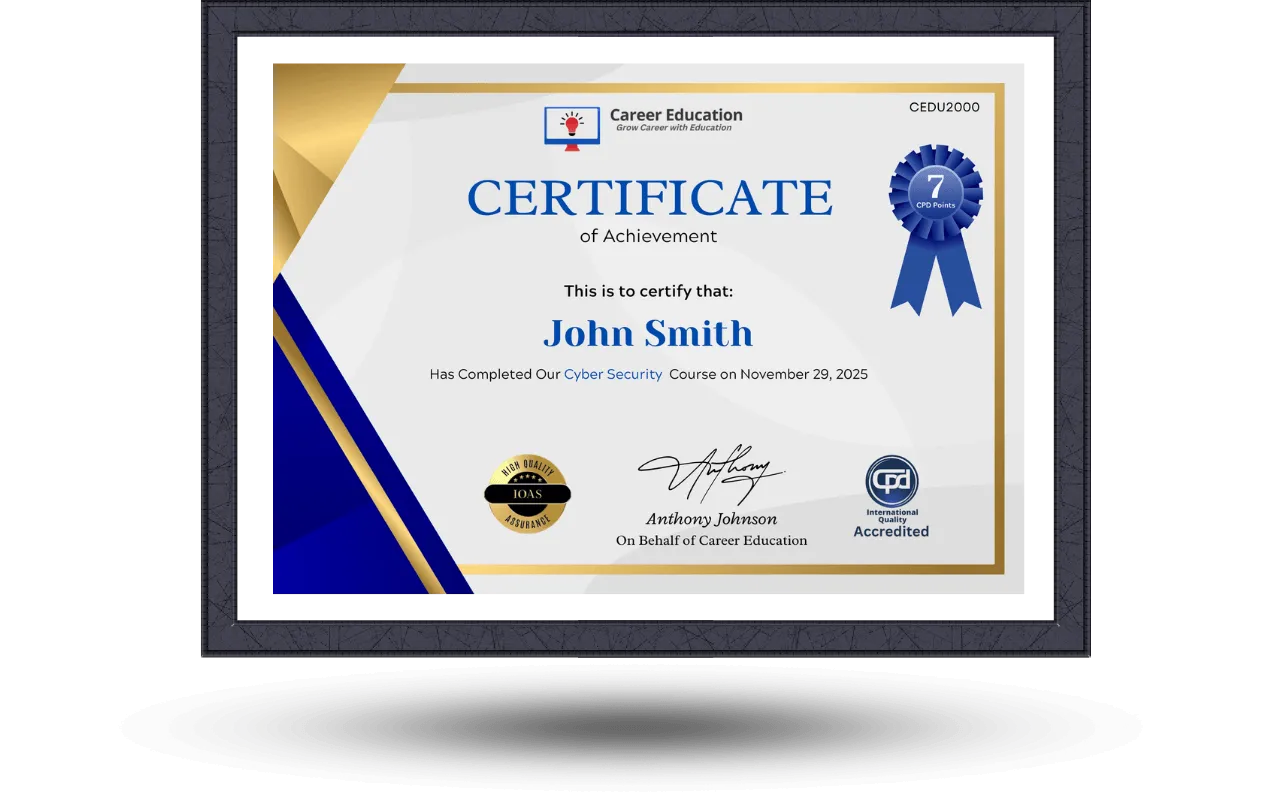
Earn an Accredited Certificate
Upon completion of any course, all students are entitled to a CPD IQ Accredited e-certificate that will be issued by Career Education signifying the completion of your course.
After you complete the course and assignment, you will be eligible to order a free certificate accredited by CPD International Quality by completing the form below.
Hardcopy certificates and transcripts are also available for a small additional fee. More information is disclosed upon course completion.
Similar Courses




Frequently Asked Questions
The lifetime membership includes unlimited access to all courses, resources, and updates for a one-time fee.
You can purchase the membership directly from our website using a secure checkout process.
Yes, selected courses can be downloaded for offline access through our mobile app.
Yes, all future updates and new courses are included at no extra cost.
Yes, we offer a 30-day money-back guarantee if you are not satisfied with the membership.