OFF
Comprehensive Fire Safety Training
- Lifetime Access
- All Levels
- PDF Certificate
Learn With Confidence









Overview
Comprehensive Fire Safety Training
Fire can develop rapidly, create dangerous conditions within seconds, and place people, property, and businesses at serious risk. Understanding how fires start, how they can be prevented, and how to respond effectively is an essential skill in almost every environment. Comprehensive Fire Safety Training is designed to help learners build practical knowledge and confidence in recognising fire hazards, preparing for emergencies, responding appropriately, and supporting safer environments.
Whether you are responsible for workplace safety, manage a commercial premises, work in a residential setting, support vulnerable individuals, or simply want to improve your personal understanding of fire safety, this course provides a structured introduction to essential fire safety principles. It covers prevention, detection, emergency response, evacuation, fire extinguishers, and safety considerations across different environments and populations.
Why Choose Comprehensive Fire Safety Training?
Fire safety is not simply about knowing where the nearest fire extinguisher is located. Effective fire safety involves understanding potential hazards, reducing risks before an incident occurs, recognising warning signs, knowing how alarms and detection systems work, and understanding what to do during an emergency.
Comprehensive Fire Safety Training takes a practical, outcome-focused approach to these areas. Instead of focusing only on theory, the course is structured to help learners understand how fire safety principles can be applied in realistic situations.
By completing the course, learners can develop greater awareness of fire risks and become better prepared to contribute to safer homes, workplaces, commercial premises, and industrial environments.
What Will You Learn?
The course consists of eight modules covering key areas of fire safety.
Module 1: Introduction to Fire Safety
The course begins with the fundamentals of fire safety. Learners are introduced to the basic principles behind fire, common fire hazards, and the importance of prevention and preparedness.
You will develop an understanding of why fires occur and why early recognition and appropriate action are essential. This foundation can help you recognise potential risks before they develop into emergencies.
You will explore:
-
Fundamental fire safety principles
-
Common causes and sources of fire
-
Typical fire hazards
-
The importance of fire prevention
-
Basic responsibilities relating to fire safety
-
The importance of emergency preparedness
-
The role of awareness in reducing fire-related risks
By the end of this module, you will have a stronger foundation for understanding fire safety in different environments.
Module 2: Fire Prevention and Preparedness
Prevention is one of the most important parts of fire safety. Identifying hazards before they cause an incident can significantly improve safety and reduce unnecessary risks.
This module focuses on proactive fire prevention and preparation. Learners will explore how everyday activities, equipment, storage practices, electrical systems, cooking, heating, and other factors can contribute to fire risks.
You will learn how to think proactively about fire safety and understand why appropriate procedures, housekeeping, maintenance, and preparedness matter.
The module helps you develop the ability to:
-
Recognise common fire hazards
-
Understand basic fire prevention measures
-
Promote safer working and living practices
-
Support appropriate emergency preparation
-
Understand the importance of maintaining clear escape routes
-
Encourage good fire safety awareness
These skills can help create an environment where fire risks are identified and addressed before an emergency occurs.
Module 3: Fire Detection and Early Warning Systems
Early warning can make an important difference during a fire emergency. Fire detection and alarm systems are designed to provide occupants with information that allows them to respond as quickly as possible.
In this module, you will learn about the role of fire detection and early warning systems. You will explore why alarms need to be maintained, why people need to recognise warning signals, and how detection systems contribute to an overall fire safety strategy.
The module helps learners understand:
-
The purpose of fire detection systems
-
The role of fire alarms
-
Different approaches to early warning
-
The importance of regular testing and maintenance
-
Appropriate responses when an alarm is activated
-
Why early notification is essential during emergencies
This knowledge can help learners respond more confidently when a fire warning is received.
Module 4: Effective Fire Response and Evacuation
Knowing what to do when a fire occurs is just as important as preventing one. Confusion or hesitation during an emergency can increase risks, making clear procedures and preparedness essential.
This module focuses on effective emergency response and evacuation. Learners will explore the importance of remaining calm, following established procedures, using appropriate escape routes, and supporting an orderly evacuation.
You will learn about:
-
Immediate actions during a fire emergency
-
The importance of raising the alarm
-
Emergency evacuation principles
-
Escape routes and exits
-
Assembly arrangements
-
Communication during an emergency
-
Supporting people who may require additional assistance
-
The importance of following site-specific fire procedures
The goal is to help learners understand how to respond responsibly and safely rather than improvising during an emergency.
Module 5: Fire Extinguishers and Suppression Techniques
Fire extinguishers and other suppression equipment can play an important role in fire response when used appropriately. However, attempting to deal with a fire is not always safe or suitable.
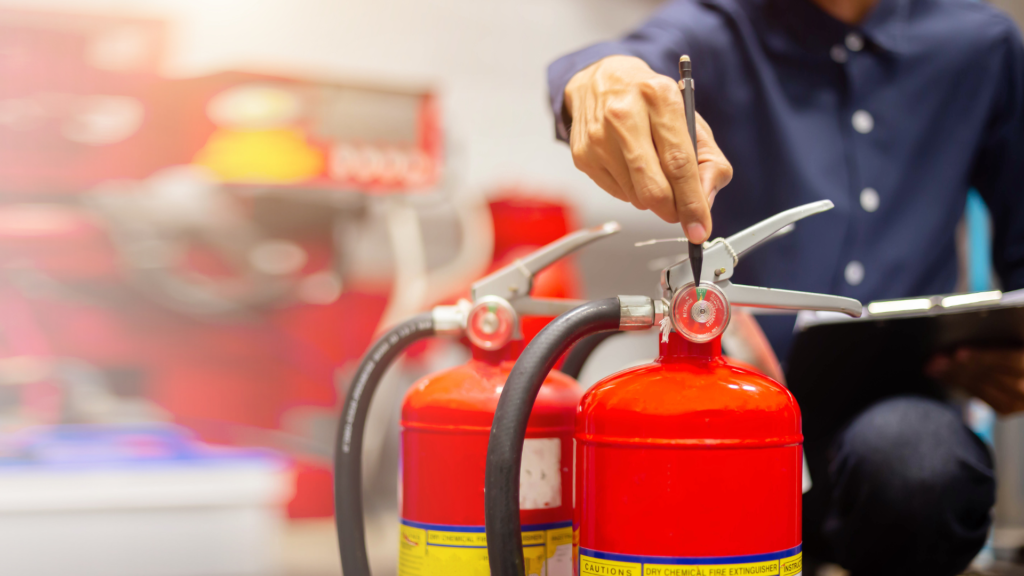
This module introduces learners to common fire extinguisher concepts and basic suppression techniques. It focuses on understanding equipment, recognising appropriate circumstances for its use, and knowing when evacuation should take priority.
You will explore:
-
The purpose of fire extinguishers
-
Common types of extinguishing equipment
-
Matching extinguishing methods to appropriate fire situations
-
Basic principles of safe extinguisher use
-
The importance of accessibility and maintenance
-
Situations where attempting to extinguish a fire may be inappropriate
-
The importance of prioritising personal safety and evacuation
This knowledge can help learners make more informed decisions during fire-related situations while recognising the limits of their role and training.
Module 6: Fire Safety in Residential Settings
Homes and residential environments contain a wide range of potential fire hazards. Cooking equipment, electrical appliances, heating systems, candles, smoking materials, and charging devices are among the areas where awareness can help reduce risks.
This module applies fire safety principles specifically to residential environments.
You will learn how to identify common household hazards and understand practical ways to improve fire prevention and preparedness. The module also considers the importance of smoke alarms, escape planning, and household emergency arrangements.
You will develop awareness of:
-
Common residential fire risks
-
Household fire prevention
-
Smoke and fire alarm awareness
-
Safe escape planning
-
Kitchen and cooking-related fire risks
-
Electrical safety considerations
-
The importance of emergency preparedness
The knowledge gained can be useful for anyone who wants to contribute to a safer home environment.
Module 7: Fire Safety in Commercial and Industrial Settings
Commercial and industrial environments can involve more complex fire risks due to equipment, machinery, chemicals, electrical systems, storage arrangements, production processes, and larger numbers of occupants.
This module examines fire safety within workplace environments and helps learners understand why fire safety responsibilities can vary depending on the nature of a premises.
You will explore:
-
Common workplace fire hazards
-
Fire prevention practices
-
Emergency procedures
-
Evacuation considerations
-
Fire safety equipment
-
Workplace fire awareness
-
The importance of clear escape routes
-
Responsibilities for maintaining safer environments
Whether you work in an office, retail environment, warehouse, hospitality setting, manufacturing facility, or another workplace, understanding the principles covered in this module can help you recognise how fire safety applies to your surroundings.
Module 8: Fire Safety for Special Populations and Vulnerable Groups
Not everyone can respond to a fire emergency in the same way. Children, older adults, people with disabilities, individuals with mobility limitations, and people who may require communication or other forms of assistance can face additional challenges during an evacuation.
The final module focuses on inclusive fire safety and the importance of considering individual needs when preparing emergency procedures.
You will explore:
-
Fire safety considerations for vulnerable individuals
-
The importance of accessible evacuation planning
-
Supporting people with mobility limitations
-
Communication considerations during emergencies
-
Individual emergency planning
-
The importance of person-centred approaches
-
Promoting dignity and safety during evacuation
This module encourages learners to consider the needs of different people and understand why effective fire safety planning should be inclusive.
Develop Practical Fire Safety Awareness
One of the key outcomes of Comprehensive Fire Safety Training is improved awareness. Fire safety depends on everyday decisions as much as emergency actions. Recognising a blocked exit, noticing an unsafe practice, understanding the purpose of an alarm, or knowing where emergency procedures are located can all contribute to a safer environment.
The course gives learners a structured way to build this awareness and apply it across different settings.
Rather than treating fire safety as a single emergency procedure, you will develop an understanding of the complete safety cycle: identify risks, prevent hazards, prepare for emergencies, detect fires early, respond appropriately, evacuate safely, and support those who need additional assistance.
Who Can Benefit from This Course?
Comprehensive Fire Safety Training can benefit a wide range of learners, including:
-
Employees who want to improve workplace safety awareness
-
Managers and supervisors
-
Business owners
-
Property and facilities personnel
-
Hospitality workers
-
Retail employees
-
Care and support workers
-
Residential staff
-
Individuals working in commercial environments
-
People seeking to improve their general fire safety knowledge
-
Learners interested in health, safety, and emergency preparedness
The course can also provide a useful foundation for individuals who want to develop further knowledge in occupational safety and fire risk management.
Build Confidence Through Knowledge
Emergencies can be stressful, but preparation can help people understand their responsibilities and make safer decisions. Comprehensive Fire Safety Training is designed to give learners a clearer understanding of the principles that support effective fire safety.
You will learn not only what fire safety equipment and procedures are intended to achieve, but also why prevention, preparation, communication, and evacuation planning are so important.
This broader perspective can help you become more aware of risks in your environment and contribute positively to a culture of safety.
Apply Your Learning Across Different Environments
A major benefit of this course is its broad coverage. Fire safety principles can apply in homes, offices, shops, hospitality venues, care settings, warehouses, industrial facilities, and many other environments.
The course therefore provides knowledge that can be relevant beyond a single workplace or situation. By understanding the principles behind fire prevention and response, you can better recognise how safety procedures should be considered in different circumstances.
Take the Next Step in Your Fire Safety Knowledge
Fire safety is everyone’s responsibility. You do not need to be a fire safety specialist to benefit from understanding the hazards around you, knowing how to prepare for an emergency, and recognising the importance of safe evacuation.
Comprehensive Fire Safety Training provides a structured learning experience covering fire prevention, detection, emergency response, evacuation, extinguishers, residential safety, workplace safety, and support for vulnerable groups.
By completing this course, you can strengthen your fire safety awareness, improve your understanding of emergency procedures, and become better prepared to contribute to safer environments.
Start your learning journey with Comprehensive Fire Safety Training and develop practical knowledge that can help you approach fire safety with greater awareness, preparation, and confidence.
Course Modules
Course Content
Module 1_ Introduction to Fire Safety.
-
Lesson 1_ Introduction to Fire Safety.
Module 2_ Fire Prevention and Preparedness.
Module 3_ Fire Detection and Early Warning Systems.
Module 4_ Effective Fire Response and Evacuation.
Module 5_ Fire Extinguishers and Suppression Techniques.
Module 6_ Fire Safety in Residential Settings.
Module 7_ Fire Safety in Commercial and Industrial Settings.
Module 8_ Fire Safety for Special Populations and Vulnerable Groups.
Module 1_ Introduction to Fire Safety
What our students say


Earn an Accredited Certificate
Upon completion of the course, an e-certificate will be downloadable from Khan Education signifying the completion of your course. But, the course is CPD Accredited and after you complete the assignment, you will be eligible to order a certificate accredited by CPD International Quality for £5.99 only. If you want a hardcopy certificate accredited by CPD IQ, you can get it for only £15.99.
Get your CertificateSimilar Courses


