
94%
OFF
OFF
Adjustment Disorder Awareness and Training
- Lifetime Access
- All Levels
- PDF Certificate
£296
£19
14-Day Money-Back Guarantee
Learn With Confidence







Adjustment Disorder Awareness and Training
Adjustment Disorder Awareness and Training is designed to build a clear understanding of adjustment disorders, how they may be assessed, and the approaches that can be used to support people experiencing difficulties following significant life changes or stressful events. The course provides learners with practical knowledge across diagnosis, assessment, therapeutic approaches, mindfulness, mind-body techniques, and medication awareness.
Life can involve major transitions, unexpected events, relationship changes, work or educational pressures, loss, and other stressful circumstances. While many people adapt over time, some individuals may experience emotional or behavioural difficulties that become difficult to manage. Developing awareness of adjustment disorders can help learners recognise relevant signs, understand professional approaches, and appreciate the importance of appropriate support.
This Adjustment Disorder Awareness and Training course takes an outcome-focused approach, helping learners develop knowledge that can be applied in relevant professional, educational, care, support, and personal development settings. It is particularly useful for people who want to strengthen their understanding of mental health and learn more about how adjustment-related difficulties are recognised and addressed.
What Is Adjustment Disorder?
Adjustment disorders are mental health conditions associated with difficulty responding to an identifiable stressful life event or significant change. Stress can affect people in different ways, and the experience may influence emotions, thoughts, behaviour, relationships, work, education, and everyday functioning.
Understanding adjustment disorders requires more than simply recognising that someone is stressed. Learners need to appreciate how symptoms can develop in relation to stressful circumstances and why professional assessment is important.
Through this course, learners can develop a stronger foundation in recognising adjustment-related difficulties and understanding the different factors that professionals may consider when assessing an individual.
Why Study Adjustment Disorder Awareness and Training?
Mental health awareness is increasingly important across many professional and community environments. People working in care, education, support services, healthcare-related settings, human resources, counselling environments, and other people-focused roles may encounter individuals experiencing significant life stress.
Studying Adjustment Disorder Awareness and Training can help learners:
-
Develop a stronger understanding of adjustment disorders.
-
Recognise key concepts associated with adjustment-related difficulties.
-
Understand the role of diagnosis and assessment.
-
Explore different treatment approaches.
-
Learn about cognitive behavioural therapy.
-
Understand mindfulness-based approaches.
-
Explore mind-body techniques.
-
Develop awareness of medication as part of professional treatment.
-
Strengthen mental health knowledge for relevant roles and responsibilities.
-
Build confidence when discussing adjustment-related challenges in an informed and appropriate way.
The course focuses on awareness and education rather than encouraging learners to diagnose or treat people independently. Professional assessment and clinical decision-making should always be undertaken by appropriately qualified healthcare professionals.
Course Learning Outcomes
By completing this Adjustment Disorder Awareness and Training course, learners should be able to demonstrate an improved understanding of:
-
The fundamental concepts surrounding adjustment disorders.
-
How stressful circumstances may relate to adjustment difficulties.
-
The importance of appropriate diagnosis and assessment.
-
Different approaches that may form part of treatment.
-
The principles of cognitive behavioural therapy.
-
Mindfulness-based approaches and their potential role in wellbeing.
-
Mind-body techniques and their relevance to stress management.
-
The role of medications within professional treatment.
-
The importance of appropriate professional support and referral.
-
The need for individualised approaches when addressing mental health concerns.
These outcomes make the course a useful learning opportunity for anyone seeking to expand their knowledge of adjustment disorders and related support approaches.
Course Curriculum
Module 1: Understanding Adjustment Disorders
The first module establishes the foundation for the course by exploring what adjustment disorders are and how they relate to stressful life experiences.
Learners will develop an understanding of the concept of adjustment and why some individuals may find certain life events particularly challenging. The module provides important background knowledge that can help learners distinguish general responses to stress from situations that may require professional assessment.
You will explore key concepts surrounding adjustment disorders and consider how emotional, cognitive, and behavioural responses may affect everyday life. This foundational knowledge helps learners approach later modules with a clearer understanding of the subject.
By completing this module, you can develop a stronger vocabulary and conceptual framework for discussing adjustment disorders in appropriate settings.
Module 2: Diagnosis and Assessment
Recognising potential mental health difficulties is only one part of effective support. Appropriate diagnosis and assessment require professional knowledge and consideration of the individual’s circumstances.
This module introduces learners to the importance of assessment in understanding adjustment-related difficulties. You will explore why professionals consider symptoms, circumstances, history, and overall functioning when forming an appropriate clinical understanding.
The module can help learners appreciate the distinction between awareness and professional diagnosis. This is particularly important for people working in roles where they may encounter individuals experiencing emotional difficulties but are not qualified to make clinical diagnoses.
By the end of this module, learners can better understand the purpose of professional assessment and why individual circumstances matter when considering mental health concerns.
Module 3: Treatment Approaches
Adjustment-related difficulties can require different forms of support depending on the individual’s needs and circumstances.
This module explores treatment approaches that may be considered by qualified professionals. Learners will gain broader awareness of how treatment planning can be approached and why support should be appropriate to the individual.
You will develop an understanding of the importance of considering the person’s experiences, needs, circumstances, and response to intervention. Rather than viewing treatment as a single fixed process, the module encourages learners to understand the importance of appropriate and individualised support.
This knowledge can be valuable for learners who want to understand the wider framework surrounding adjustment disorder treatment.
Module 4: Cognitive Behavioral Therapy
Cognitive Behavioral Therapy (CBT) is an important therapeutic approach used across a range of mental health contexts. This module introduces learners to the role of CBT when considering adjustment-related difficulties.
You will explore the relationship between thoughts, feelings, and behaviours and how cognitive and behavioural patterns can influence an individual’s experience of stressful circumstances.
The module provides educational insight into how CBT may be incorporated into professional support. Learners can develop a better understanding of the principles behind this approach without being expected to practise therapy themselves.
Completing this module can help learners recognise the value of evidence-informed psychological approaches and understand why qualified practitioners may use structured therapeutic techniques.
Module 5: Mindfulness-Based Approaches
Mindfulness-based approaches are often discussed in relation to stress management, emotional wellbeing, and psychological health.
This module explores the general principles of mindfulness and how mindfulness-based approaches may form part of broader support strategies. Learners will gain awareness of the role that present-moment attention and mindful awareness can play within appropriate wellbeing and therapeutic contexts.
The module encourages a balanced understanding of mindfulness. Rather than presenting it as a universal solution, learners can appreciate that approaches should be appropriate to the individual and, where necessary, incorporated into professional care.
This knowledge can be particularly useful for people interested in wellbeing, support work, mental health awareness, and person-centred approaches.
Module 6: Mind-Body Techniques
Mental and physical wellbeing can interact in complex ways, particularly when individuals are experiencing stress or significant life changes.
This module introduces mind-body techniques and explores their potential relevance to managing stress and supporting wellbeing. Learners will develop broader awareness of approaches that consider the relationship between psychological experiences and physical responses.
Understanding mind-body approaches can help learners appreciate the importance of looking at wellbeing from a broader perspective. It can also reinforce the importance of considering the whole person rather than focusing exclusively on one aspect of their experience.
The module supports a wider understanding of complementary approaches while recognising the importance of appropriate professional guidance.
Module 7: Medications
The final module introduces the role of medication within the broader treatment landscape.
Learners will develop awareness of why medication may sometimes be considered as part of mental health care and why decisions regarding medication must be made by appropriately qualified healthcare professionals.
The module helps learners understand the importance of professional assessment, individual circumstances, appropriate prescribing, and ongoing clinical oversight.
This awareness can be particularly valuable for people working in environments where they may encounter individuals who are receiving professional treatment. It can help learners understand their boundaries and recognise why medication-related decisions should not be made independently by unqualified individuals.
Who Is This Course For?
Adjustment Disorder Awareness and Training can be suitable for learners who want to develop their knowledge of adjustment disorders and related mental health concepts.
It may be particularly relevant to:
-
Health and social care learners.
-
Care and support workers.
-
Mental health support staff.
-
Healthcare-related professionals and learners.
-
Education and student support professionals.
-
Human resources professionals.
-
Workplace wellbeing teams.
-
Community support workers.
-
People working in people-focused roles.
-
Individuals interested in mental health awareness.
-
Learners seeking professional development in mental health-related subjects.
The course can also serve as a useful starting point for individuals considering further study in psychology, counselling, healthcare, social care, wellbeing, or related disciplines.
Build Valuable Mental Health Awareness
Mental health awareness can support more informed communication, appropriate signposting, and greater understanding of the challenges people may experience during difficult periods of their lives.
By studying Adjustment Disorder Awareness and Training, learners can develop knowledge that goes beyond a basic definition of adjustment disorder. The course introduces diagnosis and assessment, treatment approaches, CBT, mindfulness-based approaches, mind-body techniques, and medication awareness, giving learners a broad educational overview of the topic.
The outcome is a more informed understanding of adjustment-related difficulties and the professional approaches that may be used to address them.
For anyone looking to expand their knowledge of mental health and develop a stronger foundation in adjustment disorders, this course provides a structured learning experience covering essential concepts and approaches.
Start Learning Today
Understanding mental health can make a meaningful difference in professional and everyday environments. Adjustment Disorder Awareness and Training provides learners with an opportunity to explore adjustment disorders systematically while developing knowledge of assessment, treatment, therapeutic approaches, and wellbeing strategies.
Whether you are developing your professional knowledge, preparing for further study, or simply seeking a deeper understanding of adjustment disorders, this course can help you build a valuable foundation.
Enrol in Adjustment Disorder Awareness and Training today and take the next step towards developing your knowledge of adjustment disorders, mental health support, and evidence-informed approaches to wellbeing.
Course Modules
Course Content
Module 1_ Understanding Adjustment Disorders.
-
Lesson 1_ Understanding Adjustment Disorders.
Module 2_ Diagnosis and Assessment.
Module 3_ Treatment Approaches.
Module 4_ Cognitive Behavioral Therapy.
Module 5_ Mindfulness-Based Approaches.
Module 6_ Mind-Body Techniques.
Module 7_ Medications.
What our students say
Excellent
4.9 average
158 Reviews

Earn an Accredited Certificate
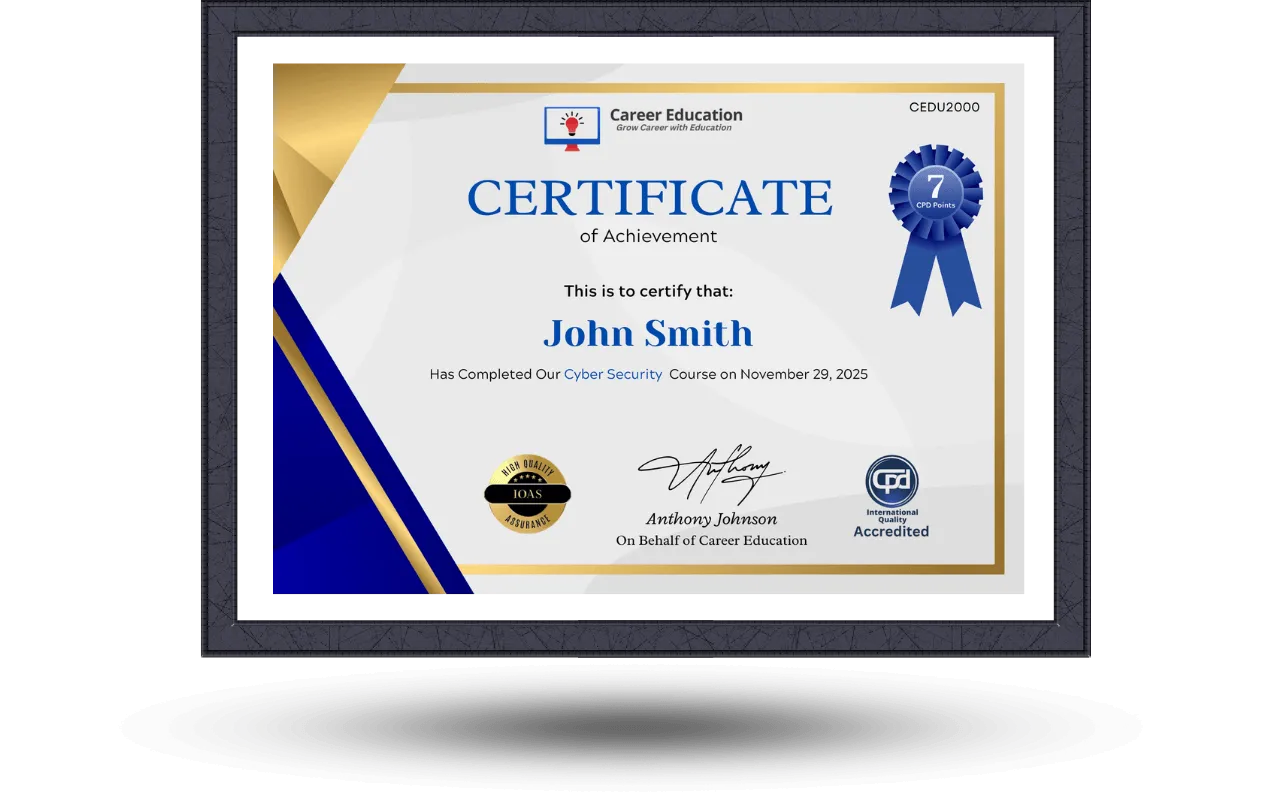
Upon completion of any course, all students are entitled to a CPD IQ Accredited e-certificate that will be issued by Career Education signifying the completion of your course.
After you complete the course and assignment, you will be eligible to order a free certificate accredited by CPD International Quality by completing the form below.
Hardcopy certificates and transcripts are also available for a small additional fee. More information is disclosed upon course completion.
Similar Courses




Frequently Asked Questions
The lifetime membership includes unlimited access to all courses, resources, and updates for a one-time fee.
You can purchase the membership directly from our website using a secure checkout process.
Yes, selected courses can be downloaded for offline access through our mobile app.
Yes, all future updates and new courses are included at no extra cost.
Yes, we offer a 30-day money-back guarantee if you are not satisfied with the membership.