
94%
OFF
OFF
Bloodborne Pathogen Safety in Industrial Workplaces
- Lifetime Access
- All Levels
- PDF Certificate
£296
£19
14-Day Money-Back Guarantee
Learn With Confidence








# Bloodborne Pathogen Safety in Industrial Workplaces
## Build Practical Safety Awareness to Prevent Exposure, Strengthen Workplace Protection and Support a Safer Industrial Environment
Industrial workplaces are often associated with machinery, tools, chemicals and physical hazards, but biological hazards can also present significant occupational risks. Employees may encounter blood or other potentially infectious materials following workplace injuries, accidents, first-aid situations, equipment incidents or emergency response activities.
Understanding how bloodborne pathogens can be transmitted and how exposure risks can be reduced is therefore an important part of a comprehensive workplace safety programme.
**Bloodborne Pathogen Safety in Industrial Workplaces** is designed to help employees, supervisors, safety professionals and workplace teams develop practical knowledge about bloodborne pathogen hazards in industrial environments. The course covers the fundamentals of bloodborne pathogens, OSHA standards and regulations, hazard identification and prevention, infection-control measures, emergency response and first aid, vaccination programmes, and workplace communication and training.
The course takes an outcome-focused approach, helping learners understand not only what safety practices are recommended, but why they matter and how they can contribute to a safer working environment.
Whether you work in manufacturing, construction, warehousing, engineering, facilities management or another industrial setting, **Bloodborne Pathogen Safety in Industrial Workplaces** can help strengthen your awareness of biological hazards and support safer workplace practices.
> **Important:** This course provides general educational information and should not be treated as a substitute for employer-required training, site-specific exposure-control plans, practical first-aid instruction, medical advice or current regulatory requirements. Employers and workers should follow the applicable OSHA requirements and their organisation’s current policies and procedures.
# Why Bloodborne Pathogen Safety Matters in Industrial Workplaces
Industrial environments can involve physically demanding tasks, machinery, tools, vehicles and other activities where workplace injuries may occur.
When an employee is injured, first-aid personnel, supervisors, emergency responders or colleagues may need to provide assistance. Depending on the circumstances, this may involve contact with blood or other potentially infectious materials.
Employees may also encounter contaminated materials or surfaces while cleaning an incident area or responding to an accident.
Without appropriate awareness, these situations can create unnecessary exposure risks.
**Bloodborne Pathogen Safety in Industrial Workplaces** helps learners understand the potential hazards and the preventive measures that can support safer responses.
# What You Will Learn
The course consists of seven structured modules that progressively develop your understanding of bloodborne pathogen safety in industrial environments.
## Module 1 – Introduction to Bloodborne Pathogens
The course begins with **Introduction to Bloodborne Pathogens**.
You will explore what bloodborne pathogens are and why they are relevant to occupational safety.
The module introduces the concept of potentially infectious materials and explains how exposure may occur in workplace situations.
You will consider why employees should remain alert to potential biological hazards even when their primary responsibilities do not involve healthcare or clinical work.
Industrial workers may encounter blood following an accident, injury or emergency. Understanding this possibility can help employees recognise when additional precautions may be necessary.
The module establishes the foundation for the rest of the course by introducing the key concepts surrounding bloodborne pathogen exposure.
By completing this module, you will have a stronger understanding of why bloodborne pathogens should be considered within broader workplace safety planning.
## Module 2 – OSHA Standards and Regulations
Workplace safety is supported by regulations and organisational procedures.
In **OSHA Standards and Regulations**, you will explore the importance of understanding applicable OSHA requirements and workplace responsibilities relating to occupational exposure to bloodborne pathogens.
You will develop greater awareness of why employers may establish exposure-control plans, provide appropriate protective measures and deliver employee training.
The module highlights the importance of following current regulatory requirements rather than relying on informal workplace practices.
You will also consider why employers and employees have roles to play in maintaining appropriate safety standards.
Regulations can change, and requirements may vary according to workplace activities and circumstances. Therefore, learners should always consult current OSHA requirements and their employer’s policies for specific compliance obligations.
By completing this module, you will have a better understanding of how regulatory requirements can support bloodborne pathogen safety in industrial workplaces.
## Module 3 – Identification and Prevention of Bloodborne Pathogens
Recognising potential hazards is an essential step in prevention.
**Identification and Prevention of Bloodborne Pathogens** focuses on helping learners understand where exposure risks may arise in industrial environments.
You will consider situations involving workplace injuries, first aid, contaminated materials and emergency response.
The module also explores why workers should avoid making assumptions about whether blood or other potentially infectious materials are hazardous.
Appropriate precautions can help reduce unnecessary exposure.
You will learn about the importance of following established safe work practices and using appropriate protective equipment where required.
The module encourages a proactive approach: identify potential hazards before exposure occurs and use appropriate controls to reduce risk.
By completing this module, you will be better prepared to recognise potential bloodborne pathogen hazards and understand basic prevention principles.
## Module 4 – Infection Control Measures
Infection-control practices are important whenever employees may encounter blood or potentially infectious materials.
In **Infection Control Measures**, you will explore the role of hygiene, personal protective equipment, safe handling practices and environmental controls in reducing exposure risks.
You will consider why appropriate protective measures should be selected and used according to workplace procedures.
The module also highlights the importance of proper cleaning and decontamination practices following an incident involving potentially infectious materials.
You will develop greater awareness of why contaminated materials should be handled carefully and why workers should follow established procedures rather than attempting improvised solutions.
By completing this module, you will have a clearer understanding of how infection-control measures can contribute to safer industrial workplaces.
## Module 5 – Emergency Response and First Aid
Workplace incidents can require immediate action.
**Emergency Response and First Aid** explores how bloodborne pathogen safety principles can be incorporated into emergency response situations.
You will consider the importance of protecting yourself and others when providing assistance following an injury.
The module highlights the importance of following appropriate first-aid procedures and using suitable protective measures according to your training and workplace requirements.
You will also explore the importance of reporting incidents and following established exposure-response procedures if a potential exposure occurs.
First aid should always be provided within the scope of the responder’s training, and serious incidents should be escalated through appropriate emergency channels.
By completing this module, you will have greater awareness of how bloodborne pathogen precautions can support safer first-aid and emergency response activities.
## Module 6 – Vaccination Programs
Vaccination can form part of an occupational health strategy for certain workplace exposure risks.
In **Vaccination Programs**, you will explore the general role vaccination programmes may play in protecting workers who could experience occupational exposure.
You will consider why employers may provide information about vaccinations or occupational health programmes based on workplace risks and applicable requirements.
The module also highlights the importance of seeking appropriate medical or occupational health advice when making vaccination decisions.
Recommendations can depend on the specific pathogen, role, exposure circumstances and current public health guidance.
By completing this module, you will develop a broader understanding of vaccination as one potential component of a comprehensive workplace health and safety approach.
## Module 7 – Communication and Training
Safety knowledge is most effective when it is communicated clearly and reinforced consistently.
In **Communication and Training**, you will explore the importance of workplace education and communication in preventing bloodborne pathogen exposure.
You will consider how employees can be informed about potential hazards, appropriate protective measures, reporting procedures and organisational expectations.
Effective training should help workers understand not only what they are expected to do but also why the procedures are important.
The module also explores the value of clear communication when reporting hazards or incidents.
A strong safety culture encourages employees to raise concerns and seek clarification when they are uncertain about a procedure.
By completing this module, you will understand how communication and training can support long-term bloodborne pathogen awareness.
# Practical Outcomes of the Course
The goal of **Bloodborne Pathogen Safety in Industrial Workplaces** is to help learners develop practical awareness that can support safer industrial operations.
After completing the course, you will be better prepared to:
* Understand the fundamentals of bloodborne pathogens.
* Recognise potential biological hazards in industrial workplaces.
* Identify situations that may create bloodborne pathogen exposure risks.
* Understand the importance of appropriate workplace precautions.
* Develop greater awareness of applicable OSHA requirements.
* Understand the role of exposure-control planning.
* Recognise potential sources of occupational exposure.
* Apply basic prevention principles.
* Understand infection-control practices.
* Recognise the importance of appropriate personal protective equipment.
* Understand basic cleaning and decontamination considerations.
* Respond more safely to workplace injury situations.
* Understand the importance of appropriate first-aid procedures.
* Recognise the importance of reporting potential exposure incidents.
* Understand the general role of occupational vaccination programmes.
* Appreciate the importance of current medical and occupational health guidance.
* Communicate safety information more effectively.
* Understand why employee training is important.
* Support a stronger workplace safety culture.
* Contribute to reducing unnecessary exposure risks.
# Who Is This Course For?
**Bloodborne Pathogen Safety in Industrial Workplaces** can be valuable for anyone who works in an environment where workplace injuries or emergency situations may involve contact with blood or potentially infectious materials.
It may be particularly useful for:
* Industrial workers.
* Manufacturing employees.
* Construction workers.
* Warehouse personnel.
* Maintenance teams.
* Facilities staff.
* Engineering personnel.
* Workplace first-aid responders.
* Health and safety professionals.
* Supervisors and managers.
* Emergency response teams.
* Site coordinators.
* Occupational safety personnel.
* Employees responsible for workplace training.
* Businesses developing workplace safety awareness programmes.
The course can also serve as general awareness training for organisations that want to strengthen understanding of biological hazards alongside their existing workplace safety practices.
# Recognise Biological Hazards in Industrial Environments
Industrial workers may not consider bloodborne pathogens part of their everyday safety responsibilities.
However, accidents and injuries can happen unexpectedly.
A worker may experience a cut, machinery-related injury or other incident that involves blood. Colleagues or designated first-aid responders may then need to provide assistance.
Understanding potential exposure hazards can help employees approach these situations more safely.
**Bloodborne Pathogen Safety in Industrial Workplaces** encourages learners to recognise biological hazards as part of broader workplace risk awareness.
# Understand OSHA Requirements
Regulatory compliance is an important component of workplace safety.
Understanding applicable OSHA requirements can help organisations develop appropriate procedures, training and exposure-control measures.
The course introduces learners to the role of OSHA standards while emphasising the need to consult current regulations and employer-specific policies.
This can help employees better understand why certain workplace practices are required.
# Strengthen Exposure Prevention
Prevention begins with awareness.
If workers understand where exposure risks may occur, they can take appropriate precautions before an incident becomes more serious.
The course explores basic prevention principles, including hazard recognition, safe work practices and appropriate protective measures.
This proactive approach can contribute to a stronger safety culture.
# Improve Infection-Control Awareness
Infection control is not limited to healthcare environments.
Industrial employees may need to clean areas following an injury or assist someone who is bleeding.
Understanding appropriate infection-control principles can help workers recognise why protective measures and proper cleaning procedures matter.
The course provides a general foundation for understanding these practices.
# Respond More Safely to Workplace Injuries
When an injury occurs, employees may need to respond quickly.
However, speed should not come at the expense of appropriate safety precautions.
**Bloodborne Pathogen Safety in Industrial Workplaces** explores how bloodborne pathogen awareness can be incorporated into emergency response and first-aid situations.
The course reinforces the importance of staying within the limits of your training and following established workplace procedures.
# Understand the Importance of Reporting
Potential exposure incidents should not be ignored.
Prompt reporting can allow organisations to activate their established response procedures and provide appropriate professional or occupational health support.
The course highlights why employees should understand their workplace reporting process before an incident occurs.
# Support Employee Health and Safety
Vaccination programmes, appropriate training and exposure-control procedures can form part of a broader occupational safety strategy.
The course helps learners understand how these elements can work together to support employee protection.
Specific medical recommendations should always come from qualified healthcare or occupational health professionals.
# Build a Stronger Safety Culture
A workplace safety culture develops through repeated actions.
When employees understand hazards, communicate concerns, follow established procedures and participate in training, safety becomes part of everyday work.
**Bloodborne Pathogen Safety in Industrial Workplaces** can contribute to this culture by helping employees develop greater awareness of biological hazards and exposure prevention.
# Improve Workplace Communication
Safety procedures are only effective when employees understand them.
Clear communication can help workers know what to do when they encounter blood or potentially infectious materials.
Training can also provide employees with opportunities to understand reporting procedures and ask questions about workplace expectations.
The course explores communication and training as important tools for maintaining ongoing awareness.
# Prepare Employees Before Incidents Occur
The best time to understand an exposure-control procedure is before an emergency happens.
Employees who already understand their responsibilities may be better prepared to respond appropriately when an incident occurs.
The course helps provide a foundation for that preparation by covering hazard identification, infection control, emergency response and communication.
# Take the Next Step Towards a Safer Industrial Workplace
Industrial safety involves more than machinery, tools and physical hazards. Biological hazards can also emerge when workplace injuries and emergency situations involve blood or potentially infectious materials.
**Bloodborne Pathogen Safety in Industrial Workplaces** provides a structured learning experience covering the essential principles of bloodborne pathogen safety in industrial environments. From understanding bloodborne pathogens and OSHA requirements to identifying hazards, applying infection-control measures, responding to emergencies, understanding vaccination programmes and strengthening workplace communication, the course provides a practical foundation for safety awareness.
By completing the course, you can develop a stronger understanding of potential exposure risks and the importance of appropriate prevention and response procedures.
Whether you are an industrial employee, supervisor, first-aid responder, safety professional or workplace trainer, this course can help strengthen your knowledge and contribute to a more informed safety culture.
**Start Bloodborne Pathogen Safety in Industrial Workplaces today and develop the knowledge to recognise biological hazards, support exposure prevention, respond appropriately to workplace incidents and promote safer industrial operations.**
Course Modules
Course Content
Module 1_ Introduction to Bloodborne Pathogens
-
Lesson 1_ Introduction to Bloodborne Pathogens
Module 2_ OSHA Standards and Regulations
Module 3_ Identification and Prevention of Bloodborne Pathogens
Module 4_ Infection Control Measures
Module 5_ Emergency Response and First Aid
Module 6_ Vaccination Programs
Module 7_ Communication and Training
What our students say
Excellent
4.9 average
158 Reviews

Earn an Accredited Certificate
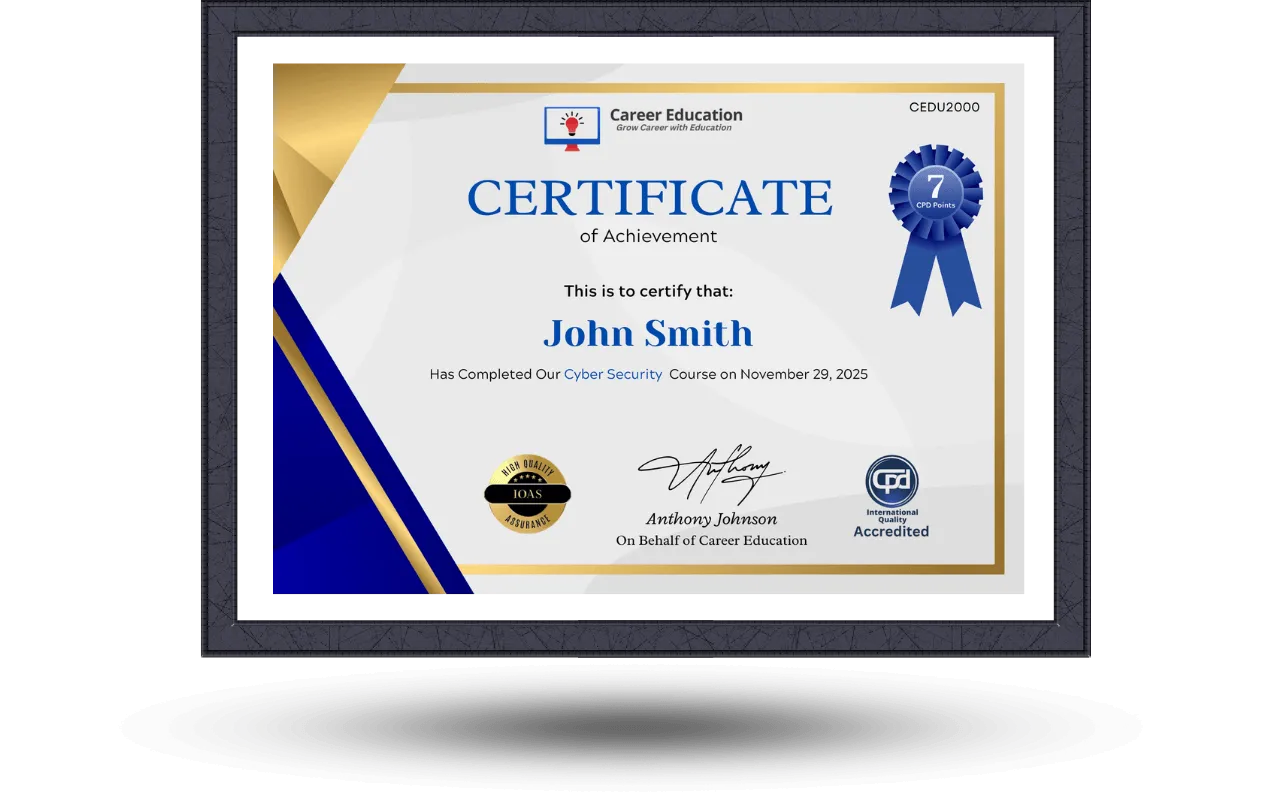
Upon completion of any course, all students are entitled to a CPD IQ Accredited e-certificate that will be issued by Career Education signifying the completion of your course.
After you complete the course and assignment, you will be eligible to order a free certificate accredited by CPD International Quality by completing the form below.
Hardcopy certificates and transcripts are also available for a small additional fee. More information is disclosed upon course completion.
Similar Courses



Frequently Asked Questions
The lifetime membership includes unlimited access to all courses, resources, and updates for a one-time fee.
You can purchase the membership directly from our website using a secure checkout process.
Yes, selected courses can be downloaded for offline access through our mobile app.
Yes, all future updates and new courses are included at no extra cost.
Yes, we offer a 30-day money-back guarantee if you are not satisfied with the membership.