

AI and human analysts are not direct substitutes in modern cyber security. Artificial intelligence is highly effective at processing large volumes of security data, identifying patterns and automating repetitive work. Human analysts are better at understanding business context, challenging uncertain evidence, making high-impact decisions and coordinating a response when an incident affects real people and services.
The most useful AI meaning in security is therefore not “machines replacing defenders”. It is the use of artificial intelligence to extend what security teams can see, investigate and manage. AI can help a Security Operations Centre prioritise alerts, summarise incidents, search threat intelligence and identify unusual behaviour. A human analyst decides whether the evidence is credible, what the activity means for the organisation and which response is proportionate.
This combination is becoming increasingly important as organisations generate more endpoint, identity, network, email and cloud data than analysts can review manually. At the same time, machine learning security systems can make mistakes, inherit weaknesses from their data and produce confident but unsupported conclusions.
The strongest cyber defence uses AI for speed, scale and consistency while keeping humans responsible for judgement, governance and accountability. This guide compares AI with human cyber analysts across security operations, threat detection, threat intelligence and incident response.
What Does AI Mean in Security?
AI in cyber security refers to computer systems that help detect, analyse or respond to digital threats by recognising patterns, making predictions, generating summaries or recommending actions.
The phrase covers several technologies. Machine learning models can classify files, identify unusual account activity and estimate the risk of security events. Generative AI can explain alerts, draft queries, summarise incidents and help analysts navigate technical information using natural language. AI agents may perform multi-step tasks, such as gathering evidence from approved sources and preparing an investigation for review.
AI may also operate quietly inside email filters, anti-malware tools, identity platforms and fraud systems. However, it does not possess human understanding in the ordinary sense. Its results depend on models, data and instructions, and it cannot independently understand an organisation’s priorities, legal duties or tolerance for disruption.
Who Are Human Cyber Security Analysts?
Human cyber security analysts are professionals who monitor systems, investigate suspicious activity, assess risk and support the response to cyber incidents.
A SOC analyst may begin by reviewing an alert from an endpoint, identity or cloud-security platform. The analyst checks the affected user, device, timing and surrounding events. They determine whether the activity is legitimate, a policy issue or evidence of an attack.
Other analysts specialise in threat intelligence, incident response, threat hunting, malware analysis, digital forensics or detection engineering. Their responsibilities differ, but all apply judgement to incomplete and sometimes conflicting evidence.
Human analysts also communicate. They explain technical findings to system owners, legal advisers, managers and other responders. During a serious incident, they may need to recommend actions that affect customer services, employee access or business continuity.
Their value extends beyond technical knowledge to organisational understanding, professional scepticism and accountability.
AI vs Human Analysts at a Glance
| Area | AI security systems | Human cyber analysts |
| Data processing | Analyse very large datasets quickly | Review smaller volumes with deeper contextual judgement |
| Consistency | Apply the same model or rules repeatedly | May vary between people but can adapt reasoning |
| Pattern recognition | Strong at finding statistical relationships and anomalies | Strong at interpreting meaning and unusual context |
| Speed | Can enrich and summarise events in seconds | Slower but capable of deliberate investigation |
| Business context | Limited to the information provided | Understand operations, priorities and consequences |
| Novel situations | May struggle outside training or expected patterns | Can reason through unfamiliar and ambiguous events |
| Communication | Generates summaries and draft explanations | Tailors communication and manages stakeholders |
| Accountability | Cannot accept legal or organisational responsibility | Can make, justify and own decisions |
| Availability | Can operate continuously when systems are available | Requires staffing, rest, training and sustainable workloads |
| Main weakness | False results, hallucinations and overconfidence | Fatigue, inconsistency, bias and limited capacity |
The comparison shows why a hybrid model is more realistic than a contest between machines and people. AI improves coverage and speed; human analysts give the result meaning and decide what should happen next.
Where AI Outperforms Human Analysts
AI has clear advantages when the problem involves volume, repetition or rapid pattern comparison.
Processing Large Volumes of Security Data
Modern organisations may generate millions of events each day. These include authentication records, endpoint processes, domain requests, email activity, cloud changes and firewall decisions.
A human team cannot read each event. AI-supported security analytics can process this data continuously and identify events that appear unusual or connected.
For example, one account might sign in from a new device, access an unfamiliar application and download more information than usual. AI can connect these weak signals and increase the risk score before any one event would have justified an alert.
Repetitive Alert Enrichment
Analysts often perform the same early investigation steps repeatedly. They look up the user, device, domain, file reputation, recent alerts and asset importance.
AI and security automation can gather this information automatically. The analyst receives an enriched case rather than several disconnected alerts.
This saves time and lets analysts concentrate on interpreting evidence.
Identifying Statistical Anomalies
Machine learning can establish patterns of ordinary activity and identify deviations.
This is useful in identity security, network monitoring and fraud detection. An account behaving differently from its history may deserve attention even when no known malicious indicator is present.
AI can consider many variables at once, including timing, location, device, access pattern and relationship with other events. Humans can reason about these factors but cannot compare them continuously across every account and device.
Fast Summarisation
Generative AI can turn a long incident record into a concise timeline or explanation. It can summarise threat intelligence reports, extract key indicators and translate technical language for different audiences.
This capability is particularly valuable during a fast-moving incident. Analysts can obtain an initial overview quickly, then verify the underlying evidence.
Continuous Availability
AI systems can operate around the clock without becoming tired. They can continue monitoring events, performing enrichment and applying approved workflows outside normal working hours.
A serious alert still requires someone with authority to decide whether a device should be isolated or a service interrupted, but continuous machine analysis can collect and prioritise evidence before that responder becomes involved.
Where Human Analysts Outperform AI
Human analysts are strongest where the problem requires context, scepticism, responsibility and adaptation.
Understanding Business Context
A security event cannot always be judged from technical data alone.
A large transfer of files may indicate data theft, but it could also be an authorised migration. A privileged login at an unusual time might be malicious or connected with emergency maintenance.
Human analysts can contact system owners, understand current projects and recognise how activity relates to business operations. This context also affects response: isolating a laptop may be simple, while disconnecting a hospital, manufacturing or payment system may create serious consequences.
Handling Ambiguity
Security investigations rarely provide complete evidence. Logs may be missing, timestamps may conflict and several explanations may remain possible.
Human analysts can compare competing explanations, recognise uncertainty and decide what additional evidence is needed. AI may provide a fluent answer that appears more certain than the evidence justifies, so analysts must test its assumptions.
Recognising Deception and Adversarial Behaviour
Attackers actively try to mislead defenders. They may use legitimate tools, compromised accounts and normal cloud services so malicious activity resembles ordinary work.
Human analysts apply adversarial thinking by asking why an event appears normal and what an attacker may be concealing. AI can assist, but attackers may manipulate model inputs, evade learned patterns or exploit AI-connected workflows.
Making High-Impact Decisions

Some security actions are disruptive. Disabling an executive account, isolating a server or blocking a supplier connection can affect operations, customers and contractual duties.
AI may recommend an action, but a responsible person or approved governance process must determine whether the action is proportionate.
Human analysts can weigh urgency, confidence, safety, legal obligations and service continuity. They can also document why the decision was made and accept responsibility for it.
Communicating During Incidents
Incident response involves more than technical containment.
Analysts may need to explain the situation to management, legal advisers, privacy teams, communications staff and affected system owners. Each audience needs different information.
Human communication requires judgement about uncertainty, timing and what the recipient needs to decide. Responders also manage disagreement and pressure during difficult containment decisions.
Learning from Unfamiliar Situations
AI performs best when current activity resembles the data, examples or instructions available to it.
Human analysts can reason more flexibly when an incident involves a new business process, unusual technology or incomplete evidence. They can combine technical knowledge with analogy, experience and direct questions.
AI in Security Operations
Security operations combines monitoring, alert triage, investigation, threat hunting and incident response. AI can assist at each stage, but the level of appropriate autonomy differs.
For routine enrichment, AI may operate with limited supervision. It can collect device information, check threat intelligence and organise related alerts.
For investigation, it can recommend queries, summarise evidence and identify possible relationships. The analyst should review the results and decide which hypotheses deserve further testing.
For response, automated action should reflect confidence and impact. Quarantining a confirmed malicious file may be suitable for automatic handling. Shutting down a critical business service normally requires stronger approval.
AI and Threat Detection
AI threat detection can identify patterns that signatures and fixed rules miss.
A model may detect unusual behaviour across identities, endpoints or networks. It can also help identify modified malware through structural and behavioural characteristics rather than one exact file signature.
However, unusual does not mean malicious. Organisational changes, travel, software updates and new working patterns can all produce anomalies.
Human analysts determine whether the detection makes sense in context. They can compare it with change records, interview users and examine whether the model relied on reliable data.
AI and Threat Intelligence
Threat intelligence analysts assess information about cyber threats, campaigns, vulnerabilities and attacker behaviour.
AI can process large report collections, extract indicators, connect repeated entities and create summaries. It can make intelligence more accessible to SOC analysts who do not have time to read every publication.
It may also help compare internal evidence with known infrastructure or techniques. A suspicious domain can be connected with relevant reports and related indicators.
Human intelligence analysts remain necessary because source evaluation and attribution require judgement. Several reports may repeat one unverified claim, making apparent confirmation misleading. Actor names also vary between vendors, and technical overlap does not necessarily prove common control.
AI and Incident Response
During incident response, speed matters, but so does accuracy.
AI can construct timelines, identify related alerts and retrieve relevant playbook steps. It can help responders understand which users, endpoints and cloud resources appear connected.
Human responders decide the scope, containment strategy and recovery priorities. They must consider whether the attacker still has access, which systems are safe to trust and how operational services will be affected.
An incorrect generated timeline may direct responders towards the wrong system. An automated containment action may destroy access to useful evidence or interrupt a critical service.
Machine Learning Security: Strengths and Weaknesses
Machine learning security systems can identify relationships that fixed rules may not capture. They adapt to complex data and can evaluate risk across a large environment.
Their performance depends on training data, features, model design and operational conditions. A model developed for one organisation may not perform equally well in another.
Models can also drift as normal behaviour changes. Remote working, new applications and organisational restructuring may make old patterns less useful.
Analysts also need to know why a model raised an alert. A high risk score without supporting evidence is difficult to investigate, so teams should monitor false positives, missed incidents and performance changes.
Human Weaknesses in Cyber Analysis
Human analysts also have limitations.
They can become tired, especially when reviewing large volumes of repetitive alerts. Alert fatigue may reduce attention and cause important signals to be overlooked.
People also bring cognitive bias, and experience levels vary. Automated enrichment, peer review and standard investigation steps can improve consistency.
The aim is not to present humans as infallible. It is to design a system in which people and technology compensate for each other’s limitations.
AI Hallucinations and Overconfidence
Generative AI can produce incorrect or unsupported statements in confident language. This is commonly described as hallucination.
In security work, an AI system might invent a relationship between an IP address and a threat actor, misunderstand a script or generate a query that searches the wrong data.
Security teams should require generated claims to be checked against logs, original intelligence and official documentation. High-impact conclusions should show sources and evidence.
Analysts should also avoid automation bias—the tendency to prefer a machine recommendation simply because it came from a sophisticated system.
Risks to AI Security Tools
AI systems create additional security risks that human-led processes must manage.
Attackers may attempt prompt injection, where malicious content influences the instructions followed by a generative AI system. Data poisoning can manipulate training or reference information so the model behaves unreliably.
Sensitive information may leak through prompts, outputs, logs or connected data sources. AI agents may also receive excessive permissions, allowing one mistaken or manipulated decision to affect several systems.
Model theft, insecure integrations and dependence on external providers are further concerns.
AI security tools therefore need their own threat models, access controls, monitoring and incident-response arrangements.
The Human-in-the-Loop Model
Human-in-the-loop means a person reviews or approves an AI-supported decision before the action is completed.
This model is useful for high-impact security actions. AI may gather evidence and recommend that an account be disabled, but an authorised analyst approves the decision.
A human-on-the-loop model allows the system to act within defined boundaries while a person monitors and can intervene. This may suit high-volume, lower-impact workflows.
Fully automated action can be appropriate for narrow, well-tested cases with high confidence and limited consequences.
The correct model depends on the potential harm of an error, the time available and the organisation’s ability to reverse the action.
The Best Model: Human-AI Collaboration
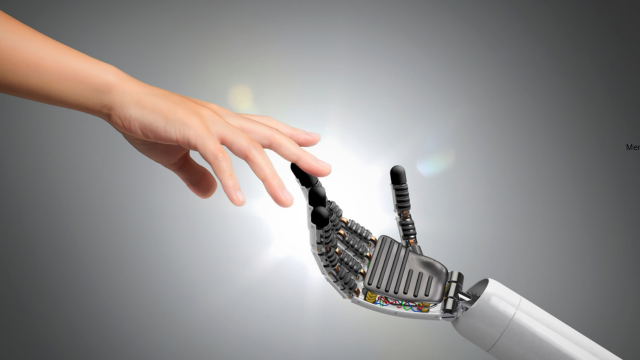
The strongest security operations model gives each side the work it performs best.
AI handles scale, repetition and rapid comparison. It gathers context, ranks alerts and creates initial summaries.
Human analysts handle interpretation, uncertainty and organisational consequences. They verify evidence, investigate unusual cases and make accountable decisions.
A useful workflow might look like this:
- AI detects or groups suspicious activity.
- Automation gathers relevant technical context.
- A human analyst reviews the evidence and tests explanations.
- AI assists with searches, summaries or related intelligence.
- The analyst decides whether response is required.
- Approved automation carries out suitable actions.
- Humans review the outcome and improve future controls.
The workflow keeps the analyst in control without requiring people to perform every repetitive step manually.
Will AI Replace Cyber Security Analysts?
AI is unlikely to remove the need for cyber analysts, but it will change their work.
Routine alert enrichment, basic summarisation and standard query generation will increasingly be automated. Analysts will spend more time validating evidence, investigating complex events and managing response.
Entry-level roles may change because some tasks traditionally used for training are becoming automated. Organisations will need deliberate learning programmes so new analysts still develop investigative judgement and understand the underlying technology.
Demand may also grow for professionals who can evaluate AI security tools, monitor model performance and secure AI applications.
Skills Human Analysts Will Need
Technical fundamentals remain essential. Analysts need to understand networks, operating systems, identities, cloud services, applications and common attacker behaviour.
They also need data and AI literacy. This includes understanding confidence, false positives, model limitations and the effect of poor-quality inputs.
Critical thinking will become even more important. Analysts must separate generated explanation from verified evidence and recognise when an answer is overly certain.
Communication and incident coordination remain strongly human skills. Security professionals must translate technical risk into business decisions and work with people under pressure.
How Organisations Should Divide Work Between AI and Humans
Organisations should classify security tasks according to risk, repeatability and reversibility.
Low-risk, repetitive tasks are strong candidates for automation. Examples include gathering asset details, formatting reports and enriching known indicators.
Medium-risk tasks may use AI recommendations with analyst review. These include prioritising alerts, generating hunting queries and suggesting incident scope.
High-risk actions should require explicit authority. Disabling critical accounts, isolating production servers and making public attribution decisions are examples.
Governance for AI-Assisted Cyber Defence
Governance begins with knowing where AI is used and what access it has.
The organisation should maintain an inventory of AI security features, models, agents and connected systems. Owners should be assigned for technical performance, data protection and operational risk.
Policies should define approved uses, prohibited data and human approval requirements. Procurement reviews should examine how vendors store information, update models and handle incidents.
Performance must be measured continuously. Teams should monitor accuracy, false positives, rejected recommendations and unexpected behaviour.
Measuring AI and Analyst Performance Fairly
AI and human analysts should be measured by security outcomes rather than raw activity.
For AI, useful measures include detection quality, time saved, false-positive rates and the percentage of recommendations accepted after review.
For analysts, useful measures include investigation quality, correct escalation, containment effectiveness and improvements created from lessons learned.
Speed matters, but closing alerts quickly is not the same as protecting the organisation.
Combined measures should examine whether the human-AI workflow reduces detection and response time without increasing disruptive errors or missed threats.
AI vs Human Analysts for Small Organisations
Small organisations may already use AI through email security, endpoint protection and managed monitoring services.
They do not need to build their own model or establish a large internal AI programme. Their priority should remain strong authentication, supported software, reliable backups and a clear incident-response route.
When selecting an AI-enabled service, the organisation should ask who reviews the alerts, what evidence is provided and which actions the provider can take.
AI is not useful when warnings enter an unmonitored dashboard. A responsible person or provider must still investigate and make decisions.
Common Misconceptions
One misconception is that AI can operate a SOC independently. It can automate many tasks, but complex incidents still require human judgement and accountability.
Another is that human analysts are always more accurate. People can become tired, miss patterns and bring bias. AI can improve consistency and help direct attention.
It is also wrong to assume that AI always understands what it reports. Generative systems can produce convincing language without reliable evidence.
Some organisations believe that adding AI will fix poor security data. In reality, incomplete logs, inaccurate inventories and weak processes reduce the value of any model.
Finally, adopting AI does not automatically reduce staffing needs. Organisations may need new skills, stronger governance and additional work to secure the AI systems themselves.
Frequently Asked Questions
What is the AI meaning in security?
AI in security means using artificial intelligence to analyse security data, detect cyber threats, support investigations and automate selected defensive tasks.
Is AI better than human cyber analysts?
AI is better at speed, scale and repetitive pattern analysis. Humans are better at context, ambiguity, communication and accountable decisions. The strongest approach combines both.
Can AI replace SOC analysts?
AI can automate parts of a SOC analyst’s work, but it cannot replace the human judgement required for complex investigations and high-impact response.
How does AI help threat intelligence?
It can extract indicators, summarise reports and identify relationships across large collections of intelligence. Human analysts still assess source reliability, relevance and confidence.
What is machine learning security?
Machine learning security uses models trained on data to classify threats, detect anomalies and estimate the risk of security events.
How does AI support incident response?
AI can group alerts, construct timelines, gather context and recommend playbook steps. Human responders decide the scope and containment strategy.
What is human-in-the-loop security?
It is a model in which AI assists with analysis or recommendations while a person reviews and approves important decisions.
What are the main risks of AI security tools?
Risks include false positives, missed attacks, hallucinations, prompt injection, data leakage, model manipulation and excessive automation.
Will AI reduce cyber security careers?
AI will change tasks and skills, but organisations will still need professionals who can investigate, communicate, govern AI and make accountable security decisions.
What is the best balance between AI and analysts?
Use AI for high-volume and repeatable work, and keep humans responsible for uncertain, sensitive or disruptive decisions.
Conclusion
AI and human analysts bring different strengths to cyber security.
AI can process enormous volumes of data, detect statistical patterns, enrich alerts and summarise complex incidents quickly. It helps security operations manage workloads that would be impossible for people to review manually.
Human analysts understand business context, evaluate uncertainty and recognise when a technically correct action could create unacceptable operational consequences. They communicate with stakeholders and remain accountable for important decisions.
Neither side is perfect. AI can hallucinate, miss threats and inherit weaknesses from its data. Humans can become fatigued, inconsistent and influenced by bias.
The best cyber defence therefore does not ask whether AI or human analysts should win. It designs a controlled partnership in which AI supports speed and scale while people provide judgement, oversight and responsibility.
As AI becomes more capable, analysts will spend less time on repetitive enrichment and more time on complex investigation, threat intelligence, incident command and governance.
Organisations that define these roles clearly will gain the advantages of machine learning security without surrendering the human control needed for reliable and responsible cyber defence.