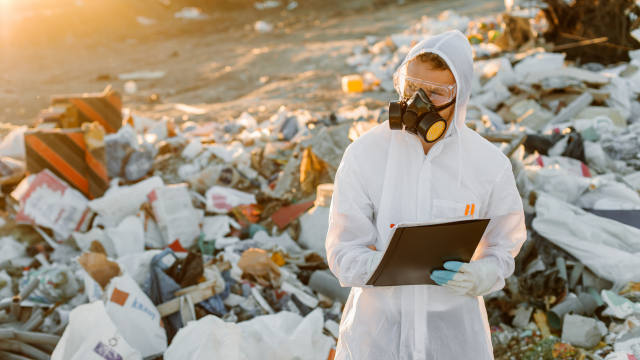

Confined spaces can look harmless from the outside. A tank may be empty, a chamber may appear clean, and a maintenance pit may have been entered many times before without incident. None of those observations proves that the next entry will be safe.
Working safely in confined spaces requires a disciplined approach to identifying hazards, avoiding unnecessary entry, controlling the atmosphere and other risks, ensuring competent supervision and preparing for rescue before anybody goes inside.
In the UK, confined-space work is also subject to specific health and safety requirements. The central principle is straightforward: if the work can reasonably be completed without entering the confined space, entry should be avoided. Where entry is unavoidable, the work needs a properly planned safe system based on the actual risks.
This guide explains what counts as a confined space safety, the main confined space hazards, how a risk assessment should approach them, the role of personal protective equipment, atmosphere testing, isolation, permits, communication and emergency rescue.
What Is a Confined Space?
A confined space is not simply a place that feels cramped.
Under the Great Britain regulatory definition, it is a place such as a chamber, tank, vat, silo, pit, trench, pipe, sewer, flue, well or similar space where, because of its enclosed nature, there is a reasonably foreseeable specified risk.
Those specified risks include serious injury from fire or explosion, unconsciousness due to excessive heat, unconsciousness or asphyxiation caused by gas, fumes, vapour or lack of oxygen, drowning following an increase in liquid level, and asphyxiation or entrapment involving a free-flowing solid.
This means a confined space can be surprisingly large.
A huge grain silo or storage vessel may still qualify. Conversely, a small cupboard would not normally become a confined space safety space under these regulations simply because there is little room to move.
The relevant questions are whether the area is substantially enclosed and whether the enclosed conditions create, or could foreseeably create, one of the specified serious risks.
A space can become confined because of the work
Conditions may also change.
Imagine an enclosed vessel that normally contains clean air and presents no specified risk. If a worker begins cleaning it with a solvent that produces harmful vapour, the work itself may create a confined-space risk.
Similarly, welding, painting, chemical cleaning or the introduction of inert gases can transform an apparently safe area into a dangerous atmosphere.
This is one reason confined space safety cannot rely on labels alone. The assessment must consider what the space contains, what has happened there previously and what the proposed work will introduce.
Why Is Working in Confined Spaces So Dangerous?
The risks of working in confined spaces are unusual because hazardous conditions can develop rapidly and escape may be difficult. In an ordinary open workplace, harmful vapour may disperse, but inside an enclosed tank, the same substance can quickly accumulate.
A worker may be only a few metres from an opening but still be unable to reach it after losing consciousness. Restricted entrances can also make emergency rescue extremely difficult. A person wearing a harness may not pass easily through a poorly designed access hatch, while a rescue team may need breathing apparatus before safely approaching the casualty.
There is another serious danger: instinctive rescue. When one worker collapses, colleagues may rush inside without protection. HSE records confined-space incidents where would-be rescuers have also been overcome. An emergency can therefore create several casualties instead of one. Effective confined-space safety planning must protect both entrants and rescuers.
The Main Confined Space Hazards
Every confined space is different, but several hazards and workplace risks appear repeatedly.
Oxygen deficiency
Low oxygen is one of the most dangerous atmospheric hazards because workers may receive little warning before becoming confused or unconscious.
Oxygen can be depleted by rusting, biological processes, combustion, displacement by another gas or deliberate use of inert gases. A space that was previously safe may later become oxygen deficient. Atmospheric testing is therefore essential where this risk is foreseeable.
Toxic gases, fumes and vapours
Sewers, tanks, industrial vessels and process equipment can contain toxic substances that are dangerous when inhaled. Hydrogen sulphide, carbon monoxide, solvent vapours and process gases are examples, although the relevant hazards depend on the workplace.
Some dangerous gases have little or no useful warning smell. Workers should never assume an atmosphere is safe simply because it smells normal.
Fire and explosion
Flammable gases, vapours, dusts or oxygen-enriched atmospheres can create serious fire and explosion hazards.
Hot work such as welding or cutting can introduce an ignition source into an environment that was previously stable. Electrical equipment, static discharge and unsuitable lighting may also create risks. Where explosive atmospheres are foreseeable, the risk assessment should consider suitable additional controls and applicable dangerous-substances legislation.
Flooding and liquid ingress
Tanks, pits, chambers and sewer systems may be exposed to unexpected water, sewage, chemicals or process liquids.
A valve operated elsewhere in a plant may create a serious hazard for workers inside. Physical separation and secure isolation are therefore often essential. Simply telling another employee not to operate a valve may provide inadequate protection where accidental operation remains possible.
Free-flowing solids
Grain, flour, sugar, sand and similar materials can behave like fluids. A worker can become engulfed, trapped or unable to reach breathable air.
Silos and hoppers therefore require careful safe-working procedures even where no toxic chemical is present.
Excessive heat
Poor ventilation, hot processes and restricted movement can contribute to heat stress. Protective clothing may increase the problem by reducing the body’s ability to lose heat.
Temperature and thermal stress should therefore be considered within the safe system of work rather than treating atmospheric gases as the only concern.
Physical Hazards Must Not Be Overlooked
Atmospheric dangers receive considerable attention, but physical hazards can be equally serious.
A confined space safety may contain moving machinery, exposed electrical equipment, sharp surfaces, slippery floors or difficult access routes. Workers may face falls when entering vertical shafts or climbing fixed ladders.
Poor lighting can make hazards difficult to identify. Noise may interfere with communication, while restricted posture can increase fatigue and make manual handling more difficult.
The task itself can introduce further dangers. Welding creates heat, fumes and ignition sources. Pressure washing may create slips or aerosols. Maintenance can expose workers to moving parts or stored energy.
A good risk assessment therefore asks two questions:
- What hazards already exist in the space?
- What hazards will the planned task introduce?
Both are important for effective confined-space risk control.
The UK Legal Approach to Confined Space Safety
For workplaces in Great Britain, the confined space safety Spaces Regulations 1997 establish three fundamental principles.
First, entry should be avoided where reasonably practicable. Second, where entry is necessary, the work should follow a safe system. Third, adequate emergency arrangements must already exist before work begins.
The Management of Health and Safety at Work Regulations also require a suitable and sufficient risk assessment. Northern Ireland has a parallel regime under the confined space safety Spaces Regulations (Northern Ireland) 1999.
Avoid entry before controlling entry
This hierarchy is important. The first question should not be, “What PPE should we wear inside?” It should be, “Do we need to go inside at all?”
A tank might be inspected using a camera. A blockage may be cleared remotely. Equipment could sometimes be removed for maintenance instead of repaired inside the enclosure.
Eliminating the need for entry removes many associated hazards altogether. This is generally more reliable than attempting to protect someone after they enter.
How to Assess the Risks of Working in Confined Spaces
A confined-space risk assessment needs to be specific. Generic paperwork that treats every tank as having identical hazards is unlikely to provide adequate control.
The assessor should consider the space itself, previous contents, connected plant, surrounding operations and the work being undertaken.
Important questions include:
- What has the space contained previously?
- Could gases, liquids or solids enter unexpectedly?
- Could the atmosphere become oxygen deficient, toxic or flammable?
- Will the work generate fumes, heat, dust or ignition sources?
- Can equipment start or move while somebody is inside?
- Is entry and exit restricted?
- How many people need to enter?
- How will entrants communicate with people outside?
- How could an unconscious worker be recovered?
- What happens if conditions change during the task?
The answers should determine the safe system of work. There should be no assumption that one control measure is always sufficient.
Preparing a Safe System of Work
Where confined-space entry cannot reasonably be avoided, the safe system should explain how the work will be performed. HSE guidance recommends that the system is written and covers the precautions identified by the risk assessment.
Use competent people
People involved in confined-space entry need suitable knowledge, training and experience for their responsibilities. This includes workers entering the space, supervisors, atmosphere testers and people involved in emergency rescue.
Competence should match the task. A worker who has completed basic confined-space awareness training is not automatically competent to conduct complex gas testing or lead a rescue involving breathing apparatus.
Physical capability may also need consideration where work involves restrictive access, heavy PPE, heat or breathing apparatus.
Isolate dangerous systems
Anything capable of introducing hazardous energy or material into the space should be considered.
This can include electricity, mechanical drives, hydraulic energy, steam, liquids, gases or free-flowing solids. Isolation may require locks, blanks, disconnection or another engineered method appropriate to the plant.
The objective is to prevent unexpected energy release or material entry while workers are inside.
Remove residues
Previous contents can remain hazardous even after a vessel is apparently empty.
Sludge, deposits or chemicals on internal surfaces may release vapours when disturbed. Cleaning, draining or purging may therefore be required before entry.
The cleaning process itself can introduce additional hazards, so it should also form part of the risk assessment.
Atmospheric Testing and Monitoring

Atmospheric testing is one of the most important confined-space controls where harmful conditions may exist.
The exact testing strategy depends on the hazards identified. Measurements may need to establish whether oxygen is at a safe level and whether toxic or flammable substances are present.
Testing equipment must be suitable for the substances being assessed and used by someone competent to operate and interpret the results.
Test from a safe position where possible
Atmospheric testing should normally be undertaken without entering the hazardous area to conduct the test.
Putting only a person’s head through an opening can still expose them to a dangerous atmosphere. Gas concentrations may also vary throughout a space. Some gases or vapours can accumulate at different heights, so apparently safe readings near an opening may not represent conditions farther inside.
Monitoring may need to continue
A safe reading before entry does not prove that conditions will remain safe.
Welding, cleaning, biological activity or changes elsewhere in a connected process can alter the atmosphere. Where such changes are foreseeable, continuous or repeated gas monitoring may be required.
Alarms should be understood by everyone working inside and should trigger a clear emergency response.
Ventilation and Purging
Ventilation can help remove contaminants and maintain suitable atmospheric conditions. Natural ventilation may sometimes be sufficient, but mechanical ventilation may be necessary where air movement is poor or contaminants are generated continuously.
The ventilation arrangement must actually reach the relevant parts of the space. Simply placing a fan near the opening does not necessarily provide effective airflow throughout a complex vessel.
Where a space has contained dangerous gases, purging may also be appropriate before entry. The atmosphere should then be checked to confirm that the intended result has been achieved.
One practice should never be used: deliberately adding oxygen to make an atmosphere seem more breathable. Oxygen enrichment increases fire risk and is not an acceptable substitute for safe ventilation or suitable breathing apparatus.
The Role of Personal Protective Equipment
Personal protective equipment may be necessary, but it sits towards the bottom of the control hierarchy.
The employer should first consider whether the hazard can be eliminated or controlled through engineering measures or safe procedures. Depending on the assessment, PPE may include protective clothing, gloves, safety footwear, helmets, eye protection, hearing protection, fall-protection equipment or respiratory protective equipment.
The correct equipment depends on the identified hazard.
Respiratory protection needs careful selection
A filtering respirator does not create oxygen. If the atmosphere cannot safely support breathing, equipment supplying breathable air may be required.
Suitable options in particular circumstances can include compressed-air line apparatus, fresh-air hose systems or self-contained breathing apparatus. These systems require proper selection, maintenance and training.
Face-fitting requirements may also apply to tight-fitting respiratory protective equipment. Workers must be physically capable of using the equipment and understand what to do if it fails.
PPE should therefore never be treated as an easy alternative to controlling the confined space safetyspace itself.
When Is a Permit-to-Work Needed?
A permit-to-work is a formal system used to control certain high-risk activities. Confined-space entry is a common situation where a permit system may form part of the safe system.
The permit can document matters such as:
- the exact space and work being authorised;
- hazards identified;
- isolations completed;
- atmosphere-test results;
- required equipment and PPE;
- people authorised to enter;
- communication arrangements;
- permit start and expiry;
- emergency arrangements;
- handover and cancellation.
A permit does not make a confined space safety safe simply because somebody signs it. Its value comes from ensuring that critical precautions have been completed, communicated and checked.
If conditions covered by the permit change, work may need to stop and the permit reviewed or reissued.
Communication and Supervision
People inside a confined space safety need a reliable means of communicating with those outside.
The method may involve voice communication, radio equipment, hard-wired systems, signals or another method appropriate to the environment. Whatever method is selected needs to function under the conditions likely to exist.
A mobile phone with poor reception should not become the emergency communication plan.
Supervision should also reflect the level of risk. The person controlling the entry needs to understand who is inside, when they entered and whether conditions remain acceptable. Where several workers enter, a reliable system for accounting for them becomes especially important.
Emergency Rescue Must Be Planned Before Entry
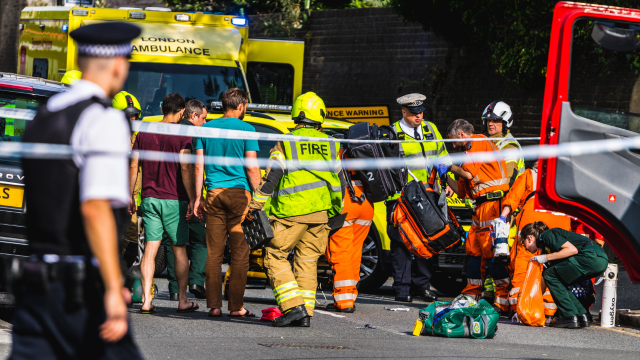
Emergency arrangements are not an optional final paragraph in a risk assessment. They are a core part of working safely in confined space safety.
The rescue plan should be based on the emergencies that could realistically occur.
If a worker becomes unconscious at the bottom of a vertical chamber, how will they be lifted? If toxic gas suddenly enters a vessel, can rescuers approach safely? If electrical or mechanical plant needs to be stopped, who has the authority and knowledge to isolate it?
These questions need clear answers before entry.
Do not rely solely on the fire and rescue service
HSE is explicit that relying only on emergency services is not sufficient. The worksite needs appropriate arrangements capable of initiating an effective rescue.
External emergency services should still be contacted when necessary, but they may not arrive quickly enough to prevent a fatality. Site personnel also understand details about isolations, chemicals and plant that arriving crews will need.
Rescue equipment must match the scenario
Depending on the space, rescue equipment may include harnesses, lifelines, tripods, winches, breathing apparatus, resuscitation equipment and first-aid supplies.
Buying equipment is not enough. Workers need appropriate training, equipment needs inspection and maintenance, and rescue procedures need realistic rehearsal.
A rescue system that has never been tested may fail when it is finally needed.
Training for Confined Space Work
Training should match each person’s duties.
An entrant needs to understand hazards, alarms, PPE, communication and emergency procedures.
A supervisor needs to understand entry controls and when work should be stopped.
Someone conducting atmospheric testing needs competence with the relevant instruments.
A rescue team requires additional skills and realistic practice.
There are regulated confined-space qualifications available in the UK, including qualifications covering entry and emergency rescue.
However, holding a certificate does not remove the employer’s responsibility to confirm competence for the actual workplace and task.
Training is one part of competence, not the whole of it.
Common Confined Space Safety Mistakes
Serious incidents often involve failures that appear obvious afterwards.
One is assuming that because the space was entered safely yesterday, it is safe today.
Another is testing the atmosphere only once and ignoring the possibility that conditions will change.
Poor isolation is another recurring problem. A valve may be closed but not secured, or machinery may remain capable of starting unexpectedly.
Other failures include unsuitable communication, inadequate access for rescue and allowing untrained colleagues to enter during an emergency.
Perhaps the most dangerous mindset is treating PPE as the main safety solution.
Effective confined space safety depends first on preventing or controlling the hazard. PPE protects the worker only after many other decisions have already been made correctly.
A Practical Confined Space Entry Sequence
Every workplace needs a site-specific system, but the logic usually follows a consistent progression.
Begin by identifying whether the proposed area is a confined space safety and whether entry can be avoided.
If entry is necessary, assess the actual hazards and determine who is competent to perform and control the work.
Isolate relevant plant and potential sources of liquids, gases, solids or energy. Clean, drain, purge or ventilate where required.
Test the atmosphere using appropriate equipment and establish monitoring arrangements for conditions that may change.
Confirm access, lighting, communication, tools and PPE.
Ensure the rescue plan, rescuers and rescue equipment are ready.
Only then should authorised entry proceed under the agreed safe system or permit.
Throughout the task, conditions should be monitored and work stopped if the assumptions supporting the safe system are no longer valid.
At completion, all people and equipment should be accounted for before isolations are removed and equipment returned to normal operation.
Why Confined Space Safety Is a Management Responsibility
Workers have an important part to play, but safe confined-space work cannot depend solely on individual caution.
Management determines whether sufficient time is allowed to plan the job, whether equipment is available, whether workers are trained and whether production pressure overrides safety controls.
A worker should never be placed in a position where refusing an unsafe entry appears to threaten their job.
Managers should also coordinate contractors carefully.
A contractor may have extensive confined-space experience but know little about the client’s particular plant, substances or isolation arrangements.
Both sides need to exchange safety-critical information.
Strong safety culture becomes most visible when something changes.
If a gas monitor alarms or an isolation cannot be personal protective equipment confirmed, stopping the job should be considered normal professional behaviour, not an inconvenience.
FAQ
What is classed as a confined space in the UK?
In Great Britain, a confined space safety is an enclosed or substantially enclosed place where, because of that enclosed nature, a reasonably foreseeable specified risk exists.
Examples can include tanks, pits, silos, chambers, sewers, pipes, trenches and similar spaces.
Physical size alone does not determine whether the regulations apply.
What are the main risks of working in confined spaces?
The major risks of working in confined spaces include oxygen deficiency, toxic gases or vapours, fire, explosion, drowning, engulfment by free-flowing solids and excessive heat.
Other physical hazards can include falls, machinery, electricity, restricted movement, manual handling, noise and poor lighting.
Can workers enter a confined space safety if they are wearing PPE?
Not automatically.
Personal protective equipment is only one part of the control system and is relatively low in the hierarchy of controls.
Employers should first consider avoiding entry, eliminating hazards, isolation, ventilation and other engineering or procedural measures.
Entry should occur only under an appropriate safe system.
Is atmosphere testing always required?
The risk assessment determines what testing is necessary.
Where oxygen deficiency, flammable atmospheres or harmful gases, fumes or vapours are reasonably foreseeable, appropriate testing is a critical control.
Monitoring may also need to continue during the work if atmospheric conditions could change.
What is a confined space safety permit?
A confined-space permit-to-work is a formal document used to authorise specified work after required precautions have been checked.
It may record isolation, gas testing, PPE, authorised workers, communication and rescue arrangements.
The permit itself does not make the job safe; the controls behind it do.
Can a worker enter a confined space safety alone?
Whether lone entry can be permitted depends on the risk assessment and safe system, but confined-space emergencies require reliable monitoring, communication and rescue arrangements.
For many higher-risk entries, having people outside the space with defined emergency responsibilities is essential.
A worker should never enter where an adequate rescue arrangement cannot be provided.
Do you need confined-space training to enter?
Anyone involved should have training and competence appropriate to their role.
The required level depends on the hazard and task.
Entry into a simple situation and rescue involving breathing apparatus require very different levels of competence.
Employers should not assume that possession of a basic training certificate makes someone competent for every type of confined-space work.
Who is responsible for confined space safety?
Employers and others controlling the work have significant legal responsibilities for assessment, planning, safe systems and emergency arrangements.
Workers must also follow training, instructions and agreed procedures.
Where clients and contractors work together, responsibilities and safety information need to be coordinated clearly.
What should happen if a worker collapses inside a confined space safety?
The predetermined rescue procedure should be activated immediately.
Unprotected colleagues should not rush into the space, because they may be exposed to the same atmosphere or hazard that incapacitated the first worker.
Trained rescuers should use the equipment and methods established for that particular emergency, while external emergency services are contacted as required.
Can oxygen be added to a confined space to make the air safer?
No. Oxygen should not be used to “sweeten” the atmosphere.
Oxygen enrichment can greatly increase fire and explosion risk.
Where the atmosphere is unsafe, appropriate measures may include ventilation, removal of contaminants or suitable supplied-air breathing equipment according to the risk assessment.

Conclusion
Working safely in confined space safetys begins with a decision that happens before anybody enters: determine whether entry is necessary at all.
Where work can be completed externally, avoiding entry is generally the strongest control. Where entry is unavoidable, effective confined space safety depends on a suitable risk assessment, a well-designed safe system, competent people, secure isolation, appropriate atmospheric testing and monitoring, effective ventilation where required and reliable communication.
The assessment also needs to consider more than gases. Electrical energy, machinery, heat, falls, restricted access and other physical hazards can make the work dangerous even where atmospheric measurements appear satisfactory.
Personal protective equipment has an important role, particularly where workers require respiratory, fall, eye, hand or body protection, but it should not become a substitute for eliminating and confined space safety controlling hazards at source.
Most importantly, emergency rescue must be planned before the first person enters. A permit, gas detector or harness means little if nobody knows how an incapacitated worker will actually be recovered.
The safest confined-space operation is therefore not the one with the largest amount of equipment. It is the one where the confined space safety hazards have been properly understood, entry has been justified, controls have been checked and everyone involved knows exactly what to do both during normal work and when conditions stop being normal.