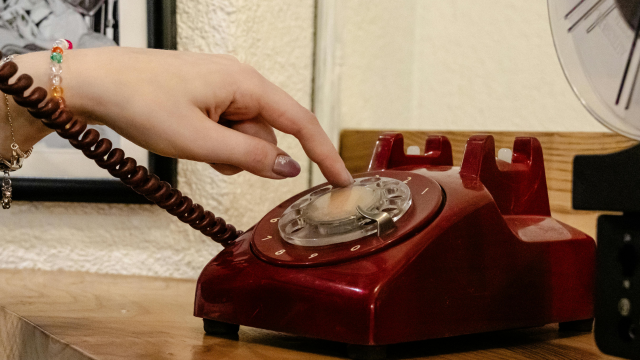

What Is Telephone Etiquette? It is the set of communication habits and professional behaviours used to make telephone conversations clear, respectful, efficient and appropriate.
In a business setting, this can include how quickly a call is answered, how the caller is greeted, tone of voice, listening skills, how information is explained, how callers are placed on hold or transferred, and how the conversation is brought to a clear conclusion.
Telephone communication may appear simple, but it removes many of the visual signals available during face-to-face conversations. The caller cannot normally see your facial expression, body language or gestures. Tone, pace, word choice and listening therefore become particularly important.
Strong professional telephone etiquette matters in customer service, reception, administration, sales, healthcare, legal services, hospitality and almost any workplace where employees communicate by phone.
This guide explains why is telephone etiquette important, essential telephone skills, practical rules of telephone etiquette, techniques for handling customer calls, and how business telephone etiquettes can create consistent telephone standards without making conversations sound robotic.
What Is Telephone Etiquette?
Telephone etiquette means communicating appropriately, politely and effectively during telephone conversations. It combines good manners, professional conduct and practical communication skills.
Good telephone etiquette includes:
- answering professionally and courteously;
- introducing yourself appropriately;
- speaking clearly and confidently;
- listening without unnecessary interruption;
- giving accurate and helpful information;
- protecting confidential or private information;
- explaining holds and transfers;
- remaining calm during difficult conversations;
- summarising important actions;
- ending the call politely and professionally.
Etiquette does not mean using one rigid script for every conversation. A medical receptionist, hotel employee, sales adviser and engineering helpdesk worker will have different responsibilities. The principles are similar, but the language, communication style and procedures should fit the role.
Why Is Telephone Etiquette Important?
Anyone asking why is telephone etiquette important should consider what a telephone call represents. For many customers, it may be their first direct interaction with an organisation. They may be calling because they:
- need information;
- have a problem;
- want to make a purchase;
- need urgent assistance;
- are confused about a process;
- wish to make a complaint.
The way the conversation is handled can influence their impression, confidence and overall perception of the organisation.
Telephone Calls Create First Impressions
Imagine calling two business telephone etiquette
The first employee answers:
“Hello?”
You then have to ask whether you have reached the correct company.
The second answers with a clear greeting, identifies the organisation and offers assistance. The second call immediately creates greater clarity and professionalism.
That does not mean every organisation needs an elaborate scripted introduction. The goal is simply to help the caller understand who they have reached and who is speaking.
Good Etiquette Reduces Misunderstanding
Poor telephone communication can create unnecessary work. Suppose a customer provides an address and the employee records it incorrectly. The mistake might lead to:
- a failed delivery;
- another telephone call;
- additional administration;
- customer frustration;
- financial cost.
Good telephone skills, including clarification, careful listening and confirmation, can prevent these avoidable problems.
It Supports Customer Confidence
Professional communication can reassure customers that their query is being taken seriously. This matters particularly when the person is already frustrated or uncertain.
Calm, clear and respectful communication does not guarantee that the customer will like the answer. However, someone can receive disappointing information and still feel that the conversation was handled fairly and professionally.
It Represents the Organisation
A caller rarely separates the employee completely from the organisation. If a receptionist sounds dismissive or uninterested, the customer may conclude that the company is also dismissive.
This makes telephone communication an important part of an organisation’s wider service culture and professional image.
Professional Telephone Etiquette: The Core Principles
Effective professional telephone etiquette can be organised around several simple principles:
clarity;
courtesy;
accuracy;
listening;
efficiency;
confidentiality;
ownership.
These principles should guide the call rather than become a memorised performance.
Answer the Telephone Professionally
The opening seconds establish the context of the conversation.
A suitable business telephone etiquette greeting might include:
- a greeting;
- the organisation or department;
- your name;
- an offer to help.
For example:
“Good morning, ABC Services, Sam speaking. How can I help?”
The exact format depends on organisational policy. Some workplaces require employees to identify a department rather than the whole organisation. Others may use first names only for security or privacy reasons.
The key is consistency, clarity and professionalism.
Speak Clearly
Clear speech is one of the most basic telephone skills. Avoid:
- speaking too quickly;
- mumbling;
- talking while eating;
- speaking away from the microphone;
- unexplained jargon;
- unnecessary abbreviations.
If the telephone connection is poor, acknowledge it rather than pretending that everything is understandable. Ask the caller to repeat information where necessary.
Government telephone guidance provides a useful general principle: never pretend you understood something when you did not. Accuracy matters more than avoiding a brief request for clarification.
Pay Attention to Tone of Voice
Words are only part of telephone communication. Compare:
“I’ll check that for you.”
said with patience and interest, with the same sentence delivered in an irritated tone.
The words have not changed, but the message has.
A professional tone should normally sound:
- calm;
- engaged;
- respectful;
- confident without being aggressive.
Trying to sound artificially cheerful can also be inappropriate, particularly when someone is discussing a serious complaint, bereavement or financial problem. Match the tone to the situation.
Listen Before Responding
One of the most important rules of telephone etiquette is allowing callers to explain why they are calling.
Employees sometimes hear the first few words, assume they know the problem and immediately begin answering. That can lead to misunderstanding.
Active listening involves:
- allowing the caller to speak;
- identifying the actual issue;
- asking relevant questions;
- clarifying uncertain information;
- summarising where appropriate.
Listening is particularly important during complex, sensitive or emotional calls.
Avoid Unnecessary Interruptions
Interrupting can make callers feel ignored. Sometimes interruption is necessary.
For example, a caller may be providing a long explanation that involves an urgent safety issue or information outside your responsibility.
Even then, interrupt politely. Try:
“Sorry to interrupt, but I want to make sure I understand one important point before we continue.”
This is more professional than simply speaking over the caller.
Use Plain Language
business telephone etiquette terminology that seems obvious internally may be meaningless to customers.
Avoid unnecessary acronyms and technical terms. Instead of:
“Your case has moved from T1 to CRP pending secondary QA.”
say what that means for the caller.
Clear telephone communication is particularly important because callers cannot easily reread a spoken sentence.
Rules of Telephone Etiquette
The following rules of telephone etiquette provide a practical foundation for most workplaces.
| Situation | Good practice |
| Answering | Greet the caller and identify the appropriate organisation, department or person |
| Listening | Allow the caller to explain and clarify uncertain points |
| Hold | Ask before placing the caller on hold and explain why |
| Transfer | Explain where and why the call is being transferred |
| Information | Give accurate information and avoid guessing |
| Privacy | Verify identity where confidential information is involved |
| Closing | Summarise relevant actions and end courteously |
These are professional principles rather than universal statutory requirements. Individual organisations may have additional policies, procedures or communication standards.
Business Telephone Etiquette for Incoming Calls
Good business telephone etiquette begins before the employee speaks.
business telephone etiquette should consider:
- whether calls are answered within a reasonable period;
- whether callers can navigate automated menus easily;
- what happens when nobody is available;
- whether voicemail messages are clear;
- how missed calls are followed up.
A courteous employee cannot compensate completely for a telephone system that leaves customers trapped in an unclear menu for twenty minutes.
Telephone etiquette is therefore partly an organisational-design issue.
Establish the Reason for the Call
After greeting the caller, find out what they need.
Open questions can be useful:
“How can I help?”
“What can I help you with today?”
More specific questions can then clarify the issue.
Avoid forcing callers to repeat the entire story several times when transferring between departments. Where systems and privacy rules permit, useful information should follow the case.
Verify Identity Before Discussing Sensitive Information
Professional friendliness does not override confidentiality.
If a caller wants information involving personal or confidential records, organisations should use appropriate identity-verification procedures.
Government call-handling guidance provides a clear example: HM Passport Office staff must verify the caller before discussing protected application information.
Private business telephone etiquette s need procedures appropriate to their own legal and operational context.
Never disclose confidential information merely because the caller sounds convincing.
Placing Someone on Hold
Sometimes a call cannot be resolved immediately.
Before placing the person on hold:
- explain why;
- ask whether they are willing to wait;
- give a realistic indication if you know the likely delay.
For example:
“May I put you on hold briefly while I check that information?”
If the wait becomes much longer than expected, return to the caller rather than leaving them indefinitely without explanation. You may be able to offer an alternative, such as a callback.
Transferring Calls
A transfer should help the caller rather than simply move the problem away.
Before transferring:
- confirm the correct destination;
- explain why the transfer is necessary;
- tell the caller who or which department they will reach.
Where systems allow, a warm transfer can be helpful. This means briefly explaining the situation to the colleague before connecting the caller. It reduces repetition and improves continuity.
Taking Telephone Messages

If the intended person is unavailable, record enough information for a useful follow-up.
Depending on workplace policy, this may include:
- caller name;
- organisation;
- telephone number;
- reason for calling;
- time;
- urgency.
Repeat important contact information to confirm accuracy.
Do not ask callers to disclose unnecessary confidential information merely for a message.
Handling Customer Calls Effectively
Strong handling customer calls skills combine efficiency, courtesy and attention.
A useful structure is:
Listen → Clarify → Resolve → Confirm → Close
Listen
Let the caller explain what they need.
Clarify
Ask enough questions to understand the situation.
Resolve
Provide the answer or take the appropriate action.
Confirm
Make sure both sides understand what happens next.
Close
End politely once the issue has been addressed.
The process sounds simple, but maintaining it consistently is a valuable customer-service and communication skill.
Handling Difficult Customer Calls
Difficult calls are among the most challenging areas of telephone work.
A customer may be:
- angry;
- confused;
- anxious;
- impatient;
- disappointed.
The employee’s first task is not necessarily to prove that the organisation is correct. It is to understand the issue and determine what can realistically be done.
Stay Calm
Matching the caller’s anger usually makes the conversation worse.
Maintain a steady tone. Speak slightly more slowly if necessary. Avoid sarcasm, confrontation or personal arguments.
Acknowledge the Problem
Acknowledgement does not always mean accepting legal or organisational responsibility.
For example:
“I understand why that delay has been frustrating.”
That recognises the customer’s experience without promising an outcome you cannot provide.
Focus on What You Can Do
Where possible, move the conversation towards action.
Instead of repeating:
“I can’t do that.”
try:
“What I can do is check whether the specialist team can review it.”
Do not make promises simply to calm someone down. A false promise creates a second service failure.
Set Boundaries Around Abuse
Professional customer service does not require employees to tolerate threats or sustained personal abuse.
Organisations should have procedures for abusive calls.
Government customer-handling guidance provides a useful model: staff may warn abusive callers that the conversation cannot continue unless their behaviour improves, while considering circumstances such as disability and allowing an appropriate opportunity for behaviour to change.
Employees should know when they may:
- warn a caller;
- escalate to a supervisor;
- terminate a call;
- report threats.
Telephone Etiquette for Outbound Calls
Outbound calls require slightly different skills.
A professional opening should normally establish:
- who you are;
- where you are calling from;
- who you wish to speak to;
- why the call is relevant.
Where appropriate, ask whether it is a convenient time.
Calling someone does not automatically mean they are free to talk.
For sensitive calls, confirm identity before disclosing information.
Prepare Before Dialling
Before making a professional call, have relevant information ready.
Know:
- the purpose of the call;
- the customer’s details;
- questions you need answered;
- actions you can authorise.
Calling someone and then spending several minutes searching for their record creates an unnecessarily poor experience.
Good preparation, clear communication and respectful telephone manners can make outbound calls more efficient and professional.
Leave Appropriate Voicemail Messages
If the person does not answer, a voicemail should usually be concise.
State:
your name;
organisation where appropriate;
reason for calling at a suitable level of detail;
how the person can respond.
Be careful about confidential information.
A voicemail could potentially be heard by another person.
Do not disclose sensitive details unless organisational procedures make it appropriate.
Handling Confidential Information by Telephone
Telephone communication can involve personal information, payment details, health information, account records or commercially sensitive data.
Good etiquette therefore includes information security.
Employees should follow organisational procedures for:
identity verification;
information disclosure;
call recording;
notes;
data access.
Avoid discussing sensitive information loudly in a public place or open office where it can easily be overheard.
Professional communication includes protecting the caller, not merely sounding polite.
Recording Telephone Calls
Many businesses record calls for reasons such as:
quality monitoring;
training;
evidence of transactions;
regulatory requirements.
Call recording involves data-protection considerations.
Current ICO guidance says organisations should have a justified purpose and appropriate data-protection basis and should inform callers that recording is taking place and why.
Employers recording staff conversations also need to consider worker privacy.
This is an area where business telephone etiquette and legal compliance overlap.
A pleasant recorded message is not enough if the organisation’s wider data-processing practices are unlawful.
Marketing Calls and Telephone Etiquette
Sales calls have additional considerations.
Ofcom and ICO rules regulate areas of UK telephone marketing.
business telephone etiquette should not assume that polite sales language makes an unsolicited marketing call lawful.
Current Ofcom guidance notes, among other things, that live marketing callers must identify themselves and provide a contact number and that Telephone Preference Service restrictions can apply unless the person has given the relevant consent.
Marketing teams therefore need both communication training and compliance procedures.
Telephone Accessibility and Inclusive Communication
Not everyone communicates in the same way.
A caller may:
have a hearing impairment;
speak slowly;
have a speech impairment;
process information differently;
have limited English;
be distressed.
Good professional telephone etiquette should allow reasonable flexibility.
Useful habits include:
speaking clearly;
allowing additional time;
rephrasing rather than merely repeating;
checking understanding;
not finishing someone’s sentences;
offering an appropriate alternative communication channel where available.
Patience is not simply a courtesy.
It improves communication accuracy.
Telephone Etiquette in Remote and Hybrid Work
Workplace calls increasingly happen outside traditional offices.
Employees may use:
mobile phones;
softphones;
Teams or similar platforms;
headsets;
home internet connections.
The location has changed, but professional standards still apply.
When working remotely:
choose a reasonably quiet environment;
use a reliable headset where possible;
check microphone quality;
avoid obvious background distractions;
protect confidential conversations;
maintain professional call notes.
Do not assume working from home turns a customer conversation into an informal personal call.
Common Telephone Etiquette Mistakes

Sounding Rushed
Customers can often hear when an employee is trying to end the conversation as quickly as possible.
Efficiency matters, but so does comprehension.
Multitasking Excessively
Typing necessary notes is normal.
Answering unrelated emails or browsing while a customer explains a problem can cause important details to be missed.
Using Too Much Jargon
Internal terminology may confuse the caller.
Saying “I Don’t Know” and Stopping There
Not knowing is sometimes unavoidable.
A better response is to explain how you will find the information or where the caller can obtain it.
Transferring Without Explanation
Unexpected transfers make callers feel discarded.
Overpromising
Never promise a refund, deadline or callback that you cannot reasonably deliver.
Arguing
Correct inaccurate information calmly.
Turning the conversation into a personal argument rarely improves the outcome.
Forgetting the Closing
A call should finish with both parties understanding what happens next.
How to End a Professional Telephone Call
The ending should confirm resolution.
Before saying goodbye:
summarise important actions;
confirm any deadline or callback;
ask whether anything relevant remains unresolved;
thank the caller where appropriate.
For example:
“So, I have updated the address and requested a replacement. You should receive confirmation by email today. Is there anything else I can help you with?”
This reduces repeat calls caused by uncertainty.
How Businesses Can Improve Telephone Standards
Telephone etiquette should not depend entirely on individual personality.
Organisations can create consistent standards.
Useful measures include:
Establish Clear Expectations
Define how staff should answer, transfer and close calls.
Train for Real Situations
Training should include difficult conversations, confidentiality and clarification—not just greeting scripts.
Give Employees the Information They Need
Good service becomes difficult when employees cannot access accurate information.
Create Escalation Routes
Staff should know when another team or supervisor is needed.
Review Calls Responsibly
Where lawful and proportionate call monitoring is used, feedback should focus on meaningful improvement rather than superficial script compliance.
Update Procedures
Products, systems and data-protection processes change.
Telephone guidance should change with them.
Telephone Etiquette Training
Structured training can help people develop confidence in areas such as:
call openings;
active listening;
tone;
customer service;
outbound calls;
difficult conversations;
confidentiality;
call closure.
Career Education currently offers Telephone Etiquette as an online learning option.
A current Career Education listing on Reed describes approximately one hour of self-paced learning covering answering calls professionally, communication techniques, difficult conversations, outbound calls, customer service, sensitive information and conference calls.
The listing states that it provides no formal qualification.
It should therefore be viewed as short skills training rather than a regulated professional qualification.
Training can introduce techniques, but strong telephone communication improves through practice, feedback and repeated real-world application.
Developing Telephone Skills Through Practice
A useful way to develop telephone skills is through realistic role-play.
Practise scenarios such as:
a customer asking a simple question;
a caller who speaks very quickly;
a complaint about a late delivery;
a person who needs to be transferred;
a customer who is upset;
an outbound appointment call;
a confidential enquiry requiring verification.
After each exercise, review:
Was the greeting clear?
Did the employee interrupt?
Were questions relevant?
Was confidential information protected?
Was the solution explained?
Did the caller understand what happens next?
Specific feedback is far more useful than saying someone needs to “sound more professional”.
Frequently Asked Questions
What Is Telephone Etiquette?
What Is Telephone Etiquette? It is the set of professional behaviours used to make telephone conversations clear, courteous, accurate and efficient. It includes greetings, tone, listening, holds, transfers, confidentiality and appropriate call closure.
Why is telephone etiquette important?
If you are asking why is telephone etiquette important, it helps create professional first impressions, reduce misunderstandings, improve customer communication and ensure callers understand how their issue will be handled.
What are the main rules of telephone etiquette?
Important rules of telephone etiquette include answering clearly, listening without unnecessary interruption, speaking respectfully, avoiding jargon, asking before placing someone on hold, explaining transfers, protecting confidential information and closing the conversation clearly.
What is professional telephone etiquette?
Professional telephone etiquette means adapting general telephone manners to a workplace context. It includes accurate information, appropriate tone, confidentiality, efficient problem-solving and following organisational procedures.
What is business telephone etiquette?
Business telephone etiquette covers the standards organisations use for incoming and outgoing calls, including greetings, customer identification, transfers, voicemail, call recording, sales calls and escalation.
How should I handle an angry customer on the telephone?
Remain calm, listen to the problem, acknowledge legitimate frustration and focus on realistic solutions. Do not argue or promise an outcome you cannot provide. Where the caller becomes abusive, follow your organisation’s boundary and escalation procedures.
Is it acceptable to put customers on hold?
Yes, where necessary. Explain why and ask before doing so. Avoid leaving someone on hold indefinitely without an update.
What are the most important telephone skills?
Important telephone skills include active listening, clear speech, questioning, empathy, summarising, accurate note-taking, problem-solving and professional call control.
Can businesses record customer telephone calls?
They may be able to do so for legitimate purposes, but call recording involves data-protection requirements. Organisations need an appropriate basis and should tell callers that the call is being recorded and why.
Does telephone etiquette training provide a formal qualification?
It depends on the programme. Some courses are informal workplace training. The Career Education course referenced in this guide is currently listed by Reed as providing no formal qualification, although it includes a completion certificate.

Conclusion
What Is Telephone Etiquette? It is the practical skill of conducting telephone conversations in a way that is clear, respectful, accurate and appropriate to the situation.
Strong professional telephone etiquette begins with a clear greeting but extends much further. Good telephone communicators listen carefully, explain information in plain language, confirm important details, protect confidential information and make sure callers understand what happens next.
For organisations, effective business telephone etiquette can improve consistency across reception, customer service, administration and sales. It also requires sensible procedures for holds, transfers, difficult callers, privacy and outbound communication.
The most useful rules of telephone etiquette are therefore not complicated: listen before responding, speak clearly, respect the caller, avoid guessing, communicate honestly and take reasonable ownership of the conversation.
These habits are particularly valuable when handling customer calls, because customers often contact an organisation when they need help rather than when everything is already working perfectly.
Developing strong telephone skills does not mean memorising one perfect script. It means learning how to adapt your communication while maintaining professionalism.
When employees combine good listening, accurate information and an appropriate tone, telephone conversations become easier for both the caller and the organisation—and that is ultimately why is telephone etiquette important in almost every customer-facing workplace.