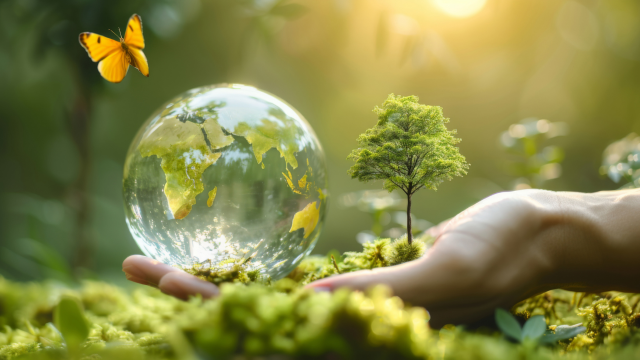

What is Environmental Conservation? At its simplest, environmental conservation means protecting, managing and restoring the natural environment so that ecosystems, wildlife and natural resources can continue to function over the long term.
That can involve conserving forests, peatlands, rivers, wetlands and coastal habitats, protecting threatened species, restoring damaged ecosystems, controlling pollution and invasive species, and managing land and water in ways that allow people and nature to coexist.
Modern conservation is therefore much broader than simply fencing off a nature reserve and leaving it untouched. In many places, ecosystems require active management and restoration. Habitats may need reconnecting, rivers may need cleaner water, degraded peat may need rewetting and threatened wildlife may need targeted recovery programmes.
For anyone asking how can we protect the environment, the answer includes individual choices, but environmental recovery ultimately depends on coordinated action by governments, land managers, businesses, conservation organisations and communities.
This guide explains the meaning of conservation, important environmental conservation practices, wildlife conservation UK priorities, ecosystem conservation, current environmental conservation UK approaches and practical environmental conservation strategies.
What Is Environmental Conservation?
Environmental conservation, or environmental protection and preservation, is the protection and careful management of nature and natural resources to maintain biodiversity, ecosystem functions and environmental quality.
It can apply to:
- wildlife and fauna;
- habitats and ecosystems;
- forests and woodlands;
- soils and land;
- rivers and waterways;
- wetlands;
- oceans and marine environments;
- landscapes;
- air and water quality.
Conservation often combines protection with sustainable use. For example, a woodland does not necessarily need to be completely inaccessible to people to be conserved or protected. It may support recreation, forestry or grazing while still being managed to safeguard important species and ecological functions.
The key question is whether human activity is compatible with maintaining or improving the ecological value and environmental condition of the area.
Conservation vs Preservation
The terms conservation and preservation are sometimes used interchangeably, although there is a useful distinction.
Preservation generally emphasises protecting nature from significant human interference or disturbance.
Conservation more commonly involves active management, protection and sustainable use.
A preserved habitat might be protected primarily by limiting disturbance. A conserved landscape might contain farming, tourism or forestry but have management arrangements designed to protect biodiversity and ecological value.
In practice, environmental policy can contain elements of both approaches. Some locations require strict protection because they contain particularly vulnerable wildlife or habitats. Others can support human activity if it is managed responsibly and appropriately.
Conservation vs Sustainability
Conservation and sustainability overlap without meaning exactly the same thing.
Environmental conservation focuses strongly on nature, species, habitats and natural resources.
Sustainability is broader. It concerns meeting present needs without undermining the ability of future generations to meet theirs and may include environmental, social and economic considerations.
A business could therefore have a sustainability strategy addressing:
- energy and resource use;
- waste management;
- working conditions;
- supply chains;
- carbon emissions;
- biodiversity and nature.
Conservation would form part of the environmental dimension of that wider sustainability strategy.
Why Is Environmental Conservation Important?
Healthy ecosystems support much of what societies depend on. Nature helps provide:
- clean water;
- food;
- pollination;
- soil formation;
- flood regulation;
- carbon storage;
- climate regulation;
- raw materials;
- recreation.
When habitats become degraded, these ecological functions and services can weaken.
For example, damaged peatlands can release stored carbon rather than continuing to function effectively as carbon-rich ecosystems. Loss of wetlands can reduce natural flood-storage capacity. Declining pollinator populations can affect both wild plants and agricultural systems.
Environmental conservation therefore concerns more than protecting attractive wildlife. It also involves safeguarding the ecological systems that support human health, economies and long-term environmental resilience.
Biodiversity and Conservation
Biodiversity means the variety and diversity of life. It includes variation within species, between species and across ecosystems.
A healthy ecosystem does not depend on only one charismatic animal. Plants, fungi, insects, microorganisms, predators and prey all interact and contribute to ecological balance.
Conservation therefore needs to consider ecological relationships. Protecting one species while allowing the habitat on which it depends to disappear is unlikely to provide a lasting solution.
This is one reason modern conservation increasingly emphasises ecosystem recovery, habitat restoration and ecological connectivity alongside individual species protection.
What Is Ecosystem Conservation?
Ecosystem conservation focuses on maintaining or restoring entire ecological systems rather than concentrating solely on individual species.
Consider a wetland. Its conservation may involve:
- water levels and quality;
- vegetation;
- soil;
- fish;
- birds;
- invertebrates;
- surrounding land use.
Protecting one bird species without addressing polluted water or habitat degradation may achieve little.
Ecosystem-based approaches therefore examine how different environmental components interact. This is particularly important because environmental pressures rarely occur independently.
Climate change, pollution, invasive species, development and habitat fragmentation can all affect the same ecosystem simultaneously.
Habitat Fragmentation: Why Connections Matter
A habitat can be damaged even when some pieces remain.
Imagine one large woodland divided into ten small isolated areas by roads and development. The total amount of woodland may initially appear substantial, but wildlife may find it difficult to move between the fragments.
Small populations can become isolated. Species may struggle to find mates, food or new territory. Fragmented habitats may also become more vulnerable to environmental change.
This has led to increasing emphasis on ecological networks and habitat connectivity.
Natural England’s approach to nature recovery reflects the principle that wildlife needs places that are bigger, better managed and more connected.
Conservation corridors, hedgerows, rivers, woodland strips and connected wetlands can help species move between important habitats.
Environmental Conservation in the UK
Environmental conservation UK policy cannot be described as one completely uniform system because environmental conservation practices matters are substantially devolved.
England, Scotland, Wales and Northern Ireland have separate policy frameworks and nature-conservation bodies. However, all four countries participate in wider UK and international biodiversity commitments, including the global objective of conserving 30% of land and sea for nature by 2030.
England
England’s conservation framework currently includes statutory Environment Act targets, the environmental conservation practices Improvement Plan, protected sites, the Nature Recovery Network, Local Nature Recovery Strategies and biodiversity net gain requirements within relevant development.
Important objectives include:
- halting the decline in species abundance by 2030;
- increasing species abundance over the longer term;
- reducing extinction risk;
- restoring wildlife-rich habitats;
- improving protected sites.
The 2026 30by30 delivery plan further develops how England intends to contribute to conserving 30% of land effectively for nature by 2030.
Scotland
Scotland has its own biodiversity and 30 by 30 framework. Its approach combines protected areas with other sites capable of providing long-term conservation outcomes.
An important element is connectivity. Protected areas should function as part of wider nature networks rather than isolated ecological islands.
Wales
Wales published an updated Nature Recovery Action Plan in March 2026.
Its approach emphasises protecting, restoring and effectively managing ecosystems, improving protected-site connectivity and increasing ecological resilience.
Wales also has its own 30by30 framework covering land, freshwater and sea.
Northern Ireland
Northern Ireland’s environmental framework is also separate.
In 2026, DAERA consulted on a new Nature Recovery Strategy intended to guide biodiversity recovery through to 2032.
Its existing environmental conservation practices l Improvement Plan includes commitments towards protecting and connecting land, freshwater and marine areas for nature.
The distinction between UK nations matters when dealing with specific conservation legislation, planning rules and protected areas.
Wildlife Conservation UK: Protecting Species and Habitats
Wildlife conservation UK programmes range from national policy to very local projects.
Some conservation focuses directly on endangered or declining species. Other work protects habitats that support dozens or hundreds of species simultaneously.
Examples of conservation priorities can include:
- woodland species;
- freshwater wildlife;
- seabirds;
- pollinators;
- bats;
- red squirrels;
- water voles;
- marine mammals.
The appropriate intervention depends on why the species is declining.
If the primary problem is habitat loss, habitat restoration may be the priority. If invasive species are involved, management may need to address that pressure. If pollution is affecting reproduction or food availability, improving habitat area without addressing pollution may be insufficient.
Conservation should therefore be evidence-led, science-based and carefully managed.
The Red Squirrel as a Conservation Example
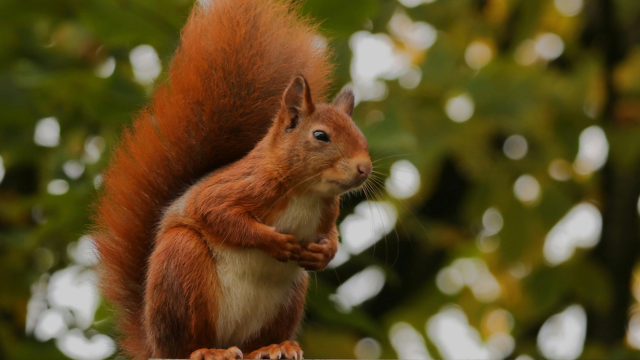
England’s red squirrel illustrates how species conservation can become complex.
Red squirrels have disappeared from much of their former range. Conservation cannot be reduced to simply releasing more squirrels.
Pressures include competition and disease associated with introduced grey squirrels, alongside habitat and landscape factors.
Successful recovery therefore requires combinations of habitat management, population monitoring, disease considerations and management of competing pressures.
This is typical of modern wildlife conservation. Visible species recovery is often the final result of much less visible ecological management and protection work.
Protected Areas
Protected areas remain central to conservation.
In the UK, different forms of designation can protect land or sea for particular ecological, geological or landscape reasons. These include various nationally and internationally important sites.
However, designation alone does not guarantee that biodiversity is thriving.
A protected site may still face:
- pollution;
- inappropriate grazing;
- invasive species;
- climate pressures;
- water-management problems;
- habitat fragmentation.
That is why current UK approaches increasingly focus not just on how much land has a conservation designation but whether it is effectively managed and protected.
The 30by30 Goal
The global 30by30 commitment aims to conserve at least 30% of land, inland waters and seas by 2030 through effectively conserved and managed areas.
The emphasis on effective management is essential. Simply drawing a boundary around 30% of a map would not necessarily improve biodiversity.
A site contributing meaningfully should protect important ecological values over the long term and be managed appropriately.
In England, the government published a new 30by30 delivery plan in July 2026. Scotland and Wales have developed their own frameworks, while Northern Ireland is also incorporating 30by30 objectives into nature-recovery policy.
Environmental Conservation Practices
Effective environmental conservation practices, or nature-protection methods, vary according to the habitat and problem.
There is no single intervention suitable everywhere. Conservation measures should reflect local ecological conditions and environmental conservation practices pressures.
Habitat Restoration
Restoration attempts to improve ecosystems that have already been damaged.
Examples include:
- rewetting peatlands;
- restoring wetlands;
- replanting native woodland;
- reconnecting rivers with floodplains;
- restoring species-rich grassland;
- improving degraded coastal habitats.
Restoration is not necessarily about recreating an exact historical landscape. Climate and land use are changing.
The aim is often to restore ecological functions and create systems capable of remaining resilient under future environmental conservation practices conditions.
Tree and Woodland Conservation
Trees provide habitat, store carbon and influence soils and water.
However, conservation is more sophisticated than simply maximising the number of trees planted. The species, location, management and ecological context matter.
Planting trees on an ecologically valuable open habitat can damage biodiversity rather than improve it.
Woodland conservation may therefore involve:
- protecting ancient woodland;
- allowing natural regeneration;
- managing woodland structure;
- controlling invasive species;
- improving connectivity;
- retaining deadwood where appropriate.
The goal should be ecological quality and biodiversity, not simply tree numbers.
Peatland Restoration
Peatlands are important habitats and major stores of carbon.
When drained or degraded, they can lose biodiversity and release carbon.
Conservation work can involve blocking drainage channels, restoring water levels and encouraging appropriate peat-forming vegetation.
Peatland recovery can therefore support biodiversity, water management and climate objectives simultaneously.
River and Freshwater Conservation
Rivers support fish, invertebrates, plants, mammals and birds.
Their ecological condition is affected not only by what happens inside the river channel but also by the surrounding catchment.
Conservation may involve:
- reducing pollution;
- restoring natural river structure;
- improving fish passage;
- protecting riverbank vegetation;
- reducing excessive nutrient inputs;
- restoring wetlands.
This demonstrates why ecosystem conservation often requires cooperation between landowners, regulators, communities and water managers.
Marine Conservation
environmental conservation practices conservation does not stop at the coastline.
Marine ecosystems face pressures including:
- pollution;
- overexploitation;
- habitat disturbance;
- climate change;
- invasive species.
Marine protected areas are one conservation tool.
As on land, however, the ecological effectiveness of a protected area depends on its objectives, management and the pressures actually affecting it.
Pollinator Conservation
Bees, butterflies, moths and other pollinating insects perform important ecological functions.
Useful conservation measures can include:
maintaining diverse flowering habitats;
reducing unnecessary pesticide exposure;
protecting nesting sites;
creating connected habitats;
allowing appropriate seasonal vegetation.
A garden, roadside verge, farm or urban park can therefore form part of a larger ecological network.
Invasive Non-Native Species
An invasive non-native species is one introduced outside its natural range that causes significant ecological or other harm.
Not every non-native species is invasive.
Where invasive species threaten native biodiversity, conservation may involve prevention, early detection, containment or control.
Management can become difficult once a species is widely established, making prevention particularly important.
Environmental Conservation Strategies for Organisations
Businesses can influence nature through their:
land use;
supply chains;
construction;
water consumption;
waste;
pollution;
resource purchasing.
Effective environmental conservation strategies should begin by identifying material impacts rather than launching isolated environmental conservation practices campaigns.
Assess the Organisation’s Impact
Ask:
Does the business own or manage land?
Does it depend on water-intensive processes?
Could its supply chain contribute to deforestation?
Does it produce pollution or waste?
Are development projects affecting habitats?
The strategy should focus on meaningful impacts.
Follow the Mitigation Hierarchy
Where development or other activity could damage biodiversity, the preferred approach is generally to avoid harm first.
If harm cannot reasonably be avoided, it should be minimised.
Restoration or compensation should not become an excuse for unnecessary destruction.
Preventing damage to a mature habitat is often ecologically preferable to attempting to recreate it later.
Establish Measurable Objectives
“Support biodiversity” is too vague.
A stronger objective might specify restoration of a particular habitat area, improvement in habitat condition or reduction of a measurable pollution source.
Targets should reflect genuine ecological evidence rather than being selected purely because they are easy to report.
Monitor Outcomes
Conservation should measure ecological outcomes rather than activities alone.
Planting 10,000 trees is an activity.
Whether those trees survive, create appropriate habitat and improve ecological condition is an outcome.
Both numbers may be useful, but they answer different questions.
How Can We Protect the Environment as Individuals?

People asking how can we protect the environment often expect a list of lifestyle changes.
Individual action matters, but conservation should not be reduced to personal consumption choices.
Still, households and communities can contribute.
Create Wildlife-Friendly Space
Gardens can provide food, shelter and movement routes for wildlife.
Possible measures include:
native or wildlife-friendly plants;
ponds;
hedges;
reduced pesticide use;
leaving some vegetation less intensively managed.
The best choice depends on location and available space.
Reduce Pollution
Dispose of chemicals, oils, batteries and medicines appropriately rather than allowing them to enter soil or water systems.
Use pesticides only where necessary and according to instructions.
Reduce Waste
Using materials efficiently reduces pressure on resources and waste-management systems.
Repair, reuse and appropriate recycling can all contribute.
Volunteer
Local conservation organisations frequently need people for:
habitat management;
wildlife surveys;
litter removal;
tree care;
community projects.
Volunteering can also develop practical understanding of conservation.
Support Evidence-Based Conservation
Not every activity marketed as “green” is necessarily environmentally beneficial.
Look for projects with clear objectives, appropriate expertise and monitoring.
How Farming Can Support Conservation
Agriculture occupies a substantial proportion of UK land, meaning farming and conservation are closely connected.
Food production and biodiversity should not always be treated as competing objectives.
Depending on the location and farming system, environmental conservation practices measures may include:
maintaining hedgerows;
protecting watercourses;
creating flower-rich margins;
reducing soil erosion;
managing nutrients appropriately;
protecting wetlands;
maintaining habitat features.
Poorly designed interventions can still create unintended consequences, so conservation measures should reflect local ecology and agricultural needs.
Conservation in Towns and Cities
Urban conservation is increasingly important.
Cities contain parks, rivers, gardens, railway corridors, street trees and other habitats.
These can support wildlife while improving human access to nature.
Urban environmental conservation practices may involve:
sustainable drainage;
wetland creation;
tree management;
pollinator planting;
green roofs;
wildlife corridors;
restoring urban rivers.
Connectivity again matters.
A network of smaller green spaces can sometimes provide movement routes between larger habitats.
Climate Change and Conservation
Climate change creates an additional challenge because conservation cannot assume that environmental conservation practices conditions will remain fixed.
Species ranges may move.
Rainfall patterns may change.
Drought, flooding and wildfire risks may increase.
Conservation strategies therefore increasingly need to build ecological resilience.
Connected habitats can help species move.
Diverse ecosystems may be better able to withstand certain pressures than highly simplified ones.
Peatland, woodland and wetland restoration can also contribute to climate mitigation or adaptation when implemented appropriately.
Climate policy and biodiversity policy therefore overlap, but one should not automatically substitute for the other.
A project that reduces carbon emissions is not necessarily beneficial for biodiversity, and a conservation project should not be assessed solely by its carbon value.
Environmental Conservation and Development
Development creates difficult conservation decisions.
Housing, transport, energy and infrastructure are necessary, but poorly located or designed development can damage habitats.
The strongest approach begins with avoiding important ecological harm where possible.
Environmental assessment, planning controls and biodiversity measures can help decision-makers understand effects before development proceeds.
England’s biodiversity net gain system is one example of integrating measurable biodiversity outcomes into development.
However, net gain does not mean every habitat can simply be destroyed and replaced somewhere else.
Irreplaceable and highly distinctive habitats require particular care.
Careers in Environmental Conservation
Environmental conservation covers a wide professional field.
Possible roles include:
ecologist;
conservation officer;
ranger;
environmental adviser;
biodiversity officer;
environmental consultant;
habitat-management specialist;
environmental policy professional;
GIS or ecological-data analyst.
Different roles have different entry requirements.
Field ecologists may need strong species-identification and survey skills.
Environmental consultants may need knowledge of planning and environmental legislation.
Policy roles may emphasise research, writing and regulatory understanding.
Practical conservation work can require land-management skills.
People interested in a career should therefore examine actual vacancy requirements rather than assuming one general environmental course qualifies them for every conservation role.
Can Environmental Conservation Training Help?
Structured learning can introduce useful concepts such as biodiversity, sustainability, habitats and conservation approaches.
Career Education currently offers Environmental Conservation and Sustainability as an online learning option.
Its publicly accessible product page currently provides limited detail regarding syllabus, assessment and qualification status, so prospective learners should check the latest information before enrolling.
A short online course can support knowledge development, but it should not automatically be regarded as proof of professional ecological competence.
Some conservation jobs require specialist degrees, field skills, species licences, health and safety competence or other practical training.
Learning is therefore most useful when combined with experience.
Volunteering with conservation organisations, participating in surveys and working on habitat projects can help learners understand how ecological principles are applied outside the classroom.
Common Environmental Conservation Mistakes
Assuming Any Tree Planting Is Beneficial
Trees need to be planted in appropriate places using appropriate species.
Planting can damage naturally valuable open habitats if poorly planned.
Focusing Only on Famous Animals
Charismatic species attract attention, but insects, fungi, plants and microorganisms are equally important to functioning ecosystems.
Protecting Sites Without Managing Them
A protected designation does not guarantee good ecological condition.
Management and monitoring matter.
Treating Conservation as Separate From People
People live, work and produce food within landscapes.
Long-term conservation often depends on cooperation with communities and land managers.
Measuring Activity Instead of Results
Counting bird boxes, trees or volunteer hours is easier than measuring ecological recovery.
Activity is useful, but environmental outcomes matter more.
Expecting Immediate Recovery
Ecosystems can take years or decades to recover.
A restored wetland does not necessarily develop full ecological function in one season.
Long-term monitoring is therefore essential.
Frequently Asked Questions
What is Environmental Conservation?
What is Environmental Conservation? It is the protection, management and restoration of natural environments and resources so that biodiversity and ecosystems can remain healthy and functional over the long term.
Why is environmental conservation important?
Conservation protects biodiversity and supports ecosystem functions including clean water, pollination, soil health, carbon storage and flood regulation. Healthy environments also contribute to economies, health and community wellbeing.
What are examples of environmental conservation practices?
Environmental conservation practices include habitat restoration, woodland management, peatland rewetting, pollution reduction, invasive-species control, wetland creation, wildlife monitoring and connecting fragmented habitats.
How can we protect the environment?
If you are asking how can we protect the environment, practical actions include reducing pollution and waste, supporting wildlife-friendly habitats, using resources responsibly, volunteering and supporting evidence-based conservation. Governments and businesses also need larger-scale action on habitats, pollution and land management.
What is ecosystem conservation?
Ecosystem conservation protects or restores ecological systems as a whole, including habitats, species, water, soils and natural processes. It recognises that individual species depend on wider ecological relationships.
What is the 30by30 target?
30by30 is the international commitment to effectively conserve and manage at least 30% of land and sea for nature by 2030. England, Scotland, Wales and Northern Ireland are developing their own approaches towards the wider UK commitment.
What is wildlife conservation in the UK?
Wildlife conservation UK work includes protected sites, habitat restoration, species-recovery programmes, ecological monitoring, invasive-species management and wider nature-recovery networks. Approaches differ between the four UK nations.
Is environmental conservation the same throughout the UK?
No. Environmental policy is substantially devolved, so England, Scotland, Wales and Northern Ireland have their own legislation, strategies, agencies and delivery mechanisms. UK-wide or international commitments may still provide shared objectives.
Can businesses contribute to conservation?
Yes. Businesses can reduce pollution, manage land responsibly, improve supply-chain practices, protect habitats and consider biodiversity in development and purchasing decisions. Actions should focus on material impacts and measurable outcomes.
Can I work in conservation without a degree?
Some practical and entry-level roles may be accessible through vocational training, apprenticeships, volunteering or experience, while specialist ecology and consultancy positions often require relevant higher education or professional skills. Requirements vary by employer and role.

Conclusion
What is Environmental Conservation? It is the long-term protection, management and restoration of nature so that species, habitats and ecological processes can continue to function.
Modern conservation is not simply about leaving nature untouched. Effective environmental conservation practices may include restoring peatlands and wetlands, managing woodlands, reducing pollution, controlling invasive species, reconnecting fragmented habitats and helping threatened wildlife recover.
The increasing emphasis on ecosystem conservation reflects an important lesson: species do not survive independently. They depend on water, soil, vegetation, food webs and connected landscapes.
For environmental conservation UK policy, the detail differs across England, Scotland, Wales and Northern Ireland, but nature recovery and the 30by30 objective are important themes throughout the country. Effective wildlife conservation UK programmes increasingly combine protected areas with wider habitat networks and active restoration.
Anyone wondering how can we protect the environment can contribute through responsible consumption, wildlife-friendly spaces, reduced pollution, volunteering and support for credible conservation programmes. However, the scale of biodiversity loss also requires coordinated action from governments, businesses, farmers, conservation bodies and land managers.
The strongest environmental conservation strategies focus on measurable ecological outcomes rather than symbolic activity. Protect important habitats before they are damaged, restore degraded ecosystems where possible, connect wildlife-rich areas and monitor whether nature is genuinely recovering.
Conservation is ultimately about maintaining the living systems on which both wildlife and people depend. Protecting those systems now gives future generations a much stronger chance of inheriting landscapes and ecosystems capable of continuing to sustain life.