

If you have ever wondered What Is Business Operations Management, the simplest answer is that it is the management of the people, processes, resources and systems that allow an organisation to deliver its products or services effectively.
Every organisation has operations. A retailer needs to manage stock, employees, suppliers and customer orders. A manufacturer needs to coordinate materials, production capacity and quality. A healthcare provider needs people, equipment, schedules and reliable processes. Even a professional-services company needs systems for managing workloads, clients, technology and staff.
Operations management brings these moving parts together.
An operations manager looks at how work is being done, whether resources are being used effectively, what risks could interrupt performance and where processes could be improved. The role can combine leadership, budgeting, problem-solving, performance management, project management and risk management.
This beginner’s guide explains what business operations management means, what operations managers actually do, the skills they need, common operations management strategies, UK training routes and how to become an operations manager.
What Is Business Operations Management?
What Is Business Operations Management in practical terms?
It is the process of planning, organising, monitoring and improving the day-to-day activities that allow an organisation to achieve its objectives. In simple terms, it means managing how work is planned (arranged), organised (structured), monitored (observed) and improved.
The word “operations” refers to the activities involved in producing and delivering something of value.
For a manufacturer, that might mean converting raw materials into finished products.
For a restaurant, operations include purchasing ingredients, scheduling staff, preparing food, maintaining hygiene standards and serving customers.
For an online retailer, operations may involve stock, warehouse processes, technology, fulfilment and delivery.
For a consultancy, operations could include allocating employees to client work, managing deadlines, invoicing and maintaining service quality.
Business operations management therefore asks a continuous question:
How can the organisation deliver what customers, users or stakeholders need reliably and sustainably?
The answer involves much more than cutting costs. Good operations management needs to balance efficiency with quality, people, customer experience, resilience and long-term organisational goals. In other words, it aims for efficiency (productivity) rather than waste (inefficiency).
What Does an Operations Manager Do?
An operations manager helps translate organisational objectives into practical activity.
Skills England describes the role as involving leadership and management of teams alongside operational and project responsibilities. Operations managers work with employees and senior managers to ensure that their area fulfils its responsibilities and contributes to wider organisational goals.
Actual responsibilities depend heavily on sector and organisation size.
A warehouse operations manager may focus on inventory, productivity, health and safety, staffing and delivery performance.
An operations manager in a professional-services business might oversee client workflows, staff capacity, budgets and systems.
A hotel operations manager could coordinate reception, housekeeping, food services and customer experience.
Despite these differences, the fundamental responsibility is similar: turn plans into consistent results.
An operations manager may therefore spend one part of the day reviewing performance figures, another solving a staffing issue, another discussing costs with finance and another managing an improvement project.
It is a role that combines analysis (evaluation) with people management rather than relying only on theory or administration.
Operations Management vs Business Management
Operations management and business management overlap, but they are not identical.
Business management is the broader concept. It can include strategy, finance, marketing, human resources, sales and overall organisational leadership.
Operations management focuses particularly on how the organisation actually delivers its work.
A senior business leader might decide that the company should increase online sales by 30%.
Operations management then asks what needs to change operationally.
Does warehouse capacity need to increase? Are additional employees required? Can suppliers provide enough stock? Does customer service need more staff? Is the existing technology capable of handling additional orders?
Business strategy determines direction.
Operations helps make that direction achievable.
Therefore, business management is generally broader (wider), while operations management is more focused (specific) on execution.
The Main Areas of Business Operations Management
Although every organisation is different, several areas commonly fall within operations management.
| Area | Typical operations question |
| People | Do we have the right skills and staffing capacity? |
| Processes | Is work being completed efficiently and consistently? |
| Resources | Are money, equipment and materials being used effectively? |
| Quality | Are products or services meeting required standards? |
| Capacity | Can the organisation handle current and future demand? |
| Performance | Are objectives and service levels being achieved? |
| Suppliers | Are external partners reliable and providing value? |
| Technology | Are systems helping or slowing down operations? |
| Risk | What could interrupt performance, and how should we respond? |
| Improvement | What can be done faster, better or more efficiently? |
These areas are interconnected.
Changing one part of the operation often affects several others.
Reducing staffing may save money but increase waiting times. Holding more inventory may reduce stockouts but tie up cash. Introducing new software may eventually increase efficiency but initially require training and process changes.
Operations managers therefore need to think in systems rather than making decisions in isolation. They must balance advantages (benefits) against disadvantages (drawbacks).
Why Is Operations Management Important?

A company can have a brilliant strategy and still fail because its operations are weak.
Imagine a retailer launching a successful advertising campaign.
Demand doubles.
That sounds like excellent news, but the business has insufficient stock, the warehouse cannot process orders quickly enough and customer-service staff become overwhelmed.
Customers receive their purchases late and begin asking for refunds.
Marketing succeeded.
Operations failed.
Good operations management helps prevent this gap between ambition and execution.
It supports consistency, productivity, quality, customer service and financial control. It can also improve the organisation’s ability to respond when circumstances change.
That last point has become particularly important because modern organisations face changing customer expectations, digital disruption, cybersecurity risks, supply-chain interruptions and wider economic uncertainty.
Effective operations can therefore increase stability (consistency) and reduce disruption (interruption).
Operations Management Strategies
Operations management strategies are the approaches organisations use to improve how work is designed and delivered.
There is no single best strategy for every business.
A large manufacturer and a small digital agency have completely different operating models.
However, several ideas appear repeatedly in successful operations.
Process Standardisation
Standardisation means creating consistent ways of performing routine tasks.
Instead of every employee inventing their own process, the organisation defines an agreed method.
This can improve reliability, training and quality.
However, excessive standardisation can also create bureaucracy. Processes should be controlled where consistency matters while allowing employees enough flexibility to handle unusual situations.
The aim is consistency (uniformity) without unnecessary rigidity (inflexibility).
Continuous Improvement
Continuous improvement means repeatedly looking for ways to improve existing processes rather than waiting for a major crisis.
CMI specifically identifies continuous improvement as an important management capability, including encouraging ideas that increase quality and efficiency.
Improvements do not always need to be dramatic.
Removing an unnecessary approval step, simplifying a form or improving how information is shared may save substantial time when repeated hundreds of times.
This approach focuses on progress (advancement) rather than allowing processes to remain unchanged (static).
Capacity Planning
Capacity planning asks whether the organisation has enough resources to meet expected demand.
A business expecting Christmas sales to triple cannot wait until December to think about warehouse space or staffing.
Capacity planning can involve employees, machinery, premises, technology or suppliers.
Too little capacity creates delays and lost opportunities.
Too much unused capacity creates unnecessary cost.
The goal is to maintain a suitable balance between available capacity (resources) and demand (requirements).
Quality Management
Quality management aims to ensure that products or services meet defined expectations.
Quality is not simply inspection after something has been produced.
Strong operations try to build quality into the process itself.
That means identifying where errors occur, understanding their causes and designing systems that reduce the likelihood of repetition.
Effective quality management therefore promotes high standards (excellence) while reducing errors (defects).
Data-Driven Performance Management
Modern operations increasingly rely on data.
Managers might monitor measures such as customer waiting time, delivery performance, production output, complaints, errors, cost per transaction or staff utilisation.
Performance indicators can reveal where problems are developing.
However, managers should avoid measuring things simply because the data is available.
A useful measure should connect clearly with an organisational objective.
Efficiency vs Effectiveness
Operations managers often talk about efficiency, but efficiency alone is not enough.
Efficiency means using resources well.
Effectiveness means achieving the intended outcome.
A customer-service department could reduce average call duration from ten minutes to four minutes.
That appears efficient.
But if customers need to call three times because their issues are not resolved, the operation may actually be less effective.
Good operations management therefore considers both.
The goal is not simply to make people work faster. It is to design processes that produce worthwhile outcomes without wasting unnecessary time, money or resources.
Operations Management and Project Management
Project management is closely related to operations management, but the two should not be confused.
APM defines project management around achieving specific objectives within agreed parameters, including a finite timescale and budget. Projects are generally separate from routine business-as-usual activity. (APM)
Operations, by contrast, continue.
A distribution centre processing customer orders every day is an operation.
Introducing a completely new warehouse-management system is a project.
Once the project is completed, the new system becomes part of ordinary operations.
Operations managers frequently become involved in projects because improving operations requires change.
They might manage projects involving a new supplier, office relocation, software implementation, warehouse redesign or customer-service improvement.
Project-management capability is therefore valuable even when someone’s job title is operations manager.
Operations Management and Risk Management
Risk management is another essential part of operational responsibility.
Every organisation faces uncertainty.
Operational risks might include supplier failure, staff shortages, cyber incidents, equipment breakdown, inaccurate data, health and safety problems, cash-flow pressure or regulatory failures.
Managing risk does not mean attempting to eliminate every possible problem.
Doing so would be expensive and often impossible.
Instead, managers need to understand which risks matter most and what proportionate action should be taken.
HM Treasury’s updated 2026 Orange Book describes effective risk management as an integrated part of planning and decision-making rather than a separate administrative exercise. Its framework centres on identifying and assessing risk, choosing treatments, monitoring the situation and reporting useful information. (GOV.UK)
Although the Orange Book is primarily government guidance, the underlying logic applies more widely.
An operations manager should know what could prevent their area from achieving its objectives and what would happen if a key control failed.
Common Operational Risks
A useful starting point is to consider different sources of disruption.
Supplier risk arises when the organisation depends on external businesses for products or services.
People risk appears when critical knowledge is concentrated in too few employees or staffing levels are inadequate.
Technology risk includes outages, cyber incidents and failed system implementations.
Financial risk can involve rising costs, fraud or insufficient cash.
Compliance risk arises where operations fail to meet legal, contractual or regulatory requirements.
Reputational risk can develop when poor operational performance affects public or customer trust.
These risks can also interact.
A cyber incident could stop a warehouse system, which delays deliveries, which produces customer complaints, which creates reputational damage.
Operations managers therefore need to consider connections rather than treating each risk in isolation.
People Management in Operations
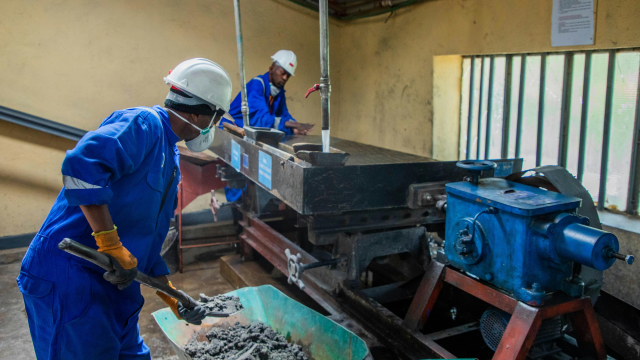
Operations management is sometimes presented as being mainly about processes, systems or procedures. In reality, it is also heavily about people. Even highly automated businesses rely on employees to make decisions, handle exceptions and improve systems.
Operations managers often need to set expectations, allocate work, resolve conflicts, provide feedback and develop team members. Communication becomes particularly important when introducing change. Employees may resist a new process because they do not understand why it is being introduced or because management has overlooked practical problems.
A manager who listens to the people actually performing the work can often identify issues that are invisible from performance reports. CMI’s management framework reflects this combination of organisational performance and interpersonal capability.
What Skills Does an Operations Manager Need?
Operations management requires a broad combination of technical, analytical and interpersonal skills or abilities.
Communication is important because managers work with employees, suppliers, customers and senior leadership. Leadership matters because managers need to help teams achieve defined objectives. Analytical ability helps them understand performance information and identify causes of problems.
Financial awareness supports budgeting and cost control. Planning skills help balance demand, deadlines and resources. Problem-solving is essential because operational environments rarely proceed exactly as expected.
Digital capability is increasingly important as operations become dependent on software, data and automation. Change management helps managers introduce new processes without damaging performance. Finally, commercial awareness helps connect operational decisions with the organisation’s wider priorities.
A manager who understands only processes but not customers, finance or strategy may optimise the wrong thing.
How to Become an Operations Manager
There is no single route explaining how to become an operations manager. Many people progress into the position after building experience in the industry where they eventually manage operations.
Someone might begin as an administrator, team member, warehouse employee, project coordinator, supervisor or technical specialist. As their experience develops, they may take responsibility for schedules, budgets, processes, projects or staff.
A typical progression might therefore look like:
entry-level role → experienced team member → supervisor or team leader → departmental responsibility → operations manager
Some people enter management through graduate programmes, professional qualifications or apprenticeships. Others move across from project management, supply chain, customer service or other business functions.
Practical credibility can be particularly valuable. An operations manager needs enough understanding of how the organisation works to make sensible decisions about people and processes.
Operations Management Training UK
There are several forms of operations management training UK learners can consider. These range from short professional-development courses to regulated qualifications, apprenticeships and university study.
The right choice depends on career stage. Someone who has never managed people may need foundational basic or introductory leadership and communication training. A practising manager might benefit more from learning about finance, projects, strategy, change or performance.
CMI Management Qualifications
The Chartered Management Institute currently offers Level 5 Management and Leadership qualifications for practising or aspiring middle managers.
CMI describes these qualifications as suitable for people operating at operations, divisional, departmental or specialist management level. Content can include managing teams, projects, change, finance and organisational objectives.
These are more substantial than an ordinary short completion course. Anyone comparing programmes should check the exact qualification, awarding organisation, assessment and recognition rather than relying solely on the course title.
Level 5 Operations Manager Apprenticeship
Skills England currently lists the Level 5 Operations Manager apprenticeship standard. The occupational standard describes a typical 24-month programme and focuses on managing teams and projects in line with operational or departmental strategy.
From 1 September 2026, new starts on this apprenticeship will no longer receive government funding. Apprentices who began before that date can remain funded through completion, while the standard can continue to be used for privately funded apprentices. Anyone considering this route should verify the latest position before making financial or training decisions.
Do You Need a Degree to Become an Operations Manager?
Not necessarily.
Operations managers come from many educational backgrounds. A degree in business, management, logistics, engineering, hospitality or another relevant subject may help in some industries, but employers often place substantial value on practical management experience.
The most suitable background depends partly on what is being managed. An engineering operation may favour technical understanding, while a hospitality operation may value extensive service-management experience. A logistics company may prioritise supply-chain knowledge.
Management qualifications can strengthen professional development, but having a certificate does not automatically make someone ready to manage a complex operation. Experience remains important.
Operations Management vs Project Management as a Career
The two careers can overlap considerably.
A project manager focuses on delivering temporary, defined change. An operations manager focuses on continuing ongoing or regular performance.
The National Careers Service currently gives business project managers an indicative salary range of approximately £29,000 for starters to £75,000 for experienced professionals, and identifies operations management as one potential progression route for experienced project managers.
Planning, budgeting, risk management, leadership and stakeholder communication are useful in both careers. The main difference is whether the manager is primarily responsible for delivering a finite project or sustaining an ongoing organisational function.
How Technology Is Changing Operations Management
Technology has transformed the amount of information available to operations managers.
Cloud software can provide near-real-time information on customers, stock, staffing, sales and performance. Automation can handle repetitive tasks. Artificial intelligence can support forecasting, scheduling, analysis and identification of unusual patterns.
Dashboards can make performance visible much more quickly than traditional monthly reporting. But technology does not automatically create good operations.
A poorly designed process can simply become a poorly designed automated process. Managers still need to determine what problem they are trying to solve, whether the underlying data is reliable and how technology will affect employees and customers.
The strongest operations managers therefore combine digital confidence with operational judgement.
Common Operations Management Mistakes
One common mistake is focusing entirely on cost. Cutting resources may improve a budget temporarily while damaging quality or customer service.
Another is changing processes without consulting the people who use them. Frontline employees often understand practical problems that senior managers cannot see.
A third is relying on too many performance indicators. Measuring dozens of metrics can obscure which outcomes actually matter.
Another mistake is treating risk management as a form-filling exercise rather than part of decision-making.
Managers can also become too reactive. If the entire working day is spent solving emergencies, there is little opportunity to investigate why those emergencies keep happening.
Effective operations management should gradually reduce recurring problems rather than simply becoming better at firefighting.
What Does Good Business Operations Management Look Like?
Good operations management is not necessarily visible. Customers simply receive what they expected. Employees understand their responsibilities. Resources are available when needed.
Problems are identified before they become crises. Performance information is reliable. Processes are improved when circumstances change. Risks are understood.
Managers know when to intervene and when to allow teams to work independently. The organisation can also adapt without losing control of ordinary service.
That combination of reliability, consistency and adaptability is one of the strongest signs of effective operations.
Frequently Asked Questions
What Is Business Operations Management in simple terms?
What Is Business Operations Management can be explained as organising and improving the people, processes, resources and systems an organisation uses to deliver its products or services.
What is the main purpose of operations management?
The main purpose is to help an organisation deliver its objectives reliably and efficiently while maintaining appropriate quality, cost, capacity and service.
What does an operations manager do every day?
Tasks vary but can include reviewing performance, managing employees, allocating resources, solving operational problems, controlling budgets, working with suppliers, managing risks and overseeing projects.
Is operations management the same as project management?
No. Operations are ongoing, while projects have defined objectives and finite timescales. However, operations managers frequently use project management when implementing improvements or organisational change.
What are common operations management strategies?
Common operations management strategies include process standardisation, continuous improvement, capacity planning, quality management, performance measurement and better use of technology and data.
Is risk management part of operations management?
Yes. Risk management helps managers identify events that could disrupt operations, understand their possible impact and decide what controls or contingency measures are appropriate.
How do I become an operations manager without a degree?
Many people progress through workplace experience, beginning in operational or supervisory roles and gradually taking responsibility for staff, processes, budgets and projects. Professional management training can support that progression.
What qualifications can help an operations manager?
Relevant options include management and leadership qualifications, industry-specific qualifications, project-management training and, depending on circumstances, apprenticeships or degrees. The appropriate choice depends on career level and sector.
Is operations management a good career?
It can provide broad career opportunities because almost every sector has operational functions. The work particularly suits people who enjoy solving problems, organising resources, working with teams and improving how organisations perform.
What is the difference between an operations manager and a general manager?
An operations manager normally focuses heavily on the systems, people and processes involved in delivering day-to-day work. A general manager may carry broader responsibility for areas such as finance, sales, strategy and overall business performance. Actual job descriptions vary between organisations.

Conclusion
So, What Is Business Operations Management? It is the discipline of making sure that an organisation’s people, processes, resources and systems work together to deliver what the organisation has promised.
Effective operations management connects strategy with everyday execution. It involves planning capacity, monitoring performance, managing people, controlling resources, improving processes and responding when problems arise.
The strongest managers also understand that efficiency is only part of the objective. An operation must deliver appropriate quality, maintain customer or stakeholder expectations and remain resilient enough to cope with change.
That is why skills in project management and risk management are so valuable. Projects help organisations introduce improvements, while structured risk management helps them anticipate uncertainty rather than merely react after disruption occurs.
For anyone researching how to become an operations manager, there is no compulsory single pathway. Workplace progression, professional management qualifications, industry experience and structured training can all contribute. Current operations management training UK options include CMI qualifications and the Level 5 Operations Manager apprenticeship standard, although learners should note the change to government funding for new apprenticeship starts from 1 September 2026.
Ultimately, good business operations management is about turning plans into repeatable results. Managers who can understand systems, lead people, solve problems and continuously improve performance can contribute in almost any industry—and those capabilities become increasingly valuable as organisations grow more complex.