

Environmental Managemet in the UK involves much more than recycling office waste or publishing an environmental statement. For businesses, it means systematically identifying how activities affect the environment, understanding applicable legal requirements, controlling significant risks and measuring whether environmental performance is actually improving.
A manufacturer may need to manage emissions, chemicals, waste and wastewater. A construction company might need controls for dust, habitats, soil and drainage. An office-based business may have fewer direct pollution risks but still use significant energy, purchase equipment, generate waste and influence environmental impacts through its supply chain.
The appropriate system therefore depends on the organisation.
One of the most useful ways to structure this work is through an environmental management system or EMS. It creates a repeatable process for understanding environmental impacts, setting objectives, assigning responsibilities, controlling activities and continually improving performance.
This guide explains environmental management, UK regulation, environmental management systems UK organisations can use, the benefits of environmental management, What are the principles of environmental management?, how to create an effective environmental policy, and the skills needed to manage environmental responsibilities properly.
What Is Environmental Management?
Environmental management is the organised process of identifying, controlling and improving the ways an organisation interacts with the environment. In other words, it is a structured approach to managing and reducing environmental effects.
Potential environmental impacts can include:
- energy consumption;
- greenhouse gas emissions;
- waste generation;
- air pollution;
- water use;
- wastewater and discharges;
- chemicals;
- noise;
- land contamination;
- biodiversity impacts;
- raw-material consumption.
environmental management system does not necessarily mean eliminating every environmental impact. Most businesses use energy, materials or transport. The objective is to understand those impacts, comply with relevant requirements, prevent unnecessary environmental harm and continually improve performance where appropriate.
This makes environmental management system both an operational and governance issue. Environmental responsibilities need to be reflected in procurement, maintenance, production, facilities, finance and senior decision-making rather than being left entirely to one environmental specialist.
Environmental Management vs Environmental Sustainability
Environmental management and sustainability are closely connected, but they are not identical.
Environmental management concerns the processes through which an organisation controls environmental impacts, effects and risks.
Environmental sustainability considers whether those activities and resource choices can remain environmentally responsible over the longer term.
For example, a company may introduce a procedure requiring monthly measurement of water consumption. That is environmental management.
If the company then uses those measurements to reduce avoidable water use and improve long-term resource efficiency, the activity contributes towards sustainability.
The management system provides the structure, framework and controls. Sustainability provides a broader long-term direction.
What Is an Environmental Management System?
An environmental management system is a formal or informal framework that helps an organisation manage its environmental responsibilities consistently and systematically.
A functioning EMS should answer practical questions including:
What impacts do our activities create?
Which impacts are most significant?
Which laws, permits and other requirements apply?
What controls are necessary?
Who is responsible?
What environmental objectives have we set?
How will we measure progress?
What happens when controls fail?
How will management review performance?
A small office may manage these questions through a relatively simple system. A chemical manufacturing site could require far more sophisticated documentation, monitoring, emergency planning and competence arrangements.
An EMS should therefore be proportionate to environmental risk, scale and complexity.
ISO 14001:2026 and Environmental Management Systems UK Businesses Use
For environmental management systems UK organisations, ISO 14001 is one of the best-known frameworks.
The current edition is ISO 14001:2026, published on 15 April 2026. It replaced ISO 14001:2015.
The standard establishes requirements for environmental management systems and is built around areas such as:
- organisational context;
- leadership;
- planning;
- environmental aspects;
- compliance obligations;
- risks and opportunities;
- objectives;
- operational controls;
- competence;
- communication;
- monitoring;
- auditing;
- management review;
- continual improvement.
An organisation can use ISO 14001 principles without necessarily seeking external certification.
Certification involves an independent certification body assessing whether the organisation’s EMS conforms to the standard within a defined scope.
Certification should not be confused with government approval. Nor does it prove that an organisation causes no environmental damage. It demonstrates that a management system has been assessed against the relevant standard.
The Plan-Do-Check-Act Model
A useful way to understand environmental management system is through the Plan-Do-Check-Act cycle.
Plan
Identify environmental impacts, obligations, risks and objectives.
Do
Implement controls, provide resources and training, and operate the processes.
Check
Monitor performance, assess compliance, audit the system and investigate problems.
Act
Correct weaknesses and improve the system.
The cycle is important because environmental management system environmental management is not a one-off exercise. A business does not finish environmental management when it publishes an environmental policy.
The organisation should repeatedly assess performance, review results and adjust the system as circumstances change.
What Are the Principles of Environmental Management?
There are two useful ways to answer What are the principles of environmental management?
The first concerns environmental-policy principles recognised in UK legislation. The second concerns practical management principles used by businesses.
They overlap but should not be confused.
The Five Environmental Principles in the Environment Act
The Environment Act 2021 identifies five environmental principles:
Integration
Environmental protection should be considered as part of policymaking rather than as an afterthought.
Prevention
Environmental harm should preferably be prevented before it occurs.
Precaution
Where there is a threat of serious or irreversible environmental harm, lack of complete scientific certainty should not automatically justify delaying proportionate protective measures.
Rectification at Source
Where environmental damage occurs, addressing the original source is generally preferable to repeatedly dealing only with its consequences.
Polluter Pays
Where appropriate, the cost of pollution control and environmental remediation should be borne by those responsible for causing the pollution rather than transferred entirely to wider society.
These principles form part of the statutory policy framework for ministers and government policymaking.
They are not, by themselves, a direct five-point operating licence for every private company. However, they provide useful thinking for corporate environmental management.
Preventing a chemical leak is normally preferable to cleaning one up. Removing pollution at its source is better than repeatedly treating contaminated water downstream.
Practical Principles for Business Environmental Management
Within a business EMS, several additional principles are especially useful.
Compliance First
A sustainability initiative does not replace legal compliance. Businesses should understand relevant environmental law, licences, permits and contractual obligations before setting voluntary objectives.
Prevent Environmental Harm
Prevention is usually better than remediation. Equipment maintenance, spill containment and safe storage can prevent incidents before they create pollution.
Prioritise Significant Impacts
Not every environmental issue deserves equal management attention.
A small office may generate some paper waste, but its business travel or energy use could have a much larger impact. A manufacturer may need to prioritise chemical releases or wastewater.
Use Evidence Environmental Managemet in the UK
Environmental decisions should be based on measurements and credible information rather than assumptions, guesses or unsupported claims.
Consider the Lifecycle
An environmental impact can occur before materials reach the organisation and after products leave it.
Procurement and product design can therefore matter alongside direct operations.
Continually Improve
Performance, technology and regulation change. environmental management system should evolve, adapt and improve accordingly.
Environmental Regulations in the UK
There is no single document called “the UK environmental management system law”.
Environmental obligations come from multiple pieces of legislation and regulatory systems. They also differ between England, Scotland, Wales and Northern Ireland.
Businesses operating across the UK therefore need to identify which rules apply at each location.
Environmental Permitting in England
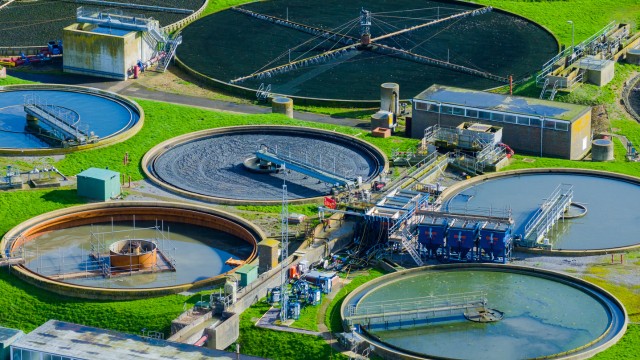
In England, certain activities require an environmental permit or licence.
According to current Environment Agency guidance, this can include activities that may:
- pollute air, water or land;
- increase flood risk;
- affect land drainage;
- abstract water;
- alter water levels or flows.
Operating without a required permit or licence can be unlawful.
Permitted activities can include areas such as waste treatment, industrial installations, combustion plants and water discharges.
An organisation should check requirements before beginning the regulated activity rather than attempting to regularise the position afterwards.
Written Management Systems for Permitted Activities
A particularly relevant point for environmental management is that many Environment Agency permits require a written management system.
The system should explain how the operator will minimise pollution risks associated with the permitted activities.
Relevant content can include:
- site operations;
- maintenance;
- accident prevention;
- staff competence;
- contingency arrangements;
- complaints;
- records;
- climate-related considerations.
The operator then needs to implement the system in practice.
A document that exists only for obtaining a permit is not sufficient.
Wales, Scotland and Northern Ireland
environmental management system is devolved.
In Wales, Natural Resources Wales regulates areas including waste, water quality and industrial environmental permitting.
In Scotland, the Scottish Environment Protection Agency is a key environmental regulator, operating within Scotland’s separate regulatory framework.
In Northern Ireland, environmental regulation is largely administered through the Northern Ireland Environment Agency, which forms part of DAERA.
This matters for national businesses.
A permit requirement, waste procedure or regulatory terminology used in England should not automatically be copied into Scottish, Welsh or Northern Irish operations without checking the local position.
Waste Duty of Care
Most businesses produce waste. That creates responsibilities.
In England and Wales, the waste duty of care under section 34 of the Environmental Protection Act 1990 requires people handling controlled waste to manage it properly.
Businesses should take reasonable steps to ensure waste is:
- stored safely;
- described accurately;
- transferred to authorised persons;
- handled without causing environmental harm.
Keeping appropriate waste-transfer documentation also matters.
Scotland operates its own code of practice and published an updated version in March 2026.
Waste management should therefore form a practical part of the EMS rather than being reduced to putting several coloured bins in an office.
Environmental Permits and Best Available Techniques
For certain regulated industrial activities, environmental permitting can require the use of best available techniques, commonly shortened to BAT.
The concept focuses on using techniques considered most effective for preventing or reducing emissions and environmental impacts while taking relevant practical considerations into account.
BAT requirements are industry-specific.
A general environmental-awareness course would not be sufficient to determine the technical operating standards for a regulated industrial installation.
Businesses should refer to applicable permits, sector guidance and specialist expertise.
Why an Environmental Policy Matters
An environmental policy is a high-level statement setting out an organisation’s environmental commitments and direction.
It should answer questions such as:
What does the organisation commit to?
Which impacts matter most?
Who is accountable?
How does environmental performance relate to business decisions?
A policy might include commitments concerning:
- legal compliance;
- pollution prevention;
- resource efficiency;
- environmental protection;
- continual improvement.
However, an environmental policy should fit the organisation.
A copied template saying “we will save the planet” provides little operational value.
A manufacturer dealing with hazardous chemicals should have different priorities from a digital consultancy.
Turning Environmental Policy Into Action
The policy establishes direction. Objectives create action.
Suppose a company policy commits to using energy efficiently.
A measurable objective might be:
“Reduce electricity consumption per unit of production over the next three years.”
That is more useful than:
“Use less electricity.”
The business can establish a baseline, assign responsibility, implement efficiency measures and measure results.
Effective objectives need:
- a clear baseline;
- a timeframe;
- responsibility;
- measurement;
- review.
Without those elements, sustainability commitments can become difficult to verify.
Identifying Environmental Aspects and Impacts
A central EMS activity is identifying environmental aspects.
An environmental aspect is something the organisation does that interacts with the environment. The environmental impact is the resulting change.
For example:
Aspect: operation of delivery vehicles
Impact: fuel use and emissions.
Aspect: chemical storage
Impact: potential contamination following leakage.
Aspect: use of packaging
Impact: resource consumption and waste.
The organisation then evaluates significance.
Factors can include:
- scale;
- severity;
- frequency;
- legal obligations;
- stakeholder concerns;
- likelihood of an incident.
The objective is prioritisation, not paperwork.
Environmental Risk Assessment
Environmental risk assessment asks what could go wrong and what the consequences could be.
A business might assess:
- oil spills;
- chemical leaks;
- fires;
- failure of pollution-control equipment;
- loss of containment;
- incorrect waste disposal;
- extreme-weather impacts.
Controls can then be introduced.
These might include secondary containment, inspections, alarms, emergency procedures or alternative equipment.
Higher-risk activities require stronger and more effective controls.
Monitoring Environmental Performance
An EMS needs evidence.
Useful environmental metrics might include:
- energy use;
- water consumption;
- waste generated;
- waste recycled;
- emissions;
- environmental incidents;
- permit exceedances;
- complaints;
- progress against objectives.
The best metric depends on the issue.
Total energy consumption can be useful, but a manufacturer experiencing rapid production growth may also need energy per unit of output.
A percentage without context can mislead.
Environmental reporting should therefore explain what has actually changed and why.
Environmental Auditing
An environmental audit examines whether the organisation’s arrangements are working as intended.
An audit may consider:
- whether procedures are followed;
- whether legal obligations are identified;
- whether required records exist;
- whether environmental controls are effective;
- whether previous problems have been corrected.
Audits should not become exercises in finding paperwork for its own sake.
The purpose is to identify meaningful weaknesses and opportunities for improvement.
For an ISO-certified EMS, formal internal and external audit processes are particularly important.
Emergency Preparedness
Environmental incidents can happen despite preventive controls.
Organisations should therefore consider emergency scenarios.
Examples include:
- chemical spills;
- fuel leaks;
- fires;
- contaminated firefighting water;
- equipment failure;
- flooding.
Emergency arrangements should explain who responds, how pollution is contained, which authorities or stakeholders may need notification and how incidents are recorded and investigated.
Exercises can reveal weaknesses before a real incident occurs.
Employee Competence and Training
Environmental procedures depend on people.
Training should match the risk.
A general office employee may need to understand waste arrangements and reporting procedures.
A waste-site manager may need specific technical competence.
Someone responsible for hazardous chemicals may need specialist knowledge of handling, containment and emergencies.
This distinction is important.
Awareness training is useful, but attendance does not automatically prove occupational competence.
Competence can depend on training, knowledge, practical skills and experience.
Benefits of Environmental Management

The benefits of environmental management system vary by organisation, but several potential advantages are significant.
Better Regulatory Control
A structured system helps identify environmental obligations and allocate responsibility.
This can reduce the chance of important requirements being overlooked.
Lower Environmental Risk
Preventive maintenance and operational controls can reduce the likelihood of pollution incidents.
Better Resource Efficiency
Measurement can identify unnecessary use of:
energy;
water;
materials.
Reducing waste can sometimes reduce costs, although savings should be demonstrated rather than promised.
Stronger Customer and Tender Position
Some customers require suppliers to demonstrate environmental-management arrangements.
In certain industries, ISO 14001 certification may support procurement or tender requirements.
It is not universally required.
Improved Accountability
Environmental objectives create clearer ownership.
Management can identify whether promised actions have actually occurred.
Better Evidence
An effective EMS replaces vague environmental claims with measurements, records and review.
This can support more credible sustainability communication.
Environmental Management Best Practices
Good environmental management system is usually practical rather than dramatic.
Focus on Material Issues
Do not spend disproportionate effort on tiny impacts while ignoring larger ones.
Build Environmental Responsibility Into Operations
Purchasing, design and maintenance decisions can influence environmental performance as much as the environmental department.
Maintain Reliable Data
Poor-quality data creates poor decisions.
Define how measurements are taken and who checks them.
Investigate Incidents Properly
Do not only clean up a spill.
Ask why it happened and whether controls need changing.
Review Suppliers
Supply chains can contain significant environmental impacts and regulatory risks.
Avoid Unsupported Green Claims
Claims such as “environmentally friendly”, “zero impact” or “100% sustainable” need evidence and appropriate context.
Review the EMS After Change
Reassess environmental risks when introducing:
new equipment;
new products;
new premises;
new chemicals;
new suppliers;
new processes.
A management system that described the organisation five years ago may no longer control today’s risks.
Common Environmental Management Mistakes
One common mistake is treating the EMS as a documentation exercise.
Having folders containing procedures does not prove that environmental controls work.
Another is focusing only on recycling.
Waste matters, but significant environmental impacts may involve emissions, water, biodiversity, chemicals or supply chains.
A third mistake is confusing certification with legal compliance.
ISO 14001 certification does not remove the need to identify applicable permits or legislation.
Other weaknesses include setting targets without reliable baselines, failing to train employees and collecting environmental data that nobody reviews.
The strongest EMS connects documentation with operational behaviour.
Environmental Management Skills
Professionals involved in environmental management system benefit from a combination of technical, regulatory and communication skills.
Important capabilities can include:
environmental risk assessment;
legislative awareness;
auditing;
data analysis;
incident investigation;
report writing;
project management;
stakeholder communication;
understanding management systems.
More specialised roles can require knowledge of:
environmental permitting;
ecology;
contaminated land;
waste regulation;
emissions;
water management;
environmental impact assessment.
The required skills depend on the job.
An environmental officer at a manufacturing site may need very different competence from a sustainability analyst working in corporate reporting.
Can Environmental Management Training Help?
Training can help beginners understand the vocabulary and basic principles behind an EMS.
Career Education offers Environmental Management Fundamentals as one introductory online learning option.
A current external listing describes the programme as covering environmental management system goals, business and law, monitoring, eco-auditing, risk assessment, environmental science and ecosystem management.
It also expressly states that the course provides no formal qualification.
That distinction matters.
A short introductory course can help build knowledge, but it should not automatically be treated as qualifying someone to operate a regulated waste site, conduct specialist environmental assessments or certify an ISO 14001 system.
Professional competence depends on the role and may require additional qualifications, experience or regulatory recognition.
Frequently Asked Questions
What is environmental management?
environmental management system is the structured process of identifying, controlling and improving the environmental effects of an organisation’s activities, products and services.
What is an environmental management system?
An environmental management system is a framework for managing environmental impacts, legal obligations, objectives, controls, monitoring and continual improvement.
What are the principles of environmental management?
A practical EMS is usually based on principles such as legal compliance, pollution prevention, risk-based controls, measurement and continual improvement. UK environmental policymaking also recognises the integration, prevention, precautionary, rectification-at-source and polluter-pays principles.
Is ISO 14001 mandatory in the UK?
No. ISO 14001 certification is not a universal legal requirement. However, businesses may choose certification for management, customer or tender reasons. Specific regulated activities can separately require environmental permits and written management systems.
What is the latest version of ISO 14001?
The current edition is ISO 14001:2026, published on 15 April 2026. It replaced ISO 14001:2015.
What should an environmental policy include?
An environmental policy should establish commitments relevant to the organisation, potentially including compliance, pollution prevention, environmental protection, resource efficiency and continual improvement.
What are the benefits of environmental management?
The benefits of environmental management can include stronger regulatory control, reduced pollution risk, improved resource efficiency, greater accountability and more reliable environmental performance information.
Are environmental management rules the same throughout the UK?
No. Environmental regulation is devolved. England, Wales, Scotland and Northern Ireland have different regulators and some different legal frameworks, although certain legislation and principles overlap.
Does every business need an environmental permit?
No. Permit requirements depend on the activities being carried out. Businesses should check the rules for the relevant UK jurisdiction before beginning an activity capable of causing regulated environmental impacts.
Does completing an environmental management course make someone professionally qualified?
Not automatically. Introductory training can build knowledge, but specialist roles may require practical experience, regulated qualifications, technical competence or professional recognition depending on the work.

Conclusion
Environmental Management in the UK is best understood as a structured process for turning environmental responsibility into everyday business controls.
An effective environmental management system helps an organisation identify significant impacts, understand legal requirements, establish an environmental policy, implement controls and measure whether performance is actually improving.
For environmental management systems UK businesses, ISO 14001:2026 now provides the current international framework for organisations choosing to use the ISO model. However, certification is voluntary in many circumstances and should not be confused with regulatory approval.
The answer to What are the principles of environmental management? also requires context. UK environmental law recognises principles including prevention, precaution, integration, rectification at source and polluter pays, while effective business management adds practical disciplines such as compliance, risk assessment, evidence and continual improvement.
The benefits of environmental management can include stronger compliance, reduced pollution risk, improved use of resources and better accountability. Those benefits depend on whether the system is genuinely implemented rather than simply documented.
Businesses should therefore concentrate on the environmental impacts that actually matter, understand the regulatory position in the relevant UK nation, train people appropriately and review their controls as operations change.
Good environmental management is ultimately not defined by the number of environmental policies a company publishes. It is demonstrated by whether environmental risks are understood, responsibilities are clear and measurable improvements occur in practice.