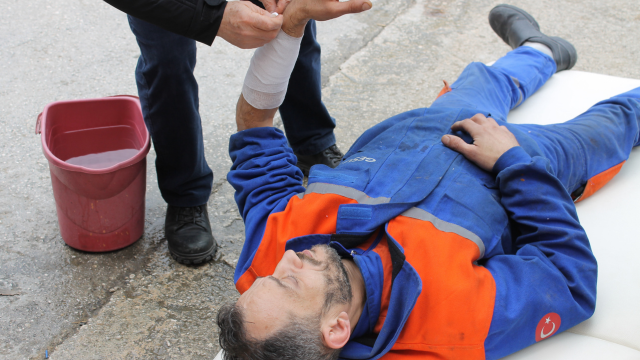

Knowing Electric Shock First Aid can be critical because an electrical injury may be far more serious than it first appears. Electricity passing through the body can damage skin and deeper tissues, interfere with muscles and nerves and, in severe cases, disrupt the heart’s normal rhythm or stop breathing.
The first rule is also the most important: do not rush in and touch a person who may still be connected to electricity. Doing so can turn one casualty into two. The electrical supply must first be isolated or the area otherwise made safe.
Once it is safe to approach, the priorities are to assess responsiveness and breathing, call 999 when necessary, begin CPR if the casualty is not breathing normally, use an AED if available and deal appropriately with any electrical burns.
This guide explains What causes an electric shock?, common electric shock symptoms, immediate first-aid actions, when emergency medical help is needed and practical electric shock prevention measures for homes and workplaces.
What Is an Electric Shock?
An electric shock occurs when electrical current passes through or travels through the body. This usually happens because the body becomes part of an electrical circuit. A person might touch an exposed live conductor while also being connected, directly or indirectly, to earth or another point at a different electrical potential.
The effects can vary considerably / differ significantly. Someone may experience a brief painful sensation and remain conscious, while another person may suffer burns, violent muscle contraction, loss of consciousness, breathing problems or cardiac arrest.
The seriousness of an electrical injury depends on factors such as the electrical source, the current’s path through the body, the duration of contact and the conditions in which exposure occurs. This is why visible skin damage may not show the full extent / true severity of an injury.
What Causes an Electric Shock?
What causes an electric shock? In everyday situations, the underlying problem is usually contact with electrical energy that has not been properly isolated, controlled or contained.
Common circumstances include damaged equipment, exposed wiring, unsuitable work practices and contact between electricity and moisture.
Damaged Cables and Leads
A damaged electrical cable may expose live conductors. Fraying, cuts, crushed sections and inappropriate repairs can create a shock risk. HSE guidance for workplaces advises checking that cables are undamaged / in good condition and that internal wires are not visible.
Equipment with a damaged lead should be taken out of use rather than temporarily patched and continued in service.
Faulty Plugs, Sockets or Appliances
Electrical equipment can deteriorate or develop faults. Warning signs may include:
- burn marks or discolouration;
- buzzing or crackling;
- unusual heat;
- damaged plugs or casings;
- circuit breakers repeatedly tripping;
- fuses repeatedly blowing.
These warning signs should not be ignored / overlooked.
Contact With Live Electrical Parts
Removing covers, carrying out unsuitable DIY work or working on equipment without proper isolation can expose a person to live parts.
electric shock safety work should normally be carried out with the electrical system safely isolated. Specialist live work should only take place where justified and under appropriate controls by competent / suitably qualified people.
Water and Electricity
Wet conditions can substantially increase / heighten electrical risk. Using unsuitable electrical equipment outdoors, handling appliances with wet hands or operating equipment in wet workplaces can make dangerous contact more likely.
Equipment must therefore be suitable for the environment in which it is used.
Drilling or Cutting Into Hidden Cables
Home improvement and construction activities can accidentally damage cables hidden inside walls, floors or other structures.
Drilling, nailing or screwing into a live cable can create both electric shock safety and fire hazards.
Overhead and Underground Electrical Services
Construction workers, agricultural workers and others may encounter overhead power lines or underground cables. These can involve much higher energy than an ordinary household appliance and require specialist risk controls.
A person should never approach someone who remains in contact with a high-voltage electrical source. Emergency services and the relevant electricity network operator should be involved.
Electric Shock Symptoms
Electric shock symptoms can range from mild to severe / immediately life-threatening.
Possible effects include pain or tingling, numbness, burns, muscle spasms, weakness, breathing difficulty or loss of consciousness.
electric shock safety also warns that electrical injuries can involve deeper burns, muscle damage, abnormal heart rhythms or broken bones caused by strong muscle contractions.
Someone may also be injured indirectly. For example, an electric shock safety while working on a ladder could cause the person to fall. The casualty may then have a head injury, fracture or spinal injury in addition to the electrical injury.
Visible Electrical Burns
electric shock safety burns may occur where current enters or leaves the body, although visible burns are not always present.
A burn might appear:
- red;
- blistered;
- pale or white;
- charred;
- relatively small despite deeper injury.
The apparent size of the skin injury should not be used to decide that the incident was harmless / minor.
Loss of Consciousness
A serious electric shock safety can cause someone to collapse. Any unresponsive casualty requires immediate assessment once the electrical danger has been made safe.
Abnormal Breathing or Cardiac Arrest
electric shock safety can interfere with the body’s electrical activity. If a casualty is unresponsive and not breathing normally, treat this as a medical emergency / critical situation. Call 999 and begin CPR, following instructions from the ambulance call handler.
Electric Shock First Aid: What Should You Do?
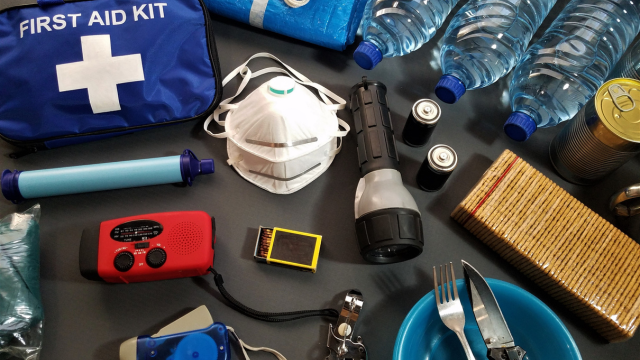
The correct sequence matters. An instinctive attempt to grab the casualty can expose the rescuer to the same electric shock safety source.
1. Check for Danger Before Approaching
Look at the situation before touching anything. Ask whether the person could still be connected to:
- a damaged appliance;
- exposed wiring;
- machinery;
- a power tool;
- an electrical installation;
- a fallen power line.
If electricity is still flowing through the casualty, touching them directly may cause current to pass through you.
Do not touch them until the electricity has been isolated and it is safe to approach.
2. Switch Off the Electrical Supply if It Is Safe
For ordinary low-voltage situations, the safest option is generally to disconnect the electricity at its source if this can be done without putting yourself at risk.
This could mean switching off the appliance, disconnecting the supply or turning off the relevant electric shock safetysupply at the consumer unit where appropriate.
Do not take unnecessary risks to reach switches or equipment.
High-voltage incidents require a different approach. Keep away, prevent others from entering the danger area and call 999. Do not attempt an improvised rescue around high-voltage equipment or power lines.
3. Check Responsiveness
Once the electrical source has been safely isolated, check whether the casualty responds. Speak loudly and determine whether they react.
If the casualty is unresponsive, call 999 immediately. If another person is present, ask them to make the call while you assess breathing.
4. Check Whether the Person Is Breathing Normally
Follow the Resuscitation Council UK’s approach for an unresponsive casualty. Assess breathing.
Occasional gasps or abnormal, irregular breathing should not be mistaken for normal / regular breathing.
The 999 call handler can help you assess the situation if you are unsure.
5. Start CPR if They Are Not Breathing Normally
If the person is unresponsive and not breathing normally, begin CPR immediately.
For an adult casualty, place your hands in the centre of the chest and deliver firm chest compressions at approximately two per second.
If you are trained and willing to provide rescue breaths, current UK guidance uses cycles of 30 compressions followed by two rescue breaths.
If you are not trained to give rescue breaths, continuous chest compressions are appropriate.
Continue following instructions from the ambulance service.
6. Use an AED as Soon as Possible
An automated external defibrillator can be used by members of the public.
If another person is available, ask them to locate and bring an AED while CPR continues.
Switch on the device and follow its spoken or visual instructions.
Place the pads on the casualty’s bare chest in the positions shown on the device. Make sure nobody is touching the casualty while the AED is analysing the heart rhythm or delivering a shock.
Continue CPR and follow the AED prompts until professional help arrives or the casualty shows clear signs of life.
What Should You Do for an Electrical Burn?
Once the electric shock safety source has been made safe and immediate life-threatening problems have been addressed, deal with visible burns.
The NHS advises cooling a burn with cool running water for 15 to 30 minutes, or until the pain improves.
Remove clothing or jewellery near the burn if this can be done easily, but do not pull away anything stuck to damaged skin.
After cooling, loosely lay cling film over the burn where appropriate. Do not wrap it tightly around a limb.
Do Not Put These on a Burn
Avoid applying:
- ice;
- iced water;
- butter;
- oils;
- creams or greasy substances;
- adhesive plasters directly over the burn.
Blisters should not be deliberately burst.
Electrical burns require medical assessment because damage beneath the skin may be more extensive than the external burn suggests.
When Should You Call 999?
Call 999 immediately where the casualty is unresponsive, is not breathing normally, has suffered a serious electrical incident or has potentially significant electrical burns or other life-threatening symptoms.
High-voltage incidents should also be treated as emergencies. Keep your distance until the electric shock safety source has been confirmed safe.
The NHS advises calling 999 or going to A&E for burns caused by electricity. Do not drive yourself to A&E after a significant electrical injury.
If someone has experienced an electrical shock but appears well, do not assume that no injury occurred. Internal damage or heart-rhythm disturbances may not be obvious immediately. Seek appropriate medical advice and assessment.
Electric Shock Treatment in Hospital
electric shock safety treatment depends on the nature of the injury.
Emergency clinicians may need to assess the person’s heart, breathing, burns and any secondary trauma caused by falls or muscle contractions.
Treatment can vary substantially.
For serious burns, hospital care may involve wound cleaning and dressing, pain relief, intravenous fluids or surgery where necessary.
A person with suspected cardiac involvement may require clinical monitoring and investigation.
There is therefore no single home treatment that can reliably exclude serious electrical injury.
First aid is intended to keep the casualty safe and support essential functions until professional assessment is available.
Why Electrical Injuries Can Be Deceptive
People sometimes assume that a small burn means the electrical exposure was minor.
That can be dangerous.
Electrical current can travel through tissue beneath the skin. As a result, the entry point may look relatively limited even when deeper structures have been affected.
Muscle contractions can also create injuries that are not immediately associated with electricity.
This is why appropriate medical assessment matters after significant electrical exposure.
Electric Shock Safety in the Home
Good electric shock safety begins before an accident happens.
Routine awareness can prevent many dangerous situations.
Stop Using Damaged Equipment
Do not continue operating an appliance if its plug, cable or casing appears damaged.
Warning signs such as burning smells, scorch marks, unusual heat, buzzing or repeated circuit-breaker operation should be investigated rather than ignored.
Keep Electricity Away From Water
Do not handle electrical equipment with wet hands unless it is specifically designed for those conditions.
electric shock safety equipment used outdoors or in wet locations should be suitable for that environment and appropriately protected.
Avoid Unsafe DIY Electrical Work
Electrical Safety First recommends using a registered competent electrician for electrical work rather than attempting work beyond your competence.
Even apparently simple work can expose hidden live parts or create faults that become dangerous later.
Use RCD Protection
A residual current device, or RCD, is designed to disconnect the electrical supply rapidly in certain fault conditions.
RCD protection can reduce the likelihood of serious electric shock safety, particularly for equipment used outdoors.
However, it is not a substitute for safe equipment, proper maintenance and appropriate working practices.
HSE specifically describes RCDs as a secondary method of risk reduction rather than an absolute guarantee against injury.
Do Not Overload Electrical Supplies
Avoid careless use of adaptors and extension leads.
Multiple high-powered appliances placed on unsuitable extensions can create overheating and fire risks.
Extension leads should also not be repeatedly connected to one another in a practice commonly called daisy chaining.
Electric Shock Prevention in the Workplace
Workplaces require a systematic approach to electric shock prevention.
In Great Britain, the Electricity at Work Regulations 1989 require electrical systems, work activities and protective measures to be managed so as to prevent danger so far as reasonably practicable.
Northern Ireland has its own Electricity at Work Regulations (Northern Ireland) 1991.
Practical controls include choosing equipment suitable for its environment, maintaining electrical systems, isolating equipment before work and ensuring that people performing electrical work are competent.
Inspect Equipment Before Use
Workers can often identify obvious defects without dismantling equipment.
Checks may reveal:
- damaged cables;
- exposed wires;
- cracked plugs;
- damaged casings;
- scorch marks;
- evidence of overheating.
Unsafe equipment should be taken out of service and examined by someone competent.
Maintain Equipment According to Risk
There is no universal rule that every electrical item must be tested at exactly the same interval.
HSE advises that inspection and testing arrangements should reflect the type of equipment, its working environment and previous inspection results.
A power tool used heavily on a construction site will not necessarily have the same maintenance needs as an office appliance.
Isolate Before Working
Electrical equipment should normally be made dead before work that could expose someone to electrical danger.
Isolation needs to be reliable.
Simply assuming that equipment has been switched off may not be enough where the risk requires a formal safe-isolation procedure.
Use Competent People
Complex electrical installation, testing, maintenance and repair should be performed by people with the appropriate knowledge, skill, training and experience.
A general electrical-awareness course does not automatically make someone competent to carry out electrical work.
Consider the Environment
Wet areas, confined spaces, outdoor work, construction sites and locations where cables may be physically damaged can require additional precautions.
Risk assessment should consider how the equipment is actually being used rather than assuming that equipment suitable for one setting is safe in every environment.
How to Stay Safe From Electrical Hazards
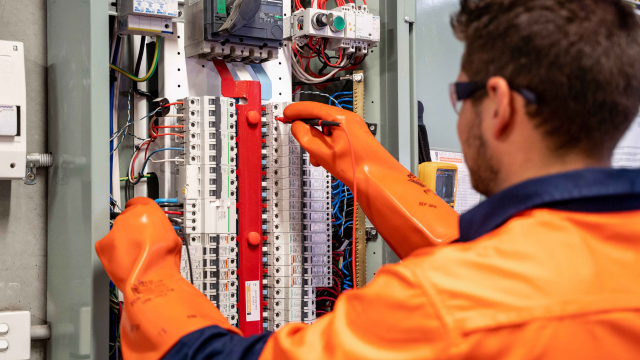
For anyone asking how to stay safe from electrical hazards, the most useful approach is to develop a few consistent habits.
Treat damaged electrical equipment as unsafe until it has been checked.
Never bypass guards, earth connections or protective devices simply to keep equipment running.
Keep electricity and unsuitable equipment away from wet conditions.
Switch off and isolate electrical supplies before relevant work.
Use RCD protection where appropriate.
Keep clear of overhead power lines and exposed high-voltage equipment.
Most importantly, do not undertake electric shock safety work that is beyond your competence.
Can Electrical Safety Training Help?
Training can improve awareness of hazards, safe behaviour and emergency procedures.
For workers who regularly encounter electrical equipment, structured learning may help reinforce subjects such as hazard recognition, safe handling and emergency response.
Career Education offers Preventing Electric Shock Online Training as one possible introductory learning option.
Its current course page describes self-paced training relating to identifying and reducing electrical risks.
However, completing an online awareness course should not be confused with qualification as an electrician, competence to undertake live electric shock safety work, formal first-aid certification or authorisation to perform specialist electrical duties.
Where a job requires practical competence, employers need to ensure that training, experience, supervision and assessment are appropriate to the actual work involved.
Common Electric Shock First-Aid Mistakes
One of the most dangerous mistakes is immediately grabbing the casualty.
Until the electricity is isolated, the casualty may remain part of a live circuit.
Another mistake is assuming that someone is fine because they are awake. Electrical injuries can cause problems that are not immediately visible.
Other errors include putting ice or creams onto electrical burns, failing to call for emergency help when the casualty is unresponsive, and delaying CPR while searching for an AED.
The correct priorities are safety, early emergency help, CPR where necessary and prompt professional assessment.
Frequently Asked Questions
What should I do first if someone gets an electric shock?
Do not touch the person while they may still be connected to electricity. Make sure the electrical source is safely isolated before approaching. Once safe, check responsiveness and breathing and call 999 where appropriate.
What causes an electric shock?
An electric shock occurs when electrical current passes through the body. Common causes include damaged cables, exposed live conductors, faulty appliances, inadequate isolation, unsuitable electrical work and using inappropriate electrical equipment in wet environments.
What are the main electric shock symptoms?
Possible electric shock symptoms include pain, tingling, numbness, burns, muscle contractions, weakness, breathing problems and loss of consciousness. More serious injuries can affect the heart or involve deep tissue damage.
Should every electric shock casualty go to hospital?
Electrical burns require emergency medical assessment, and significant electric shock safety can cause internal injuries even when external signs appear limited. Seek appropriate urgent medical advice rather than deciding solely from how the person looks immediately afterwards.
Can I touch someone who has been electrocuted?
Not if they may still be connected to the electrical source. Electricity must first be safely isolated. With high-voltage electricity, stay away and call the emergency services rather than attempting an improvised rescue.
What should I put on an electrical burn?
After the electrical danger has been eliminated and life-threatening problems addressed, cool the burn under cool running water for 15–30 minutes. Once cooled, cling film may be laid loosely over the burn where appropriate. Do not use ice, butter, oils or creams.
Can an RCD prevent electric shock?
An RCD can reduce the likelihood and severity of some electrical injuries by rapidly disconnecting the supply when certain faults occur. It does not guarantee safety and should be used alongside safe equipment, correct installation, maintenance and safe working practices.
Should I perform CPR after an electric shock?
If the casualty is unresponsive and not breathing normally after it is safe to approach, call 999 and begin CPR. Use an AED as soon as one becomes available and follow the device and ambulance-service instructions.
How can workplaces prevent electric shocks?
Workplaces should assess electrical risks, use suitable equipment, inspect and maintain systems, isolate equipment appropriately before work, provide necessary protective measures and ensure electrical work is carried out by competent people.
Is online electrical safety training enough to work as an electrician?
No. General safety training can improve awareness, but it does not automatically establish competence as an electrician or authorise someone to perform specialist electrical work. Competence depends on the knowledge, practical skills, training and experience required for the particular task.

Conclusion
Knowing Electric Shock First Aid begins with protecting yourself.
Never touch a casualty who may still be connected to electricity. Safely isolate the supply where possible, and keep well away from high-voltage sources. Once it is safe to approach, check responsiveness and breathing, call 999 when required, start CPR if the casualty is not breathing normally and use an AED as soon as one is available.
Electrical burns should be cooled with cool running water for 15–30 minutes after the electrical danger has been removed and urgent medical assessment should follow. Do not assume that a small external burn means the underlying injury is minor.
Effective electric shock safety also depends heavily on prevention. Damaged cables, faulty equipment, unsafe DIY electrical work, wet conditions and inadequate isolation can all expose people to avoidable risk.
At home and at work, sensible electric shock prevention includes maintaining equipment, using appropriate RCD protection, removing damaged appliances from service, isolating electricity before relevant work and leaving specialist electrical tasks to competent people.
Understanding how to stay safe from electrical hazards is ultimately more valuable than knowing only how to react after an incident. Good electrical safety combines prevention, emergency awareness and prompt professional electric shock treatment when an injury occurs.