
94%
OFF
OFF
Time Blocking for Maximum Productivity and Efficiency
- Lifetime Access
- All Levels
- PDF Certificate
£296
£19
14-Day Money-Back Guarantee
Learn With Confidence









Time Blocking for Maximum Productivity and Efficiency
In a world filled with competing priorities, constant notifications, meetings, and unexpected interruptions, simply making a to-do list is often not enough. Time Blocking for Maximum Productivity and Efficiency is a practical course designed to help learners take greater control of their schedules, organise their priorities, and create a structured approach to getting important work done.
Time blocking is a powerful productivity technique that involves assigning specific periods of time to particular tasks, activities, or responsibilities. Instead of deciding what to work on only when the moment arrives, learners can plan their time intentionally and create a clear structure for their day. This approach can make it easier to focus, reduce unnecessary distractions, and make meaningful progress toward important goals.
The Time Blocking for Maximum Productivity and Efficiency course takes learners through the complete process of developing and maintaining an effective time-blocking system. From understanding the foundations of time blocking to evaluating and improving a personal productivity system, the course focuses on practical outcomes that can be applied to everyday life, study, and professional environments.
What Is Time Blocking?
Time blocking is a scheduling method where available time is divided into dedicated blocks, with each block assigned a specific purpose. For example, a learner might reserve one period for focused project work, another for responding to messages, and another for meetings or planning.
Rather than treating the entire day as one large, unstructured period, time blocking creates intentional boundaries around activities. This can help learners understand where their time is going and make better decisions about what deserves their attention.
The goal is not simply to fill every minute of the day. Effective time blocking combines structure with realistic expectations, allowing learners to prioritise important activities while leaving enough flexibility to respond to changing circumstances.
What Will You Learn?
The Time Blocking for Maximum Productivity and Efficiency course provides a step-by-step learning experience covering the key principles, techniques, and practical considerations involved in effective time management.
Module 1: Introduction to Time Blocking
The course begins by introducing the concept of time blocking and explaining how it can support productivity and efficiency. Learners will explore the principles behind structured scheduling and understand why intentionally allocating time can improve focus and organisation.
By the end of this module, learners will have a clear foundation for understanding how time blocking works and how it can be incorporated into a personal productivity strategy.
Module 2: Assessing Your Current Schedule
Before creating a new system, it is important to understand how time is currently being used. This module focuses on reviewing existing schedules, identifying recurring activities, and recognising areas where time may not be used effectively.
Learners will develop greater awareness of their current routines and discover opportunities to reorganise their schedules. This assessment provides a useful starting point for building a more realistic and effective time-blocking system.
Module 3: Setting Goals and Priorities
Productivity is not about completing the greatest possible number of tasks. It is about directing time toward activities that matter.
This module explores how to establish meaningful goals and determine priorities. Learners will consider the difference between urgent and important activities and learn how prioritisation can influence the design of their schedules.
The outcome is a clearer understanding of what deserves dedicated time and how time blocks can be aligned with broader objectives.
Module 4: Designing Your Time Blocks
Once priorities are established, learners can begin designing their own time-blocking structure. This module focuses on turning goals and responsibilities into practical blocks of time.
Learners will explore how to allocate time for focused work, routine responsibilities, planning, breaks, and other activities. They will learn to create schedules that are structured without becoming unnecessarily rigid.
By completing this module, learners will be better prepared to create a time-blocking framework that reflects their individual responsibilities and working patterns.
Module 5: Implementing Time Blocking Tools
A good productivity system becomes more useful when it can be implemented consistently. This module introduces learners to the role of calendars, planners, digital scheduling systems, and other time-management tools.
The focus is on choosing and using tools that make time blocking easier to organise and maintain. Learners will gain practical knowledge for turning their planned time blocks into an accessible, repeatable scheduling system.
Module 6: Overcoming Distractions and Interruptions
Distractions and interruptions can quickly undermine even the best-designed schedule. This module examines common productivity barriers and explores practical strategies for protecting focused work periods.
Learners will develop approaches for managing notifications, unnecessary interruptions, competing demands, and other distractions. They will also learn the importance of creating realistic boundaries around focused work.
The outcome is a stronger ability to protect valuable time and maintain attention on priority activities.
Module 7: Time Blocking for Meetings and Collaboration
Professional and collaborative environments often involve meetings, discussions, teamwork, and shared responsibilities. This module explores how time blocking can be adapted to accommodate collaborative work.
Learners will consider how to organise meeting time alongside focused work and individual responsibilities. They will gain a better understanding of how structured scheduling can support both personal productivity and effective collaboration.
Module 8: Maintaining Flexibility and Adaptability
A productive schedule should provide structure without making it impossible to respond to change. Unexpected tasks, changing deadlines, new priorities, and interruptions are normal parts of everyday life.
This module teaches learners how to maintain flexibility within a time-blocking system. Rather than abandoning a schedule when circumstances change, learners will understand how to adjust their blocks and reorganise priorities.
This adaptable approach can make time blocking more sustainable and practical over the long term.
Module 9: Evaluating and Improving Your System
No productivity system is perfect from the beginning. Regular evaluation helps identify what works, what does not, and what needs to change.
This module focuses on reviewing the effectiveness of a time-blocking system and making improvements based on experience. Learners will consider factors such as productivity, realistic scheduling, distractions, priorities, and changing responsibilities.
The result is a continuous-improvement mindset that allows the system to evolve rather than becoming outdated.
Module 10: Building a Long-Term Productivity Habit
The final module focuses on consistency. Learning a productivity technique is valuable, but applying it regularly is what can turn it into a lasting habit.
Learners will explore ways to maintain their time-blocking practice and integrate structured scheduling into their regular routines. The emphasis is on creating a sustainable approach that can continue to support productivity as responsibilities and goals change.
Outcomes of the Course
By completing Time Blocking for Maximum Productivity and Efficiency, learners can develop practical skills to:
-
Understand the principles and benefits of time blocking.
-
Analyse how their current schedule is being used.
-
Identify important priorities and align them with available time.
-
Create structured and realistic time blocks.
-
Organise focused work, routine tasks, meetings, and other responsibilities.
-
Use digital and traditional tools to support time blocking.
-
Reduce the impact of common distractions and interruptions.
-
Manage collaborative responsibilities more effectively.
-
Adapt schedules when priorities or circumstances change.
-
Review and improve a personal productivity system.
-
Develop more consistent time-management habits.
-
Make more intentional decisions about how available time is allocated.
Who Can Benefit From This Course?
The Time Blocking for Maximum Productivity and Efficiency course is suitable for anyone who wants a more structured approach to managing their time.
Professionals can use the techniques to organise workloads, protect focused work periods, and manage meetings alongside important responsibilities. Students and learners can use time blocking to structure study sessions, assignments, revision, and other commitments.
Entrepreneurs, freelancers, managers, administrators, and anyone managing multiple responsibilities can also benefit from learning how to allocate time more intentionally.
The course does not require learners to completely redesign their lives or follow an inflexible schedule. Instead, it provides a framework that can be adapted to different routines, responsibilities, and working environments.
Why Time Blocking Matters
Modern schedules can easily become reactive. Messages arrive, meetings appear, tasks accumulate, and urgent requests compete for attention. Without a clear structure, important work can repeatedly be pushed aside.
Time blocking offers a different approach. It encourages learners to decide in advance how available time should be used. By giving important activities dedicated periods, learners can create greater clarity around their responsibilities.
The technique can also encourage more realistic planning. When tasks are assigned specific periods, it becomes easier to recognise how much work can reasonably fit into a day. This can help reduce the habit of continually adding tasks without considering available time.
Most importantly, time blocking shifts the focus from simply being busy to using time intentionally.
Build a More Effective Productivity System
The Time Blocking for Maximum Productivity and Efficiency course is designed around practical application rather than theory alone. Learners progress from understanding the concept to assessing their current schedule, setting priorities, designing time blocks, implementing tools, handling distractions, adapting to change, and developing long-term habits.
The result is a complete framework for approaching time management with greater structure and purpose.
Instead of constantly reacting to whatever demands attention next, learners can develop a clearer system for deciding what deserves their time and when. With regular practice and evaluation, time blocking can become a valuable part of a broader productivity strategy.
Start Building Better Time Management Habits
Effective productivity begins with understanding that time is limited and attention is valuable. A well-designed schedule can provide the structure needed to focus on meaningful priorities while still allowing room for flexibility.
Time Blocking for Maximum Productivity and Efficiency gives learners the knowledge and practical framework to organise their schedules, prioritise important activities, manage distractions, and build sustainable productivity habits.
Whether the goal is to improve workplace organisation, manage study commitments, handle multiple projects, or simply create a more intentional daily routine, this course provides a practical starting point.
Take the opportunity to develop a clearer approach to scheduling, turn priorities into dedicated time, and build a productivity system designed to support consistent progress.
Course Modules
Course Content
Module 1_ Introduction to Time Blocking
-
Lesson 1_ Introduction to Time Blocking
Module 2_ Assessing Your Current Schedule
Module 3_ Setting Goals and Priorities
Module 4_ Designing Your Time Blocks
Module 5_ Implementing Time Blocking Tools
Module 6_ Overcoming Distractions and Interruptions
Module 7_ Time Blocking for Meetings and Collaboration
Module 8_ Maintaining Flexibility and Adaptability
Module 9_ Evaluating and Improving Your System
Module 10_ Building a Long-Term Productivity Habit
What our students say
Excellent
4.9 average
158 Reviews

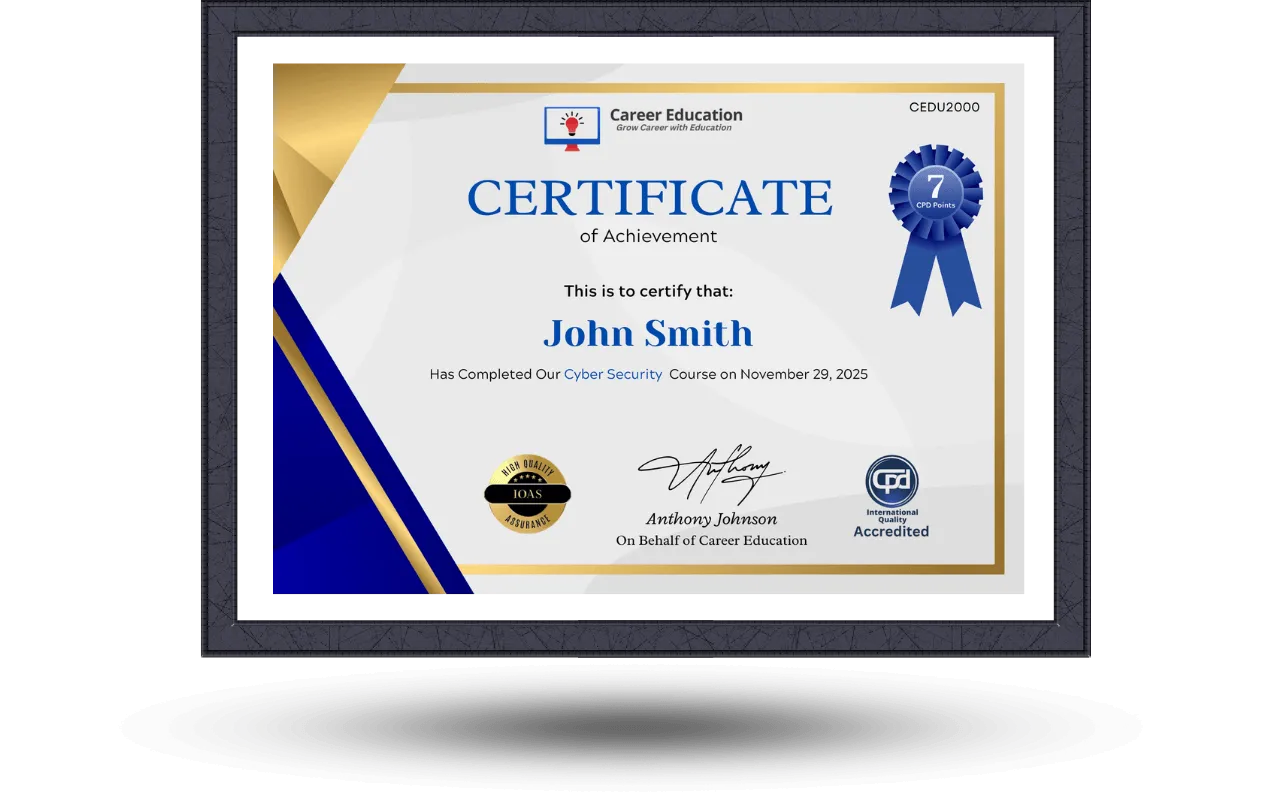
Earn an Accredited Certificate
Upon completion of any course, all students are entitled to a CPD IQ Accredited e-certificate that will be issued by Career Education signifying the completion of your course.
After you complete the course and assignment, you will be eligible to order a free certificate accredited by CPD International Quality by completing the form below.
Hardcopy certificates and transcripts are also available for a small additional fee. More information is disclosed upon course completion.
Similar Courses




Frequently Asked Questions
The lifetime membership includes unlimited access to all courses, resources, and updates for a one-time fee.
You can purchase the membership directly from our website using a secure checkout process.
Yes, selected courses can be downloaded for offline access through our mobile app.
Yes, all future updates and new courses are included at no extra cost.
Yes, we offer a 30-day money-back guarantee if you are not satisfied with the membership.