
94%
OFF
OFF
The World in the 19th Century
- Lifetime Access
- All Levels
- PDF Certificate
£296
£19
14-Day Money-Back Guarantee
Learn With Confidence








The World in the 19th Century
The The World in the 19th Century course offers a fascinating journey through one of the most transformative periods in global history. The 19th century was an era of revolutions, industrialisation, imperial expansion, political reform, social change, scientific discovery, and cultural transformation. Events during this period reshaped nations, changed economies, influenced international relations, and established many of the foundations of the modern world.
From the aftermath of the French Revolution and the rise and fall of Napoleon to the Industrial Revolution, the expansion of European empires, the growth of the United States, political developments across Asia and the Americas, and the emergence of modern science and culture, this course explores the major forces that shaped the century.
Rather than simply studying isolated historical events, The World in the 19th Century focuses on understanding connections between political decisions, economic developments, social movements, technological progress, and global expansion. By exploring these connections, learners can develop a broader understanding of how the 19th century influenced the world that followed.
Why Study The World in the 19th Century?
The 19th century marked a dramatic transition from traditional societies toward increasingly industrialised, interconnected, and modern states. Political power was challenged, old systems were questioned, factories transformed production, railways and steamships accelerated transportation, and new scientific ideas changed how people understood the world.
At the same time, imperial expansion dramatically altered relationships between Europe and regions across Africa, Asia, and the Americas. Nationalism influenced the creation and transformation of states, while social reform movements challenged established inequalities and working conditions.
Studying this period helps learners understand the historical background behind many modern political, economic, cultural, and international developments.
What You Will Learn
Through The World in the 19th Century, learners will explore major events and developments across Europe, North America, Latin America, Africa, and Asia. The course provides a structured overview of the century while encouraging learners to consider how developments in one region influenced events elsewhere.
You will examine revolutions and political transformations, the growth of industrial economies, imperialism and colonialism, nationalism, social reform, scientific advancement, cultural developments, and the changing balance of global power.
By the end of the course, you should have a stronger ability to place major historical events within their wider context and understand the forces that contributed to the emergence of the modern world.
Course Curriculum
Module 1: The Aftermath of the French Revolution and the Napoleonic Era
The course begins with the political upheaval created by the French Revolution and its lasting consequences. You will explore how revolutionary ideas challenged traditional political structures and contributed to debates about citizenship, rights, sovereignty, and government.
The module also examines the Napoleonic Era and its influence on Europe. You will consider how Napoleon transformed political relationships, spread legal and administrative reforms, and contributed to major changes in the European balance of power.
By completing this module, you will gain a clearer understanding of why the French Revolution and Napoleonic period were so important to 19th-century political development.
Module 2: The Industrial Revolution and Social Change
The Industrial Revolution fundamentally transformed production, employment, transportation, cities, and everyday life. This module explores the growth of industrialisation and the transition from predominantly agricultural economies toward factory-based production.
You will examine how technological developments influenced economic growth and how industrialisation affected workers, families, cities, and social structures. The module also considers the emergence of new social classes and the growing importance of labour and social reform movements.
This knowledge will help you understand why industrialisation became one of the defining forces of the 19th century.
Module 3: The Age of Empire and Colonial Expansion
European imperial expansion was one of the most significant features of 19th-century global history. This module examines the motivations, methods, and consequences of colonial expansion.
You will explore the growth of European influence across different parts of the world and consider the economic, political, and strategic interests behind imperialism. The module also encourages a broader understanding of how colonial expansion affected societies, economies, cultures, and political structures in colonised regions.
By studying this period, you will develop a more balanced understanding of the global consequences of empire.
Module 4: Europe in Transition
The 19th century was a period of significant political transformation in Europe. This module examines nationalism, political reform, revolutions, and the changing structure of European states.
You will explore how demands for political representation and national identity influenced major developments across the continent. The module highlights the forces that challenged established political systems and contributed to the emergence of new national and political arrangements.
You will gain insight into the processes that helped shape the political map of modern Europe.
Module 5: The Victorian Era and British Global Influence
The Victorian Era was closely associated with Britain’s industrial development, political evolution, cultural influence, and expanding global presence. This module examines Britain during a period of major economic and imperial influence.
You will explore Britain’s changing society, industrial economy, political institutions, and international relationships. The module also considers the wider global consequences of British expansion and influence.
This provides valuable context for understanding Britain’s role in 19th-century international affairs and the development of the British Empire.
Module 6: The United States and the Struggle for Unity
The United States underwent profound political and social change during the 19th century. This module explores the country’s expansion, political tensions, sectional divisions, and struggle to maintain national unity.
You will examine the major issues that contributed to growing conflict between different regions and political interests, as well as the consequences of the American Civil War and its aftermath.
The module helps learners understand how the United States developed during a crucial period and how internal conflict influenced its future political and economic direction.
Module 7: Asia in the 19th Century
Asia experienced substantial political, economic, and social changes throughout the 19th century. This module examines developments across major Asian societies and considers their interactions with industrialising and imperial powers.
You will explore responses to foreign pressure, internal reform efforts, political transformation, and the changing balance of power in the region.
The module provides a broader global perspective by demonstrating that the 19th century was not simply a period of European transformation. Asian societies also experienced complex processes of adaptation, resistance, reform, and modernisation.
Module 8: Africa and the Impact of European Expansion
European expansion had profound consequences for African societies during the 19th century. This module examines the growth of European involvement in Africa and the political and economic changes associated with imperial expansion.
You will explore the changing relationships between European powers and African societies while considering the broader impact of colonial ambitions. The module encourages learners to understand African history within its own political and social contexts rather than viewing the continent solely through the perspective of European expansion.
Module 9: The Americas Beyond the United States
The history of the 19th-century Americas extends far beyond the United States. This module examines developments across Latin America and the Caribbean, including political transformation, independence, nation-building, economic change, and international influence.
You will explore how newly independent states navigated political challenges and attempted to establish stable governments and economies. The module also considers the wider relationships between the Americas and global powers.
This creates a more comprehensive understanding of the Western Hemisphere during a period of major transformation.
Module 10: Science, Culture, and the Dawn of Modernity
The final module explores the intellectual and cultural developments that helped define the transition toward the modern world. Scientific discoveries, technological innovations, new forms of communication, and changing cultural ideas transformed people’s understanding of society and the natural world.
You will examine how science, education, literature, art, technology, and intellectual movements contributed to changing perceptions of progress and modernity.
This module brings together many of the themes explored throughout The World in the 19th Century, demonstrating how political, economic, technological, scientific, and cultural changes interacted with one another.
Learning Outcomes
By completing The World in the 19th Century, learners can develop the ability to:
-
Identify major political, economic, social, and cultural developments of the 19th century.
-
Explain the historical significance of the French Revolution and Napoleonic Era.
-
Understand the causes and consequences of the Industrial Revolution.
-
Explore the development and impact of European imperialism.
-
Examine nationalism, political reform, and state-building in Europe.
-
Understand Britain’s expanding global influence during the Victorian Era.
-
Analyse major political developments in the 19th-century United States.
-
Explore significant transformations across Asia and Africa.
-
Develop a broader understanding of political and social change throughout the Americas.
-
Recognise the importance of scientific, technological, and cultural developments.
-
Connect events in different regions to wider global historical trends.
-
Develop stronger historical analysis and contextual understanding.
Who Is This Course For?
The World in the 19th Century is suitable for learners who want to develop a broader understanding of global history and the forces that contributed to the modern world.
It can be valuable for students, history enthusiasts, lifelong learners, educators, researchers, and anyone interested in understanding how political, economic, social, and technological developments shaped international history.
The course can also provide useful background knowledge for learners preparing for further study in history, politics, international relations, sociology, geography, cultural studies, or related subjects.
Build a Stronger Understanding of Modern History
Understanding modern history requires more than memorising dates and names. It requires recognising relationships between events and understanding why societies changed.
The World in the 19th Century provides learners with an opportunity to examine the century as a connected global story. Revolutions influenced political thinking, industrialisation changed economies and societies, imperialism transformed international relationships, nationalism reshaped states, and scientific and technological developments accelerated the pace of change.
These developments did not occur independently. They interacted across borders and continents, creating consequences that continued well beyond the 19th century.
By studying these connections, learners can develop a more informed perspective on the origins of many institutions, conflicts, movements, and global relationships that continue to influence the modern world.
Start Exploring The World in the 19th Century
The 19th century was a turning point in global history. It was a century of extraordinary transformation, marked by revolution and reform, industrialisation and urbanisation, empire and resistance, nationalism and nation-building, scientific discovery and cultural change.
The World in the 19th Century brings these developments together in a structured learning experience designed to help you understand the people, events, ideas, and forces that shaped this remarkable period.
Whether your goal is to strengthen your historical knowledge, support further academic study, explore global history out of personal interest, or develop a deeper understanding of the origins of the modern world, this course provides a valuable foundation.
Enrol in The World in the 19th Century and begin exploring the remarkable transformations that helped shape the world we know today.
Course Modules
Course Content
Module 1_ The Aftermath of the French Revolution and the Napoleonic Era
-
Lesson 1_ The Aftermath of the French Revolution and the Napoleonic Era
Module 2_ The Industrial Revolution and Social Change
Module 3_ The Age of Empire and Colonial Expansion
Module 4_ Europe in Transition
Module 5_ The Victorian Era and British Global Influence
Module 6_ The United States and the Struggle for Unity
Module 7_ Asia in the 19th Century
Module 8_ Africa and the Impact of European Expansion
Module 9_ The Americas Beyond the United States
Module 10_ Science, Culture, and the Dawn of Modernity
What our students say
Excellent
4.9 average
158 Reviews

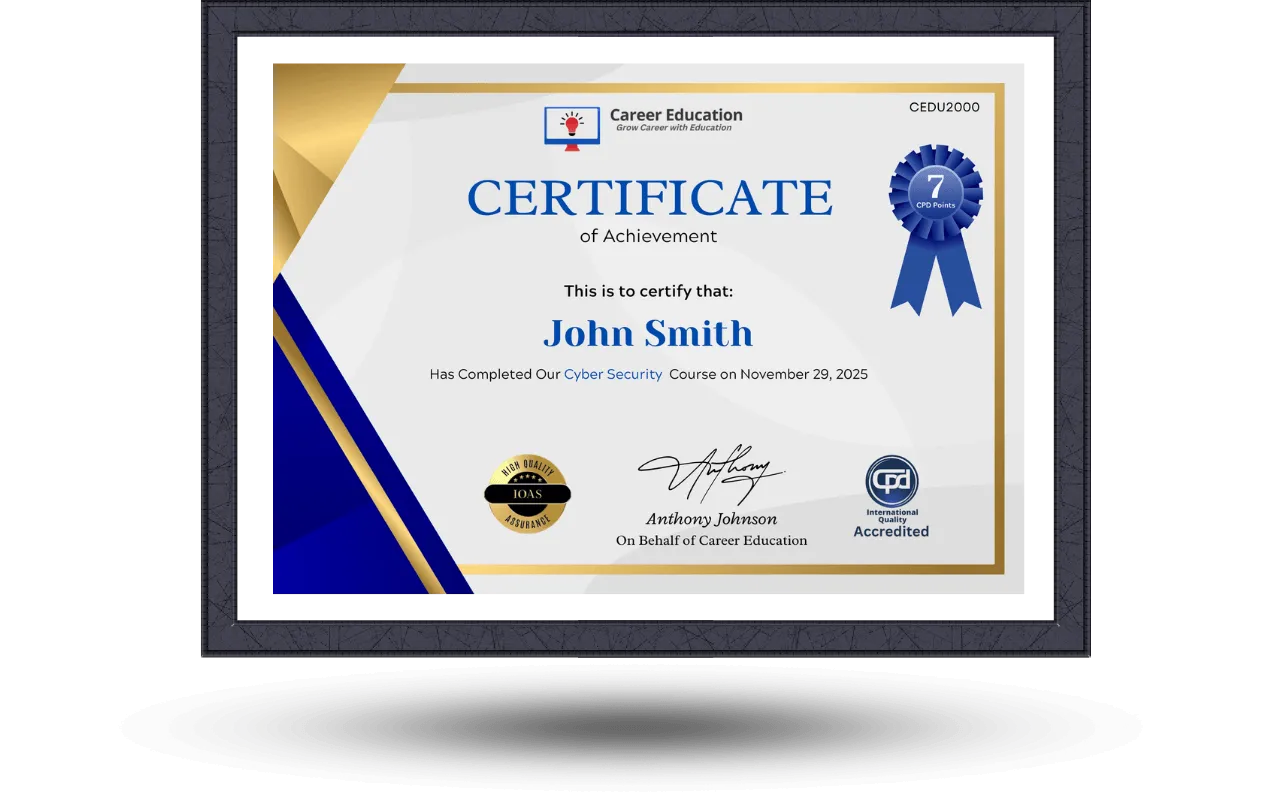
Earn an Accredited Certificate
Upon completion of any course, all students are entitled to a CPD IQ Accredited e-certificate that will be issued by Career Education signifying the completion of your course.
After you complete the course and assignment, you will be eligible to order a free certificate accredited by CPD International Quality by completing the form below.
Hardcopy certificates and transcripts are also available for a small additional fee. More information is disclosed upon course completion.
Similar Courses


Frequently Asked Questions
The lifetime membership includes unlimited access to all courses, resources, and updates for a one-time fee.
You can purchase the membership directly from our website using a secure checkout process.
Yes, selected courses can be downloaded for offline access through our mobile app.
Yes, all future updates and new courses are included at no extra cost.
Yes, we offer a 30-day money-back guarantee if you are not satisfied with the membership.