
94%
OFF
OFF
Talent Recruitment and Retention
- Lifetime Access
- All Levels
- PDF Certificate
£296
£19
14-Day Money-Back Guarantee
Learn With Confidence









Talent Recruitment and Retention
Talent Recruitment and Retention is a practical online course designed to help professionals understand how organisations can attract capable employees, select the right candidates, build a positive employer reputation, and retain valuable talent over the long term.
In today’s competitive employment market, finding skilled people is only part of the challenge. Organisations also need effective strategies for keeping talented employees engaged, supporting their development, managing performance, and creating an environment where people want to build their careers. A strong approach to Talent Recruitment and Retention can help organisations build more capable teams, reduce unnecessary employee turnover, improve workforce planning, and support long-term business performance.
This course takes a structured approach to the complete talent journey, from workforce planning and employer branding through recruitment, candidate assessment, retention, performance management, and feedback. Rather than focusing solely on recruitment theory, the course is designed around practical outcomes that can help learners understand how talent strategies can be developed and applied in professional environments.
Whether you work in human resources, recruitment, management, business operations, or people development, Talent Recruitment and Retention can provide useful knowledge for improving the way organisations attract, select, support, and retain employees.
What You Will Learn
By completing Talent Recruitment and Retention, you will develop a stronger understanding of the principles and practices involved in effective workforce management.
You will learn how to:
-
Understand the fundamentals of talent recruitment and retention
-
Analyse workforce requirements and future talent needs
-
Identify skills gaps and workforce priorities
-
Understand the role of employer branding in recruitment
-
Develop recruitment marketing approaches
-
Explore effective recruitment strategies and techniques
-
Understand different candidate sourcing methods
-
Evaluate selection and assessment approaches
-
Support more informed hiring decisions
-
Develop strategies for retaining valuable employees
-
Understand factors that influence employee engagement and retention
-
Manage employee performance more effectively
-
Use feedback to support employee development
-
Build a more structured approach to talent management
-
Contribute to long-term workforce planning and organisational success
Build a Strong Foundation in Talent Management
Successful organisations need the right people with the right skills in the right roles. However, achieving this requires more than simply posting job advertisements and interviewing candidates.
Talent Recruitment and Retention begins by introducing the broader talent management process and explaining why recruitment and retention should be considered together.
The course helps learners understand how attracting employees, selecting suitable candidates, supporting their development, managing performance, and retaining valuable people are interconnected activities.
When these areas are approached strategically, organisations can create a stronger and more consistent employee experience while making better use of their workforce.
Module 1: Introduction to Talent Acquisition and Retention
The course begins with an introduction to Talent Acquisition and Retention, establishing the foundation for the topics explored throughout the programme.
You will examine why organisations need effective approaches to finding and retaining capable employees. The module introduces key concepts surrounding talent acquisition, recruitment, employee retention, and workforce development.
You will also consider the challenges organisations may face when attempting to attract skilled candidates and maintain employee engagement over time.
Understanding these fundamentals will help you appreciate why recruitment and retention should not be treated as isolated HR activities. Instead, they form part of a broader approach to building a sustainable and effective workforce.
Module 2: Talent Planning and Workforce Analysis
Effective recruitment begins with understanding what an organisation actually needs.
This module focuses on Talent Planning and Workforce Analysis, helping learners explore how organisations can evaluate their current workforce and identify future talent requirements.
You will learn why workforce analysis is important for identifying skills, capabilities, vacancies, potential shortages, and areas where additional talent may be required.
Talent planning can help organisations move away from reactive recruitment and towards a more strategic approach. Instead of waiting until a position becomes difficult to fill, organisations can anticipate future requirements and prepare accordingly.
You will explore how workforce information can support better decisions about recruitment, staffing, skills development, succession planning, and organisational growth.
By the end of this module, you should have a clearer understanding of how workforce analysis can contribute to effective Talent Recruitment and Retention.
Module 3: Employer Branding and Recruitment Marketing
Attracting talented candidates requires more than advertising a vacancy. Candidates increasingly want to understand what an organisation stands for, what its workplace culture is like, and what opportunities it provides.
This module explores Employer Branding and Recruitment Marketing, helping learners understand how organisations can present themselves as attractive places to work.
You will explore the importance of employer reputation and how an organisation’s values, workplace culture, employee experience, communication, and professional opportunities can influence candidate perceptions.
Recruitment marketing can help organisations reach potential candidates through appropriate channels and communicate why people should consider joining the organisation.
A strong employer brand can support recruitment efforts by helping organisations stand out in competitive talent markets.
This module provides insights into how employer branding and recruitment communication can contribute to attracting candidates who are more likely to align with organisational expectations.
Module 4: Recruitment Strategies and Techniques
Once an organisation understands its talent requirements and employer proposition, it needs effective recruitment strategies.
This module focuses on Recruitment Strategies and Techniques, exploring different approaches that can be used to identify and attract suitable candidates.
You will develop an understanding of candidate sourcing, recruitment channels, job advertising, networking, referrals, digital recruitment, and other potential approaches.
You will also consider how recruitment strategies can be aligned with specific roles and workforce requirements. Different positions may require different sourcing methods, and an effective recruitment strategy should reflect the nature of the role, the target candidate group, and the organisation’s objectives.
The module encourages a structured approach to recruitment so that organisations can improve the efficiency and effectiveness of their hiring processes.
Module 5: Selection and Assessment Methods
Attracting candidates is only the beginning. Organisations also need reliable ways to assess whether applicants have the knowledge, skills, experience, and capabilities required for a role.
This module focuses on Selection and Assessment Methods.
You will explore different approaches that organisations can use during the selection process, including interviews, assessments, candidate evaluation, and structured decision-making.
The module highlights the importance of using appropriate assessment methods and establishing clear criteria for evaluating candidates.
A structured selection process can help organisations make more informed hiring decisions and improve the likelihood of selecting people who are suited to the requirements of the role.
You will also develop a better understanding of how consistent and objective assessment practices can contribute to a stronger recruitment process.
Module 6: Talent Retention Strategies
Recruitment alone cannot create a successful workforce. Organisations also need to keep valuable employees engaged and motivated.
This module explores Talent Retention Strategies, helping learners understand the factors that can influence whether employees choose to remain with an organisation.
You will explore areas such as employee engagement, workplace culture, career development, recognition, communication, learning opportunities, management support, and employee experience.
Retention is not simply about preventing employees from leaving. It is about creating an environment in which employees can contribute, develop, and see value in continuing their careers within the organisation.
You will learn how organisations can identify potential retention challenges and consider practical strategies for supporting employee satisfaction and long-term commitment.
Strong retention practices can also reduce the disruption and costs associated with unnecessary employee turnover.
Module 7: Managing Performance and Feedback
Effective performance management plays an important role in employee development and retention.
The final module focuses on Managing Performance and Feedback, helping learners understand how organisations can support employees through clear expectations, performance monitoring, communication, and constructive feedback.
You will explore why regular feedback is important and how it can help employees understand their strengths, identify development opportunities, and work towards agreed objectives.
Effective performance management should not be limited to formal annual reviews. Ongoing communication and constructive feedback can help employees stay aligned with expectations and receive support when challenges arise.
This module also demonstrates how performance management can contribute to retention. Employees who understand their responsibilities, receive meaningful feedback, and have opportunities to develop may be better positioned to contribute effectively and remain engaged.
Develop Better Recruitment Decisions
One of the major benefits of Talent Recruitment and Retention is the opportunity to develop a more structured approach to recruitment.
Rather than treating recruitment as simply filling vacancies, you will learn to consider workforce requirements, employer branding, candidate sourcing, selection, and long-term retention.
This broader perspective can help organisations make recruitment decisions that support both immediate staffing requirements and longer-term workforce objectives.
Improve Your Workforce Planning Skills
Workforce requirements can change as organisations grow, restructure, adopt new technologies, or enter new markets.
Talent planning helps organisations anticipate these changes and prepare for future needs.
Through workforce analysis, you can develop a better understanding of how current capabilities compare with future requirements. This can help inform recruitment decisions, employee development initiatives, and broader workforce strategies.
Strengthen Employer Attractiveness
In competitive recruitment environments, organisations need to communicate why talented professionals should choose them.
The employer branding component of this course helps you understand how organisational reputation and employee experience can influence candidate attraction.
By considering the complete employer proposition, you can develop a more consistent approach to communicating employment opportunities and organisational values.
Support Employee Retention
Retaining skilled employees can be just as important as recruiting them.
High employee turnover can create additional recruitment requirements, disrupt teams, affect productivity, and result in the loss of valuable knowledge and experience.
Talent Recruitment and Retention provides insights into practical retention strategies that can help organisations create stronger employee experiences.
By understanding the factors that influence retention, you can contribute to initiatives that support engagement, development, recognition, communication, and career growth.
Create a More Effective Employee Experience
Recruitment and retention are closely connected to the employee experience.
An organisation’s relationship with an employee does not begin on the first day of employment. It can begin during the recruitment process and continue throughout the employee’s career.
Clear communication, realistic expectations, effective management, development opportunities, and constructive feedback can all contribute to a more positive experience.
The course helps you consider talent management from this broader perspective.
Who Is This Course For?
Talent Recruitment and Retention is suitable for a wide range of learners, including:
-
HR professionals
-
Recruitment specialists
-
Talent acquisition professionals
-
Hiring managers
-
Team leaders and supervisors
-
Business owners and entrepreneurs
-
People managers
-
Workforce planning professionals
-
Learning and development professionals
-
Professionals preparing for HR-related responsibilities
-
Anyone interested in modern talent management practices
It can be useful for both beginners who want to develop foundational knowledge and experienced professionals looking to strengthen their understanding of talent management.
Practical Outcomes You Can Take Forward
After completing Talent Recruitment and Retention, you should have a clearer understanding of how organisations can build and maintain a capable workforce.
You will be better prepared to:
-
Assess workforce requirements
-
Identify talent gaps
-
Plan recruitment activities
-
Strengthen employer branding
-
Develop recruitment marketing approaches
-
Select appropriate recruitment strategies
-
Understand candidate assessment methods
-
Support effective hiring decisions
-
Identify factors influencing employee retention
-
Develop practical retention strategies
-
Support employee performance
-
Provide constructive feedback
-
Contribute to employee development
-
Support long-term workforce planning
These skills can be applied across many industries and organisational environments.
Take the Next Step in Your Professional Development
The ability to attract, select, develop, and retain talented people is increasingly important in modern organisations. Effective Talent Recruitment and Retention can help organisations build stronger teams, respond to workforce challenges, and create an environment where employees are more likely to contribute and grow.
This course provides a structured learning journey that covers the complete process, from talent planning and workforce analysis to employer branding, recruitment, selection, retention, performance management, and feedback.
By completing the course, you can develop a more comprehensive perspective on talent management and understand how different stages of the employee journey connect.
If you want to strengthen your knowledge of recruitment, improve your understanding of employee retention, and develop practical skills for managing talent more strategically, Talent Recruitment and Retention provides a valuable foundation.
Enrol today and develop the knowledge and practical understanding needed to attract the right people, support their performance, and build a workforce designed for long-term success.
Course Modules
Course Content
Module 1_ Introduction to Talent Acquisition and Retention.
-
Lesson 1_ Introduction to Talent Acquisition and Retention.
Module 2_ Talent Planning and Workforce Analysis.
Module 3_ Employer Branding and Recruitment Marketing.
Module 4_ Recruitment Strategies and Techniques.
Module 5_ Selection and Assessment Methods.
Module 6_ Talent Retention Strategies.
Module 7_ Managing Performance and Feedback.
What our students say
Excellent
4.9 average
158 Reviews

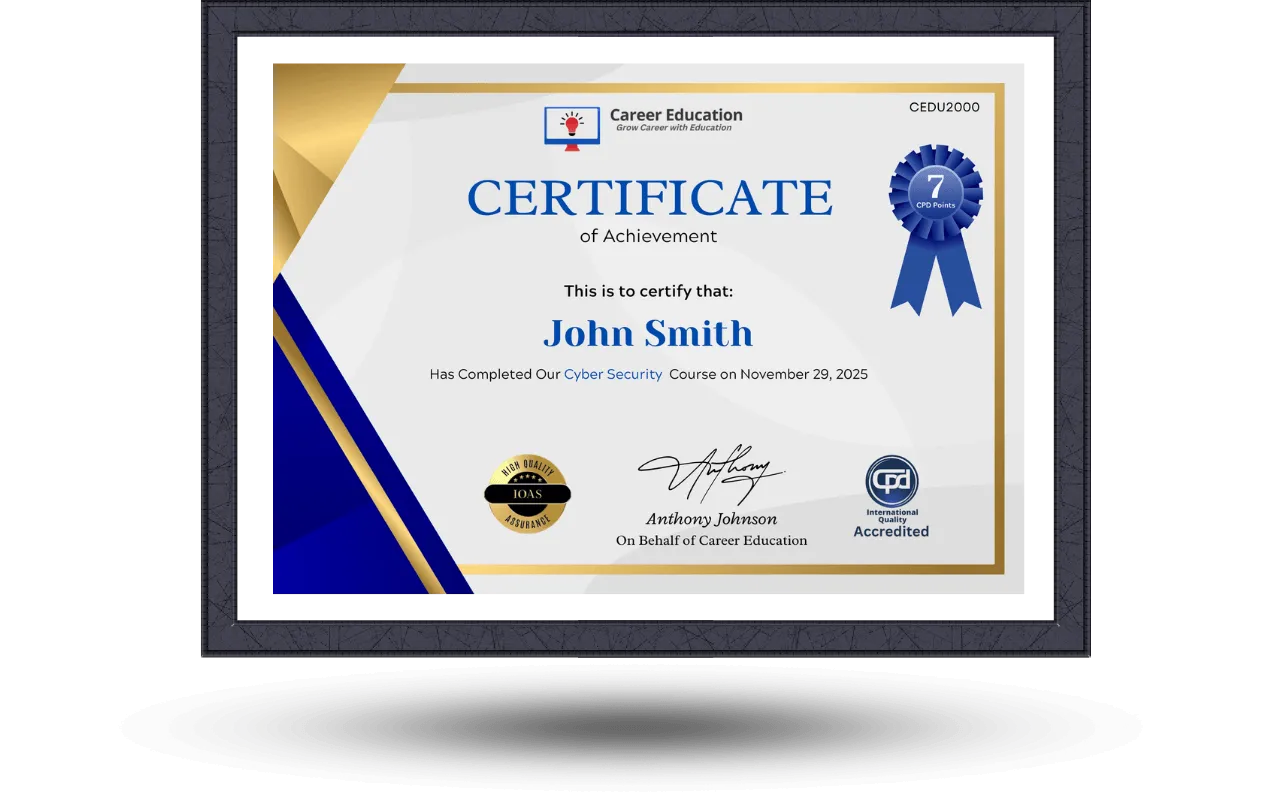
Earn an Accredited Certificate
Upon completion of any course, all students are entitled to a CPD IQ Accredited e-certificate that will be issued by Career Education signifying the completion of your course.
After you complete the course and assignment, you will be eligible to order a free certificate accredited by CPD International Quality by completing the form below.
Hardcopy certificates and transcripts are also available for a small additional fee. More information is disclosed upon course completion.
Similar Courses




Frequently Asked Questions
The lifetime membership includes unlimited access to all courses, resources, and updates for a one-time fee.
You can purchase the membership directly from our website using a secure checkout process.
Yes, selected courses can be downloaded for offline access through our mobile app.
Yes, all future updates and new courses are included at no extra cost.
Yes, we offer a 30-day money-back guarantee if you are not satisfied with the membership.