
94%
OFF
OFF
Special Educational Needs Learning Support Assistant Training
- Lifetime Access
- All Levels
- PDF Certificate
£296
£19
14-Day Money-Back Guarantee
Learn With Confidence







Special Educational Needs Learning Support Assistant Training
Supporting children and young people with special educational needs requires patience, understanding, adaptability, and the ability to recognise that every learner has different strengths, challenges, and ways of engaging with education. The Special Educational Needs Learning Support Assistant Training course is designed to help learners develop practical knowledge and professional skills for providing effective support in educational settings.
Whether you are interested in becoming a learning support assistant, already work with children and young people, or want to develop your understanding of SEN, this course provides a structured introduction to the principles and practices involved in inclusive learning support. You will explore communication, behaviour management, curriculum adaptation, social inclusion, sensory processing, autism spectrum disorder, specific learning difficulties, life skills, and professional development.
The course focuses on outcomes that can help you approach learning support with greater confidence and awareness. By completing the training, you can build a stronger understanding of how to contribute to positive learning experiences and help students participate more effectively in educational environments.
Why Choose Special Educational Needs Learning Support Assistant Training?
Students with special educational needs may require different forms of support to access lessons, communicate their needs, manage classroom situations, and develop independence. A learning support assistant can play an important role in helping students overcome barriers to participation while working alongside teachers, families, and other professionals.
The Special Educational Needs Learning Support Assistant Training course introduces the knowledge needed to understand these responsibilities and respond appropriately to a variety of learning needs.
Rather than focusing solely on theory, the course explores practical areas that are relevant to supporting learners. You will learn about communication strategies, behaviour management, adapting learning activities, working with parents, encouraging social inclusion, understanding sensory processing, supporting students with ASD, and preparing learners for greater independence.
This makes the course useful for anyone seeking to strengthen their understanding of SEN support and develop skills that can be applied in educational and support environments.
What Will You Learn?
The Special Educational Needs Learning Support Assistant Training curriculum covers six key modules, each focusing on an important area of learning support.
Module 1: SEN Basics
The course begins by establishing a foundation in special educational needs. Understanding the principles behind SEN support is essential for anyone working with learners who require additional assistance.
In this module, you will explore the fundamentals of SEN and develop a clearer understanding of the diverse needs that students may experience. You will consider why individualised support matters and how different learners may require different approaches to participation and learning.
By completing this module, you can develop a stronger foundation for recognising the importance of inclusive and learner-centred support.
You will be better prepared to:
-
Understand fundamental SEN concepts
-
Recognise the importance of individual learning needs
-
Appreciate the value of inclusive education
-
Consider how additional support can remove barriers to learning
-
Approach SEN learners with greater awareness and sensitivity
Module 2: Communication Strategies and Behaviour Management
Effective communication is central to successful learning support. Some students may communicate differently or find it difficult to express their needs, emotions, or concerns. Learning support assistants therefore need to understand how communication can be adapted to suit individual learners.
This module examines communication strategies alongside behaviour management. You will explore approaches that can help create supportive learning environments and encourage positive interactions.
Understanding behaviour as a form of communication can also help support staff respond more constructively to challenging situations. Rather than simply reacting to behaviour, effective support involves considering possible needs, triggers, communication difficulties, and environmental factors.
After completing this module, you can develop the ability to:
-
Use appropriate communication approaches
-
Support clearer interactions with learners
-
Recognise the importance of listening and observation
-
Contribute to positive classroom behaviour
-
Respond to behavioural challenges more thoughtfully
-
Encourage respectful and supportive relationships
These skills can help you contribute to a classroom environment where students feel understood, supported, and able to participate.
Module 3: Curriculum Adaptation and Parent Collaboration
Not every student benefits from exactly the same learning approach. Curriculum activities may need to be adapted so that learners can engage with educational content according to their individual abilities, preferences, and support requirements.
Module 3 explores curriculum adaptation and the importance of collaboration with parents. You will consider how learning activities can be adjusted to improve accessibility while maintaining meaningful educational goals.
Working collaboratively with parents and carers can also provide valuable insight into a student’s experiences, strengths, routines, and needs. Positive communication between educational staff and families can contribute to more consistent support.
By completing this module, you can learn to:
-
Understand the purpose of curriculum adaptation
-
Consider different ways to make learning more accessible
-
Support individual learning requirements
-
Appreciate the importance of family collaboration
-
Communicate more effectively with parents and carers
-
Contribute to a coordinated support approach
These outcomes can help you understand how learning support extends beyond the classroom and involves collaboration with the wider support network around a student.
Module 4: Social Inclusion and Sensory Processing
Education is about more than academic achievement. Students also need opportunities to develop relationships, participate in activities, and feel that they belong within their learning environment.
Module 4 focuses on social inclusion and sensory processing. You will explore why inclusion matters and consider some of the ways sensory experiences can affect a student’s ability to engage with their surroundings.
Understanding sensory processing can help support assistants become more aware of environmental factors that may affect concentration, comfort, communication, or participation. A thoughtful approach can contribute to a more accessible and supportive environment.
You will develop knowledge that can help you:
-
Understand the importance of social inclusion
-
Encourage participation in classroom and group activities
-
Recognise the potential impact of sensory experiences
-
Consider how environments may affect individual learners
-
Support positive peer interactions
-
Promote a stronger sense of belonging
This module reinforces the importance of seeing each learner as an individual and considering the whole learning experience rather than focusing exclusively on academic performance.
Module 5: Supporting Students with ASD and Addressing Specific Difficulties
Autism spectrum disorder can affect individuals in different ways, and students with ASD may have varied strengths, preferences, communication styles, and support requirements. Effective support begins with understanding individual differences rather than relying on assumptions.
Module 5 focuses on supporting students with ASD while also addressing specific difficulties that may affect learning and participation.
You will develop greater awareness of the potential challenges learners may experience and explore the importance of appropriate, individualised support. The module encourages a flexible approach that recognises students’ abilities while identifying areas where additional assistance may be beneficial.
On completion, you can strengthen your ability to:
-
Develop a broader understanding of ASD
-
Recognise individual differences among autistic learners
-
Consider communication and participation needs
-
Support students in structured learning environments
-
Respond sensitively to specific learning difficulties
-
Encourage learners to use their strengths and capabilities
This knowledge can be particularly valuable for individuals who want to work in inclusive educational settings where students have a wide range of learning and support needs.
Module 6: Life Skills Preparation and Professional Development
Learning support can extend beyond helping students complete classroom activities. Preparing learners for greater independence and everyday responsibilities is also an important part of development.
The final module explores life skills preparation and professional development. You will consider how support can help learners develop practical abilities and prepare for greater independence as they progress through education and beyond.
The module also focuses on your own development as a learning support professional. Continuous learning can help you remain aware of changing educational practices, improve your approach, and identify areas where further development may be useful.
By completing this module, you can:
-
Understand the importance of life skills development
-
Support learners as they work towards greater independence
-
Recognise the value of practical preparation
-
Reflect on your own professional skills
-
Identify opportunities for continued development
-
Build a more professional approach to learning support
Practical Outcomes of the Course
The Special Educational Needs Learning Support Assistant Training course is designed around practical outcomes that can support your future development in education and learning support.
After completing the course, you should have a stronger understanding of how to support students with different educational needs and contribute to an inclusive learning environment.
You can develop knowledge and skills in areas such as:
-
SEN fundamentals
-
Inclusive learning support
-
Communication strategies
-
Behaviour management
-
Curriculum adaptation
-
Parent collaboration
-
Social inclusion
-
Sensory processing
-
ASD awareness and support
-
Supporting specific learning difficulties
-
Life skills development
-
Professional development
These areas can help you approach learning support responsibilities with greater confidence and a more informed perspective.
Develop a Learner-Centred Approach
One of the most important principles of effective SEN support is recognising that there is no single approach that works for every student. Learners have different abilities, communication preferences, interests, experiences, and support requirements.
The Special Educational Needs Learning Support Assistant Training course encourages a learner-centred mindset. Instead of viewing additional needs only as challenges, you will develop greater awareness of the importance of recognising individual strengths and creating opportunities for meaningful participation.
This approach can help you become more observant, flexible, and responsive when supporting students.
Build Confidence in Educational Support
Entering or progressing within an educational support role can involve working with teachers, students, parents, and other professionals. Confidence comes from having a strong foundation of knowledge and understanding how different aspects of support fit together.
This course can help you build that foundation by taking you through the essential areas of SEN learning support in a logical sequence. Starting with SEN basics, you progress through communication, behaviour, curriculum adaptation, inclusion, sensory processing, ASD support, life skills, and professional development.
As a result, you can gain a broader view of the responsibilities involved in supporting learners with additional needs.
Who Can Benefit from This Course?
The Special Educational Needs Learning Support Assistant Training course can be suitable for a variety of learners who want to develop their understanding of SEN and educational support.
It may be particularly useful for:
-
Aspiring learning support assistants
-
Teaching assistants interested in SEN
-
Education support workers
-
Individuals considering a career working with children and young people
-
Professionals seeking to expand their SEN knowledge
-
People interested in inclusive education
-
Individuals supporting learners with additional needs
-
Those looking to strengthen their professional development
No matter where you are starting from, the course provides a structured opportunity to build knowledge across several important areas of SEN support.
Enhance Your Professional Development
Professional development is an ongoing process, particularly in education, where approaches, expectations, and understanding of additional needs continue to develop.
Completing the Special Educational Needs Learning Support Assistant Training course can demonstrate your commitment to expanding your knowledge and developing relevant skills. It can also provide a useful foundation for identifying areas in which you may wish to pursue further learning.
By building knowledge in communication, behaviour support, inclusion, curriculum adaptation, ASD, and life skills, you can create a broader professional skill set that is relevant to educational support environments.
Support More Inclusive Learning Experiences
Every learner deserves the opportunity to participate in education in a way that recognises their individual circumstances and capabilities. Effective learning support can help reduce barriers, encourage participation, and create more positive educational experiences.
The Special Educational Needs Learning Support Assistant Training course gives you the opportunity to explore the principles behind this support and understand how different strategies can contribute to an inclusive environment.
From adapting learning activities to encouraging social inclusion, from understanding sensory processing to supporting communication, the course covers practical areas that can influence a student’s educational experience.
Take the Next Step with Special Educational Needs Learning Support Assistant Training
If you are interested in developing your knowledge of special educational needs and building skills relevant to learning support, the Special Educational Needs Learning Support Assistant Training course offers a comprehensive starting point.
You will explore SEN basics, communication strategies, behaviour management, curriculum adaptation, parent collaboration, social inclusion, sensory processing, ASD support, specific difficulties, life skills preparation, and professional development.
Most importantly, the course can help you develop a more informed, supportive, and learner-centred approach to educational assistance.
Whether you are preparing for a potential role in education or looking to strengthen your existing knowledge, this training can help you take a meaningful step towards your professional goals.
Enrol in Special Educational Needs Learning Support Assistant Training today and start developing the knowledge and practical understanding needed to support diverse learners and contribute to more inclusive educational environments.
Course Modules
Course Content
Module 1 SEN Basics.
-
Lesson 1 SEN Basics.
Module 2 Communication Strategies and Behaviour Management.
Module 3 Curriculum Adaptation and Parent Collaboration.
Module 4 Social Inclusion and Sensory Processing.
Module 5 Supporting Students with ASD and Addressing Specific Difficulties.
Module 6 Life Skills Preparation and Professional Development.
What our students say
Excellent
4.9 average
158 Reviews

Earn an Accredited Certificate
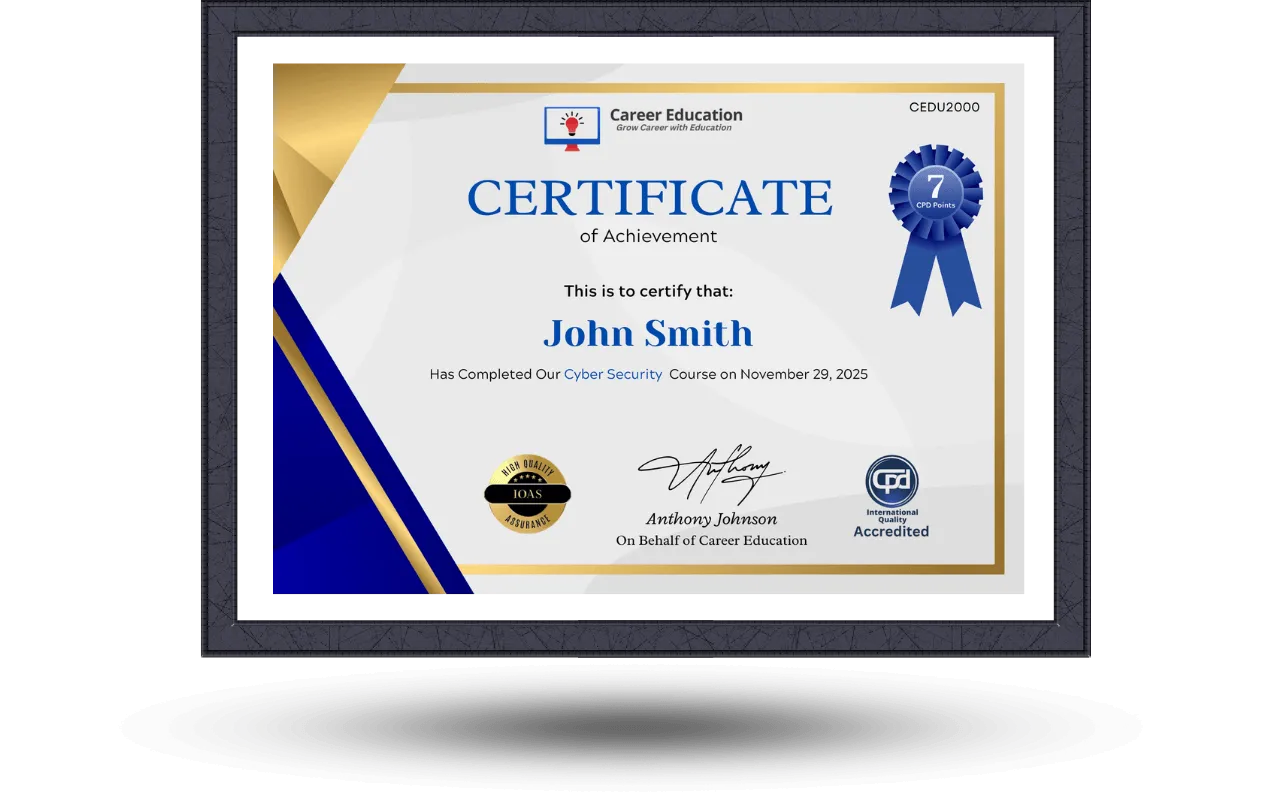
Upon completion of any course, all students are entitled to a CPD IQ Accredited e-certificate that will be issued by Career Education signifying the completion of your course.
After you complete the course and assignment, you will be eligible to order a free certificate accredited by CPD International Quality by completing the form below.
Hardcopy certificates and transcripts are also available for a small additional fee. More information is disclosed upon course completion.
Similar Courses


Frequently Asked Questions
The lifetime membership includes unlimited access to all courses, resources, and updates for a one-time fee.
You can purchase the membership directly from our website using a secure checkout process.
Yes, selected courses can be downloaded for offline access through our mobile app.
Yes, all future updates and new courses are included at no extra cost.
Yes, we offer a 30-day money-back guarantee if you are not satisfied with the membership.