
94%
OFF
OFF
SIA Training Course
- Lifetime Access
- All Levels
- PDF Certificate
£296
£19
14-Day Money-Back Guarantee
Learn With Confidence









# SIA Training Course
Build a strong foundation in security principles, professional conduct, communication, conflict management, observation and legal responsibilities with our comprehensive **SIA Training Course**.
Working in the UK security industry requires more than simply being alert and physically capable. Security professionals need to understand their responsibilities, communicate effectively, respond appropriately to challenging situations, recognise potential risks and operate within legal and ethical boundaries.
The **SIA Training Course** is designed to introduce learners to essential knowledge and skills relevant to working in the security industry. Covering six focused modules, the course explores the role of the Security Industry Authority (SIA), health and safety, customer service, communication, conflict management, physical intervention, surveillance, observation, legal responsibilities and professional ethics.
Whether you are considering a career in private security, preparing for further security training, looking to strengthen your existing knowledge or simply want to understand the expectations of security professionals, this course provides a practical starting point.
## Why Choose an SIA Training Course?
The private security industry plays an important role in helping protect people, property, businesses and events.
Security personnel may work in environments such as retail premises, offices, residential buildings, construction sites, entertainment venues, events and other locations. The nature of the role can vary considerably, but professional standards remain important.
Security workers may be required to interact with members of the public, monitor environments, identify potential risks, respond to incidents and communicate with colleagues or emergency services.
These responsibilities require sound judgement and professional behaviour.
An **SIA Training Course** can help learners understand the fundamental principles behind effective security work and prepare them for further learning and professional development.
## What Will You Learn?
By completing the **SIA Training Course**, you will develop an understanding of:
* The role of the SIA and the UK security industry.
* The responsibilities associated with working in security.
* Basic health and safety principles relevant to security environments.
* Effective customer service and professional communication.
* Approaches to managing conflict and challenging situations.
* Key considerations surrounding physical intervention.
* Surveillance and observation techniques.
* Legal responsibilities within a security role.
* Professional ethics and responsible conduct.
* The importance of appropriate decision-making.
* Professional standards and behaviour expected within security environments.
The course is designed to give you knowledge that can support further security-related training and career development.
—
# Module 1: Introduction to SIA and Security Industry
The first module introduces the Security Industry Authority and the wider private security industry.
Understanding the environment in which security professionals operate is an important first step for anyone considering a career in the sector.
You will explore the role of the SIA and develop an understanding of why regulation and professional standards are important within private security.
The module introduces the responsibilities that can accompany security work and helps learners appreciate the importance of professionalism, accountability and appropriate conduct.
You will also explore the different types of activities that may be associated with private security.
Security professionals can work in a variety of environments, and the duties of a particular role can depend on the employer, location and licence category involved.
Understanding these differences can help you develop realistic expectations about working within the industry.
The module also introduces the importance of professional behaviour.
A security professional may represent an organisation while interacting with customers, visitors, employees and members of the public. Maintaining a calm, respectful and professional approach is therefore essential.
By completing this module, you will have a clearer understanding of the UK security industry and the regulatory environment surrounding it.
—
# Module 2: Health and Safety in Security
Health and safety is a fundamental consideration for security professionals.
Module 2 explores the importance of maintaining a safe environment while carrying out security-related responsibilities.
Security workers may operate in busy, unpredictable or potentially hazardous environments. Understanding basic health and safety principles can help professionals identify risks and respond appropriately.
You will explore the importance of awareness, risk identification and responsible working practices.
Health and safety is not simply about protecting other people. Security professionals also need to consider their own safety and the safety of colleagues.
The module encourages learners to understand why hazards should be recognised and reported through appropriate procedures.
You will also consider how clear communication can contribute to safer working environments.
Security personnel may be among the first people to notice a potential hazard, unusual activity or developing incident. Knowing how to respond within the limits of your role can be extremely important.
By completing this module, you will develop greater awareness of health and safety considerations relevant to security work.
—
# Module 3: Customer Service and Communication Skills
Security professionals regularly interact with people.
Module 3 focuses on customer service and communication skills, helping learners understand why effective communication is an important part of professional security work.
Security personnel may need to provide directions, answer questions, explain procedures, communicate instructions or deal with complaints.
The way these interactions are handled can influence how people perceive both the security professional and the organisation they represent.
You will explore the importance of active listening, clear communication, professional language and appropriate body language.
You will also consider how communication can help prevent misunderstandings and reduce the likelihood of unnecessary conflict.
Good customer service does not mean ignoring security requirements.
Instead, it involves balancing professionalism and helpfulness with appropriate procedures, boundaries and responsibilities.
The module helps learners understand how a calm and respectful communication style can support effective security operations.
You will also develop awareness of the importance of adapting communication to different situations and individuals.
These skills can be valuable in security environments where professionals interact with people from a wide range of backgrounds and circumstances.
—
# Module 4: Physical Intervention and Conflict Management
Security professionals may encounter disagreements, challenging behaviour or potentially confrontational situations.
Module 4 introduces conflict management and explores the importance of responding appropriately to challenging circumstances.
The primary objective in many situations is to prevent conflict from escalating.
Effective communication, awareness and de-escalation can play an important role in achieving this.
You will explore ways of recognising developing conflict and consider how professional communication can contribute to calmer outcomes.
The module also introduces physical intervention as an important area of security practice.
Physical intervention is a serious responsibility and should only be approached within appropriate legal, organisational and training requirements. Security professionals should understand the limits of their role and the importance of using appropriate procedures.
Rather than encouraging unnecessary physical confrontation, the course focuses on awareness, responsible decision-making and understanding the principles surrounding conflict management and intervention.
You will develop greater awareness of why proportionality, safety and professional judgement are important considerations.
The module can provide useful foundational knowledge for learners who intend to undertake relevant practical training as part of their wider security education.
—
# Module 5: Surveillance and Observation Techniques
Observation is an essential skill for many security professionals.
Module 5 focuses on surveillance and observation techniques and explores how effective observation can support security responsibilities.
Security work often requires individuals to remain alert to their surroundings and recognise unusual or potentially concerning activity.
You will explore the importance of situational awareness and paying attention to relevant details.
Effective observation is not simply about watching people. It can involve understanding the wider environment, identifying changes and recognising circumstances that may require further attention.
You will consider the importance of accurate information and professional reporting.
When an incident occurs, clear observations can help security personnel communicate what happened to colleagues, supervisors or relevant authorities.
The module encourages learners to distinguish between observation and assumption.
Security professionals should focus on relevant facts and avoid making unjustified conclusions about people based solely on appearance or personal characteristics.
This supports professional, fair and responsible security practice.
By completing this module, you will develop greater awareness of the role observation can play in maintaining a secure environment.
—
# Module 6: Legal Responsibilities and Ethics in Security
Security professionals operate within legal and ethical boundaries.
Module 6 explores legal responsibilities and professional ethics, helping learners understand why knowledge of responsibilities is essential within the security industry.
Security personnel do not have unlimited powers.
They must understand the limits of their role and operate in accordance with relevant laws, workplace procedures and professional standards.
You will explore the importance of acting responsibly and understanding the consequences of inappropriate conduct.
The module also examines ethical considerations.
A security professional may have access to sensitive information, interact with vulnerable people or make decisions that affect members of the public. Professional integrity is therefore essential.
You will consider the importance of fairness, respect, confidentiality, accountability and appropriate use of authority.
Ethical behaviour can help build trust between security professionals, employers, customers and the wider public.
The module encourages learners to think carefully about the difference between what may be technically possible and what is professionally appropriate.
By completing this module, you will have greater awareness of the legal and ethical framework that should guide responsible security practice.
—
# Develop Professional Security Awareness
The **SIA Training Course** is designed to help you build knowledge across several key areas of security work.
Instead of focusing on just one aspect of the industry, the course provides a broader introduction covering regulation, safety, communication, conflict, observation and professional responsibilities.
This holistic approach can help you understand how different security skills work together.
## Understand the Security Industry
Before beginning a security career, it is useful to understand the industry and the role of regulation.
The course introduces the SIA and provides context around private security work, helping learners develop realistic expectations and a stronger foundation for further training.
## Improve Communication
Security professionals need to communicate clearly and confidently.
Whether dealing with customers, colleagues or individuals involved in an incident, communication can have a significant impact on the outcome.
The course introduces practical communication principles that can support professional interactions.
## Recognise Potential Risks
Security involves awareness.
Developing observation and situational awareness can help professionals recognise relevant changes or potential concerns within their environment.
The course explores the role of observation and responsible reporting.
## Handle Conflict More Effectively
Conflict management is an important security skill.
The course introduces learners to approaches that can help prevent unnecessary escalation and encourages responsible decision-making when dealing with challenging situations.
## Understand Professional Boundaries
Knowing what you should and should not do is essential.
The legal and ethical module encourages learners to understand professional boundaries and the importance of operating within appropriate responsibilities.
## Promote Safety
Health and safety should remain central to security work.
Security professionals need to consider their own safety, the safety of colleagues and the safety of members of the public.
The course develops awareness of these responsibilities.
—
# Who Is This SIA Training Course For?
The **SIA Training Course** can be suitable for:
* Individuals considering a career in private security.
* Aspiring security officers.
* Door supervision candidates seeking foundational knowledge.
* Security personnel wanting to refresh their general awareness.
* Individuals interested in event security.
* People considering security-related employment.
* Those preparing for further security training.
* Employees whose roles involve security responsibilities.
* Learners interested in the UK private security industry.
* Anyone wanting to understand fundamental security principles.
The course is particularly suitable for beginners who want to develop an understanding of the industry before progressing to more specialised training.
—
# Prepare for Further Security Development
The **SIA Training Course** can provide a useful foundation, but learners should understand that completing a general training course does **not automatically provide an SIA licence or guarantee eligibility to work in a regulated security role**.
Specific security roles in the UK may have their own training, qualification and licensing requirements. Learners should check the current requirements that apply to the particular SIA licence-linked activity they intend to pursue.
This makes the course particularly useful as part of a broader professional development journey.
You can use the knowledge gained here to better understand the terminology, responsibilities and expectations you may encounter during further industry-specific training.
—
# Build Confidence Before Entering the Security Industry
Starting a new career can feel challenging when you do not know what to expect.
The **SIA Training Course** gives you an opportunity to explore important aspects of security work in a structured learning environment.
You will learn about the industry, communication, safety, conflict management, observation and legal responsibilities.
This can help you approach future training and professional opportunities with a stronger understanding of the role.
# Develop Transferable Professional Skills
Many of the skills covered in this course extend beyond security.
Communication, observation, professionalism, conflict management, decision-making and awareness can be useful across a wide range of employment environments.
These skills can contribute to more confident interactions with colleagues, customers and members of the public.
# Why Choose the SIA Training Course?
The **SIA Training Course** provides a six-module learning journey covering:
1. Introduction to SIA and Security Industry.
2. Health and Safety in Security.
3. Customer Service and Communication Skills.
4. Physical Intervention and Conflict Management.
5. Surveillance and Observation Techniques.
6. Legal Responsibilities and Ethics in Security.
The curriculum combines industry awareness with practical professional skills, giving learners a broad introduction to the knowledge required in security environments.
Whether you are exploring security as a career option or developing your existing knowledge, the course provides a convenient way to study essential concepts in one structured programme.
## Start Your Security Learning Journey Today
A successful security professional needs more than vigilance. They need communication skills, sound judgement, awareness, professionalism and an understanding of their responsibilities.
The **SIA Training Course** gives you the opportunity to explore these essential areas and develop a stronger foundation in security industry practices.
From understanding the role of the SIA to exploring health and safety, customer service, conflict management, observation and legal responsibilities, each module contributes to a broader understanding of professional security work.
If you are serious about developing your knowledge and preparing for further security training, this course can be a valuable starting point.
**Enrol in the SIA Training Course today and build the foundational knowledge, professional awareness and confidence to take your next step towards a career in the UK security industry.**
Course Modules
Course Content
Module 1_ Introduction to SIA and Security Industry
-
Lesson 1_ Introduction to SIA and Security Industry
Module 2_ Health and Safety in Security
Module 3_ Customer Service and Communication Skills
Module 4_ Physical Intervention and Conflict Management
Module 5_ Surveillance and Observation Techniques
Module 6_ Legal Responsibilities and Ethics in Security
What our students say
Excellent
4.9 average
158 Reviews

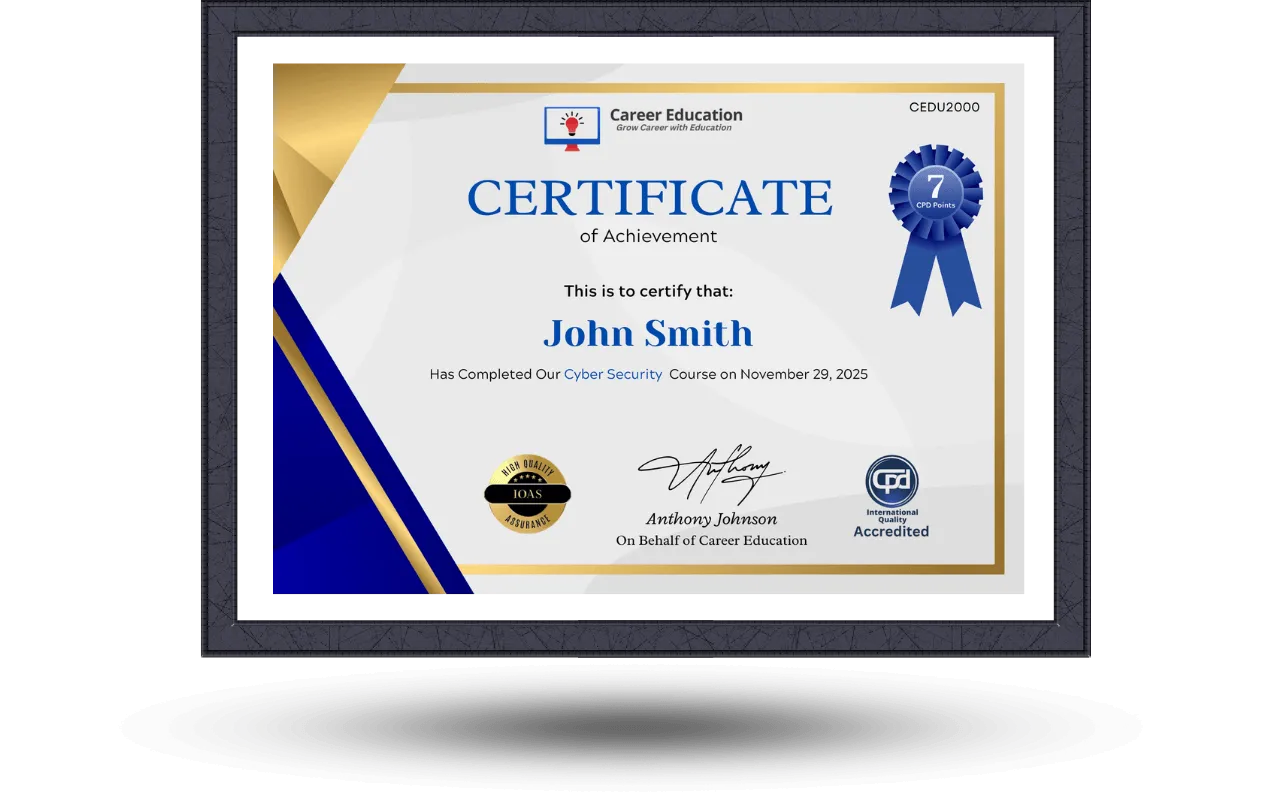
Earn an Accredited Certificate
Upon completion of any course, all students are entitled to a CPD IQ Accredited e-certificate that will be issued by Career Education signifying the completion of your course.
After you complete the course and assignment, you will be eligible to order a free certificate accredited by CPD International Quality by completing the form below.
Hardcopy certificates and transcripts are also available for a small additional fee. More information is disclosed upon course completion.
Similar Courses


Frequently Asked Questions
The lifetime membership includes unlimited access to all courses, resources, and updates for a one-time fee.
You can purchase the membership directly from our website using a secure checkout process.
Yes, selected courses can be downloaded for offline access through our mobile app.
Yes, all future updates and new courses are included at no extra cost.
Yes, we offer a 30-day money-back guarantee if you are not satisfied with the membership.