
94%
OFF
OFF
Self-Employed Accounting
- Lifetime Access
- All Levels
- PDF Certificate
£296
£19
14-Day Money-Back Guarantee
Learn With Confidence







Self-Employed Accounting
Take Control of Your Business Finances with Self-Employed Accounting Skills
Managing your own business comes with freedom, flexibility, and responsibility. From recording income and expenses to understanding taxation, analysing financial statements, choosing accounting software, and managing financial risks, having the right financial knowledge can make a significant difference to your business decisions.
The Self-Employed Accounting course is designed to help learners build practical knowledge of accounting and bookkeeping while developing the skills needed to manage financial responsibilities confidently. Whether you are already self-employed, planning to start a small business, working as a freelance professional, or looking to strengthen your accounting knowledge, this course provides a structured learning experience covering essential areas of self-employed accounting.
Rather than focusing only on accounting theory, the course explores how financial knowledge can support better organisation, informed decision-making, compliance, risk management, and sustainable business development.
Why Learn Self-Employed Accounting?
Financial management is one of the most important parts of running a successful self-employed business. Even when a business is performing well, poor financial organisation can make it difficult to understand profitability, prepare for tax obligations, control costs, or plan for future growth.
Learning Self-Employed Accounting can help you understand the financial side of running a business and develop a more organised approach to managing money.
You can learn how to:
-
Understand fundamental accounting and bookkeeping principles
-
Keep clearer and more organised financial records
-
Develop greater awareness of taxation responsibilities
-
Use accounting software to support day-to-day financial administration
-
Interpret financial statements and identify useful business information
-
Understand how accounting knowledge can support business advisory services
-
Recognise financial and operational risks
-
Develop awareness of cybersecurity considerations affecting financial information
-
Make more informed business decisions using financial data
-
Build transferable accounting skills applicable to self-employment and small-business environments
Build Strong Foundations in Accounting and Bookkeeping
The course begins with Fundamentals of Accounting and Bookkeeping, providing an essential foundation for understanding how financial information is recorded and organised.
Bookkeeping plays a central role in effective financial management. Accurate records can help business owners understand where money is coming from, where it is being spent, and how the business is performing over time.
Through this module, learners can develop an understanding of core accounting and bookkeeping concepts and their relevance to self-employed professionals. Building this foundation can make it easier to approach financial records systematically rather than treating accounting as an overwhelming administrative task.
A stronger understanding of bookkeeping can also support better financial organisation. Learners can develop knowledge that helps them recognise the importance of accurate records, consistent processes, and reliable financial information.
Understand Taxation for Self-Employed Individuals
Tax responsibilities are an important consideration for anyone operating as a self-employed individual. The Taxation for Self-Employed Individuals module focuses on developing awareness of the tax-related considerations that self-employed professionals may encounter.
Understanding taxation can help learners become more prepared when organising financial information and planning for tax-related responsibilities. Instead of approaching tax matters without sufficient knowledge, learners can develop a clearer understanding of why financial records and relevant documentation matter.
This module is particularly valuable for learners who want to improve their overall financial awareness and understand how taxation fits into the wider accounting process.
The knowledge gained can support more organised financial planning and encourage learners to approach their responsibilities proactively.
Tax rules and requirements can change, so learners should always consult current official guidance or a qualified professional for advice relating to their specific circumstances.
Develop Confidence with Small Business Accounting Software
Modern accounting technology can simplify many financial administration tasks. The Small Business Accounting Software module introduces learners to the role accounting software can play in managing business finances.
For self-employed professionals, appropriate software can help organise financial information, streamline routine accounting activities, and make important information easier to access.
Understanding the purpose and potential benefits of accounting software can help learners make better-informed decisions about their financial processes. It can also support more efficient administration and reduce dependence on disorganised manual records.
By developing knowledge in this area, learners can become more comfortable with the technology used in contemporary small-business accounting environments.
Learn to Analyse Financial Statements
Recording financial information is only part of effective accounting. Being able to understand what that information means can be equally important.
The Financial Statements Analysis module focuses on developing the ability to examine financial information and gain useful insights from financial statements.
Financial analysis can help self-employed professionals assess business performance, identify trends, understand financial strengths and weaknesses, and support future planning.
Developing these skills can move learners beyond simply recording transactions towards understanding the story that financial information tells about a business.
With stronger financial analysis knowledge, learners can approach business decisions with greater awareness of relevant financial information. This can be valuable when reviewing performance, considering costs, planning investments, or assessing opportunities for development.
Explore Business Advisory Services
Accounting knowledge can have applications beyond basic bookkeeping and financial administration. The Business Advisory Services for Self-Employed Accountants module explores how accounting professionals can provide broader support and guidance to self-employed clients.
This module introduces the wider advisory potential of accounting and highlights the importance of using financial knowledge to support business-related decision-making.
Learners can develop an understanding of how financial information may contribute to conversations around business performance, planning, and improvement.
For individuals interested in developing their accounting career or providing accounting-related services to self-employed clients, this broader perspective can be particularly useful. It encourages learners to think about accounting not simply as a record-keeping function, but as a source of valuable business insight.
Understand Risk Management and Cybersecurity
Financial information is an important business asset, and protecting it is a key consideration in modern business environments.
The Risk Management and Cybersecurity for Self-Employed Accountants module introduces learners to important considerations surrounding financial and operational risk.
Self-employed professionals may handle sensitive financial information, use cloud-based systems, communicate electronically, and rely on digital accounting tools. Understanding potential risks can help learners develop a more responsible approach to protecting business information and financial processes.
This module encourages greater awareness of risk management and cybersecurity considerations relevant to accounting activities. It can help learners recognise why secure systems, responsible information handling, and appropriate risk awareness are important parts of modern financial administration.
Who Is This Self-Employed Accounting Course For?
The Self-Employed Accounting course can be suitable for a wide range of learners who want to strengthen their understanding of accounting in a self-employed or small-business context.
It may be particularly useful for:
-
Self-employed professionals who want to improve their financial knowledge
-
Freelancers looking to understand business accounting more effectively
-
Small-business owners seeking stronger financial management skills
-
Entrepreneurs developing their understanding of business finances
-
Individuals considering a career involving accounting or bookkeeping
-
Aspiring self-employed accountants
-
Administrative professionals who want to expand their accounting knowledge
-
Learners interested in small-business financial management
-
Professionals seeking to develop practical and transferable business skills
No matter where you are starting from, the course provides a structured opportunity to develop knowledge across several important areas of self-employed accounting.
What Can You Gain from the Course?
Completing the Self-Employed Accounting course can give you a broader understanding of the financial responsibilities associated with self-employment and small-business operations.
You can develop knowledge that helps you:
Improve financial organisation: Understand the importance of structured bookkeeping and accurate financial records.
Strengthen tax awareness: Gain a clearer understanding of taxation considerations relevant to self-employed individuals.
Use accounting technology: Develop awareness of how small-business accounting software can support financial administration.
Interpret financial information: Learn how financial statement analysis can provide useful insights into business performance.
Support better decisions: Use financial knowledge to contribute to more informed business planning and evaluation.
Understand advisory opportunities: Explore how accounting knowledge can extend into business advisory services.
Recognise financial risks: Develop awareness of risk management and cybersecurity considerations relevant to accounting.
Build transferable skills: Gain knowledge that can be useful across self-employment, entrepreneurship, bookkeeping, accounting, and small-business environments.
Turn Accounting Knowledge into Practical Business Confidence
One of the biggest benefits of learning Self-Employed Accounting is developing greater confidence around financial responsibilities.
You do not need to view accounting as simply a collection of numbers and records. Financial information can provide valuable insights into how a business operates, where improvements may be possible, and what decisions could affect future performance.
By developing accounting knowledge, you can approach your financial responsibilities with greater structure and awareness. You can also build a stronger foundation for working with accounting professionals, software, financial records, and business information.
The course’s combination of bookkeeping, taxation, accounting software, financial analysis, advisory services, risk management, and cybersecurity provides a broad learning experience designed around the needs of modern self-employed and small-business environments.
Develop Skills for Your Next Professional Step
Whether your goal is to manage your own business finances more effectively or develop skills for future professional opportunities, the Self-Employed Accounting course can help you build a valuable knowledge base.
Accounting skills are relevant across many business environments because financial information influences planning, operations, compliance, performance assessment, and decision-making. Developing these skills can therefore complement existing professional experience while opening opportunities to learn more about accounting and business management.
For aspiring self-employed accountants, the course can provide a useful foundation for understanding some of the key responsibilities and considerations involved in supporting self-employed clients.
For business owners and freelancers, it can help develop greater financial awareness and encourage a more informed approach to managing business finances.
Course Curriculum
Module 1: Fundamentals of Accounting and Bookkeeping
Build a strong foundation in essential accounting and bookkeeping principles. Develop an understanding of how financial information is organised and why accurate record-keeping matters for self-employed professionals.
Module 2: Taxation for Self-Employed Individuals
Explore key taxation considerations relevant to self-employed individuals and develop greater awareness of the relationship between financial records and tax responsibilities.
Module 3: Small Business Accounting Software
Discover the role of accounting software in modern small-business finance. Develop awareness of how digital tools can support financial administration and improve organisation.
Module 4: Financial Statements Analysis
Learn about analysing financial statements and using financial information to gain insights into business performance, trends, and financial position.
Module 5: Business Advisory Services for Self-Employed Accountants
Explore how accounting knowledge can contribute to broader business advisory services and support clients with financial insight and business decision-making.
Module 6: Risk Management and Cybersecurity for Self-Employed Accountants
Develop awareness of financial risks, operational risks, and cybersecurity considerations that can affect accounting activities and sensitive business information.
Start Building Your Self-Employed Accounting Knowledge
Managing finances effectively can make a meaningful difference to how confidently you operate a business. From bookkeeping and taxation to financial analysis, technology, advisory services, and cybersecurity, understanding the financial side of self-employment can help you become better prepared for the responsibilities of running or supporting a small business.
The Self-Employed Accounting course provides a comprehensive learning journey covering essential accounting concepts and modern considerations relevant to self-employed professionals and small-business environments.
Whether you want to improve your own financial management skills, explore accounting-related career opportunities, or develop a stronger foundation for supporting self-employed clients, this course can help you move forward with greater knowledge and confidence.
Enrol in Self-Employed Accounting today and start developing practical knowledge that can support smarter financial management, stronger business awareness, and your long-term professional development.
Course Modules
Course Content
Module 1_ Fundamentals of Accounting and Bookkeeping
-
Lesson 1_ Fundamentals of Accounting and Bookkeeping
Module 2_ Taxation for Self-Employed Individuals
Module 3_ Small Business Accounting Software
Module 4_ Financial Statements Analysis
Module 5_ Business Advisory Services for Self-Employed Accountants
Module 6_ Risk Management and Cybersecurity for Self-Employed Accountants
What our students say
Excellent
4.9 average
158 Reviews

Earn an Accredited Certificate
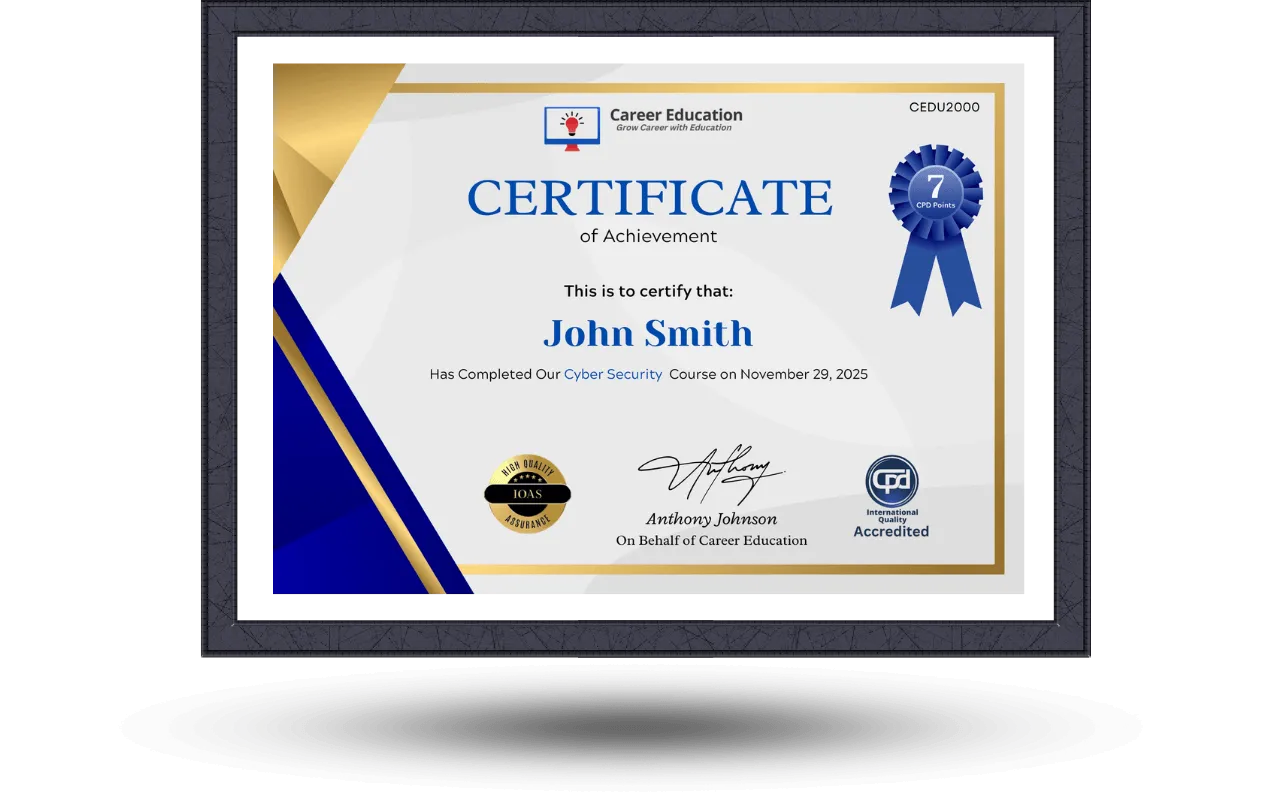
Upon completion of any course, all students are entitled to a CPD IQ Accredited e-certificate that will be issued by Career Education signifying the completion of your course.
After you complete the course and assignment, you will be eligible to order a free certificate accredited by CPD International Quality by completing the form below.
Hardcopy certificates and transcripts are also available for a small additional fee. More information is disclosed upon course completion.
Similar Courses


Frequently Asked Questions
The lifetime membership includes unlimited access to all courses, resources, and updates for a one-time fee.
You can purchase the membership directly from our website using a secure checkout process.
Yes, selected courses can be downloaded for offline access through our mobile app.
Yes, all future updates and new courses are included at no extra cost.
Yes, we offer a 30-day money-back guarantee if you are not satisfied with the membership.