
94%
OFF
OFF
Safe Lifting Practices in Construction
- Lifetime Access
- All Levels
- PDF Certificate
£296
£19
14-Day Money-Back Guarantee
Learn With Confidence









Safe Lifting Practices in Construction
Construction work often involves lifting, carrying, moving, positioning, and handling materials, tools, equipment, and other loads. Without appropriate knowledge and preparation, these activities can place significant strain on the body and increase the likelihood of workplace injuries. The Safe Lifting Practices in Construction course is designed to help learners develop practical knowledge and safer working habits for handling loads in construction environments.
This outcome-focused course explores the principles behind safe lifting, effective body mechanics, task assessment, proper lifting techniques, fatigue prevention, and the safe handling of different types of loads. Learners will also explore how to approach lifting tasks in confined spaces and awkward working positions, where normal techniques may need to be adapted.
Why Learn Safe Lifting Practices in Construction?
Manual handling is a common part of many construction roles. Workers may regularly move materials, tools, components, boxes, equipment, and supplies throughout a worksite. Repeated or poorly performed lifting tasks can contribute to unnecessary physical strain and reduce workplace safety.
The Safe Lifting Practices in Construction course provides learners with knowledge that can support safer decision-making before and during lifting activities. Rather than focusing only on how to lift an object, the course encourages learners to consider the complete task—including the load, environment, movement, posture, available space, and personal limitations.
By developing these skills, learners can become better prepared to recognise potential hazards, select appropriate techniques, and approach manual handling tasks more thoughtfully.
What Will You Learn?
This course covers essential concepts that can be applied to everyday construction activities. Learners will explore:
-
The fundamentals of safe lifting in construction environments
-
The relationship between ergonomics and manual handling
-
Effective body mechanics and safer movement patterns
-
How to assess lifting tasks before beginning work
-
Practical principles for proper lifting techniques
-
Ways to reduce unnecessary overexertion and fatigue
-
Considerations for lifting in confined or awkward spaces
-
Safer approaches to handling different types of loads
-
How planning can contribute to more controlled lifting activities
-
How to recognise situations where a lifting task may require additional support or an alternative approach
Module 1: Introduction to Safe Lifting Practices
The course begins by establishing a strong foundation in safe lifting principles. Learners will explore why lifting safety matters in construction and how everyday manual handling activities can present different risks.
This module introduces the importance of planning before lifting and encourages learners to think about factors such as load characteristics, surroundings, movement requirements, and available assistance. Understanding these fundamentals can help learners approach lifting activities with greater awareness and preparation.
The outcome is a clearer understanding of what safe lifting involves and why it should be treated as an important part of construction workplace safety.
Module 2: Understanding Ergonomics and Body Mechanics
Safe movement begins with understanding how the body responds to physical tasks. This module introduces ergonomics and body mechanics, helping learners understand how posture, positioning, movement, and physical effort can influence lifting activities.
Learners will examine principles that can support more efficient body positioning and controlled movement. They will develop greater awareness of how poor posture or unsuitable movement patterns can increase physical strain.
By the end of this module, learners will be better equipped to apply basic ergonomic principles when approaching manual handling tasks and recognise the value of working with, rather than unnecessarily against, the body’s natural movement.
Module 3: Assessing Lifting Tasks
Not every lifting task presents the same challenges. The size, shape, weight, stability, and location of a load can all affect how it should be handled.
This module focuses on assessing lifting tasks before carrying them out. Learners will consider the characteristics of the load, the distance it needs to be moved, the working environment, the required posture, and other relevant factors.
The goal is to encourage a practical risk-aware mindset. Instead of automatically attempting a lift, learners will understand the importance of stopping to evaluate whether the task can be completed safely and whether another method, additional assistance, or suitable equipment may be appropriate.
Module 4: Proper Lifting Techniques
This module focuses on the practical principles associated with safer lifting. Learners will explore how preparation, positioning, controlled movement, and appropriate handling techniques can contribute to safer manual handling.
The module helps learners understand the importance of avoiding unnecessary twisting, sudden movements, and poorly controlled handling. It also reinforces the value of maintaining awareness throughout the entire lifting and moving process.
After completing this module, learners should have a stronger understanding of how proper lifting principles can be incorporated into routine construction activities.
Module 5: Preventing Overexertion and Fatigue
Construction work can involve repeated physical activity, and fatigue can affect concentration, coordination, and physical performance. This module explores the importance of recognising overexertion and understanding how fatigue can influence safe manual handling.
Learners will consider ways to approach demanding tasks more effectively by planning activities, using appropriate methods, taking suitable breaks, and recognising when a task may exceed reasonable physical capacity.
The focus is not simply on completing a task quickly but on supporting sustainable and controlled working practices. Learners will develop greater awareness of how fatigue management can contribute to safer and more effective work.
Module 6: Lifting in Confined Spaces and Awkward Positions
Some construction environments do not provide ideal conditions for lifting. Restricted access, limited space, low clearances, obstacles, uneven surfaces, or awkward working positions can make manual handling more challenging.
This module explores the additional considerations involved in lifting under such circumstances. Learners will examine why standard movement patterns may become difficult and why careful planning is particularly important when space is restricted.
By completing this module, learners will be better prepared to recognise the challenges associated with confined or awkward lifting situations and consider safer alternatives where appropriate.
Module 7: Safe Handling of Different Loads
Construction workers may encounter loads with very different characteristics. Some may be large or bulky, while others may be uneven, difficult to grip, unstable, or awkward to carry.
The final module focuses on adapting handling practices to different load types. Learners will develop a broader understanding of why one lifting approach may not be suitable for every situation.
This module reinforces the importance of assessing the specific load and working conditions before deciding how it should be handled. Learners will be encouraged to consider stability, grip, size, shape, movement requirements, and the surrounding environment.
Practical Outcomes of the Course
Completing the Safe Lifting Practices in Construction course can help learners build practical knowledge that supports safer manual handling. By the end of the training, learners should be able to:
-
Explain the importance of safe lifting practices in construction
-
Recognise common factors that can make lifting tasks more challenging
-
Apply basic ergonomic and body mechanics principles
-
Assess a lifting task before attempting it
-
Understand key principles of safer lifting technique
-
Recognise the effects of excessive exertion and fatigue
-
Identify additional challenges associated with confined or awkward spaces
-
Adapt their approach when handling different types of loads
-
Make more informed decisions about when a lifting task may require additional support or an alternative handling method
-
Develop a more safety-conscious approach to everyday manual handling activities
Who Can Benefit from This Course?
The Safe Lifting Practices in Construction course can be useful for individuals who work in or around construction environments where manual handling forms part of their responsibilities.
It may be particularly relevant to:
-
Construction workers
-
Site operatives
-
General labourers
-
Maintenance personnel
-
Warehouse and material-handling staff working on construction sites
-
Supervisors and team leaders
-
Individuals preparing for construction-related roles
-
Anyone seeking to improve their understanding of safer lifting practices
The course can also serve as useful learning for people who want to strengthen their awareness of manual handling principles before entering a physically demanding workplace.
Build Safer Working Habits
Safe lifting is more than simply moving an object from one location to another. It involves preparation, awareness, appropriate technique, environmental consideration, and knowing when a task may require a different solution.
The Safe Lifting Practices in Construction course encourages learners to develop a structured approach to lifting and handling tasks. Instead of treating manual handling as an automatic part of the job, learners can develop the habit of assessing the situation, considering the risks, and selecting an appropriate approach.
These habits can contribute to greater confidence and awareness when dealing with everyday lifting challenges in construction environments.
Improve Your Construction Safety Knowledge
Whether you are already working in construction or preparing to enter the industry, understanding safe lifting principles can be a valuable addition to your professional knowledge. The Safe Lifting Practices in Construction course brings together essential concepts covering ergonomics, task assessment, lifting techniques, fatigue prevention, confined spaces, awkward positions, and different load types.
Through the seven-module curriculum, learners can develop a practical foundation for approaching manual handling with greater care and awareness.
Start the Safe Lifting Practices in Construction course today and build the knowledge needed to approach construction lifting tasks with improved preparation, safer techniques, and greater confidence.
Course Modules
Course Content
Module 1_ Introduction to Safe Lifting Practices
-
Lesson 1_ Introduction to Safe Lifting Practices
Module 2_ Understanding Ergonomics and Body Mechanics
Module 3_ Assessing Lifting Tasks
Module 4_ Proper Lifting Techniques
Module 5_ Preventing Overexertion and Fatigue
Module 6_ Lifting in Confined Spaces and Awkward Positions
Module 7_ Safe Handling of Different Loads
What our students say
Excellent
4.9 average
158 Reviews

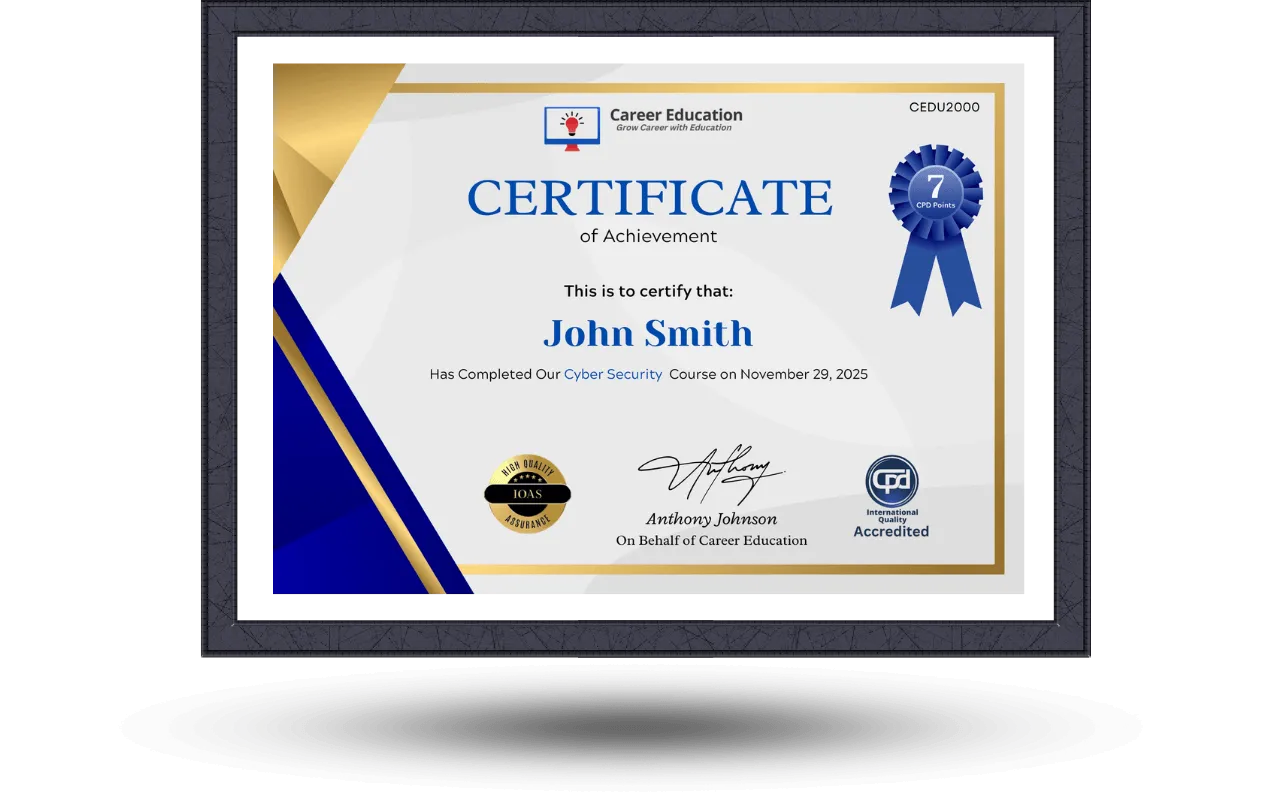
Earn an Accredited Certificate
Upon completion of any course, all students are entitled to a CPD IQ Accredited e-certificate that will be issued by Career Education signifying the completion of your course.
After you complete the course and assignment, you will be eligible to order a free certificate accredited by CPD International Quality by completing the form below.
Hardcopy certificates and transcripts are also available for a small additional fee. More information is disclosed upon course completion.
Similar Courses


Frequently Asked Questions
The lifetime membership includes unlimited access to all courses, resources, and updates for a one-time fee.
You can purchase the membership directly from our website using a secure checkout process.
Yes, selected courses can be downloaded for offline access through our mobile app.
Yes, all future updates and new courses are included at no extra cost.
Yes, we offer a 30-day money-back guarantee if you are not satisfied with the membership.