
94%
OFF
OFF
Resilience and Adaptability for Effective Leadership
- Lifetime Access
- All Levels
- PDF Certificate
£296
£19
14-Day Money-Back Guarantee
Learn With Confidence









Resilience and Adaptability for Effective Leadership
In today’s fast-changing professional environment, effective leadership requires more than technical expertise or strong management skills. Leaders must be able to remain composed during uncertainty, adapt to changing circumstances, support their teams through challenges, and make sound decisions when the path forward is unclear. Resilience and Adaptability for Effective Leadership is designed to help learners develop these essential leadership capabilities and apply them confidently in real-world situations.
This outcome-focused course explores the psychological foundations of resilience, practical strategies for strengthening personal resilience, techniques for building resilient teams, and approaches to strategic decision-making in uncertain environments. Learners will also discover how to lead change and innovation while developing the skills needed to respond effectively to crises.
Whether you are an aspiring manager, team leader, business professional, supervisor, entrepreneur, or experienced executive, this course can help you become more confident and capable when facing pressure, disruption, and organisational change.
Why Resilience and Adaptability Matter in Leadership
Workplaces are constantly evolving. Organisations may experience changes in technology, market conditions, customer expectations, business priorities, regulations, staffing, or internal processes. During these periods, employees often look to their leaders for stability, direction, and reassurance.
A resilient leader does not simply avoid difficulties. Instead, they develop the ability to respond constructively, learn from setbacks, and continue working toward meaningful objectives. Adaptability complements resilience by helping leaders adjust their approach when circumstances change.
Resilience and Adaptability for Effective Leadership focuses on turning these qualities into practical leadership capabilities. Rather than treating resilience as a fixed personality trait, the course explores skills and strategies that can be developed and strengthened over time.
By completing the course, learners can gain a stronger understanding of how their reactions, decisions, communication, and leadership behaviours influence themselves and those around them.
What You Will Learn
The course takes learners through seven structured modules, moving from foundational concepts to practical leadership applications.
Module 1: Introduction to Resilience and Adaptability
The course begins by establishing a clear understanding of resilience and adaptability within a leadership context. Learners will explore what these concepts mean, why they are important, and how they influence leadership effectiveness.
You will examine how leaders respond to challenges, setbacks, uncertainty, and change. The module also introduces the relationship between resilience, adaptability, performance, and long-term leadership effectiveness.
By the end of this module, you should be able to:
-
Explain the importance of resilience in leadership.
-
Understand the role of adaptability in changing environments.
-
Recognise common leadership challenges that require resilience.
-
Identify situations where flexible leadership approaches may be beneficial.
-
Develop a foundation for strengthening your leadership capabilities.
Module 2: Psychological Foundations of Resilience
Understanding resilience requires an appreciation of the psychological processes behind how people respond to pressure and adversity. This module explores the foundations that influence resilient thinking and behaviour.
Learners will consider factors that can shape responses to difficult situations, including mindset, perceptions, emotional responses, coping approaches, and personal beliefs.
This knowledge can help you become more aware of how you respond when circumstances become challenging. Greater awareness can support more deliberate and constructive leadership decisions.
After completing this module, learners can:
-
Understand key psychological principles associated with resilience.
-
Recognise how mindset can influence responses to challenges.
-
Develop greater awareness of personal reactions to pressure.
-
Identify thought patterns that may affect leadership effectiveness.
-
Apply resilience principles to everyday professional situations.
Module 3: Developing Personal Resilience Skills
Strong leadership starts with the ability to manage your own response to challenges. This module focuses on practical personal resilience skills that can support confidence, consistency, and effective performance.
Learners will explore ways to strengthen their ability to remain focused when facing obstacles and adapt when plans do not work as expected. The emphasis is on developing sustainable approaches that can be applied in professional environments.
You will work toward becoming better prepared to:
-
Respond constructively to setbacks.
-
Maintain focus during challenging periods.
-
Adapt your approach when circumstances change.
-
Build greater confidence in handling uncertainty.
-
Develop practical habits that support resilient leadership.
-
Approach professional challenges with a more solution-focused mindset.
Developing personal resilience can also improve the way leaders interact with colleagues. When leaders respond thoughtfully rather than react impulsively, they can provide greater clarity and consistency for their teams.
Module 4: Building Resilient Teams
Individual resilience is only one part of effective leadership. Successful organisations also need teams that can adapt, collaborate, and continue working effectively when faced with change or disruption.
This module examines how leaders can contribute to a resilient team culture. You will explore the importance of communication, trust, collaboration, support, flexibility, and shared responsibility.
The goal is to help learners understand how leadership behaviours can influence team resilience and organisational performance.
By completing this module, you can learn to:
-
Encourage adaptability within teams.
-
Support constructive communication during challenging situations.
-
Create an environment where team members can respond positively to change.
-
Strengthen collaboration and shared responsibility.
-
Help teams remain focused on objectives during periods of uncertainty.
-
Recognise the leadership behaviours that contribute to team resilience.
These capabilities can be particularly valuable when teams are dealing with changing priorities, new systems, organisational restructuring, or unexpected challenges.
Module 5: Strategic Decision Making in Uncertain Environments
Leaders are often expected to make decisions without having complete information. Waiting for perfect certainty is not always possible, so effective leaders need structured approaches to evaluating situations, considering options, and responding to changing circumstances.
This module focuses on strategic decision-making in uncertain environments. Learners will explore how resilience and adaptability can contribute to clearer and more considered leadership decisions.
You will develop an understanding of how to:
-
Assess situations when information is incomplete.
-
Consider alternative courses of action.
-
Adapt decisions as new information becomes available.
-
Balance immediate needs with longer-term objectives.
-
Approach uncertainty with greater confidence.
-
Support strategic thinking during periods of change.
The outcome is a more flexible approach to leadership decision-making. Instead of becoming overwhelmed by uncertainty, learners can develop methods for evaluating circumstances and responding appropriately.
Module 6: Leading Change and Innovation
Change can create opportunities, but it can also produce uncertainty and resistance. Leaders play an important role in helping organisations and teams navigate change effectively.
This module explores how resilient and adaptable leadership can support organisational transformation and innovation. Learners will consider how leaders can communicate change, encourage flexibility, support new ideas, and help teams adjust to evolving circumstances.
You will learn how to:
-
Approach organisational change with a flexible mindset.
-
Support teams during periods of transition.
-
Encourage constructive responses to new ideas and approaches.
-
Communicate effectively during change.
-
Recognise opportunities for innovation.
-
Help create a culture that is open to learning and improvement.
These skills can help leaders move beyond simply managing change and instead contribute positively to an organisation’s ability to evolve.
Module 7: Crisis Management and Resilience
The final module brings together the course concepts by focusing on crisis management and resilience. Unexpected events can place significant demands on leaders, making preparation, communication, adaptability, and sound judgement particularly important.
Learners will explore the role of resilient leadership during difficult situations and develop a clearer understanding of how to respond when normal processes are disrupted.
By the end of this module, you can work toward being better prepared to:
-
Respond to challenging situations in a structured manner.
-
Maintain leadership effectiveness during disruption.
-
Communicate clearly when circumstances are uncertain.
-
Support teams through difficult periods.
-
Adapt priorities as situations develop.
-
Apply resilience principles to crisis-related leadership challenges.
The knowledge gained throughout the course can help learners approach difficult circumstances with greater preparedness and strategic awareness.
Who Can Benefit from This Course?
Resilience and Adaptability for Effective Leadership can be valuable for anyone interested in strengthening their leadership capabilities in dynamic professional environments.
It may be particularly suitable for:
-
Aspiring leaders and managers
-
Existing team leaders and supervisors
-
Business professionals
-
Entrepreneurs and business owners
-
Project and operations professionals
-
Professionals preparing for greater leadership responsibility
-
Individuals involved in organisational change
-
Anyone seeking to improve their ability to manage uncertainty
No matter your current leadership experience, the course provides a structured opportunity to explore the behaviours, thinking patterns, and strategies associated with resilient and adaptable leadership.
Practical Outcomes for Learners
Completing Resilience and Adaptability for Effective Leadership can help you build a more flexible and confident approach to leadership.
You can expect to develop a stronger ability to:
Handle professional challenges: Understand how resilience can help you respond constructively when difficulties arise.
Adapt to change: Become better prepared to adjust strategies and priorities when circumstances evolve.
Support your team: Apply principles that encourage communication, collaboration, and resilience within teams.
Make decisions under uncertainty: Develop a more structured approach to strategic decision-making when information or circumstances are changing.
Lead innovation: Understand how adaptable leadership can support new ideas, transformation, and continuous improvement.
Respond to crises: Build greater awareness of the leadership capabilities needed during unexpected disruptions.
Strengthen leadership confidence: Develop greater awareness of your own responses to pressure and change, helping you approach challenges more deliberately.
Build Leadership Skills for a Changing Future
Effective leadership is not simply about knowing what to do when everything goes according to plan. It is also about knowing how to respond when circumstances change.
Leaders who can remain adaptable, learn from challenges, support their teams, and make thoughtful decisions can contribute significantly to organisational stability and progress. Resilience provides the foundation for continuing to move forward, while adaptability enables leaders to change direction when necessary.
Resilience and Adaptability for Effective Leadership brings these capabilities together in a practical seven-module learning experience. From understanding the psychology of resilience to developing personal skills, building resilient teams, making strategic decisions, leading change, and responding to crises, the course provides a comprehensive foundation for modern leadership.
Investing in these skills can help you approach professional challenges with greater preparation, flexibility, and confidence. Whether you are stepping into leadership for the first time or looking to strengthen your existing management capabilities, this course can support your continued professional development.
Start Resilience and Adaptability for Effective Leadership today and develop the knowledge and practical leadership mindset needed to navigate uncertainty, support resilient teams, lead meaningful change, and respond effectively when challenges arise.
Course Modules
Course Content
Module 1_ Introduction to Resilience and Adaptability
-
Lesson 1_ Introduction to Resilience and Adaptability
Module 2_ Psychological Foundations of Resilience
Module 3_ Developing Personal Resilience Skills
Module 4_ Building Resilient Teams
Module 5_ Strategic Decision Making in Uncertain Environments
Module 6_ Leading Change and Innovation
Module 7_ Crisis Management and Resilience
What our students say
Excellent
4.9 average
158 Reviews

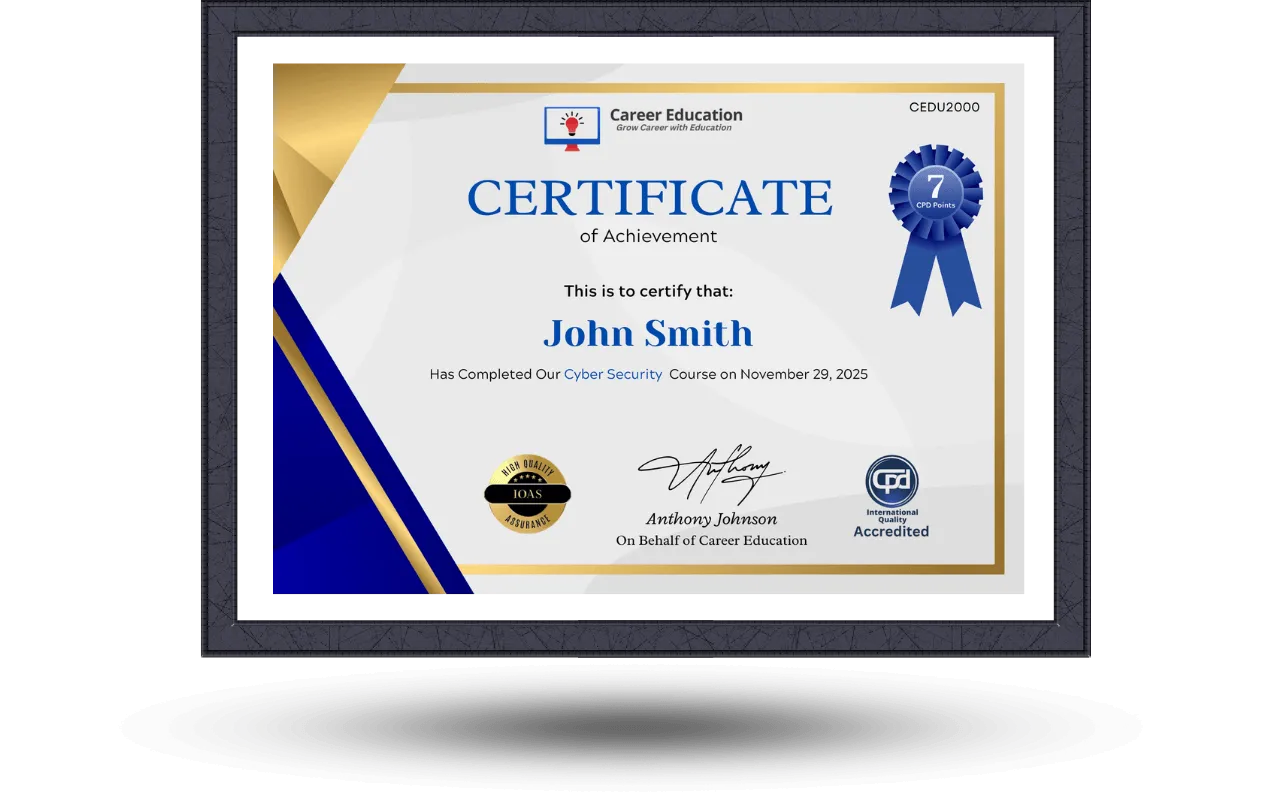
Earn an Accredited Certificate
Upon completion of any course, all students are entitled to a CPD IQ Accredited e-certificate that will be issued by Career Education signifying the completion of your course.
After you complete the course and assignment, you will be eligible to order a free certificate accredited by CPD International Quality by completing the form below.
Hardcopy certificates and transcripts are also available for a small additional fee. More information is disclosed upon course completion.
Similar Courses


Frequently Asked Questions
The lifetime membership includes unlimited access to all courses, resources, and updates for a one-time fee.
You can purchase the membership directly from our website using a secure checkout process.
Yes, selected courses can be downloaded for offline access through our mobile app.
Yes, all future updates and new courses are included at no extra cost.
Yes, we offer a 30-day money-back guarantee if you are not satisfied with the membership.