
94%
OFF
OFF
Public Relations Strategies for Startup Media Coverage
- Lifetime Access
- All Levels
- PDF Certificate
£296
£19
14-Day Money-Back Guarantee
Learn With Confidence







Public Relations Strategies for Startup Media Coverage
Public Relations Strategies for Startup Media Coverage is a practical course designed to help startup founders, entrepreneurs, marketers, communications professionals, and aspiring PR specialists understand how to generate meaningful media attention and build a strong public profile for a growing business.
For startups, gaining visibility can be challenging. Established companies often have larger marketing budgets, recognised brands, and long-standing relationships with journalists. Startups, however, can still attract valuable media coverage by understanding what makes a story newsworthy, developing a focused PR strategy, communicating effectively with journalists, and creating campaigns that give the media a compelling reason to pay attention.
This course focuses on practical, outcome-oriented public relations strategies that can help you move beyond simply promoting a business. You will learn how to position a startup, develop media relationships, create effective press releases, manage media campaigns, establish thought leadership, and generate publicity around important business milestones such as product launches.
Why Learn Public Relations Strategies for Startup Media Coverage?
Media coverage can help a startup build awareness, credibility, authority, and trust. A well-placed article, interview, feature, or announcement can introduce your company to audiences that may be difficult to reach through traditional advertising alone.
However, successful PR is not simply about sending emails to journalists. Effective public relations requires planning, research, storytelling, relationship building, timing, and a clear understanding of the media landscape.
Public Relations Strategies for Startup Media Coverage helps you develop these skills systematically. Rather than focusing only on theory, the course explores the essential stages involved in creating and executing a startup PR approach.
By completing the course, you can develop a stronger understanding of how to turn business developments and ideas into media opportunities. You will also gain a framework for communicating with journalists and presenting your startup in a professional and compelling way.
What Will You Learn?
The course takes you through seven focused modules, covering the key elements of startup public relations.
Module 1: Introduction to PR for Startups
The course begins by introducing the fundamentals of public relations within a startup environment.
You will explore the role PR can play in increasing brand visibility, strengthening credibility, communicating business values, and supporting long-term growth. You will also develop a clearer understanding of how startup PR differs from general advertising and promotional activity.
This foundation can help you recognise potential publicity opportunities and understand why media coverage can be particularly valuable for emerging businesses.
By the end of this module, you should have a stronger understanding of the purpose of PR and how it can contribute to a startup’s overall communication and marketing objectives.
Module 2: Crafting Your PR Strategy
Successful publicity usually starts with a clear strategy. In this module, you will explore how to develop a structured PR strategy based on your startup’s objectives, audience, positioning, and available opportunities.
You will learn how to think strategically about your target media, key messages, potential stories, campaign objectives, and communication channels.
A focused strategy can help you avoid random outreach and make your PR activity more consistent and purposeful. You will gain a framework for identifying what you want to achieve through media coverage and how your communications can support those goals.
This strategic approach can help you create more relevant PR campaigns while making better use of limited startup resources.
Module 3: Building Media Relationships
Relationships are an important part of effective public relations. Journalists and media professionals receive large volumes of pitches and announcements, so developing professional and relevant relationships can make a significant difference.
This module focuses on the principles of building productive media relationships. You will learn how to understand journalists’ interests, identify appropriate media contacts, communicate professionally, and approach journalists with relevant information.
You will also develop an appreciation for the importance of credibility, consistency, and respect when communicating with the media.
Instead of viewing journalists simply as recipients of press releases, you will learn to approach media relationships as professional connections that can develop over time.
Module 4: Writing Effective Press Releases
A press release needs to communicate important information clearly, quickly, and professionally. Poorly structured announcements can make it difficult for journalists to identify the actual story.
In this module, you will explore the principles of writing effective press releases for startup announcements and newsworthy developments.
You will learn how to organise information, communicate key messages, create compelling headlines, present relevant details, and write in a way that supports media usability.
The goal is to help you transform important company information into a clearer and more media-friendly format. These skills can be useful when announcing partnerships, business developments, research, events, milestones, products, or other potentially newsworthy stories.
Module 5: Conducting Successful Media Campaigns
Individual media placements can be valuable, but coordinated campaigns can create broader and more consistent visibility.
This module explores how to plan and conduct successful media campaigns. You will learn how different PR activities can work together around a common objective and how to maintain consistency throughout a campaign.
You will develop an understanding of campaign planning, communication timing, media outreach, messaging, and campaign coordination.
The module is designed to help you approach PR as an organised process rather than a collection of isolated activities. With a structured campaign approach, you can improve your ability to communicate a startup’s story across appropriate media channels.
Module 6: Leveraging Thought Leadership
Thought leadership can help founders and startup representatives become recognised voices within their industry.
This module explores how individuals can use expertise, insights, opinions, and valuable information to establish professional authority. You will learn why credible expertise can strengthen a startup’s public profile and how thought leadership can complement broader PR activity.
You will explore ways to communicate useful perspectives rather than relying exclusively on direct promotional messaging.
Developing thought leadership can help you create opportunities for interviews, expert commentary, articles, discussions, and other forms of media engagement. It can also support the development of a stronger professional reputation over time.
Module 7: Securing Coverage for Product Launches
A product launch can represent one of the most important publicity opportunities for a startup. However, simply announcing that a product exists does not necessarily make it interesting to journalists or audiences.
In this final module, you will explore strategies for generating media interest around product launches.
You will learn how to think about launch messaging, identify potential media angles, coordinate outreach, and communicate the value and relevance of a new product.
The module helps you understand how to approach a launch as a PR opportunity rather than simply a sales announcement. By developing stronger messaging and planning your outreach carefully, you can create a more organised approach to generating launch-related publicity.
Practical Outcomes of the Course
After completing Public Relations Strategies for Startup Media Coverage, you can expect to have a more structured understanding of how startup PR works and how different PR activities can contribute to visibility and credibility.
You will be able to:
-
Understand the fundamentals of public relations for startups.
-
Develop a focused PR strategy aligned with business objectives.
-
Identify relevant media opportunities and audiences.
-
Build more professional relationships with journalists and media contacts.
-
Understand the structure and purpose of effective press releases.
-
Plan and coordinate startup media campaigns.
-
Use expertise and insights to support thought leadership.
-
Develop PR approaches for product launches.
-
Communicate startup stories more clearly and strategically.
-
Approach media outreach with greater confidence and preparation.
Who Should Take This Course?
Public Relations Strategies for Startup Media Coverage is suitable for a wide range of learners who want to develop practical PR and media communication skills.
It can be particularly useful for:
-
Startup founders and entrepreneurs
-
Small business owners
-
Marketing professionals
-
PR and communications professionals
-
Brand managers
-
Social media and content professionals
-
Business development professionals
-
Freelancers working with startup brands
-
Aspiring public relations specialists
-
Professionals responsible for company communications
No matter whether you are launching your first business or supporting an established startup, the principles covered in this course can help you approach public relations more strategically.
Build a Stronger Startup PR Approach
In a competitive business environment, visibility matters. A startup can have an excellent product or service, but reaching the right audience requires effective communication. Public relations provides a way to tell your story, demonstrate expertise, build credibility, and create meaningful awareness.
Public Relations Strategies for Startup Media Coverage gives you a structured learning pathway covering strategy development, media relationships, press release writing, campaign management, thought leadership, and product launch publicity.
Rather than treating PR as a one-time promotional activity, you will learn to view it as an ongoing communication process. The skills developed throughout the course can help you identify better opportunities, communicate more effectively with media professionals, and create more purposeful publicity campaigns.
If your goal is to understand how startups can approach media coverage with greater structure, confidence, and strategic focus, this course provides a valuable foundation. Enrol in Public Relations Strategies for Startup Media Coverage and develop the knowledge needed to plan stronger PR activities, communicate compelling startup stories, and work towards greater media visibility.
Course Modules
Course Content
Module 1_ Introduction to PR for Startups
-
Lesson 1_ Introduction to PR for Startups
Module 2_ Crafting Your PR Strategy
Module 3_ Building Media Relationships
Module 4_ Writing Effective Press Releases
Module 5_ Conducting Successful Media Campaigns
Module 6_ Leveraging Thought Leadership
Module 7_ Securing Coverage for Product Launches
What our students say
Excellent
4.9 average
158 Reviews

Earn an Accredited Certificate
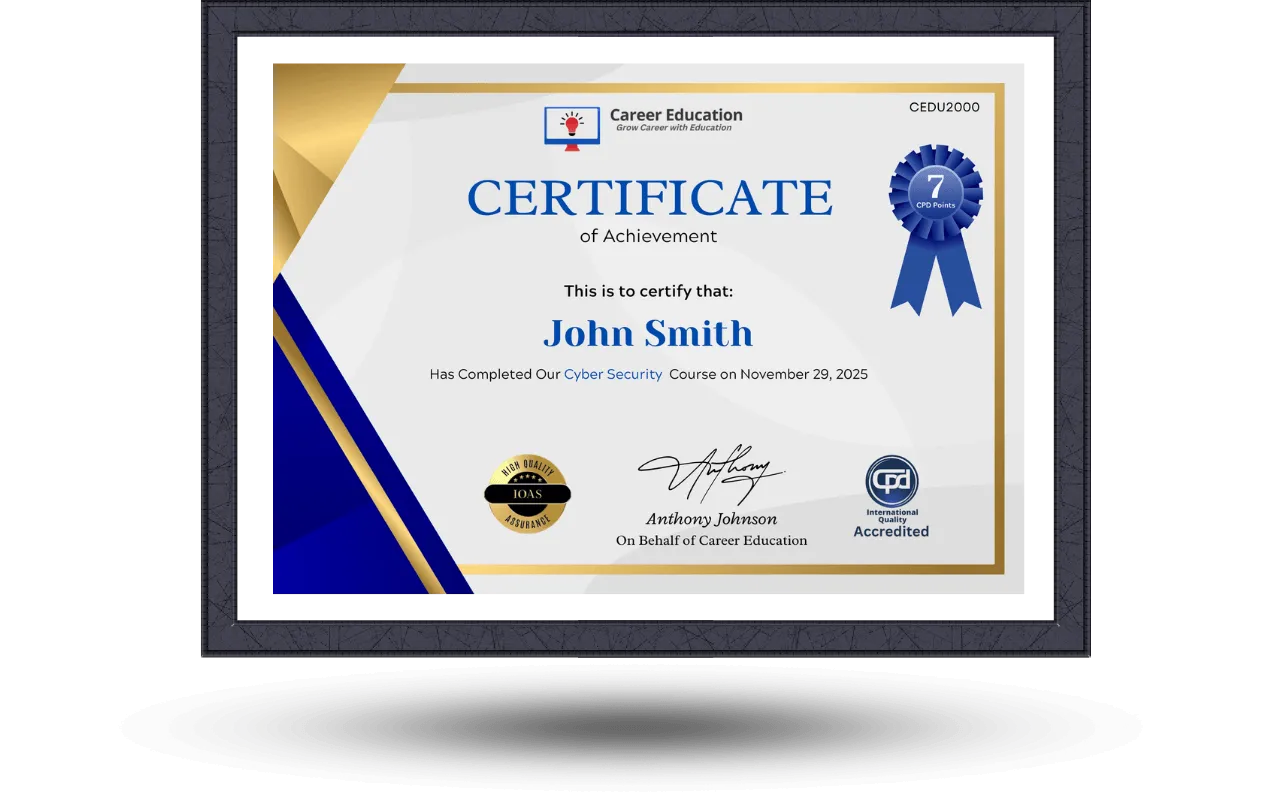
Upon completion of any course, all students are entitled to a CPD IQ Accredited e-certificate that will be issued by Career Education signifying the completion of your course.
After you complete the course and assignment, you will be eligible to order a free certificate accredited by CPD International Quality by completing the form below.
Hardcopy certificates and transcripts are also available for a small additional fee. More information is disclosed upon course completion.
Similar Courses



Frequently Asked Questions
The lifetime membership includes unlimited access to all courses, resources, and updates for a one-time fee.
You can purchase the membership directly from our website using a secure checkout process.
Yes, selected courses can be downloaded for offline access through our mobile app.
Yes, all future updates and new courses are included at no extra cost.
Yes, we offer a 30-day money-back guarantee if you are not satisfied with the membership.