
94%
OFF
OFF
Professional Mechanic Training
- Lifetime Access
- All Levels
- PDF Certificate
£296
£19
14-Day Money-Back Guarantee
Learn With Confidence





Professional Mechanic Training
The automotive industry depends on skilled professionals who understand how vehicles work, how their major systems interact, and how to identify and resolve common mechanical problems. The Professional Mechanic Training course is designed to build a strong foundation in automotive systems, engine operation, fuel systems, vehicle electrical systems, and braking technology.
Whether you are looking to develop practical automotive knowledge, prepare for a career in vehicle maintenance, strengthen your existing mechanical skills, or simply gain a deeper understanding of modern vehicles, this course provides a structured learning pathway covering essential areas of automotive mechanics.
Rather than focusing only on theory, the Professional Mechanic Training course is designed around practical outcomes. By progressing through the modules, learners can develop a clearer understanding of how key vehicle systems operate, recognise potential faults, and approach automotive maintenance with greater confidence.
What Is Professional Mechanic Training?
Professional Mechanic Training introduces learners to the fundamental systems and components that allow vehicles to operate safely and efficiently. From the engine that produces power to the electrical systems that control essential vehicle functions, every major area plays an important role in vehicle performance.
A professional mechanic needs more than familiarity with individual components. Understanding how systems work together is essential when investigating faults, carrying out maintenance, and making informed decisions about vehicle servicing.
This course provides a progressive introduction to these core areas. Learners begin with an overview of automotive systems before exploring engine systems, fuel systems, electrical systems, and brake systems in greater detail.
By completing the training, learners can build a solid knowledge base that supports further development in automotive maintenance and mechanical engineering.
Why Study Professional Mechanic Training?
Vehicles contain increasingly complex mechanical and electrical systems, making automotive knowledge valuable across many roles and settings. A strong understanding of vehicle fundamentals can help learners approach automotive problems more systematically and confidently.
The Professional Mechanic Training course can help you:
-
Understand the main systems found in modern vehicles
-
Develop foundational automotive mechanical knowledge
-
Learn how engine systems operate
-
Understand the purpose and operation of fuel systems
-
Build awareness of automotive electrical systems
-
Understand the importance of effective braking systems
-
Recognise the roles of key vehicle components
-
Develop a more structured approach to automotive fault identification
-
Improve your confidence when discussing vehicle maintenance
-
Build knowledge that can support further automotive training
The course is particularly useful for learners who want a broad introduction to vehicle mechanics rather than concentrating on a single automotive system.
Course Learning Outcomes
By the end of the Professional Mechanic Training course, learners will have developed knowledge across several essential areas of automotive technology.
You will be able to explain the purpose of major automotive systems and understand how different components contribute to overall vehicle operation. You will also gain a stronger foundation for recognising mechanical and electrical issues that may affect vehicle performance.
The course can help you develop the ability to:
Understand automotive systems: Gain an overview of the key systems that work together within a vehicle and understand their importance.
Explore engine operation: Develop knowledge of engine systems and the components involved in producing and managing vehicle power.
Understand fuel systems: Learn about the role of fuel systems and how fuel delivery contributes to effective engine operation.
Build electrical knowledge: Explore vehicle electrical systems and understand their importance in modern automotive operation.
Understand braking technology: Develop awareness of brake systems and their critical role in vehicle safety and control.
These outcomes provide a useful foundation for continued learning and practical development within the automotive sector.
Course Curriculum
Module 1: Introduction to Automotive Systems
The first module provides a foundation for the rest of the course by introducing the major systems found in automobiles.
Learners will develop an understanding of how different vehicle systems contribute to overall operation and why a mechanic needs to consider the vehicle as an interconnected system rather than a collection of unrelated parts.
This introductory knowledge can help you understand the relationship between mechanical, electrical, fuel, and braking components.
By completing this module, you can establish a strong foundation for understanding more specialised automotive topics covered throughout the course.
Outcome: Develop a broad understanding of automotive systems and the role they play in vehicle operation and maintenance.
Module 2: Engine Systems
The engine is one of the most important systems in a conventional vehicle, and understanding its operation is fundamental to automotive mechanics.
This module focuses on engine systems, helping learners develop knowledge of how engines function and how their major components contribute to vehicle performance.
Understanding engine systems can help you recognise the importance of correct operation, maintenance, and fault identification. It also provides essential background knowledge for understanding how the engine interacts with other vehicle systems.
The module supports a more informed approach to automotive troubleshooting by helping learners understand what the engine needs to operate effectively and how problems within engine-related components can affect vehicle performance.
Outcome: Build foundational knowledge of engine systems and develop a clearer understanding of their role in vehicle performance.
Module 3: Fuel Systems
Fuel systems are essential to engine operation because they are responsible for delivering fuel as required by the engine.
In this module, learners explore the fundamentals of fuel systems and develop a better understanding of their purpose within a vehicle. This knowledge can help learners appreciate the relationship between fuel delivery and engine performance.
A sound understanding of fuel systems is valuable when learning about common automotive issues, maintenance requirements, and the factors that can influence effective engine operation.
The module also builds on the engine knowledge introduced earlier in the course, helping learners understand how different vehicle systems interact.
Outcome: Understand the fundamentals of automotive fuel systems and their relationship with engine operation and vehicle performance.
Module 4: Electrical Systems
Modern vehicles rely heavily on electrical systems. From starting and charging to vehicle controls and other essential functions, electrical components play an increasingly important role in automotive technology.
This module introduces learners to automotive electrical systems and helps develop an understanding of their importance.
By studying this area, learners can become more familiar with the role of electrical systems in vehicle operation and develop knowledge that can support further study of automotive electrical diagnosis and maintenance.
Understanding electrical systems alongside mechanical systems is particularly valuable because many modern vehicle issues can involve interactions between mechanical and electrical components.
Outcome: Develop foundational knowledge of automotive electrical systems and understand their importance within modern vehicles.
Module 5: Brake Systems
Braking systems are among the most important safety-related systems in a vehicle. They allow drivers to control speed and bring vehicles to a controlled stop.
This module introduces the fundamentals of brake systems and their role in safe vehicle operation. Learners develop a better understanding of why effective braking performance is essential and how brake components contribute to vehicle control.
Knowledge of brake systems is an important part of automotive training because mechanics need to understand the significance of maintaining braking components and identifying potential problems.
Outcome: Develop a foundational understanding of brake systems and their importance to vehicle safety and control.
Develop Practical Automotive Knowledge
One of the key advantages of Professional Mechanic Training is its broad coverage. Instead of focusing narrowly on one component, the course introduces learners to several major areas of automotive technology.
This wider perspective can make it easier to understand how vehicle systems interact.
For example, engine performance can be influenced by fuel delivery, while electrical systems can affect vehicle starting and operation. Braking systems have a direct relationship with vehicle safety, while the broader automotive systems overview provides context for understanding how all these areas fit together.
Developing this systems-based perspective can be valuable for anyone considering a future in automotive maintenance or related technical roles.
Build Confidence Through Structured Learning
Learning automotive mechanics can seem challenging when faced with unfamiliar components, technical terminology, and interconnected systems. A structured course can make the learning process more manageable by introducing subjects progressively.
The Professional Mechanic Training course starts with the fundamentals before moving into specific vehicle systems. This allows learners to establish basic knowledge before progressing to more specialised topics.
By the end of the course, learners can have a stronger conceptual foundation for continuing their automotive education and developing practical skills.
Who Is This Course For?
The Professional Mechanic Training course can be suitable for a wide range of learners interested in automotive technology.
It may be particularly useful for:
-
Beginners interested in vehicle mechanics
-
Aspiring automotive mechanics
-
Learners considering an automotive career
-
Vehicle enthusiasts who want structured mechanical knowledge
-
Individuals looking to broaden their understanding of vehicle systems
-
Professionals seeking foundational automotive knowledge
-
Learners preparing for further automotive education
-
Anyone interested in understanding how key vehicle systems work
You do not need to be an experienced mechanic to benefit from the foundational concepts covered in this course.
Support Your Automotive Career Development
A career in automotive maintenance can involve continuous learning as vehicle technology develops. Building strong fundamentals can provide a useful starting point for further professional development.
The Professional Mechanic Training course covers several core areas that are relevant to automotive maintenance, giving learners a foundation on which they can continue building their knowledge.
Whether your long-term goal involves vehicle servicing, automotive repair, mechanical engineering, workshop-based work, or further technical education, understanding fundamental automotive systems can be an important first step.
Learn at Your Own Pace
Professional development does not always fit neatly around a traditional classroom timetable. Flexible learning can make it easier to develop new knowledge alongside other responsibilities.
The Professional Mechanic Training course allows learners to work through the curriculum systematically and focus on developing their understanding of essential automotive topics.
This makes the course suitable for people who want to add automotive learning to their existing personal, educational, or professional development plans.
Why Choose Professional Mechanic Training?
Choosing the right automotive course means looking for learning that provides a useful combination of breadth, structure, and practical relevance.
The Professional Mechanic Training course brings together five important areas of automotive knowledge:
-
Automotive Systems – Build a foundation in the major systems that make up a vehicle.
-
Engine Systems – Understand the fundamentals of engine operation and components.
-
Fuel Systems – Explore how fuel systems support effective engine performance.
-
Electrical Systems – Develop knowledge of essential automotive electrical technology.
-
Brake Systems – Understand the importance and fundamentals of vehicle braking systems.
Together, these modules provide a well-rounded introduction to essential automotive mechanics.
Take the Next Step Towards Automotive Knowledge
Developing professional knowledge starts with understanding the fundamentals. The Professional Mechanic Training course provides a structured opportunity to explore the systems that underpin modern vehicle operation.
From engines and fuel systems to electrical components and brakes, you will explore key areas that every aspiring automotive professional should understand. The knowledge gained can help you approach automotive topics with greater confidence and provide a foundation for continued learning.
If you are ready to strengthen your understanding of vehicle mechanics and explore the essential systems behind modern automobiles, Professional Mechanic Training can be a valuable step towards your learning and career development.
Enrol today and start building your foundation in professional automotive mechanics.
Course Modules
Course Content
Module 1_ Introduction to Automotive Systems
-
Lesson 1_ Introduction to Automotive Systems
Module 2_ Engine Systems
Module 3_ Fuel Systems
Module 4_ Electrical Systems
Module 5_ Brake Systems
What our students say
Excellent
4.9 average
158 Reviews

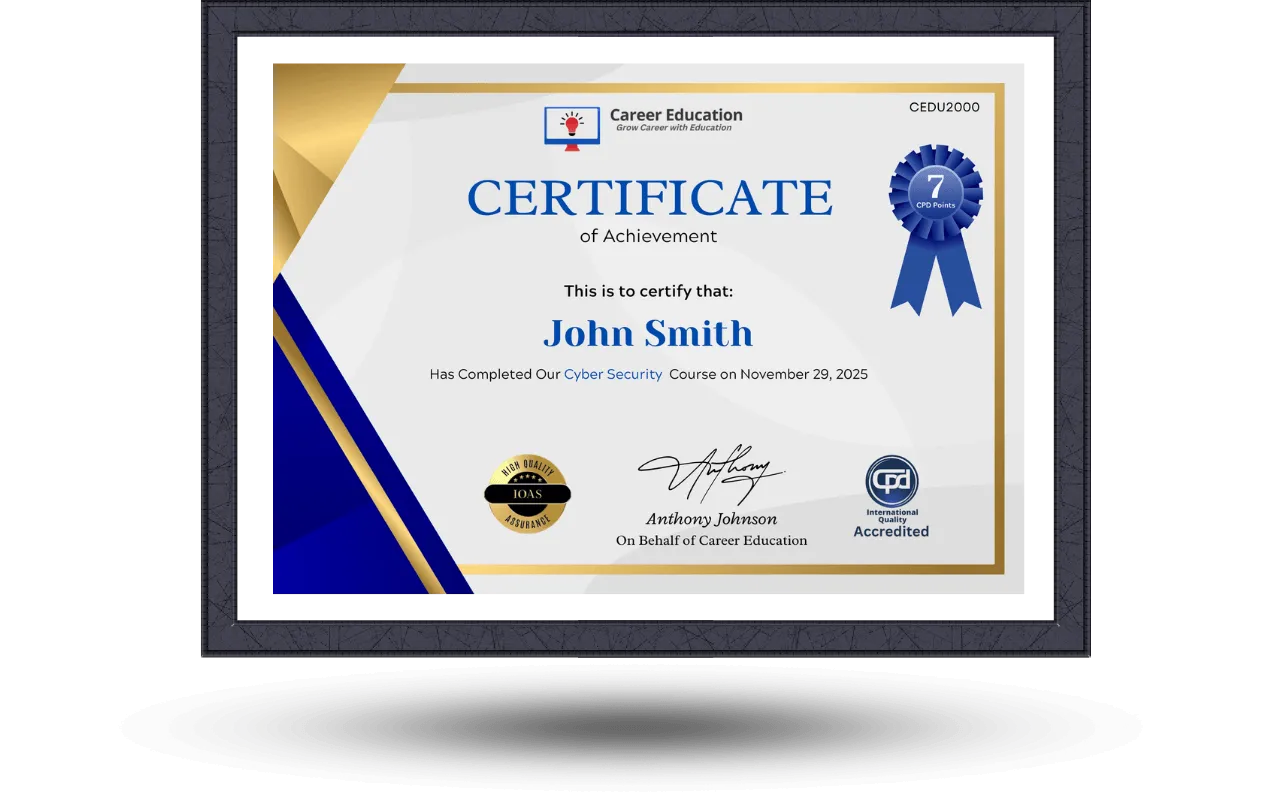
Earn an Accredited Certificate
Upon completion of any course, all students are entitled to a CPD IQ Accredited e-certificate that will be issued by Career Education signifying the completion of your course.
After you complete the course and assignment, you will be eligible to order a free certificate accredited by CPD International Quality by completing the form below.
Hardcopy certificates and transcripts are also available for a small additional fee. More information is disclosed upon course completion.
Similar Courses



Frequently Asked Questions
The lifetime membership includes unlimited access to all courses, resources, and updates for a one-time fee.
You can purchase the membership directly from our website using a secure checkout process.
Yes, selected courses can be downloaded for offline access through our mobile app.
Yes, all future updates and new courses are included at no extra cost.
Yes, we offer a 30-day money-back guarantee if you are not satisfied with the membership.