
94%
OFF
OFF
Pressure Vessel Safety Training
- Lifetime Access
- All Levels
- PDF Certificate
£296
£19
14-Day Money-Back Guarantee
Learn With Confidence






Pressure Vessel Safety Training
Pressure vessels are essential in many industrial environments, including manufacturing, energy, chemical processing, pharmaceuticals, food production and engineering operations. They are designed to contain gases or liquids under pressure, making their safe design, manufacture, installation, operation and maintenance critically important.
When pressure vessels are not properly designed, inspected, operated or maintained, failures can result in serious injuries, equipment damage, production disruption and significant safety consequences. Understanding the principles of pressure vessel safety is therefore essential for anyone involved in working with, managing or maintaining pressurised equipment.
Pressure Vessel Safety Training provides a practical introduction to the key principles involved in pressure vessel safety. The course is designed to help learners understand pressure vessel hazards, design considerations, manufacturing processes, safe installation and operation, pressure relief systems, inspection and testing, and risk assessment.
The course takes an outcome-focused approach, helping participants develop practical knowledge that can support safer decisions and more effective pressure vessel management in the workplace.
Why Take Pressure Vessel Safety Training?
Pressure vessel safety depends on multiple stages of the equipment lifecycle. A vessel must be appropriately designed and manufactured, correctly installed, safely operated, properly maintained and periodically inspected.
A weakness at any stage can increase the likelihood of equipment failure.
Pressure Vessel Safety Training helps learners understand how these stages connect and why each one matters.
Through the course, participants will learn how to:
-
Understand the fundamental principles of pressure vessel safety.
-
Recognise hazards associated with pressurised equipment.
-
Understand key pressure vessel design principles.
-
Gain awareness of manufacturing processes and quality considerations.
-
Support safe pressure vessel installation and operation.
-
Understand the purpose of pressure relief devices.
-
Recognise the importance of inspection and testing.
-
Identify potential failure risks and contributing factors.
-
Apply basic risk assessment and management principles.
-
Promote safer practices when working around pressure vessels.
The objective is to build practical safety awareness that can be applied in industrial and engineering environments.
What You Will Learn
By completing Pressure Vessel Safety Training, learners will develop a stronger understanding of how pressure vessels are designed, manufactured, installed, operated and inspected.
Participants will explore the relationship between pressure, vessel integrity and workplace safety. They will also learn why pressure relief systems are essential, how inspection and testing contribute to equipment integrity, and how risk assessment can help identify and control hazards.
The course is structured to provide a logical progression from fundamental concepts through to practical safety management.
Rather than focusing only on technical theory, the training emphasises how knowledge can support safer workplace decisions and more effective risk management.
Module 1: Introduction to Pressure Vessel Safety
The course begins with an introduction to pressure vessel safety and the hazards associated with pressurised equipment.
Learners will explore what pressure vessels are, why they are used and why they require careful management throughout their service life.
Participants will develop an understanding of the potential consequences of pressure vessel failure. These may include sudden releases of stored energy, exposure to hazardous substances, fires, explosions, equipment damage and serious workplace injuries.
The module introduces fundamental safety principles and encourages learners to consider the importance of controlling hazards before they develop into incidents.
Key concepts include:
-
The purpose and function of pressure vessels.
-
Sources of pressure-related hazards.
-
The importance of vessel integrity.
-
Safe operating practices.
-
Equipment inspection and maintenance.
-
Pressure control.
-
The role of competent personnel.
-
The importance of following established procedures.
By completing this module, learners will have a solid foundation for understanding pressure vessel safety.
Module 2: Pressure Vessel Design Principles
Safe operation begins with appropriate design.
This module introduces learners to fundamental pressure vessel design principles and explains why design decisions have a direct influence on equipment safety and reliability.
Participants will explore factors that must be considered when designing pressure vessels, including pressure, temperature, materials, operating conditions and the intended application.
The module also introduces the importance of engineering standards, design specifications and appropriate safety margins.
Learners will gain awareness of concepts such as:
-
Internal and external pressure.
-
Design conditions.
-
Material selection.
-
Vessel geometry.
-
Wall thickness considerations.
-
Corrosion and degradation.
-
Temperature effects.
-
Connections and openings.
-
Structural integrity.
-
Design verification.
The objective is not to turn participants into pressure vessel designers but to help them understand the safety considerations that influence vessel design.
This knowledge can help learners better recognise why equipment specifications, engineering documentation and design controls are important to pressure vessel safety.
Module 3: Pressure Vessel Manufacturing Processes
The quality of manufacturing can have a significant effect on the integrity of a pressure vessel.
This module examines the manufacturing processes involved in producing pressure vessels and highlights the importance of quality control throughout production.
Learners will explore how materials are prepared, formed, joined and finished and why manufacturing defects can create safety concerns.
The module introduces key considerations such as:
-
Material quality.
-
Fabrication processes.
-
Welding and joining.
-
Heat treatment.
-
Dimensional accuracy.
-
Quality assurance.
-
Manufacturing inspections.
-
Defect identification.
-
Documentation and traceability.
Participants will understand why manufacturing quality cannot be separated from pressure vessel safety.
Poor workmanship, unsuitable materials or undetected defects may affect equipment integrity during service. Appropriate manufacturing controls therefore provide an important foundation for long-term reliability.
By completing this module, learners will better appreciate the connection between manufacturing quality and safe pressure vessel performance.
Module 4: Pressure Vessel Installation and Operation
Even a well-designed and well-manufactured pressure vessel can become unsafe if it is incorrectly installed or operated.
This module focuses on the principles of safe installation and operation.
Learners will explore why installation must consider equipment location, connections, supporting structures, operating systems and access for inspection and maintenance.
The module also examines safe operating practices and the importance of staying within established operating limits.
Participants will consider:
-
Correct installation.
-
Equipment positioning.
-
Pipework and connections.
-
Operating pressure and temperature.
-
Start-up and shutdown procedures.
-
Operating controls.
-
Monitoring equipment.
-
Abnormal operating conditions.
-
Maintenance requirements.
-
Safe work procedures.
The module reinforces the importance of following manufacturer specifications, engineering requirements and applicable workplace procedures.
Learners will develop a greater understanding of how operational discipline can help prevent pressure-related incidents.
Module 5: Pressure Relief Devices and Systems
Pressure relief devices play an important role in protecting pressure vessels from potentially dangerous overpressure conditions.
This module introduces the purpose and basic principles of pressure relief devices and systems.
Learners will explore why excessive pressure can create significant risks and how relief systems are used to provide a means of controlling or relieving pressure under defined conditions.
Participants will develop awareness of:
-
The purpose of pressure relief systems.
-
Common types of pressure relief devices.
-
Overpressure scenarios.
-
Appropriate installation considerations.
-
Inspection and maintenance.
-
Discharge considerations.
-
The importance of correct device selection.
-
The consequences of blocked, damaged or incorrectly configured relief systems.
The course emphasises that pressure relief devices are safety-critical components and must be properly selected, installed, maintained and inspected according to applicable requirements.
Understanding their role enables learners to recognise why these systems must never be overlooked or improperly altered.
Module 6: Inspection and Testing of Pressure Vessels
Regular inspection and testing are essential for identifying conditions that may affect pressure vessel integrity.
This module explores the importance of inspection programmes and appropriate testing throughout a vessel’s service life.
Learners will consider how vessels can deteriorate over time because of corrosion, erosion, fatigue, mechanical damage, temperature effects or other operating conditions.
The module introduces key inspection and testing concepts, including:
-
Visual inspection.
-
Condition assessment.
-
Thickness measurement.
-
Non-destructive examination concepts.
-
Pressure testing principles.
-
Inspection intervals.
-
Recordkeeping.
-
Defect identification.
-
Corrective actions.
-
Follow-up inspections.
Participants will learn why inspection findings should be taken seriously and appropriately evaluated by qualified personnel.
The goal is to support a proactive approach to equipment integrity, where potential problems are identified and addressed before they result in failure.
Module 7: Risk Assessment and Management
The final module brings the course together by focusing on pressure vessel risk assessment and management.
Risk management helps organisations identify potential hazards, evaluate their significance and implement appropriate controls.
Learners will explore how to consider factors such as:
-
Pressure and temperature.
-
Equipment condition.
-
Operating environment.
-
Material degradation.
-
Human factors.
-
Maintenance practices.
-
Inspection findings.
-
Emergency scenarios.
-
Existing control measures.
Participants will develop a more structured approach to identifying potential pressure vessel hazards and determining appropriate preventive measures.
The module reinforces the importance of using risk assessments as active safety tools rather than documents that are completed and then forgotten.
Effective risk management requires ongoing review, especially when equipment, operating conditions, processes or procedures change.
By completing this module, learners will be better prepared to contribute to workplace discussions about pressure vessel hazards and risk controls.
Practical Benefits of Pressure Vessel Safety Training
Pressure Vessel Safety Training is designed to provide practical outcomes that learners can apply to their professional responsibilities.
After completing the course, participants should be better able to:
Recognise Pressure Vessel Hazards
Understand the potential dangers associated with pressurised equipment and identify conditions that may increase risk.
Understand Equipment Design
Recognise key factors that influence pressure vessel design and structural integrity.
Appreciate Manufacturing Quality
Understand how material selection, fabrication and quality control can influence vessel reliability.
Promote Safe Operation
Apply greater awareness of operating limits, procedures and equipment conditions.
Understand Pressure Relief Systems
Recognise the importance of pressure relief devices in protecting equipment against overpressure.
Support Inspection Activities
Understand why inspection and testing are necessary to identify deterioration and maintain equipment integrity.
Apply Risk Management Principles
Identify potential hazards and contribute to appropriate risk control measures.
Strengthen Safety Awareness
Develop a more proactive approach to pressure vessel safety throughout the equipment lifecycle.
Who Is This Course For?
Pressure Vessel Safety Training can be valuable for professionals who work with, manage, inspect, maintain or supervise pressure-containing equipment.
It may be particularly suitable for:
-
Engineers.
-
Maintenance personnel.
-
Plant operators.
-
Mechanical technicians.
-
Safety professionals.
-
Engineering supervisors.
-
Maintenance managers.
-
Plant managers.
-
Quality and inspection personnel.
-
Manufacturing professionals.
-
Industrial technicians.
-
Facility management teams.
-
Newly appointed supervisors.
-
Professionals seeking to strengthen their pressure vessel safety awareness.
The course can also serve as useful foundational training for individuals who work alongside pressure vessels and need a stronger understanding of the hazards and controls involved.
Build a Stronger Pressure Vessel Safety Culture
Pressure vessel safety is not limited to one inspection or one piece of equipment. It is an ongoing responsibility that extends across design, manufacturing, installation, operation, inspection and risk management.
A vessel may be technically sound, but unsafe operating practices can increase risk. Similarly, good operating procedures cannot compensate for inadequate inspection or poorly maintained safety systems.
This is why a lifecycle approach is essential.
Pressure Vessel Safety Training helps learners understand how different safety activities work together to protect people, equipment and operations.
By developing stronger awareness of design principles, manufacturing quality, safe installation, pressure relief, inspection and risk assessment, participants can make better-informed safety decisions and contribute more effectively to pressure equipment management.
Support Safer and More Reliable Operations
Pressure vessels are designed to contain significant amounts of stored energy. Maintaining their integrity and operating them within appropriate limits is therefore essential.
Effective safety practices can help organisations reduce avoidable risks, support equipment reliability and promote responsible workplace operations.
Through Pressure Vessel Safety Training, learners gain practical knowledge that can help them understand pressure vessel hazards and the controls used to manage them.
The course provides a structured learning journey from fundamental safety concepts through design, manufacturing, installation, operation, pressure relief, inspection and risk management.
Take a Proactive Approach to Pressure Vessel Safety
Pressure vessel incidents can have serious consequences, making prevention and responsible equipment management essential.
Pressure Vessel Safety Training equips learners with knowledge of the key principles required to support safer pressure vessel operations. Participants will gain greater awareness of pressure-related hazards, equipment integrity, relief systems, inspection requirements and risk management.
By applying these principles within their roles and following applicable workplace procedures, learners can contribute to a stronger culture of equipment safety and risk awareness.
Invest in knowledge that supports safer decisions, better hazard recognition and more responsible pressure equipment management with Pressure Vessel Safety Training.
Course Modules
Course Content
Module 1_ Introduction to Pressure Vessel Safety
-
Lesson 1_ Introduction to Pressure Vessel Safety
Module 2_ Pressure Vessel Design Principles
Module 3_ Pressure Vessel Manufacturing Processes
Module 4_ Pressure Vessel Installation and Operation
Module 5_ Pressure Relief Devices and Systems
Module 6_ Inspection and Testing of Pressure Vessels
Module 7_ Risk Assessment and Management
What our students say
Excellent
4.9 average
158 Reviews

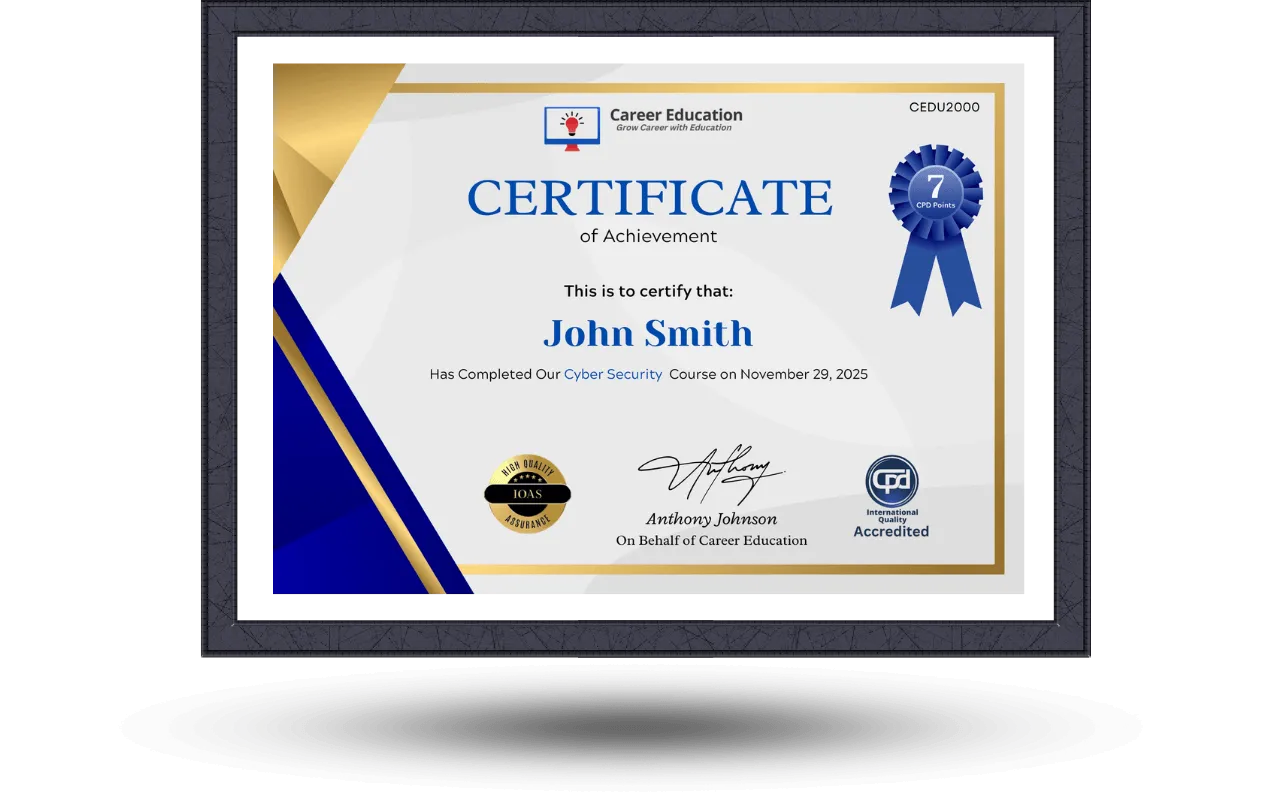
Earn an Accredited Certificate
Upon completion of any course, all students are entitled to a CPD IQ Accredited e-certificate that will be issued by Career Education signifying the completion of your course.
After you complete the course and assignment, you will be eligible to order a free certificate accredited by CPD International Quality by completing the form below.
Hardcopy certificates and transcripts are also available for a small additional fee. More information is disclosed upon course completion.
Similar Courses



Frequently Asked Questions
The lifetime membership includes unlimited access to all courses, resources, and updates for a one-time fee.
You can purchase the membership directly from our website using a secure checkout process.
Yes, selected courses can be downloaded for offline access through our mobile app.
Yes, all future updates and new courses are included at no extra cost.
Yes, we offer a 30-day money-back guarantee if you are not satisfied with the membership.