
94%
OFF
OFF
Practical Functional Math Skills
- Lifetime Access
- All Levels
- PDF Certificate
£296
£19
14-Day Money-Back Guarantee
Learn With Confidence








Practical Functional Math Skills
Build the Everyday Math Skills You Need for Greater Confidence, Independence, and Success
Math is not only about equations, formulas, or classroom exercises. It is a practical skill used throughout everyday life. From managing money and understanding prices to reading measurements, working with time, comparing quantities, and making informed decisions, functional mathematics plays an important role in personal, academic, and professional situations.
Practical Functional Math Skills is designed to help learners develop useful mathematical abilities that can be applied to real-life situations. Rather than focusing only on abstract mathematical concepts, this course takes a practical, outcome-focused approach that helps learners understand how numbers and calculations work in everyday contexts.
Whether you want to strengthen your mathematical foundation, become more confident handling everyday calculations, improve your problem-solving abilities, or develop skills that can support future learning and employment, this course provides an accessible pathway toward practical mathematical confidence.
Why Practical Functional Math Skills Matter
Functional math is about using mathematics with purpose. It helps you interpret information, make calculations, solve everyday problems, and make sensible decisions.
Many situations require mathematical thinking, even when they do not feel like traditional “math problems.” You may need to calculate the cost of several items, work out how much money remains after an expense, understand a timetable, measure ingredients, compare options, interpret numerical information, or estimate an answer before making a decision.
Developing Practical Functional Math Skills can make these situations easier to understand and manage.
This course focuses on building practical confidence step by step. Learners can develop a stronger understanding of numbers while learning how mathematical concepts connect to real-world tasks.
What You Can Gain from This Course
By completing Practical Functional Math Skills, learners can work toward:
-
Greater confidence when working with numbers
-
Improved understanding of everyday mathematical concepts
-
Stronger calculation and problem-solving abilities
-
Better ability to apply mathematics to real-life situations
-
Improved understanding of money and financial calculations
-
Greater accuracy when working with measurements and quantities
-
Better ability to interpret numerical information
-
Improved time-management calculations
-
Stronger logical and analytical thinking
-
A more practical approach to solving everyday problems
The goal is not simply to remember mathematical rules. It is to understand how and when to use mathematical skills effectively.
Course Curriculum
Module 1: Building a Strong Mathematical Foundation
The course begins by establishing a foundation for practical mathematics. Learners explore essential numerical concepts and develop greater familiarity with working with numbers.
This introductory module helps create a strong starting point for the rest of the course. By strengthening fundamental skills first, learners can approach more practical calculations with greater confidence.
The emphasis is on understanding rather than simply memorising. Learners can begin developing a positive and practical approach to mathematics that can support continued progress throughout the course.
Module 2: Everyday Calculations and Number Skills
Everyday situations frequently require basic calculations. This module focuses on developing the ability to work confidently with numbers in practical contexts.
Learners can develop greater accuracy when performing calculations and learn how numerical skills can be applied to common situations.
The focus on practical application helps learners connect mathematical operations with tasks they may encounter in daily life, education, work, and other environments.
Module 3: Money and Financial Mathematics
Money is one of the most important areas where functional mathematics is used.
This module helps learners develop practical skills for dealing with financial calculations and everyday monetary situations. Understanding prices, totals, differences, and other financial information can help people make more informed decisions.
By strengthening their financial math skills, learners can become more confident when handling common money-related calculations and interpreting numerical information associated with everyday spending.
Module 4: Percentages, Fractions, and Decimals
Fractions, decimals, and percentages appear in many real-world situations. They can be used when comparing values, interpreting information, understanding changes, and working with quantities.
This module helps learners understand these concepts in a practical context. Instead of treating fractions, decimals, and percentages as isolated mathematical ideas, the course connects them with situations where these skills can be useful.
Developing this understanding can help learners interpret numerical information more effectively and approach calculations with greater confidence.
Module 5: Measurement and Practical Quantities
Measurement is another essential component of functional mathematics.
Whether dealing with distance, length, weight, volume, or other quantities, accurate measurement skills can be useful in everyday activities and workplace situations.
This module introduces practical approaches to understanding and working with measurements. Learners can develop greater awareness of units, quantities, and numerical relationships while improving their ability to apply measurement skills to practical problems.
Module 6: Time, Schedules, and Everyday Planning
Time is a mathematical concept that people use every day.
From understanding schedules and calculating durations to planning activities and interpreting timetables, time-related calculations can support organisation and independence.
This module focuses on practical time mathematics and helps learners develop skills that can be applied to everyday planning. The objective is to make numerical time concepts easier to understand and use confidently.
Module 7: Ratios, Comparisons, and Proportions
Comparing quantities is an important part of practical decision-making. Ratios and proportions can help people understand relationships between different amounts.
This module introduces practical applications of comparison and proportional thinking. Learners can develop the ability to recognise numerical relationships and use them when working through everyday problems.
These skills can also contribute to stronger logical thinking and help learners approach situations where quantities need to be compared or adjusted.
Module 8: Problem-Solving in Real-Life Situations
Knowing how to calculate an answer is useful, but knowing which calculation to use is equally important.
This module brings together mathematical skills through practical problem-solving. Learners are encouraged to identify the information provided, understand what needs to be determined, choose an appropriate mathematical approach, and work toward a sensible solution.
This practical approach can help learners become more independent when facing unfamiliar numerical situations.
Module 9: Interpreting Numerical Information
Numbers are frequently presented through tables, charts, lists, schedules, prices, measurements, and other forms of information.
This module helps learners develop greater confidence when reading and interpreting numerical information. Understanding what numbers mean in context is an important part of functional mathematics.
By strengthening interpretation skills, learners can become better equipped to evaluate information, identify relevant figures, and make practical decisions based on numerical data.
Module 10: Applying Practical Functional Math Skills
The final module brings together the knowledge and skills developed throughout the course.
Learners can review the key concepts covered and focus on applying them in practical situations. The emphasis is on transferring mathematical knowledge beyond the learning environment and into everyday life.
By the end of the course, learners should have a clearer understanding of how mathematics can support practical tasks, problem-solving, decision-making, and greater independence.
Develop Skills You Can Use Beyond the Classroom
One of the key benefits of Practical Functional Math Skills is its focus on application.
Instead of learning mathematics simply because it is part of a curriculum, learners can understand how mathematical skills can contribute to real-world outcomes. This practical perspective can make learning more meaningful and help learners recognise opportunities to use mathematics in everyday situations.
Functional math can support a wide range of activities, including managing everyday expenses, understanding quantities, interpreting information, planning time, comparing options, and solving routine problems.
These are transferable skills that can be useful across different areas of life.
Build Greater Confidence with Numbers
A lack of confidence can make mathematical tasks seem more difficult than they need to be. Practical Functional Math Skills aims to provide learners with a structured learning experience that encourages gradual development.
As learners strengthen their understanding and practise applying concepts, they can become more comfortable approaching numerical problems.
Confidence does not come from avoiding challenging calculations. It comes from developing the knowledge and strategies needed to approach them logically.
This course provides an opportunity to build that foundation.
Support Personal and Professional Development
Practical mathematical ability can also contribute to wider personal and professional development.
Many workplaces involve numbers in some form. Employees may need to understand measurements, quantities, schedules, costs, records, or other numerical information. Stronger functional math skills can therefore complement other workplace abilities.
For learners preparing for further education, training, or employment, developing practical mathematics can provide an additional foundation for continued learning.
The skills developed through this course can also support broader abilities such as attention to detail, logical reasoning, accuracy, and problem-solving.
Who Can Benefit from Practical Functional Math Skills?
Practical Functional Math Skills can be suitable for learners who want to strengthen their everyday mathematical knowledge and develop greater confidence using numbers.
It may be particularly useful for:
-
Learners who want to strengthen their mathematical foundations
-
Individuals who lack confidence with everyday calculations
-
People preparing for further education or training
-
Learners developing practical workplace skills
-
Individuals who want to improve everyday problem-solving
-
Anyone seeking a more practical approach to learning mathematics
-
Learners who want to apply mathematical concepts to real-world situations
No matter where you are starting from, the course provides an opportunity to develop useful mathematical skills in a structured way.
Turn Mathematical Knowledge into Practical Ability
Learning mathematics becomes more valuable when you can use it confidently.
Practical Functional Math Skills focuses on helping learners move from simply recognising mathematical concepts to understanding how those concepts can be applied. Through a practical learning journey covering foundational number skills, calculations, money, percentages, measurements, time, comparisons, problem-solving, and numerical information, the course supports the development of transferable abilities.
The outcome is a stronger practical relationship with mathematics.
Instead of seeing numbers as something limited to textbooks or classrooms, learners can begin to recognise mathematics as a useful tool for everyday decision-making and problem-solving.
Start Building Your Practical Math Confidence
Mathematics is a skill that can be developed with understanding, practice, and consistent application. You do not need to rely on complicated theories to begin making progress. By focusing on practical concepts and real-world applications, you can build a stronger foundation and become more comfortable handling everyday numerical situations.
Practical Functional Math Skills gives learners the opportunity to develop useful mathematical knowledge that can support everyday independence, personal development, education, and workplace readiness.
If your goal is to become more confident with numbers, strengthen your calculation abilities, improve practical problem-solving, and understand how mathematics applies to everyday life, this course provides a focused and accessible learning pathway.
Enrol in Practical Functional Math Skills today and start developing practical mathematical abilities you can apply with greater confidence in real-world situations.
Course Modules
Course Content
Module 1.
-
Lesson 1.
Module 2.
Module 3.
Module 4.
Module 5.
Module 6.
Module 7.
Module 8.
Module 9.
Module 10.
What our students say
Excellent
4.9 average
158 Reviews

Earn an Accredited Certificate
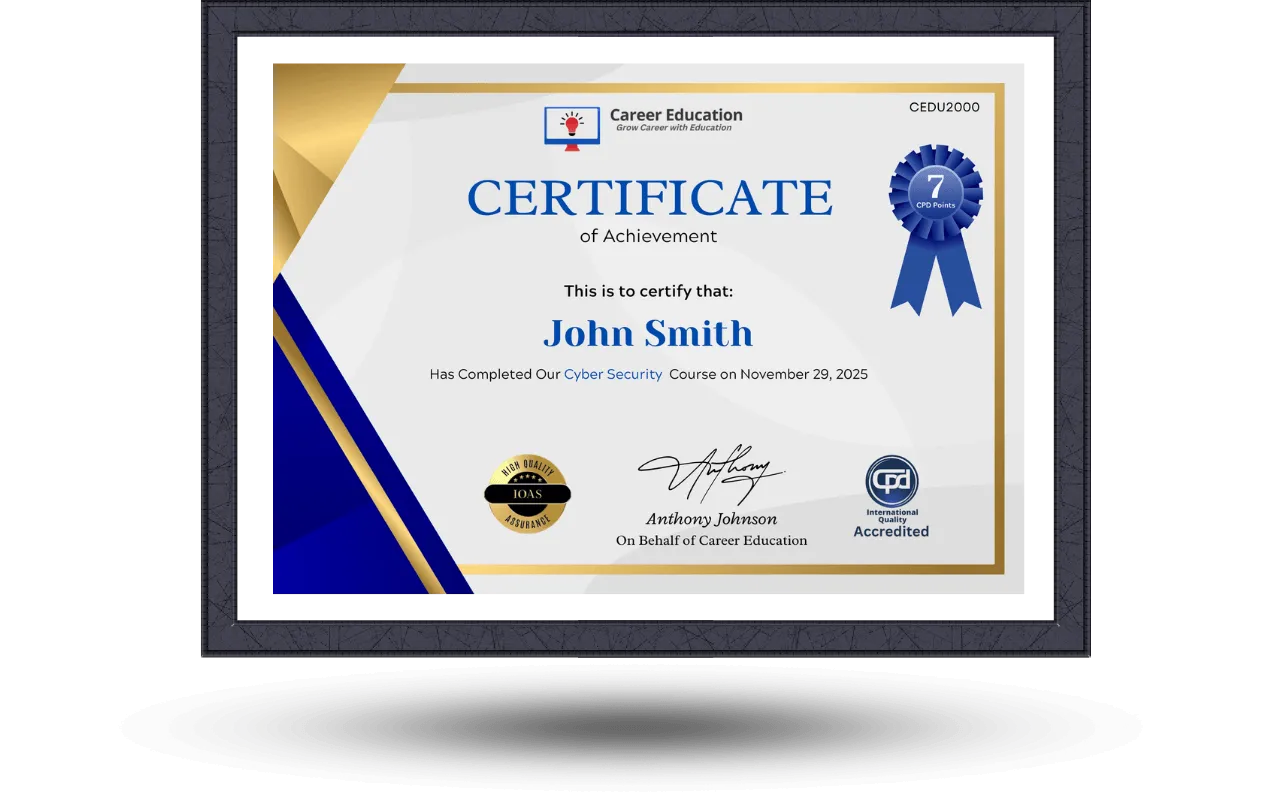
Upon completion of any course, all students are entitled to a CPD IQ Accredited e-certificate that will be issued by Career Education signifying the completion of your course.
After you complete the course and assignment, you will be eligible to order a free certificate accredited by CPD International Quality by completing the form below.
Hardcopy certificates and transcripts are also available for a small additional fee. More information is disclosed upon course completion.
Similar Courses


Frequently Asked Questions
The lifetime membership includes unlimited access to all courses, resources, and updates for a one-time fee.
You can purchase the membership directly from our website using a secure checkout process.
Yes, selected courses can be downloaded for offline access through our mobile app.
Yes, all future updates and new courses are included at no extra cost.
Yes, we offer a 30-day money-back guarantee if you are not satisfied with the membership.