
94%
OFF
OFF
Personal Protective Equipment (PPE) Safety Training
- Lifetime Access
- All Levels
- PDF Certificate
£296
£19
14-Day Money-Back Guarantee
Learn With Confidence









Personal Protective Equipment (PPE) Safety Training
Workplace hazards can take many forms, from falling objects and flying particles to excessive noise, airborne contaminants and contact with hazardous materials. While organisations should always aim to eliminate or control hazards at their source, personal protective equipment (PPE) can provide an important additional layer of protection when exposure cannot be completely prevented.
Personal Protective Equipment (PPE) Safety Training is designed to help employees, supervisors and workplace professionals understand the purpose, selection, correct use and limitations of PPE. The course provides practical knowledge that can help learners make better safety decisions and use protective equipment more effectively in a wide range of workplace environments.
Having PPE available is only one part of an effective safety programme. Workers must understand which equipment is appropriate for a particular hazard, how to use it correctly, how to inspect it and when it may need to be replaced. Incorrectly selected or improperly used PPE may fail to provide the expected level of protection.
This course takes an outcome-focused approach, helping learners develop practical PPE awareness that can be applied before and during workplace tasks.
Why Take Personal Protective Equipment (PPE) Safety Training?
Different workplace activities expose employees to different hazards. A worker may need head protection in one area, eye protection during another task and respiratory protection when working around airborne contaminants.
Understanding how to match PPE to the hazard is therefore essential.
Personal Protective Equipment (PPE) Safety Training helps learners understand how to:
-
Recognise workplace hazards that may require PPE.
-
Understand the purpose of different types of protective equipment.
-
Participate effectively in hazard assessment.
-
Select PPE appropriate to specific workplace risks.
-
Use PPE correctly and consistently.
-
Inspect protective equipment before use.
-
Recognise damaged, defective or unsuitable PPE.
-
Understand the limitations of personal protective equipment.
-
Maintain and store PPE appropriately.
-
Support safer workplace practices.
-
Develop a stronger personal safety mindset.
The course focuses on practical application rather than simply listing types of PPE. Learners will understand why appropriate selection and correct use are critical to effective protection.
What You Will Learn
By completing Personal Protective Equipment (PPE) Safety Training, learners will develop a comprehensive foundation in PPE and its role in workplace hazard control.
The course begins with fundamental PPE principles before moving into hazard assessment and equipment selection. It then examines specific forms of protection, including head, eye and face, hearing, respiratory, hand and arm protection.
Participants will develop greater awareness of how PPE should be integrated into wider workplace safety procedures. PPE should not automatically be considered the first or only solution to a hazard. Where appropriate, hazards should be eliminated, substituted or controlled through engineering and administrative measures, with PPE providing additional protection where required.
The overall objective is to help workers make informed decisions and develop consistent protective practices.
Module 1: Introduction to PPE
The course begins with an introduction to personal protective equipment.
Learners will explore what PPE is, why it is used and how it contributes to workplace safety.
Participants will examine common situations where workers may require protective equipment, including exposure to:
-
Falling objects.
-
Flying particles.
-
Excessive noise.
-
Dust and airborne contaminants.
-
Hazardous substances.
-
Sharp objects.
-
Mechanical hazards.
-
Other workplace-specific risks.
The module introduces the importance of using PPE correctly and consistently. It also highlights that PPE should be considered as part of a broader hierarchy of hazard controls.
Learners will understand that protective equipment must be appropriate for the task and hazard. Simply wearing PPE does not guarantee protection if the equipment is unsuitable, damaged, poorly fitted or incorrectly used.
By completing this module, participants will have a clear foundation for understanding the purpose and importance of PPE.
Module 2: Hazard Assessment and PPE Selection
Choosing the right PPE starts with understanding the hazard.
This module focuses on hazard assessment and the process of selecting appropriate protective equipment.
Learners will explore how to consider the nature of a hazard, the level of exposure, the task being performed and the working environment when determining PPE requirements.
Participants will consider questions such as:
-
What hazards are present?
-
Who could be exposed?
-
How could exposure occur?
-
What controls are already in place?
-
Is PPE required as an additional control?
-
What type of protection is appropriate?
-
Does the PPE fit the user correctly?
-
Is the equipment compatible with other required PPE?
-
Is the equipment in good condition?
The module emphasises that PPE selection should be based on the actual risks present rather than assumptions or convenience.
Learners will develop greater confidence in recognising the relationship between workplace hazards and appropriate protective equipment.
Module 3: Head Protection
Head injuries can have serious consequences, particularly in environments where workers may be exposed to falling or moving objects.
This module examines the role of head protection and the circumstances in which appropriate protective headgear may be required.
Learners will explore the importance of:
-
Selecting suitable head protection.
-
Ensuring proper fit and adjustment.
-
Inspecting equipment before use.
-
Identifying damage or deterioration.
-
Maintaining protective headgear.
-
Storing equipment appropriately.
-
Following workplace and manufacturer requirements.
Participants will understand why protective headgear should be appropriate for the identified hazards and why damaged or unsuitable equipment should not be relied upon.
The module also reinforces the importance of using head protection consistently where workplace risk assessments and procedures require it.
By completing this module, learners will have greater awareness of how appropriate head protection can help reduce exposure to workplace hazards.
Module 4: Eye and Face Protection
The eyes and face can be exposed to a wide range of workplace hazards, including dust, flying particles, chemical splashes, radiation and impact risks.
This module focuses on selecting and using appropriate eye and face protection.
Learners will explore how different tasks may require different forms of protection and why equipment must be matched to the specific hazard.
Participants will develop awareness of:
-
Impact hazards.
-
Flying particles.
-
Dust.
-
Splashes.
-
Chemical exposure.
-
Task-specific risks.
-
Correct fitting.
-
Equipment inspection.
-
Cleaning and maintenance.
-
Replacement of damaged equipment.
The course also reinforces the importance of maintaining clear visibility while using protective equipment.
Learners will understand that eye and face protection should be selected according to the risk assessment and used in accordance with workplace procedures and manufacturer instructions.
By applying these principles, workers can reduce avoidable exposure to hazards that may affect vision or cause facial injuries.
Module 5: Hearing Protection
Noise is a common workplace hazard in many industries.
Machinery, power tools, manufacturing equipment, construction activities and other operations can expose workers to excessive noise levels.
This module examines hearing protection and its role in reducing exposure to workplace noise.
Learners will explore why noise should be assessed and controlled and how appropriate hearing protection can provide an additional layer of protection when required.
Participants will consider:
-
Recognising potentially hazardous noise.
-
Understanding the importance of workplace noise assessments.
-
Different forms of hearing protection.
-
Correct fitting and use.
-
Cleaning and maintenance.
-
Equipment inspection.
-
Replacement of damaged or worn protection.
-
Following workplace hearing conservation procedures.
The course reinforces that PPE is only one component of noise control. Where practical and appropriate, engineering and administrative controls should also be considered.
Learners will finish the module with a clearer understanding of how hearing protection supports workplace safety and hearing conservation.
Module 6: Respiratory Protection
Some workplace environments may contain dust, fumes, vapours, gases or other airborne contaminants.
This module introduces the role of respiratory protection in controlling inhalation hazards.
Learners will explore why respiratory protection must be selected carefully according to the contaminant, exposure conditions and requirements of the workplace.
Participants will develop awareness of:
-
Identifying airborne hazards.
-
Understanding exposure risks.
-
Selecting suitable respiratory protection.
-
Correct fitting and use.
-
Equipment inspection.
-
Maintenance requirements.
-
Filter and component management where applicable.
-
Proper storage.
-
Understanding equipment limitations.
The module emphasises that respiratory protective equipment should be used as part of a comprehensive exposure-control programme.
Learners will also understand why fit, correct use and appropriate maintenance are important factors in effective respiratory protection.
By completing this module, participants will be better prepared to recognise when respiratory hazards require attention and understand the importance of following established workplace procedures.
Module 7: Hand and Arm Protection
Hands and arms are frequently exposed to workplace hazards because employees often use them directly when handling tools, equipment and materials.
This module explores the importance of selecting appropriate hand and arm protection.
Learners will examine hazards such as:
-
Cuts and punctures.
-
Abrasions.
-
Impact.
-
Heat and cold.
-
Certain chemical exposures.
-
Sharp materials.
-
Mechanical hazards.
Participants will learn why different gloves and protective equipment are designed for different hazards.
The module highlights the importance of selecting protection based on the task rather than assuming one type of glove will provide adequate protection in every situation.
Learners will also consider:
-
Correct fit.
-
Inspection before use.
-
Cleaning and maintenance.
-
Replacement of damaged equipment.
-
Proper storage.
-
Appropriate use.
-
Workplace-specific requirements.
The goal is to help employees make more informed decisions about protecting their hands and arms while carrying out workplace tasks.
Practical Benefits of Personal Protective Equipment (PPE) Safety Training
Personal Protective Equipment (PPE) Safety Training is designed to provide practical outcomes that learners can apply across different workplace environments.
After completing the course, participants should be better able to:
Recognise PPE Requirements
Identify workplace hazards that may require personal protective equipment.
Assess Hazards
Understand the importance of evaluating risks before selecting protective equipment.
Choose Appropriate PPE
Match protective equipment to the hazards, task and working environment.
Use PPE Correctly
Develop better awareness of correct fitting, use and handling procedures.
Inspect Protective Equipment
Recognise visible damage, deterioration or other conditions that may affect PPE performance.
Understand Different Protection Types
Identify the purposes of head, eye and face, hearing, respiratory, hand and arm protection.
Follow Workplace Procedures
Apply established PPE requirements consistently and responsibly.
Recognise PPE Limitations
Understand that PPE is an important protective measure but should work alongside broader hazard-control strategies.
Strengthen Safety Awareness
Develop proactive habits that encourage workers to consider personal protection before beginning potentially hazardous activities.
Who Is This Course For?
Personal Protective Equipment (PPE) Safety Training is suitable for employees and professionals working in environments where personal protective equipment may be required.
It may be particularly useful for:
-
General workplace employees.
-
Construction workers.
-
Manufacturing personnel.
-
Warehouse workers.
-
Maintenance teams.
-
Engineering professionals.
-
Laboratory personnel.
-
Industrial workers.
-
Supervisors and team leaders.
-
Health and safety professionals.
-
Contractors.
-
New employees.
-
Experienced workers seeking a PPE refresher.
The course can also support organisations seeking to strengthen general PPE awareness among their workforce, subject to their own workplace procedures, hazard assessments and applicable requirements.
Build Better PPE Safety Habits
Effective PPE use begins with understanding the hazard.
Workers should know why protection is required, what type of equipment is appropriate and how to use it correctly. They should also understand that protective equipment must be inspected and maintained to remain suitable for use.
Personal Protective Equipment (PPE) Safety Training encourages learners to take a proactive approach.
Instead of simply putting on PPE because it is required, participants will learn to think about the relationship between the hazard, the task and the protective equipment being used.
This approach can help employees become more engaged in workplace safety and make more informed decisions about personal protection.
Support a Stronger Workplace Safety Culture
Workplace safety is a shared responsibility.
Employers, supervisors and employees all have important roles in identifying hazards, implementing controls and using PPE appropriately.
When workers understand the purpose and limitations of protective equipment, PPE requirements can become a more meaningful part of everyday safety practices rather than a simple compliance exercise.
Personal Protective Equipment (PPE) Safety Training helps build this understanding by combining general PPE principles with practical guidance on specific types of protection.
From head and eye protection to hearing, respiratory, hand and arm protection, learners develop a broader understanding of how PPE can help reduce exposure to workplace hazards.
Take a Proactive Approach to Personal Protection
PPE can provide an important layer of protection when workers face hazards that cannot be completely eliminated or controlled through other measures.
However, its effectiveness depends on appropriate selection, correct use, proper fit, inspection and maintenance.
Personal Protective Equipment (PPE) Safety Training provides learners with the practical knowledge needed to understand these principles and apply them responsibly.
By completing the course, participants can strengthen their PPE awareness, improve hazard recognition and contribute to safer workplace practices.
Develop Safer Working Practices
Every worker should understand the hazards associated with their role and the protective measures available to them.
Knowing how to select and use appropriate PPE can help employees take greater responsibility for their personal safety while supporting wider organisational safety objectives.
Personal Protective Equipment (PPE) Safety Training provides a structured learning experience covering PPE fundamentals, hazard assessment, equipment selection and essential forms of personal protection.
Build stronger PPE knowledge. Improve hazard awareness. Use protective equipment more effectively. Support a safer workplace with Personal Protective Equipment (PPE) Safety Training.
Course Modules
Course Content
Module 1_ Introduction to PPE
-
Lesson 1_ Introduction to PPE
Module 2_ Hazard Assessment and PPE Selection
Module 3_ Head Protection
Module 4_ Eye and Face Protection
Module 5_ Hearing Protection
Module 6_ Respiratory Protection
Module 7_ Hand and Arm Protection
What our students say
Excellent
4.9 average
158 Reviews

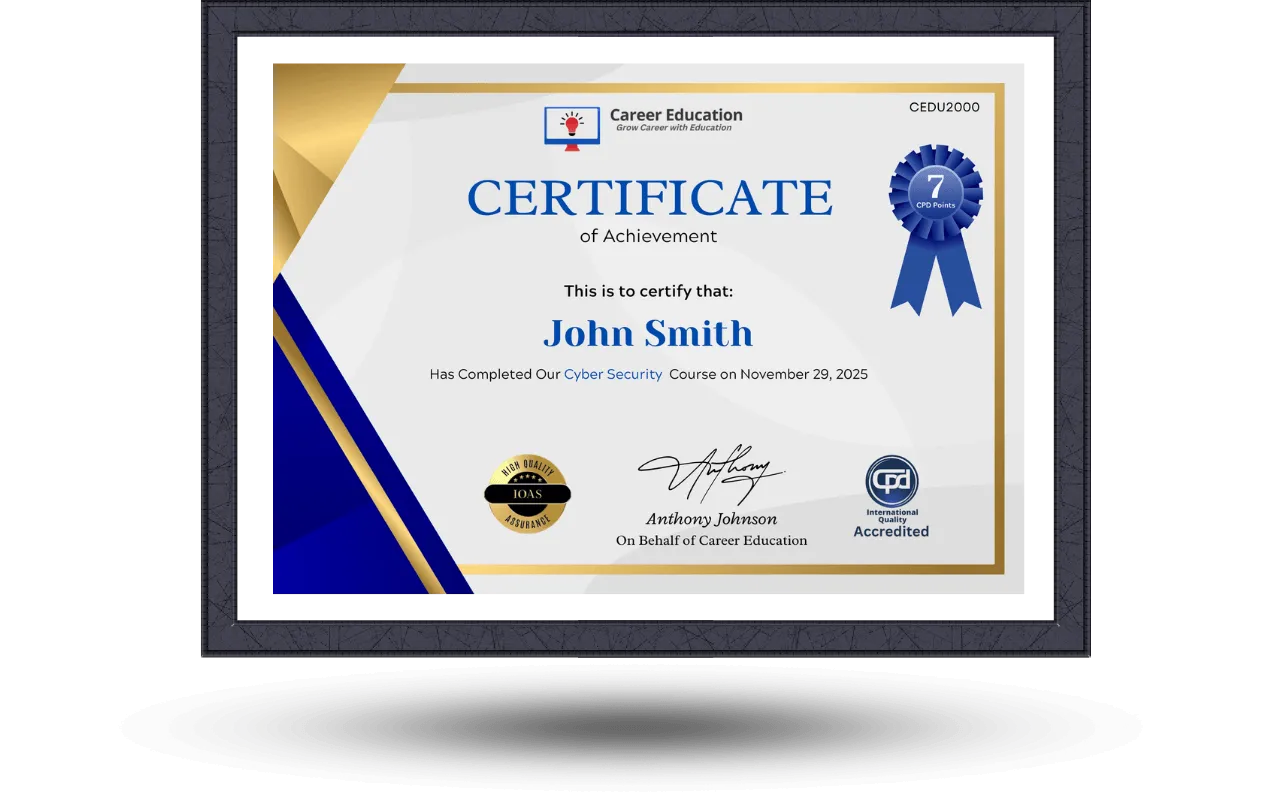
Earn an Accredited Certificate
Upon completion of any course, all students are entitled to a CPD IQ Accredited e-certificate that will be issued by Career Education signifying the completion of your course.
After you complete the course and assignment, you will be eligible to order a free certificate accredited by CPD International Quality by completing the form below.
Hardcopy certificates and transcripts are also available for a small additional fee. More information is disclosed upon course completion.
Similar Courses



Frequently Asked Questions
The lifetime membership includes unlimited access to all courses, resources, and updates for a one-time fee.
You can purchase the membership directly from our website using a secure checkout process.
Yes, selected courses can be downloaded for offline access through our mobile app.
Yes, all future updates and new courses are included at no extra cost.
Yes, we offer a 30-day money-back guarantee if you are not satisfied with the membership.