
94%
OFF
OFF
Operations Management Training
- Lifetime Access
- All Levels
- PDF Certificate
£296
£19
14-Day Money-Back Guarantee
Learn With Confidence





Operations Management Training
Build the Skills to Improve Processes, Manage Resources and Support Business Performance
Every successful organisation depends on effective operations. Whether a business manufactures products, delivers professional services, manages a warehouse, runs an online operation or serves customers directly, its ability to organise people, resources, processes and information has a direct impact on performance.
Operations Management Training is designed to provide learners with a practical foundation in the principles and practices used to manage and improve business operations.
The course explores the key areas that operations professionals need to understand, including product and service design, capacity planning, process design, inventory management and supply chain management.
Rather than looking at operations as simply the day-to-day running of a business, this course helps you understand the decisions and processes behind effective operations. You will explore how products and services are designed, how organisations plan their capacity, how processes can be analysed, how inventory can be managed and how supply chains contribute to overall performance.
Whether you are preparing for a career in operations, working in business, logistics, manufacturing or supply chain management, or simply want to strengthen your professional knowledge, Operations Management Training provides a structured starting point.
Why Operations Management Matters
Operations are at the heart of how organisations deliver value.
A business may have an excellent product, but if its production process is inefficient, inventory is poorly managed or customers experience constant delays, overall performance can suffer.
Similarly, a service organisation may have talented employees and strong demand, but without appropriate capacity planning and well-designed processes, it may struggle to serve customers effectively.
Operations management helps organisations address these challenges.
It involves making informed decisions about resources, processes, capacity, inventory, products, services and supply chains.
The Operations Management Training course introduces these areas and helps learners develop a broader understanding of how they interact.
You will explore questions such as:
-
How should products and services be designed?
-
How much capacity does an organisation need?
-
How can operational processes be designed and analysed?
-
How should inventory be managed?
-
What role does the supply chain play in business performance?
-
How can operational resources be coordinated more effectively?
Understanding these principles can help you approach business operations with greater structure and confidence.
What You Will Learn
The course consists of six core modules:
-
Introduction to Operations Management
-
Product and Service Design
-
Capacity Planning and Management
-
Process Design and Analysis
-
Inventory Management
-
Supply Chain Management
Together, these modules provide a foundation for understanding how organisations plan, manage and improve their operational activities.
Module 1 – Introduction to Operations Management
The first module provides an Introduction to Operations Management, establishing the foundation for the rest of the course.
The introductory lesson introduces the purpose and scope of operations management and explains why effective operations are important to organisational success.
You will explore the role of operations in transforming inputs into products and services that create value for customers.
Operations can involve people, equipment, materials, technology, information and processes. Managing these elements effectively requires careful planning and coordination.
This module helps you understand the broader responsibilities associated with operations management and provides the terminology needed to explore the more specialised areas covered later.
By completing this module, you should have a clearer understanding of how operations contribute to business performance and customer value.
Module 2 – Product and Service Design
The products and services an organisation offers have a major influence on its operations.
Module 2 focuses on Product and Service Design, helping learners understand how design decisions can affect operational requirements and customer value.
Product and service design is not simply about appearance. It can involve considering functionality, customer expectations, resources, processes, quality and the organisation’s ability to deliver the final product or service effectively.
A well-designed product may be easier to manufacture, distribute and maintain. Similarly, a well-designed service can be structured to provide customers with a consistent and efficient experience.
Through this module, you will develop greater awareness of the relationship between design and operations.
You will understand why operational considerations should be taken into account when products and services are developed.
Module 3 – Capacity Planning and Management
Organisations need sufficient capacity to meet demand, but having too much capacity can also create unnecessary costs.
Module 3 explores Capacity Planning and Management, introducing learners to the principles involved in balancing operational capacity with demand.
Capacity refers broadly to the amount of work an operation can handle within a particular period.
Effective capacity planning can help organisations anticipate demand and make informed decisions about resources.
Too little capacity may result in delays, bottlenecks and poor customer service. Excess capacity may mean that resources are underutilised.
This module helps you understand why capacity planning is an important part of operations management.
You will develop awareness of the considerations involved in planning and managing capacity and understand how capacity decisions can influence operational performance.
Module 4 – Process Design and Analysis
Processes determine how work gets done.
Module 4 focuses on Process Design and Analysis, helping learners understand how operational processes can be structured and evaluated.
A process may involve multiple steps, people, systems, resources and decisions. If these elements are poorly coordinated, organisations can experience delays, errors, unnecessary costs or inconsistent outcomes.
Process design involves thinking carefully about how activities should be organised.
Process analysis then helps organisations examine how the process performs and identify opportunities for improvement.
Through this module, you will develop a stronger understanding of why process design is central to effective operations management.
You will learn to think about operations as connected workflows rather than isolated tasks.
Module 5 – Inventory Management
Inventory is an important consideration for organisations that purchase, store, manufacture or sell physical products.
Module 5 explores Inventory Management, introducing the principles involved in managing stock effectively.
Inventory can include raw materials, components, work in progress and finished products.
Too much inventory can tie up capital and increase storage costs. Too little inventory can create shortages, delays and lost sales.
Effective inventory management therefore involves balancing availability with cost and operational requirements.
This module helps learners understand why inventory decisions are important and how inventory management connects with wider operations and supply chain activities.
You will develop a broader appreciation of the role inventory plays in maintaining operational continuity and meeting customer needs.
Module 6 – Supply Chain Management
The final module focuses on Supply Chain Management, bringing together the broader relationships that connect organisations with suppliers, logistics providers, customers and other participants.
A supply chain can extend across multiple organisations and geographical locations.
Effective supply chain management requires coordination between different activities, including sourcing, production, inventory, transportation and distribution.
This module helps you understand how supply chain performance can influence operations and customer service.
You will develop awareness of the importance of coordination and information flow throughout the supply chain.
By completing this module, you will have explored the major operational areas covered by the course and developed a more complete understanding of how organisations manage the flow of products, resources and activities.
Practical Learning Outcomes
By completing Operations Management Training, you can develop a strong foundation in modern operations management principles.
You will be able to:
-
Explain the fundamental principles of operations management.
-
Understand the role of operations in creating customer value.
-
Recognise how operational decisions affect business performance.
-
Understand key considerations in product and service design.
-
Explain why operational requirements should influence design decisions.
-
Understand the fundamentals of capacity planning.
-
Recognise the importance of balancing capacity with demand.
-
Develop awareness of process design principles.
-
Understand the purpose of process analysis.
-
Recognise common operational challenges associated with poorly designed processes.
-
Understand the fundamentals of inventory management.
-
Recognise the risks of excessive or insufficient inventory.
-
Understand the relationship between operations and supply chain management.
-
Develop awareness of how supply chain coordination affects operational performance.
-
Apply foundational operations management concepts to further study or professional development.
Develop a Process-Oriented Mindset
One of the most valuable skills developed through Operations Management Training is the ability to think in terms of processes.
Every organisation has processes.
Employees follow processes to serve customers. Manufacturers use processes to produce goods. Warehouses use processes to receive, store and dispatch inventory. Service providers use processes to deliver services.
When processes are well designed, work can flow more efficiently.
When processes are poorly designed, problems can occur at multiple stages.
The course helps you understand why analysing the way work is performed is essential to effective operations management.
This process-oriented mindset can help you identify opportunities for improvement and understand how individual activities contribute to wider operational outcomes.
Understand the Relationship Between Design and Operations
Product and service decisions can have a major impact on operational performance.
A product that is difficult to manufacture may require additional resources. A service that is poorly structured may create unnecessary delays for customers.
The Product and Service Design module helps you understand this relationship.
By considering operations during the design process, organisations can create offerings that are not only attractive to customers but also practical to deliver.
This perspective can be valuable for professionals involved in product development, service delivery, operations and business management.
Improve Your Understanding of Capacity
Capacity decisions can influence almost every part of an organisation.
If demand increases, businesses may need additional employees, equipment, facilities or production capability.
If demand falls, organisations may need to adjust their resources to avoid unnecessary costs.
Capacity planning provides a framework for thinking about these challenges.
Through the course, you will develop greater awareness of why organisations need to consider both current and future operational requirements when making capacity decisions.
Understand Inventory More Strategically
Inventory management is not simply about counting products.
It involves making decisions about how much stock should be available, where it should be stored and how inventory can support customer demand and operational continuity.
The Operations Management Training course helps you understand inventory from a wider operational perspective.
You will recognise the balance organisations need to maintain between product availability and the costs associated with holding stock.
This knowledge can be useful for anyone working in purchasing, warehousing, retail, manufacturing, logistics or supply chain environments.
Understand Supply Chain Connections
Modern organisations rarely operate independently.
They rely on suppliers, logistics providers, distributors and other partners.
A disruption in one part of a supply chain can potentially affect other parts of the organisation.
Understanding supply chain management therefore helps operations professionals see beyond their immediate responsibilities.
The final module introduces this wider perspective and demonstrates how supply chain activities connect with operations.
This can help you understand why collaboration, coordination and information sharing are important to operational success.
Who Is This Course For?
Operations Management Training is suitable for learners from a wide range of professional and educational backgrounds.
Aspiring Operations Managers
If you are considering a career in operations management, this course provides a foundation in the core areas you are likely to encounter.
Business Professionals
Managers and employees can benefit from understanding how operational decisions influence efficiency, resources and customer service.
Supply Chain Professionals
Those working in supply chain environments can use the course to strengthen their understanding of the operational activities surrounding supply networks.
Logistics Professionals
Logistics professionals can benefit from understanding how transportation, inventory and supply chain activities connect with wider operations.
Manufacturing Professionals
Manufacturing relies heavily on capacity, processes, inventory and supply chain coordination, making operations management knowledge particularly relevant.
Entrepreneurs and Business Owners
Business owners can use operations knowledge to better understand how products, services, processes and resources need to be coordinated as an organisation grows.
Students and Career Changers
The course can also provide an accessible introduction for learners considering further study or a career in operations, supply chain management or business.
Support Your Professional Development
Operations management skills are relevant across almost every industry.
Retailers, manufacturers, healthcare organisations, technology companies, hospitality businesses, logistics providers, financial institutions and professional services organisations all rely on effective operations.
Developing operations knowledge can therefore complement many different career paths.
The Operations Management Training course provides a broad foundation that can support further education, workplace development and career exploration.
The course is educational in nature and should not be considered a replacement for specialist professional qualifications or practical workplace experience where these are required.
Learn at Your Own Pace
Online training provides a flexible way to develop professional knowledge.
You can study Operations Management Training around your existing work, education or personal commitments.
Whether you are completely new to operations or looking to strengthen your existing understanding, the course provides a structured progression through the key areas of operations management.
You can use the knowledge gained as a foundation for further study or as a way to develop a broader understanding of how businesses operate.
Build the Knowledge to Improve Business Operations
Successful operations require coordination.
Products and services need to be designed effectively. Capacity needs to be aligned with demand. Processes need to work efficiently. Inventory needs to be managed appropriately. Supply chains need to be coordinated.
The Operations Management Training course brings these areas together to help learners understand the bigger picture.
You will explore the fundamentals of operations management before progressing into product and service design, capacity planning, process design, inventory management and supply chain management.
This gives you the opportunity to develop a broad foundation rather than focusing on one isolated operational function.
Take the Next Step Towards Your Operations Goals
Operations management is about turning resources and processes into reliable outcomes.
Whether those outcomes involve producing a product, delivering a service, fulfilling an order or satisfying a customer, effective operations are essential.
Operations Management Training gives you the opportunity to develop foundational knowledge across the key areas that influence operational performance.
You will learn how design decisions affect operations, why capacity needs to be managed, how processes can be analysed, why inventory matters and how supply chains connect different parts of a business.
Whether your goal is career development, further study, business improvement or simply gaining a stronger understanding of how organisations operate, this course can help you take the next step.
Enrol in Operations Management Training today and build the knowledge you need to understand processes, manage resources and contribute more effectively to efficient and well-coordinated business operations.
Course Modules
Course Content
Module 1_ Introduction to Operations Management
-
Lesson 1_ Introduction to Operations Management
Module 2_ Product and Service Design
Module 3_ Capacity Planning and Management
Module 4_ Process Design and Analysis
Module 5_ Inventory Management
Module 6_ Supply Chain Management
What our students say
Excellent
4.9 average
158 Reviews

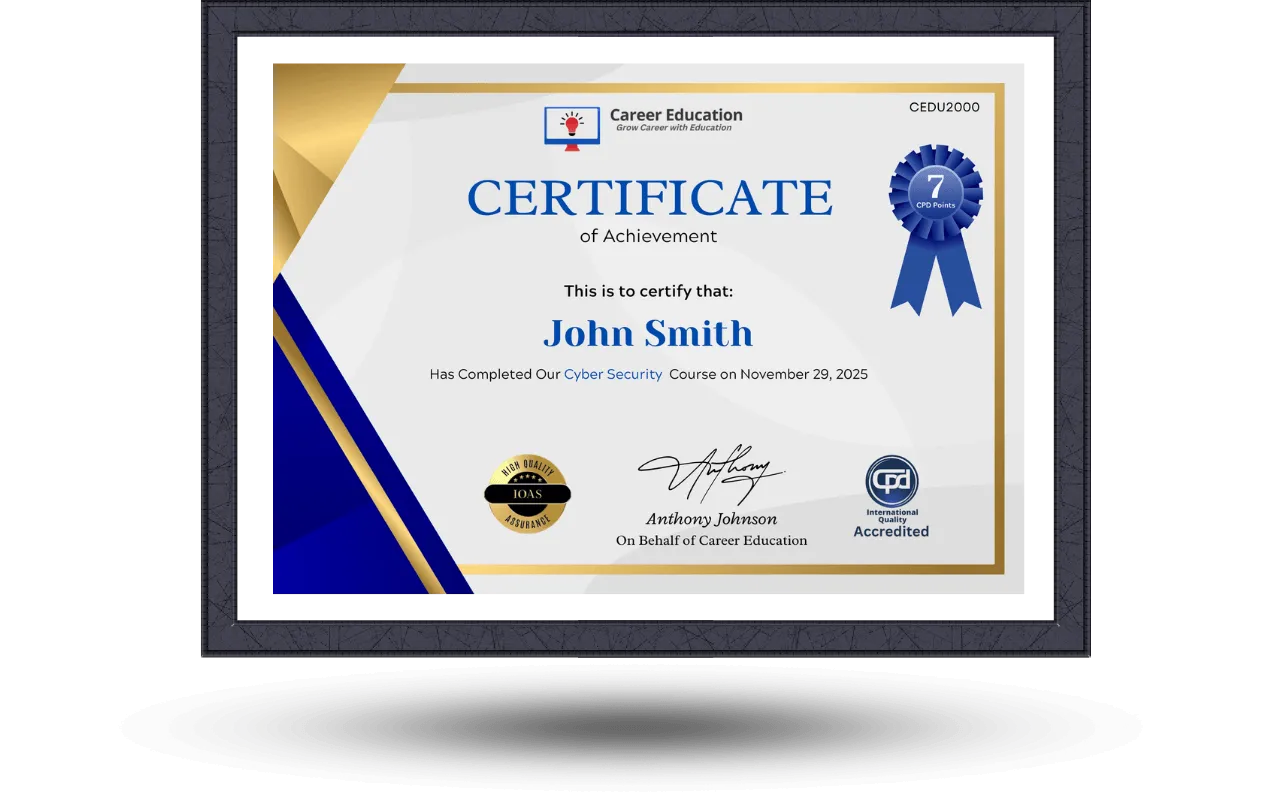
Earn an Accredited Certificate
Upon completion of any course, all students are entitled to a CPD IQ Accredited e-certificate that will be issued by Career Education signifying the completion of your course.
After you complete the course and assignment, you will be eligible to order a free certificate accredited by CPD International Quality by completing the form below.
Hardcopy certificates and transcripts are also available for a small additional fee. More information is disclosed upon course completion.
Similar Courses




Frequently Asked Questions
The lifetime membership includes unlimited access to all courses, resources, and updates for a one-time fee.
You can purchase the membership directly from our website using a secure checkout process.
Yes, selected courses can be downloaded for offline access through our mobile app.
Yes, all future updates and new courses are included at no extra cost.
Yes, we offer a 30-day money-back guarantee if you are not satisfied with the membership.